

Table of Contents
Overview
Rocket Journal is an AI-powered voice-first journaling application designed to simplify mental health reflection and emotional processing. Launched on September 11, 2024, the app transforms spoken thoughts into actionable insights through advanced AI analysis, offering users a hands-free alternative to traditional text-based journaling. Currently available exclusively on iOS with unlimited free entries, Rocket Journal focuses on making mental wellness accessible through natural conversation rather than typing.
Key Features
Rocket Journal combines intuitive voice technology with sophisticated AI analysis to create a comprehensive journaling experience:
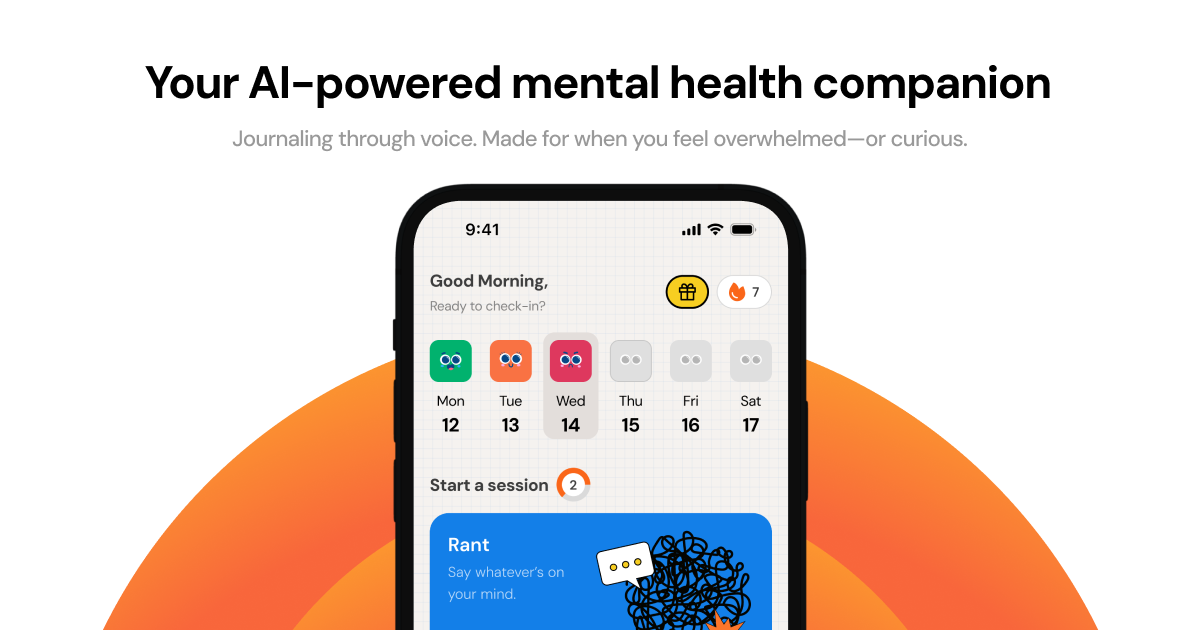
Voice Capture and Transcription: The app’s voice-first design allows users to speak naturally while AI accurately transcribes thoughts into text, making journaling accessible during walks, commutes, or any moment when typing is impractical.
AI Theme and Pattern Analysis: Advanced artificial intelligence examines entries to identify recurring emotional patterns, themes, and behavioral trends, providing users with insights that might not be apparent through self-reflection alone.
Dual-Mode System:
- Rant Mode: A judgment-free space for unfiltered emotional expression, designed for those moments when users need to voice frustrations, anxieties, or overwhelming thoughts without structure
- Reflect Mode: Structured prompts and guided questions that facilitate deeper introspection and targeted exploration of specific life areas
Empathetic AI Responses: The system provides warm, non-judgmental feedback that encourages continued reflection while maintaining the feeling of conversing with a supportive companion.
Visual Elements: Users can enhance their journaling experience with stickers and scrapbook features that add personal touches to their emotional journey.
How It Works
Rocket Journal’s streamlined workflow prioritizes ease and accessibility. Users simply open the app and begin speaking their thoughts, whether through structured Reflect Mode prompts or free-form Rant Mode expression. The AI transcribes speech in real-time while simultaneously analyzing emotional content, tone patterns, and recurring themes.
After each session, users receive personalized insights highlighting emotional states, progress tracking, and gentle suggestions for continued growth. The app maintains conversation history, allowing the AI to provide increasingly personalized responses based on individual patterns and preferences.
Pricing and Accessibility
Unlike many AI-powered wellness applications, Rocket Journal operates on a freemium model with unlimited entries available at no cost. This approach removes financial barriers to mental health support while demonstrating the app’s commitment to accessibility. Future premium features may be introduced, but core functionality remains freely accessible.
How Does It Compare?
The AI-powered journaling landscape in 2025 features sophisticated platforms with distinct approaches to mental wellness:
Day One has evolved into a comprehensive journaling ecosystem with Day One Labs offering experimental AI features. Its AI Entry Summary creates thoughtful reflections, while AI Multi Entry Summary identifies patterns across time periods. The platform’s Prompt Packs provide curated collections for specific themes like gratitude and mindfulness. Day One’s strength lies in its mature infrastructure and privacy-first approach to AI integration.
Mindsera positions itself as an AI-powered mental health companion with 10+ built-in AI mentors based on philosophical and psychological experts. Its advanced pattern recognition uses Professor Plutchik’s emotions model for sophisticated analysis, while Big Five personality snapshots provide ongoing psychological insights. Mindsera excels in therapeutic frameworks and custom AI advisor creation, making it suitable for users seeking structured psychological support.
Notion AI offers journaling capabilities within its broader productivity platform, providing powerful knowledge management and database automation. While not primarily voice-focused, it supports voice input and excels at connecting journaling insights across multiple life areas through its comprehensive workspace integration.
Rocket Journal’s competitive advantage lies in its singular focus on voice-first mental health journaling with immediate AI feedback. While competitors offer broader feature sets, Rocket Journal excels at removing barriers to consistent journaling practice through natural speech patterns and empathetic AI responses designed specifically for emotional processing.
Privacy and Data Considerations
Users considering voice-based AI journaling should understand data handling practices for sensitive emotional content. Rocket Journal’s approach to voice data storage, processing methods, and content privacy policies should be reviewed to ensure alignment with personal privacy preferences, particularly given the intimate nature of mental health journaling.
Considerations for Users
Voice Dependency: The app’s effectiveness relies on users’ comfort with spoken reflection rather than written expression. Some individuals may prefer the contemplative nature of writing over speaking their thoughts aloud.
AI Interpretation Accuracy: As with all AI systems, there’s potential for misinterpretation of emotional nuances, cultural contexts, or speech patterns that could affect insight accuracy.
Platform Limitations: Current iOS exclusivity may limit accessibility for Android users, though the planned expansion addresses this concern.
Mental Health Support: While Rocket Journal provides valuable reflection tools, it should complement rather than replace professional mental health support when dealing with serious psychological concerns.
Final Assessment
Rocket Journal addresses a specific need in the AI wellness ecosystem: making mental health journaling as accessible as having a conversation with a trusted friend. Its voice-first approach eliminates traditional barriers to consistent journaling practice while providing immediate AI-powered insights that encourage continued engagement.
The app’s free model and focus on emotional accessibility make it valuable for users seeking low-friction entry into reflective practices. However, its effectiveness depends on individual comfort with voice-based reflection and AI-generated emotional analysis. As the platform matures and expands to Android, its success will likely depend on maintaining the balance between AI sophistication and the human need for authentic emotional expression and understanding.
For users comfortable with voice-based reflection and seeking immediate feedback on emotional patterns, Rocket Journal offers a unique approach that differentiates it from text-heavy competitors while maintaining focus on mental wellness rather than broader productivity applications.