
Table of Contents
Overview
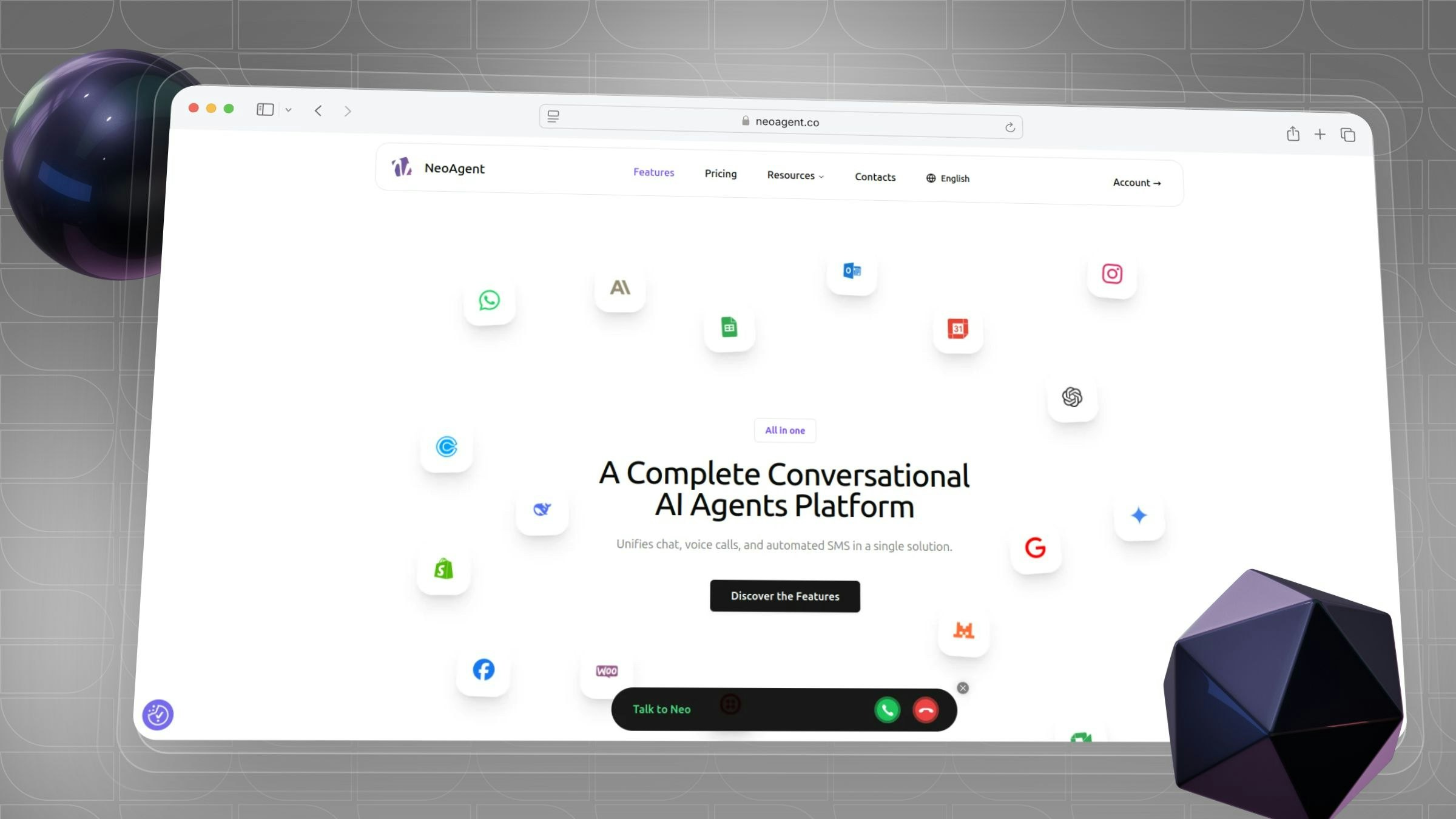
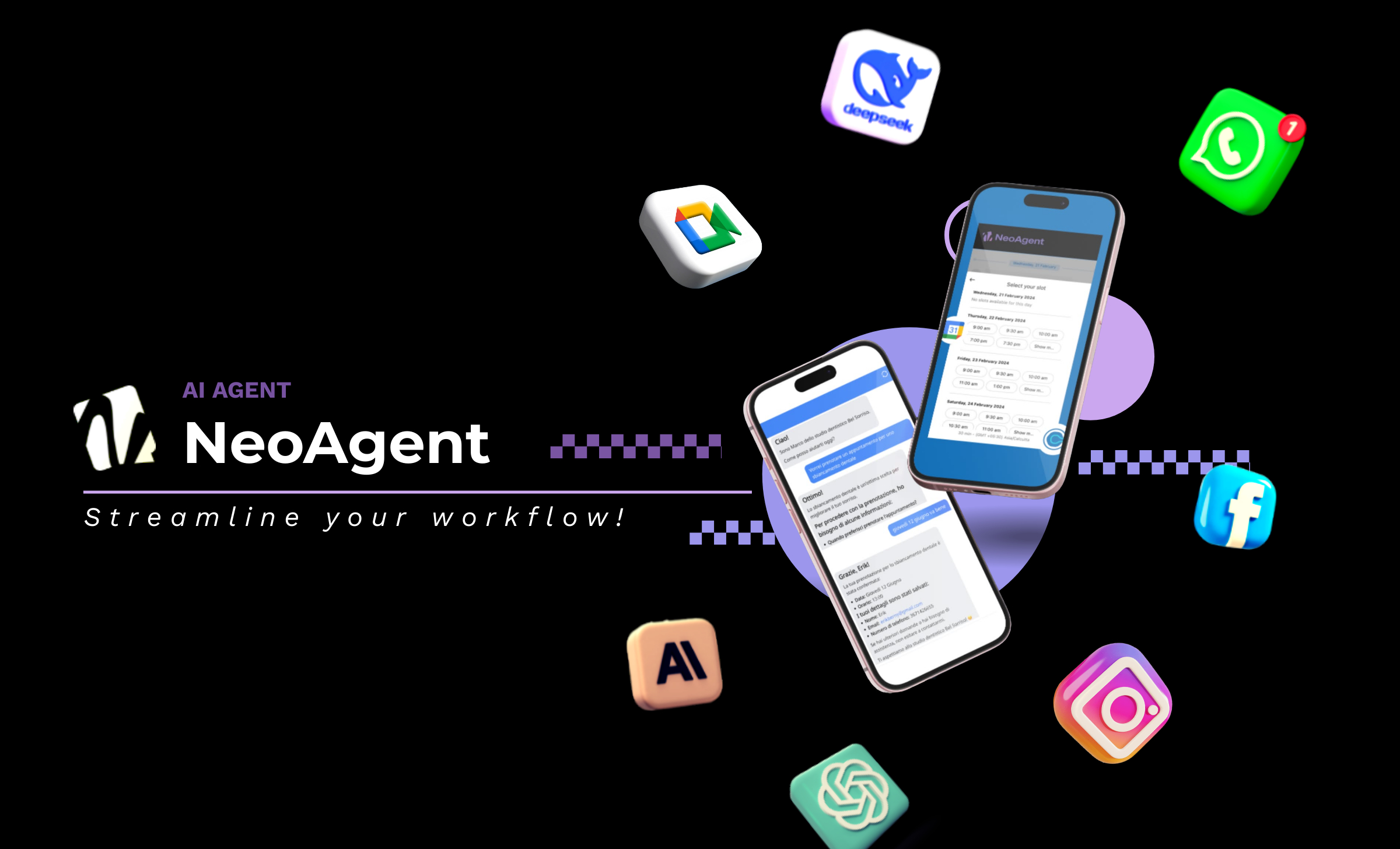
In the rapidly evolving landscape of customer service automation, providing intelligent, multi-channel support has become essential for competitive differentiation. NeoAgent positions itself as an AI-powered business automation platform designed to transform customer engagement through specialized virtual agents capable of interacting 24/7 across Web Chat, WhatsApp, SMS, and Voice Chat.
Important clarification: Two distinct products share the “NeoAgent” name. This review specifically addresses NeoAgent.co, the customer service automation platform for businesses launched on Product Hunt on November 17, 2025. This should not be confused with Neo Agent from neoagent.io, which serves as an MSP automation tool for IT service desks targeting managed service providers.
Key Features
NeoAgent delivers comprehensive capabilities designed to automate and enhance customer interactions across multiple touchpoints:
Multi-channel interaction support: Engage customers across Web Chat, WhatsApp, SMS, and Voice Chat with synchronized conversations maintaining context as customers switch between channels.
Real-time GPT-powered Voice AI: Enable natural voice conversations with sub-one-second response times using GPT technology for text-to-speech synthesis and natural language understanding, creating human-like vocal interactions.
Rapid API integration: Connect to social media channels and messaging platforms via API, with the company claiming 43-second integration setup, though actual implementation time depends on API configurations and account verification requirements.
Native WhatsApp and Facebook automation: Leverage automation features including bulk messaging directly within these communication platforms, complying with WhatsApp Business API policies and Meta platform requirements.
Automated appointment scheduling and lead qualification: Streamline operations through AI-driven booking coordination with Calendly integration and intelligent lead pre-qualification based on conversation analysis.
Customizable voice personas and multilingual capabilities: Tailor AI voice characteristics and language to match brand identity while serving diverse global audiences through multi-language support.
How It Works
NeoAgent implements a structured deployment process designed for rapid integration and intelligent automation:
Businesses provide brand details and integration requirements, specifying customer channels, brand voice, service offerings, and operational workflows requiring automation.
The platform connects to customer channels via API, linking Web Chat, WhatsApp, SMS, and Voice systems through standardized API connections. While marketed as achievable in 43 seconds, actual setup depends on authentication complexity, account verification status, and integration configurations.
AI agents learn business context and create specialized personas by analyzing provided information, existing customer interactions, knowledge bases, and FAQs to develop contextually appropriate response strategies aligned with brand voice.
Customers interact through preferred channels with the AI agent autonomously handling inquiries, scheduling appointments through calendar integrations, and qualifying leads based on predefined criteria or learned patterns from successful conversions.
The system syncs data across channels and integrates with CRM and calendar tools, consolidating interaction history into existing business systems like Google Sheets, Salesforce, HubSpot, and providing unified operational visibility.
Use Cases
NeoAgent addresses automation needs across various business contexts and organizational scales:
Small to medium-sized businesses can automate customer service to provide round-the-clock support, competing with larger enterprises through consistent availability without proportional staffing increases.
Healthcare practices efficiently manage appointment scheduling, answer common patient inquiries about services and procedures, provide practice information, and reduce administrative burden on medical staff.
E-commerce stores handle product inquiries about specifications and availability, provide instant order confirmations and shipping updates, assist with returns and exchanges, and offer personalized recommendations based on browsing behavior.
Professional services firms qualify leads effectively via WhatsApp and other channels, gathering initial information about client needs before human consultation, streamlining sales funnels and ensuring human agents focus on high-potential prospects.
Startups compete with premium support experiences by offering high-quality customer engagement and responsiveness from inception, building trust and loyalty through consistent availability despite limited human resources.
Multi-location businesses coordinate cross-channel customer engagement across branches, ensuring consistent service delivery regardless of location and providing unified brand experiences.
Pros and Cons
Advantages
Voice AI capabilities with GPT-powered synthesis deliver human-like vocal interactions that feel natural and engaging, supporting both inbound customer inquiries and outbound communication needs.
Resolves 80% of routine inquiries automatically according to company claims, significantly reducing workload on human agents and freeing them for complex issues requiring empathy, creativity, or nuanced judgment.
Sub-one-second response time ensures smooth, instant customer experiences across channels, minimizing frustration and abandoned interactions compared to traditional support wait times.
Native WhatsApp Business API compliance guarantees reliable, secure communication on one of the world’s most popular messaging platforms while adhering to Meta’s policies and avoiding account restrictions.
Rapid integration setup with claimed 43-second API connections accelerates deployment, though actual implementation timelines depend on technical configurations and organizational readiness.
Multi-language support enables serving diverse customer bases and expanding global reach without hiring multilingual staff for every supported language.
Disadvantages
May struggle with complex or emotional customer issues requiring empathy, cultural sensitivity, or creative problem-solving that AI cannot adequately replicate without human intervention.
Voice quality depends on GPT model performance which can vary based on model version, server load, network conditions, and specific language or accent combinations.
Limited publicly available pricing information makes budget planning challenging, requiring direct inquiry to assess cost-effectiveness and compare against alternative solutions.
Customization depth for specialized industries remains unclear, potentially requiring additional configuration or custom development for highly niche business requirements or regulatory compliance needs.
Potential learning curve for persona configuration, especially for businesses seeking highly nuanced brand voices or managing multiple distinct customer segments requiring different communication styles.
How Does It Compare?
Understanding NeoAgent’s market position requires examining both established customer service platforms and emerging specialized alternatives:
vs Zendesk
Zendesk represents a mature, enterprise-grade customer service platform with comprehensive AI capabilities introduced throughout 2024-2025. Zendesk AI includes AI-driven chatbots providing 24/7 automated support, automated ticket prioritization using machine learning to route inquiries efficiently, sentiment analysis tracking customer emotions for appropriate escalation, and omnichannel support spanning chat, email, messaging, and voice.
The platform offers AI Copilot providing suggested replies to human agents, AI-powered insights and reporting for operational optimization, extensive third-party integrations with business tools, and established enterprise features including team collaboration, knowledge management, and SLA tracking.
Zendesk supports voice interactions natively within its omnichannel suite, contradicting claims that it requires third-party integrations for voice capabilities. The platform targets mid-market to enterprise organizations with complex support requirements and substantial budgets.
NeoAgent differentiates through simplified setup and focus on SMB accessibility with transparent onboarding, while Zendesk provides mature enterprise features, deeper customization, and established market presence with extensive integration ecosystem. Zendesk suits organizations requiring comprehensive helpdesk infrastructure, while NeoAgent targets businesses prioritizing rapid deployment of focused automation capabilities.
vs Intercom
Intercom delivers AI-enhanced customer engagement through its unified AI system comprising multiple components. Intercom Fin AI agent autonomously resolves customer queries with claimed 65% last-30-day resolution rate as of July 2025, significantly higher than many competitors. The platform features multi-step Procedures enabling complex task workflows like refund processing or account updates.
Intercom supports multiple channels including chat, email, API, WhatsApp, Messenger, and voice, with native integrations rather than third-party dependencies. The AI Copilot assists human agents with suggested responses, while AI Analyst delivers insights and recommendations to support leaders for continuous improvement.
The 2025 Intercom roadmap includes email support conversations beyond chat widgets, Content API for external knowledge sources, customizable tone of voice for brand alignment, and enhanced ROI reporting dashboards. Pricing follows per-resolution model which can become expensive at scale but offers predictable costs for lower volumes.
Both Intercom and NeoAgent offer voice capabilities, though Intercom provides more comprehensive platform with mature features spanning marketing, sales, and support. Intercom excels in conversational marketing and customer lifecycle management, while NeoAgent focuses specifically on support automation with voice emphasis. Intercom suits businesses seeking complete customer communication platform, while NeoAgent targets support-specific automation.
vs Voiceflow
Voiceflow represents an established no-code conversational AI platform founded in 2019, specializing in voice and chat agent development. The visual flow builder enables designing conversation paths through drag-and-drop interface without coding. Dialog API allows custom channel deployment beyond built-in integrations.
Multi-LLM support includes GPT-4, Claude, Gemini, and Llama with bring-your-own-LLM flexibility for specific model preferences or cost optimization. Telephony capabilities support voice assistant deployment for phone systems. Team collaboration features enable multiple designers working on shared projects with version control.
Pricing follows per-editor model: Free tier provides 2 agents with 100K AI tokens for testing, Pro at sixty dollars per editor monthly includes 20 agents with 10 million tokens, Team at one hundred twenty-five dollars per editor monthly offers unlimited agents with 30 million tokens plus advanced features.
Voiceflow emphasizes conversational design and workflow visualization for product teams building specific voice and chat experiences. NeoAgent offers managed service approach with built-in business integrations like appointment scheduling and CRM connectivity. Voiceflow suits teams wanting control over conversation design, while NeoAgent provides pre-built automation for common business workflows.
vs Tidio
Tidio is a multichannel customer service platform popular among small to medium-sized businesses for affordable AI automation. The Lyro AI chatbot powered by proprietary technology automates 70-90% of customer inquiries without human intervention, with performance improving through continuous learning from interactions.
AI Phrase Matcher supports eight languages including English, French, German, and Spanish, identifying customer intent in real-time for accurate responses. Reply Assistant powered by GPT-3.5 helps human agents generate clear messages during manual conversations. Live chat integration enables seamless transition between AI and human support.
Multichannel support encompasses Messenger, Instagram Stories, WhatsApp, email services like Gmail, and website chat with unified inbox consolidating all conversations. Smart Views categorize messages by topic or urgency, while FAQ Wizard provides instant answers from knowledge base.
Pricing includes free tier with 50 interactions monthly, paid plans from nineteen dollars monthly for increased capacity and features. Tidio emphasizes ease of use with quick setup and intuitive interface for non-technical users.
Both Tidio and NeoAgent target SMB market with affordable pricing and simple deployment. Tidio provides broader visual customization and ecommerce integrations particularly for Shopify, while NeoAgent emphasizes voice capabilities and WhatsApp automation. Tidio suits businesses prioritizing live chat and ecommerce, while NeoAgent serves organizations requiring voice and messaging automation.
vs Ada CX
Ada operates as enterprise-grade AI-native automation platform serving major clients including Meta, Verizon, and Shopify. The proprietary Reasoning Engine combines multiple AI models with knowledge retrieval and safety guardrails, enabling understanding of complex inquiries and dynamic solution planning.
No-code builder designed for non-technical business teams provides drag-and-drop interface for conversation design, procedures, and knowledge management. The platform acts as AI layer connecting with separate helpdesk systems like Zendesk for human agent handoff when automation reaches limitations.
Ada resolves approximately 67% of common customer questions independently, freeing human agents for complex cases. Phone inquiry automation handles voice calls with conversational AI. Seamless CRM and system integrations connect with Salesforce and other enterprise tools.
Pricing positions Ada at enterprise level with costs exceeding seventy thousand dollars annually, targeting large organizations with substantial support volumes. The platform requires maintaining separate helpdesk for human agents, adding to total cost of ownership.
Ada excels at handling massive volumes for enterprises with dedicated customer experience teams and substantial budgets. NeoAgent targets smaller organizations seeking accessible automation without enterprise price points or complexity. Ada provides sophisticated reasoning and enterprise governance, while NeoAgent offers faster deployment and SMB-appropriate pricing.
vs ManyChat
ManyChat established itself since 2015 as social media automation platform for Instagram, WhatsApp, Messenger, and TikTok. Visual flow builder enables creating conversation sequences without coding. FAQ automation handles common inquiries with predefined responses or dynamic content.
Lead qualification workflows capture contact information and segment leads based on responses. Automated workflows trigger sequences based on customer actions or time delays. WhatsApp Business API integration enables compliant bulk messaging and broadcast campaigns.
Pricing includes free tier with basic features, Pro plan at fifteen dollars monthly unlocking advanced automation and higher message volumes. The platform focuses primarily on messaging automation for marketing and sales rather than comprehensive customer support.
ManyChat excels in social media marketing automation and creator economy applications. NeoAgent emphasizes customer service automation with voice capabilities and support-specific features like appointment scheduling. ManyChat suits social media marketers and influencers, while NeoAgent targets customer support operations.
vs WhatsApp Business API Specialists
Specialized WhatsApp platforms provide deep platform-specific capabilities. Wappbiz offers AI chatbots with advanced NLP, CRM integrations, analytics dashboards, and message template management compliant with Meta policies. Heltar operates as official Business Solution Provider partnering with Meta, offering CRM sync with Salesforce, HubSpot, and Zoho, shared team inbox, and custom API triggers.
Zotok provides NLP-powered AI agents with workflow automation claiming fifty-percent cost reductions, data binding to databases and APIs, and multi-language support. ChatArchitect delivers advanced personalization tools and automation at scale for enterprise WhatsApp deployments.
These specialists offer superior WhatsApp-specific features including advanced analytics, campaign management, compliance tools, and deep ecommerce integrations beyond general customer service platforms. They suit businesses for whom WhatsApp represents primary customer communication channel.
NeoAgent provides WhatsApp support alongside other channels in unified platform. WhatsApp specialists deliver deeper platform expertise and features, while NeoAgent offers multi-channel consistency. Choose specialists for WhatsApp-centric strategies, NeoAgent for omnichannel approaches.
vs DIY Technical Solutions
Technical teams can build custom WhatsApp Voice AI systems using: Twilio for WhatsApp Business API provisioning and phone number management, n8n for visual workflow automation connecting components, Retell AI, VAPI, Bland AI, or ElevenLabs for voice AI engines, and OpenAI for large language model intelligence.
Multiple tutorials demonstrate implementation including YouTube guides by Joren Wouters and Bart Slodyczka covering end-to-end setup. These approaches offer unlimited customization, bring-your-own infrastructure control, and potentially lower recurring costs after initial development investment.
However, DIY solutions require significant technical expertise in APIs, webhooks, system integration, and ongoing maintenance responsibility. Development time ranges from days to weeks depending on complexity. Organizations must handle updates, debugging, and scaling independently.
NeoAgent provides managed service eliminating technical overhead with pre-built integrations, maintained infrastructure, and vendor support. DIY suits technically capable teams wanting maximum control and customization, while NeoAgent serves organizations prioritizing rapid deployment without engineering resources.
Final Thoughts
NeoAgent represents a focused approach to customer service automation emphasizing multi-channel accessibility and voice AI capabilities. Launched on Product Hunt on November 17, 2025, the platform targets small to medium-sized businesses seeking to automate routine customer interactions without enterprise complexity or investment.
The platform’s strengths include genuine multi-channel support spanning web, WhatsApp, SMS, and voice with unified conversation management, GPT-powered voice AI delivering sub-one-second response times for natural interactions, and integration capabilities connecting to CRMs, calendars, and business tools for workflow automation. The claimed 80% resolution rate for routine inquiries aligns with industry benchmarks from established competitors.
However, several considerations temper enthusiasm. The characterization of voice AI as “rare” among customer service platforms is inaccurate in 2025, as major competitors including Intercom, Zendesk, Voiceflow, Ada, and numerous specialized platforms offer comprehensive voice capabilities. This misrepresentation raises questions about market positioning accuracy.
The absence of publicly available pricing information prevents cost-benefit analysis and comparison shopping, requiring direct sales engagement to assess affordability. While the platform mentions 14-day Pro trial availability, specific pricing tiers, feature limitations per plan, and total cost of ownership remain undisclosed.
The competitive landscape has become increasingly sophisticated throughout 2025. Established platforms like Intercom and Zendesk introduced substantial AI enhancements with proven enterprise implementations and extensive integration ecosystems. Specialized voice AI platforms like Voiceflow provide superior conversation design tools for teams prioritizing customization. Budget-conscious alternatives like Tidio and ManyChat offer accessible automation at transparent pricing points.
For organizations evaluating NeoAgent, critical considerations include assessment of true voice AI requirements versus text-based automation sufficiency, budget flexibility given undisclosed pricing and likely custom quotes, comfort with newer platform versus established alternatives with proven track records, and specific channel priorities particularly WhatsApp versus omnichannel needs.
The platform appears best suited for small businesses prioritizing WhatsApp automation with voice capabilities, organizations in Italian-speaking markets given evident Italian language focus, companies requiring rapid deployment without technical resources for custom solutions, and businesses comfortable with managed service approach accepting platform-specific limitations.
As AI customer service continues evolving, platforms delivering measurable business outcomes, transparent pricing, reliable performance at scale, and adaptability to changing customer expectations will gain sustained adoption. NeoAgent’s success will depend on demonstrating consistent results across diverse business contexts, providing pricing clarity enabling informed purchase decisions, differentiating beyond commoditized features now common across competitors, and building reputation through customer success stories and independent validation.
For teams considering NeoAgent, recommended due diligence includes requesting detailed pricing breakdown with total cost projections, testing platform with real customer scenarios during trial period, comparing feature-for-feature against alternatives like Tidio, Voiceflow, and established players, evaluating integration quality with existing business systems, and assessing vendor support responsiveness and knowledge base completeness for self-service troubleshooting.
The democratization of AI customer service technology means capable solutions exist across price points and complexity levels. The optimal choice depends on matching specific organizational requirements, technical capabilities, budget constraints, and growth trajectories to platform strengths rather than accepting marketing claims at face value.