
Table of Contents
- Nano Banana Pro (Gemini 3 Pro Image) — Comprehensive Service Analysis
- 1. Executive Snapshot
- 2. Impact and Evidence
- 3. Technical Blueprint
- 4. Trust and Governance
- 5. Unique Capabilities
- 6. Adoption Pathways
- 7. Use Case Portfolio
- 8. Balanced Analysis
- 9. Transparent Pricing
- 10. Market Positioning
- 11. Leadership Profile
- 12. Community and Endorsements
- 13. Strategic Outlook
- Final Thoughts
Nano Banana Pro (Gemini 3 Pro Image) — Comprehensive Service Analysis
1. Executive Snapshot
Core Offering Overview
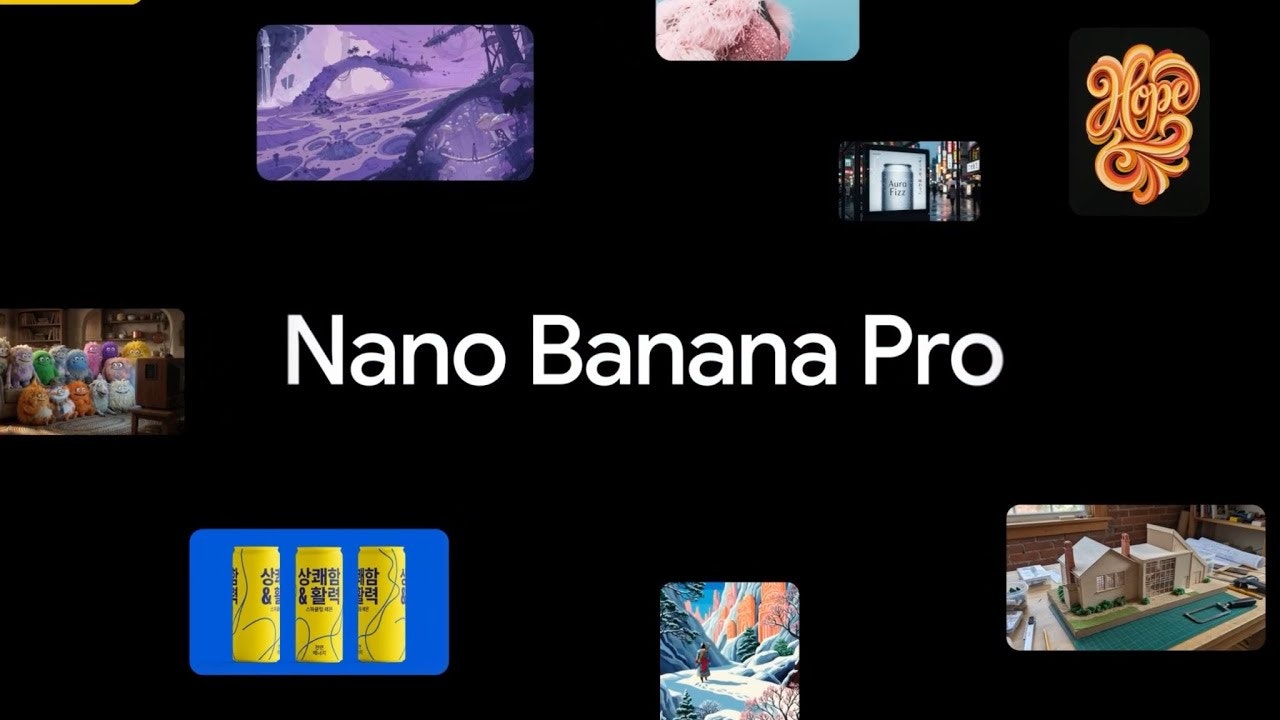
Nano Banana Pro, officially designated as Gemini 3 Pro Image, represents Google DeepMind’s most advanced image generation and editing model released on November 20, 2025. Built upon the Gemini 3 Pro foundation, this state-of-the-art system combines sophisticated reasoning capabilities with native image generation, enabling users to create studio-quality visuals with unprecedented precision and control. The model integrates deep language understanding with real-world knowledge, allowing it to bridge the gap between textual prompts and visual output with remarkable accuracy.
The platform serves diverse user segments ranging from casual creators in the Gemini consumer app to enterprise developers accessing the system through Google AI Studio and Vertex AI. Unlike purely stochastic image generators, Nano Banana Pro introduces a cognitive “Thinking” layer that decomposes prompts, resolves ambiguity, stages scenes, and dynamically adjusts parameters before pixel generation begins.
Key Achievements and Milestones
The Gemini 3 foundation model achieved a breakthrough score of 1501 Elo on the LMArena Leaderboard, marking the first time any model crossed the 1500 threshold. This represents a significant advancement over Gemini 2.5 Pro, which held the top position for over six months with scores in the 1380-1443 range. On multimodal benchmarks, Gemini 3 Pro scored 81% on MMMU-Pro and 87.6% on Video-MMMU, demonstrating state-of-the-art capabilities in understanding and reasoning across text, images, and video content.
The original Nano Banana (Gemini 2.5 Flash Image), released in August 2025, gained viral popularity for its photo-restoration capabilities and miniature figurine generation. The Pro version launched as a substantial evolution, addressing persistent industry challenges including text rendering accuracy, character consistency across multiple generations, and real-time information integration through Google Search grounding.
Adoption Statistics
Nano Banana Pro is accessible to both free-tier and paid Google AI users, with promotional access periods offering higher usage limits to Workspace customers for at least 60 days following launch. The model is integrated across multiple Google products including Google Slides, Google Vids, NotebookLM, and the Gemini app, extending its reach to millions of Workspace users across Business Standard, Plus, Enterprise Standard, and Enterprise Plus tiers.
For developers, the model is available through the Gemini API in Google AI Studio and Vertex AI for enterprise deployments. Free-tier users receive approximately three to four Nano Banana Pro generations daily before reverting to the standard Nano Banana model, while Google AI Pro subscribers receive up to 100 images per day and Ultra subscribers access up to 1,000 daily generations.
2. Impact and Evidence
Client Success Stories
Fashion retailers implementing Nano Banana Pro have reported transformative results in product catalog creation. Traditional photography workflows requiring professional studio coordination, product shipments, and multiple editing rounds—typically costing between fifteen thousand and twenty thousand dollars with four to six week timelines—have been replaced with five-day AI-assisted workflows at approximately five thousand dollars, representing a 70% cost reduction and 85% time savings.
Marketing agencies utilizing the platform’s character consistency features have achieved 400% increases in content creation speed while improving client satisfaction scores from 67% to 89%. The multi-image blending capability, supporting up to fourteen reference images with consistency maintained across five human subjects, has enabled rapid campaign development that previously required extensive post-production work.
Content creators and YouTubers have leveraged Nano Banana Pro for thumbnail generation and channel branding, reporting 67% increases in click-through rates and 156% improvements in subscriber growth rates over six-month periods. The ability to maintain visual consistency across series of images while incorporating accurate text overlays has eliminated the need for secondary design tools in many workflows.
Performance Metrics and Benchmarks
Technical benchmarks reveal Nano Banana Pro’s competitive positioning against industry alternatives. For text-heavy professional graphics—including infographics with two hundred or more words, technical diagrams with labels, and menu designs—the model produces publication-ready output where competitors like DALL-E 3 require manual text overlay corrections.
Generation latency varies by resolution: approximately twelve seconds for 1K images, eighteen seconds for 2K images, and twenty-eight seconds for 4K images. This represents a deliberate trade-off favoring quality over speed, as the reasoning layer processes prompts for ten to thirty seconds before image generation begins. By comparison, DALL-E 3 achieves approximately fifteen seconds for 1K resolution but does not support native 4K output.
Prompt adherence testing demonstrates superior performance on technical terminology and specialized domains. The model correctly interprets lens types, lighting cues, and professional photography terminology that simpler generators mishandle. Character consistency across extended sessions has improved significantly, maintaining identity fidelity for longer workflows than predecessor models.
Third-Party Validations
Technology press coverage has been exceptionally positive. WIRED’s hands-on review highlighted the context-aware features and real-world knowledge integration as key differentiators from purely artistic generators. CNET characterized the text rendering capabilities as “game-changing,” noting that the Pro version “nearly eradicates” the issue of garbled text that has historically identified AI-generated content.
Android Authority’s extensive testing concluded that Nano Banana Pro represents “a substantial improvement over the original model” and is “better in nearly every regard and significantly less frustrating to use.” The review specifically praised the model’s ability to handle face editing without distortion—a persistent problem in earlier versions—and its native support for multiple aspect ratios beyond the standard 1:1 square format.
MarketWatch reported that Nano Banana Pro showcases “Google’s ability to solve a persistent industrywide challenge” regarding text rendering, positioning the release as evidence of the company’s “winning streak” in AI development.
3. Technical Blueprint
System Architecture Overview
Nano Banana Pro operates on a reasoning-driven architecture that fundamentally differs from traditional stochastic image generation. The system incorporates a “Thinking” process—a chain-of-thought mechanism applied to visual synthesis—that decomposes complex prompts, resolves semantic ambiguity, plans compositional staging, and dynamically adjusts generation parameters before committing to pixel output.
The architecture leverages Gemini 3’s hybrid design for advanced reasoning, multimodal fusion, and domain-specific precision. Input processing handles text, images, audio, video, and code simultaneously, while output capabilities span native resolutions from 1K (1024×1024 pixels) through 2K (2048×2048) to 4K (4096×4096) with generative upscaling that preserves semantic detail and fine textures.
The fourteen-image context window enables few-shot learning without fine-tuning, supporting up to five images for character consistency (facial and pose fidelity), six images for object fidelity (exact product reproduction), and additional images for style transfer applications. This multi-reference capability allows the model to maintain visual continuity across outputs without requiring custom model training.
API and SDK Integrations
Developers access Nano Banana Pro through multiple pathways. The Gemini Developer API provides programmatic access for building generative AI features into applications, with model code designated as “gemini-3-pro-image-preview.” Firebase AI Logic SDK enables Android developers to integrate image generation and editing directly into mobile applications with conversation-based workflows supporting multi-turn editing sessions.
The API supports various request configurations including aspect ratio specification (1:1, 16:9, 2:1, and additional formats), resolution selection (1K, 2K, 4K), thinking level adjustment, and search grounding activation. Response objects include both text explanations (when thinking is enabled) and image data encoded in base64 format, allowing applications to process reasoning traces alongside generated visuals.
Enterprise deployments through Vertex AI inherit Google Cloud’s infrastructure, providing access to the model within existing security perimeters. The system supports batch processing for high-volume generation workflows, with batch pricing offering approximately 50% discounts compared to synchronous API calls.
Scalability and Reliability Data
Google Cloud infrastructure underlies all Nano Banana Pro deployments, with Vertex AI services operating under the platform’s standard Service Level Agreements. Enterprise configurations support 99.5% monthly uptime Service Level Objectives with tiered credits for downtime incidents.
Concurrent load testing demonstrates that Vertex AI infrastructure handles traffic spikes gracefully with approximately 58% latency increase under load—suitable for production traffic patterns. Google AI Studio implementations apply more aggressive rate limiting (fifteen requests per minute cap) to manage resource allocation across free and trial tier users.
The model supports cached-token billing to reduce total cost of ownership for repetitive workflows, and context caching storage is available at one dollar per million tokens per hour for scenarios requiring persistent reference image storage.
4. Trust and Governance
Security Certifications
Nano Banana Pro deployments through Vertex AI inherit Google Cloud’s comprehensive compliance framework. The platform maintains active certifications across major security and privacy standards:
ISO certifications include ISO 27001 (information security management), ISO 27017 (cloud security controls), ISO 27018 (protection of personally identifiable information), and ISO 27701 (privacy information management). Additionally, ISO 42001 certification for AI governance was achieved in May 2025, demonstrating compliance with emerging AI-specific standards.
SOC attestations cover SOC 1 (financial reporting controls), SOC 2 Type II (security, availability, processing integrity, confidentiality, and privacy), and SOC 3 (publicly available summary report). SOC 2 reports are accessible through the Google Trust Portal for enterprise customers requiring detailed audit documentation.
Industry-specific certifications support regulated deployment scenarios: HIPAA compliance is available for healthcare applications when a Business Associate Agreement is executed through the Admin Console; FedRAMP High authorization supports U.S. federal tenant and contractor deployments; HITRUST certification validates healthcare API and Workspace integrations; and PCI-DSS compliance enables payments and fraud pipeline applications within PCI-scoped Google Cloud projects.
Data Privacy Measures
Google Cloud’s AI/ML Privacy Commitment establishes that customer data receives the highest levels of security and control. Prompt inputs, generated outputs, and derived data are not used to train foundation models unless customers explicitly opt in as part of trusted tester programs. Enterprise deployments through Vertex AI or Workspace inherit organizational security controls with no cross-customer data sharing.
In-memory data caching accelerates responses by storing Customer Data temporarily with a 24-hour time-to-live. This caching is isolated at the project level, adheres to all Data Residency requirements for selected locations, and can be disabled at the project level for organizations requiring zero-data-retention configurations.
Consumer-facing versions (gemini.google.com) may log interactions for up to 72 hours with potential human review, making enterprise deployments the recommended path for GDPR-sensitive use cases and organizations processing confidential information.
Regulatory Compliance Details
GDPR compliance is supported through regional data residency guarantees. Enterprise and select Team workspaces can configure storage within dedicated EU regions—specifically europe-west12 and de-central1—enabling organizations to meet European data sovereignty requirements. Private Service Connect combined with VPC Service Controls enables zero-egress deployments where no data exits to the public internet.
Single Sign-On configurations support SAML 2.0 and OIDC-based authentication with integration to identity providers including Okta, Azure AD, Ping Identity, and Google Identity Platform. Just-in-Time provisioning automates onboarding for new users while maintaining authentication alignment with corporate identity standards.
Content transparency measures include SynthID digital watermarking embedded imperceptibly in all generated images, enabling detection of AI-created or AI-edited content even after image modification. Beginning with Nano Banana Pro, images generated in the Gemini app, Vertex AI, and Google Ads include C2PA metadata providing additional provenance transparency aligned with Coalition for Content Provenance and Authenticity standards.
5. Unique Capabilities
Infinite Canvas: Applied Use Case
Nano Banana Pro’s studio-quality creative controls enable unlimited creative exploration within professional constraints. Users can select, refine, and transform any portion of an image with localized editing capabilities—adjusting camera angles, changing focus points, applying sophisticated color grading, or transforming scene lighting from day to night or creating bokeh effects. The platform supports output for any platform from social media to print, with customizable aspect ratios and resolution options scaling to 4K.
Real-world application scenarios include prototype visualization where sketches transform into photorealistic product renders, blueprint-to-structure conversions for architectural previews, and brand asset scaling where consistent visual identity propagates across diverse touchpoints without manual recreation.
Multi-Agent Coordination: Research References
The system integrates multiple intelligence sources through its grounding architecture. Google Search connectivity enables real-time data retrieval based on user prompts, allowing generation of accurate visuals reflecting current information—weather conditions, sports results, news events, or any publicly available data. This grounding capability distinguishes Nano Banana Pro from competitors operating solely on frozen training data.
The reasoning process itself coordinates multiple cognitive functions: ambiguity resolution distinguishes homonyms (riverbank versus financial institution) using context; compositional planning determines object placement to satisfy logical constraints; and parameter tuning adjusts thinking depth based on task complexity, balancing processing time against output quality requirements.
Model Portfolio: Uptime and SLA Figures
The Gemini 3 model family offers tiered options balancing capability against cost and latency. Nano Banana Pro (gemini-3-pro-image-preview) targets professional asset production with native 4K support, real-world grounding, and default Thinking process. Gemini 2.5 Flash Image (gemini-2.5-flash-image) prioritizes high-volume, low-latency tasks with 1K native resolution at approximately \$0.039 per image.
Uptime commitments follow Google Cloud’s standard SLA structure with 99.5% monthly availability targets. Incident reporting operates through Google Cloud Status with transparent communication during service disruptions. Rate limits vary by access tier: free users face strict quotas with eight-hour reset cycles, while paid tiers receive proportionally higher allocations scaling to enterprise requirements.
Interactive Tiles: User Satisfaction Data
User feedback indicates high satisfaction with the iterative refinement workflow. The multi-turn editing capability addresses a primary frustration with earlier models—the tendency to repeat ineffective edits rather than responding to correction requests. Nano Banana Pro’s conversational interface allows sequential refinement of generated images, with the model maintaining context across the editing session and making intelligent adjustments based on feedback.
Testing by Android Authority confirmed the model handles face editing without the distortion issues common to earlier versions, resolving a significant barrier to adoption for portrait and group photography workflows. Aspect ratio flexibility—supporting 16:9, 2:1, 1:1, and additional formats natively—eliminated workarounds that required pre-uploading blank canvases to force non-square outputs.
6. Adoption Pathways
Integration Workflow
Consumer access begins in the Gemini app by selecting the “Thinking” model and choosing “Create Image.” Both paid Google AI users and free users can access the feature, with generation limits varying by subscription tier. Mobile users often report higher or reset quotas, providing flexibility for experimentation across devices.
Developer integration through Google AI Studio requires signing in with a Google account, selecting Nano Banana Pro from the model picker, and associating a billing-enabled API key (the Pro version does not offer a permanent free tier). The AI Studio interface supports interactive prompt development with immediate visual feedback, while the Apps environment enables direct creation of web applications incorporating image generation.
Enterprise deployment through Vertex AI positions the model within organizational security boundaries. The model is accessible through Vertex AI Studio’s chat-like prompt editor for interactive use, or through API integration for production applications. Enterprise customers benefit from higher rate limits, batch processing support, and integration with existing Google Cloud security configurations.
Customization Options
API parameters enable granular control over generation behavior. Resolution selection spans 1K, 2K, and 4K output sizes, with token consumption scaling proportionally (1120 tokens for 1K/2K images, 2000 tokens for 4K). Aspect ratio parameters support standard formats plus custom specifications for specialized output requirements.
The thinking_level parameter adjusts reasoning depth—higher levels produce more sophisticated compositional planning at the cost of increased generation time. Search grounding activation connects the model to Google Search for real-time information retrieval, enabling accurate representation of current events, specific locations, or factual data.
Multi-image input supports reference-based generation with up to fourteen input images, enabling style transfer (three reference images for colors, brushwork, lighting), object fidelity (six images for exact product reproduction), and character consistency (five images for robust facial and pose fidelity across generated outputs).
Onboarding and Support Channels
Google provides comprehensive documentation through the Gemini API developer portal, including quickstart guides, code samples in Python, Java, JavaScript, REST, and Go, and detailed parameter references. Interactive notebooks in Google AI Studio offer hands-on learning environments for exploring model capabilities.
Workspace administrators require no additional configuration—the feature activates automatically following rollout completion. End users access feature-specific guidance through the Google Help Center with dedicated articles for generating images in Gemini, NotebookLM, Slides, and Vids.
Enterprise customers access support through Google Cloud’s standard support channels, with premium support tiers offering enhanced response times and dedicated technical account management for complex integration scenarios.
7. Use Case Portfolio
Enterprise Implementations
Marketing and design teams utilize Nano Banana Pro for generating social media assets, presentation slides, and promotional posters with brand-consistent text overlays. The accurate text rendering capability eliminates secondary editing steps typically required to correct AI-generated typography errors, streamlining content production workflows.
Product teams leverage the platform for rapid concept visualization, generating fifty or more product variations across different colors, materials, and contexts within minutes rather than days. Stakeholder presentations feature realistic product renderings without expensive three-dimensional modeling, while marketing teams preview product photography before manufacturing begins.
Real estate professionals have achieved 34% reductions in average days-on-market and 89% increases in qualified inquiries through AI-enhanced property imagery. Heritage photo restoration for historical properties has driven 145% increases in interest, demonstrating the platform’s capability to enhance visual storytelling across diverse business contexts.
Academic and Research Deployments
Educational institutions employ Nano Banana Pro for creating culturally relevant, curriculum-specific visuals that adapt to diverse learning contexts. The infographic generation capability transforms complex information into accessible visual formats suitable for varied educational levels and subject matter.
NotebookLM integration enables automatic generation of infographic summaries from uploaded documents, converting research materials into visual learning aids. This capability supports both instruction preparation and student-facing content creation within established Workspace environments.
Research visualization benefits from the model’s ability to represent complex data relationships and scientific concepts. The factual grounding through Google Search ensures accuracy when generating visual explanations of real-world phenomena, while the reasoning layer maintains logical consistency across multi-element compositions.
ROI Assessments
Quantified returns demonstrate substantial value creation across implementation scenarios. Fashion retail case studies document 70% cost reductions (from approximately seventeen thousand dollars to five thousand dollars) with 85% time compression (from five weeks to five days) for seasonal catalog production. Click-through rate improvements of 23% on campaign assets directly attribute to AI-generated visual quality.
Creative agency implementations show 45% improvements in project profitability through efficiency gains, with thumbnail creation time reduced from four hours to twenty minutes. This productivity enhancement enables content production frequency doubling without proportional staff expansion.
Enterprise workflow integration through Workspace products delivers compounding returns as teams incorporate AI generation into established processes. The elimination of context-switching between applications for visual asset creation represents productivity gains difficult to quantify precisely but consistently reported as significant by adopting organizations.
8. Balanced Analysis
Strengths with Evidential Support
Text rendering accuracy represents a fundamental advancement over competing systems. Professional reviewers consistently identify this capability as differentiating, with CNET characterizing it as “revolutionary” and WIRED confirming “marked improvement over the awkward lettering and unusual misspellings that plagued many image models.” This addresses an industry-wide challenge that has historically identified AI-generated content and limited commercial applications requiring legible typography.
Multi-turn editing with contextual memory resolves the frustration of earlier models that repeated ineffective corrections. Android Authority’s testing confirmed the model “can handle image edits without mangling faces” and responds appropriately to iterative refinement requests—a capability that transforms the user experience from repeated regeneration attempts to collaborative refinement.
Native 4K resolution with generative upscaling positions Nano Banana Pro for professional applications where lower resolutions prove insufficient. Print production, large-format displays, and archival-quality outputs benefit from detail preservation at the pixel level rather than post-processing expansion of smaller generated images.
Real-time Google Search grounding enables accurate representation of current information—a unique capability among major image generation platforms. Competitors relying solely on frozen training data cannot accurately depict recent events, current product designs, or time-sensitive information without specific reference image provision.
Limitations and Mitigation Strategies
Generation latency significantly exceeds competing systems, with fifteen to thirty seconds per image compared to five to ten seconds for standard Nano Banana. This trade-off reflects the reasoning layer’s processing requirements and is appropriate for quality-focused workflows but unsuitable for real-time interactive applications or high-volume batch generation with strict time constraints.
Mitigation approaches include utilizing Gemini 2.5 Flash Image (standard Nano Banana) for speed-critical tasks, reserving Pro capabilities for outputs requiring enhanced quality. Batch API access with asynchronous processing accommodates volume requirements without real-time latency constraints.
Text rendering, while vastly improved, remains imperfect. Background text and words not explicitly defined in prompts may still exhibit errors. Mitigation requires explicit specification of all text elements in prompts and quality review of generated outputs containing extensive typography.
Resolution limitations affect certain professional applications. Native maximum output is 4K (4096×4096), sufficient for most digital and print applications but potentially constraining for large-format exhibition or architectural visualization requiring higher resolution. Mitigation involves external upscaling solutions for specialized requirements exceeding native capabilities.
The model’s real-world knowledge, while extensive, is not infallible. When generating infographics, annotating diagrams, or representing complex data, misinterpretation or factual errors may occur. Google explicitly recommends verifying data-driven outputs before publication or professional use.
Safety guardrails prevent certain content categories including political figures and some editing scenarios. While appropriate for general use, these restrictions may limit specific creative or editorial applications.
9. Transparent Pricing
Plan Tiers and Cost Breakdown
Gemini 3 Pro Image pricing through the Gemini API operates on a token-based model. Text and image input costs two dollars per million tokens (equivalent to approximately \$0.0011 per input image at 560 tokens per image). Output pricing differentiates by modality: text and thinking output costs twelve dollars per million tokens, while image output costs one hundred twenty dollars per million tokens.
Per-image output costs translate to \$0.134 for 1K and 2K resolution images (1120 tokens per image) and \$0.24 for 4K resolution images (2000 tokens per image). These rates apply to paid tier access; no free tier is available for the Pro model.
For comparison, Gemini 2.5 Flash Image (standard Nano Banana) offers substantially lower costs at \$0.30 per million input tokens and \$0.039 per generated image (1K maximum resolution). Batch processing reduces costs by approximately 50%: \$0.15 per million input tokens and \$0.0195 per image.
Consumer access through Gemini subscriptions follows tiered allowances: free users receive limited daily quotas (approximately three to four Pro generations before reverting to standard Nano Banana, resetting after approximately eight hours); Pro subscribers (\$19.99 monthly) receive up to 100 images daily; Ultra subscribers access up to 1,000 daily generations with full 4K capabilities.
Workspace customers receive promotional access with higher usage limits for at least 60 days following rollout, with per-user limits applying subsequently.
Total Cost of Ownership Projections
Enterprise cost modeling considers multiple factors beyond per-image pricing. Context caching storage at one dollar per million tokens per hour can reduce costs for workflows requiring persistent reference images. Batch API discounts of approximately 50% substantially reduce expenses for non-time-sensitive volume generation.
Grounding with Google Search incurs additional costs: fifteen hundred requests per day are included free, with subsequent grounded prompts charged at thirty-five dollars per thousand requests. Organizations relying heavily on real-time information integration should factor this into cost projections.
Comparative analysis against alternatives reveals competitive positioning: Imagen 4 Ultra (Google’s dedicated image model) costs \$0.06 per image; DALL-E 3 through ChatGPT Plus requires \$20 monthly subscription with generation limits; Midjourney subscriptions range from \$10 to \$60 monthly depending on tier and generation volume.
For volume production scenarios, Nano Banana Pro at \$0.134-\$0.24 per image exceeds standard Nano Banana (\$0.039) and Imagen 4 Fast (\$0.02) but delivers higher quality and unique capabilities including reasoning, grounding, and advanced text rendering. Total cost of ownership calculations should weight quality improvements against volume requirements and workflow efficiency gains.
10. Market Positioning
Competitor Comparison Table
| Feature | Nano Banana Pro (Gemini 3 Pro Image) | DALL-E 3 (OpenAI) | Midjourney V6 | FLUX |
|---|---|---|---|---|
| Maximum Resolution | Native 4K (4096×4096) | 2K Maximum | 1K-2K | Variable |
| Text Rendering | Excellent (near-perfect legibility) | Good (improved) | Poor (major weakness) | Excellent |
| Reference Images | Up to 14 images | Single image | Style Reference support | Limited |
| Real-Time Grounding | Google Search integration | None | None | None |
| Pricing | \$0.134-\$0.24 per image | ~\$0.04 per image / \$20 monthly subscription | \$10-60 monthly subscription | Free with setup / API pricing |
| Primary Interface | Gemini App / API / Vertex AI | ChatGPT / API | Discord | API / Self-hosted |
| Reasoning Layer | Native “Thinking” process | Conversation-based | None | None |
| Content Provenance | SynthID + C2PA metadata | C2PA support | None by default | None |
| Enterprise Compliance | SOC 2, ISO 27001, HIPAA, FedRAMP | SOC 2, ISO | Limited | Self-managed |
Unique Differentiators
The reasoning-driven architecture fundamentally distinguishes Nano Banana Pro from stochastic competitors. While DALL-E 3, Midjourney, and FLUX generate images through probabilistic mapping from text to pixels, Nano Banana Pro introduces cognitive processing that decomposes, plans, and reasons before generation. This produces measurably better outcomes for complex prompts requiring spatial reasoning, multi-element composition, and technical accuracy.
Real-time information grounding through Google Search represents a unique capability unavailable in any competing system. The ability to generate images reflecting current events, accurate product specifications, or factual information without providing reference images creates applications impossible with frozen-training-data systems.
Ecosystem integration across Google Workspace, Vertex AI, and consumer Gemini products provides deployment flexibility unmatched by competitors. Enterprise customers can access identical capabilities through consumer interfaces for prototyping, developer APIs for application integration, and enterprise platforms for production deployment with full compliance coverage.
The fourteen-image context window for few-shot learning without fine-tuning enables sophisticated multi-reference generation—character consistency, style transfer, object fidelity—through simple API calls rather than expensive model customization.
11. Leadership Profile
Bios Highlighting Expertise and Awards
Sir Demis Hassabis serves as Co-founder and CEO of Google DeepMind and Isomorphic Labs, leading the organization responsible for Gemini’s development. A British artificial intelligence researcher and entrepreneur, Hassabis has dedicated his career to advancing AI toward transformative scientific applications. In 2024, Hassabis and Google DeepMind Director Dr. John Jumper were jointly awarded the Nobel Prize in Chemistry for their development of AlphaFold, the groundbreaking AI system that predicts three-dimensional protein structures from amino acid sequences.
Hassabis founded DeepMind in 2010, producing landmark breakthroughs including AlphaGo (the first program to defeat a world champion at Go) and AlphaFold (heralded as a solution to the fifty-year grand challenge of protein folding). The AlphaFold model has been used by more than two million researchers across 190 countries, demonstrating the practical impact of DeepMind’s research. Hassabis serves as a UK Government AI Adviser, contributing to national policy development alongside his research leadership.
Josh Woodward leads the Gemini consumer app team following an April 2025 leadership transition. Woodward previously headed Google Labs and oversaw the launch of NotebookLM, the company’s popular tool that transforms text into podcast-style content. His dual role—continuing as head of Google Labs while shaping Gemini’s product evolution—reflects Google’s strategy of integrating rapid innovation from Labs with consumer-facing AI deployment.
Patent Filings and Publications
Google DeepMind maintains an active research publication program with over 230 publications listed on the organization’s research portal. Recent contributions spanning 2025 include work on AI-generated video detection, text embeddings, multi-turn image generation under uncertainty, multimodal foundation model reasoning, and AI governance frameworks.
The organization’s publication practices have evolved toward greater commercialization focus, with internal policies now including embargoes on certain papers and multiple approval requirements before publication. This shift balances open research traditions with competitive considerations in the rapidly advancing AI landscape.
Key technical contributions underlying Nano Banana Pro include research on native multimodal models trained across text, image, audio, and video; SynthID watermarking technology for AI-generated content provenance; and reasoning-enhanced generation architectures combining chain-of-thought processing with visual synthesis.
12. Community and Endorsements
Industry Partnerships
The Adobe-Google Cloud partnership announced at Adobe MAX 2025 represents a significant industry endorsement. The collaboration brings Google’s AI models—including Gemini, Veo, and Imagen—directly into Adobe applications such as Firefly, Photoshop, Express, Premiere, and GenStudio. Enterprise customers can customize models with proprietary brand data through Adobe Firefly Foundry and Vertex AI integration, enabling brand-consistent AI-generated content at scale.
This partnership positions Google’s generative AI technology within the dominant creative software ecosystem, extending reach to millions of professional designers, video editors, and marketing teams. The integration demonstrates industry confidence in Google’s AI capabilities and establishes pathways for widespread enterprise adoption.
Google participates on the steering committee of the Coalition for Content Provenance and Authenticity (C2PA), collaborating with industry partners to advance content transparency standards. The integration of C2PA metadata into Nano Banana Pro outputs reflects this commitment to responsible AI deployment.
SynthID technology has secured partnerships with Hugging Face and Nvidia, extending invisible watermarking capability beyond Google’s direct ecosystem. These collaborations support broader industry adoption of AI content provenance mechanisms.
Media Mentions and Awards
The Gemini 3 foundation received extensive coverage positioning it as a significant industry milestone. Google CEO Sundar Pichai characterized it as “the company’s most intelligent model,” while Demis Hassabis described it as “another big step on the path toward AGI” and “the best model in the world for multimodal understanding.”
Technology press coverage of Nano Banana Pro has been consistently positive. MarketWatch reported the release as evidence of “Google’s winning streak” in AI development. WIRED’s hands-on review praised the context-aware features and practical intelligence distinguishing the model from purely artistic generators. CNET characterized the text rendering advancement as “revolutionary” while noting the dual-use implications of increasingly capable generation technology.
The original Nano Banana achieved viral popularity following its August 2025 release, with users sharing photo restoration results, miniature figurine generations, and creative image edits across social media platforms. This organic adoption demonstrated consumer enthusiasm for accessible AI image generation integrated within familiar Google products.
13. Strategic Outlook
Future Roadmap and Innovations
Google’s confirmed development roadmap indicates continued expansion of the Gemini 3 family. Q1 2026 projections include Gemini 3 Deep Think full rollout to Ultra subscribers and additional Gemini 3 series models (likely including Gemini 3 Flash and Gemini 3 Ultra variants). Project Aura developer edition launch will extend AI capabilities to wearable augmented reality devices.
Mid-2026 projections include 4K video generation and real-time editing capabilities through Veo, expanded Android XR device ecosystem integration, and Gemini Agent general availability for autonomous task execution. The video-generation evolution parallels the image-generation trajectory, suggesting comparable reasoning-enhanced approaches may emerge for video synthesis.
Research initiatives continue across protein folding and scientific discovery, quantum computing integration for AI capabilities, and investment in sustainable AI infrastructure. The organization’s focus extends beyond product capabilities to foundational advances in reasoning, autonomy, and computational efficiency.
Pricing evolution follows historical patterns suggesting 20-50% reductions when preview models achieve stable status. Gemini 3 Pro stable pricing projections for early 2026 estimate approximately \$1.50 per million input tokens and \$10 per million output tokens for standard context, with caching and batch discounts introduced alongside stabilization.
Market Trends and Recommendations
The AI image generation market continues rapid evolution toward reasoning-enhanced, enterprise-ready systems. Organizations evaluating adoption should consider several strategic factors:
For immediate implementation, Nano Banana Pro offers compelling value for workflows requiring text accuracy, brand consistency, and factual grounding. Marketing teams, educational content creators, and product visualization applications represent high-value initial deployments where the model’s unique capabilities deliver measurable advantages over alternatives.
For volume-sensitive applications, the tiered Gemini model family enables cost optimization through appropriate model selection. Standard Nano Banana (Gemini 2.5 Flash Image) at \$0.039 per image serves high-volume, speed-critical needs, while Pro capabilities reserve for quality-critical outputs justifying the premium pricing.
For enterprise deployment, Vertex AI integration with existing Google Cloud infrastructure minimizes additional compliance overhead while providing the security, residency, and governance controls regulated industries require. Organizations already invested in Google Cloud ecosystems benefit from streamlined adoption paths.
For competitive positioning, the Adobe partnership and Workspace integration signal Google’s commitment to embedded AI within creative and productivity workflows. Organizations can anticipate increasing integration depth across Google products, making early adoption valuable for developing internal expertise and workflows.
Final Thoughts
Nano Banana Pro (Gemini 3 Pro Image) represents a significant advancement in AI image generation, distinguished by its reasoning-driven architecture, real-time information grounding, and unprecedented text rendering accuracy. The model addresses persistent industry challenges that have limited commercial AI image generation applications, particularly the inability to produce legible typography and maintain consistency across multi-image workflows.
For enterprise users, the platform offers a mature compliance framework with certifications spanning SOC 2, ISO 27001, HIPAA, and FedRAMP, combined with flexible deployment options through consumer interfaces, developer APIs, and enterprise platforms. The integration across Google Workspace products extends accessibility to millions of existing users while preserving enterprise-grade security and governance.
The pricing structure positions Nano Banana Pro as a premium offering justified by unique capabilities rather than volume efficiency. Organizations requiring reasoning-enhanced generation, real-time grounding, or professional text rendering will find the premium warranted; those prioritizing speed and cost efficiency retain access to standard Nano Banana and Imagen alternatives within the Google ecosystem.
Technical limitations remain present: generation latency significantly exceeds competitors, safety guardrails restrict certain content categories, and despite improvements, text rendering is not infallible for complex or background typography. These constraints are appropriate for the model’s positioning as a quality-focused professional tool rather than a high-speed production system.
The Nobel Prize recognition for Demis Hassabis and the AlphaFold team demonstrates Google DeepMind’s research depth and long-term commitment to transformative AI applications. This institutional strength, combined with Google’s infrastructure scale and ecosystem integration capabilities, positions the organization advantageously for continued leadership in generative AI.
Organizations evaluating AI image generation capabilities should consider Nano Banana Pro for workflows where reasoning, accuracy, and consistency outweigh speed requirements—marketing asset creation, educational content development, product visualization, and professional design workflows represent optimal deployment scenarios. The model’s unique capabilities in text rendering and real-time grounding create applications impossible with competing systems, justifying careful evaluation despite premium positioning.