

Table of Contents
Overview
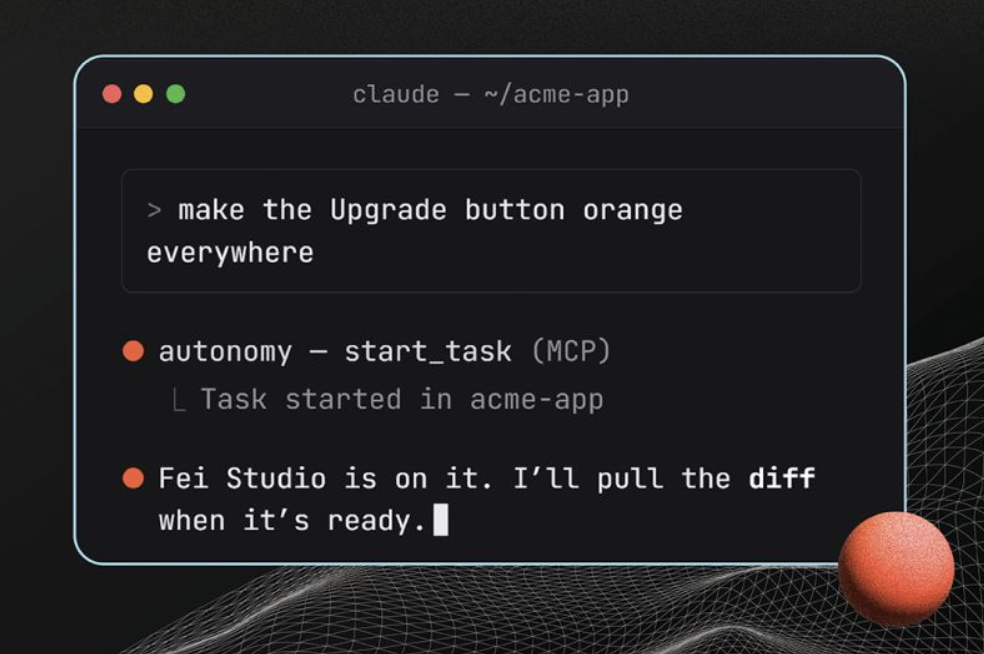
Fei Studio by AutonomyAI is an AI-native product development platform launched publicly December 2025 enabling product managers, designers, and UX writers directly implementing frontend changes to real production codebases without developer bottlenecks. Rather than requiring developers manually implementing minor UI updates, layout adjustments, and styling changes, Fei Studio empowers non-coders proposing visual and interactive changes that the AI translates into production-grade code. The platform combines AutonomyAI’s proprietary Agentic Context Engine (ACE) understanding codebase architecture with Claude model for code generation, opening pull requests with reviewed code changes ready for developer validation.
AutonomyAI emerged from stealth with pre-seed funding led by Y Combinator and raised follow-on capital from leading venture firms recognizing the persistent problem: frontend implementation represents majority of “low-value” work occupying engineering capacity despite high-impact business importance. Available through waitlist access with enterprise pricing (specific pricing not published), Fei Studio targets mid-to-large product organizations suffering from product velocity bottlenecks caused by engineering resource constraints on UI implementation work.
Key Features
Repo-Aware AI Understanding Codebase: Agentic Context Engine (ACE) deeply analyzes repository structure, existing components, design systems, coding standards, and architectural patterns. Unlike generic code generators, Fei understands your specific codebase enabling intelligent component reuse and standards compliance.
Visual Editing with Chat/Screenshots: Users point to UI elements visually or through screenshots describing desired changes in natural language. System understands exact context of requested changes enabling precise modifications versus generic generation.
Production-Grade Code Generation: Generated code maintains senior developer standards—follows project conventions, reuses existing components, applies design system tokens, maintains accessibility standards, and integrates with existing testing infrastructure.
Pull Request Generation and Publishing: AI generates pull requests with complete code changes, comprehensive descriptions, and technical context for developer review. Developers review actual code rather than approving vague directions.
Multi-Framework Support: Handles React, Vue, and Angular codebases with sophisticated understanding of framework-specific patterns, best practices, and optimization techniques.
Design System Integration: Automatically references and applies design tokens, component libraries, and design system specifications ensuring visual consistency without manual context switching.
Figma Integration: Reads Figma designs understanding pixel-perfect specifications and translating them to production-ready code. Bridges designer-to-developer gap eliminating misinterpretation.
Jira and Ticket Integration: Ingests Jira tickets, GitHub issues, and product requirements automatically translating to implementation work. Reduces context switching and requirement ambiguity.
Component Reuse and Technical Debt Prevention: Preferentially reuses existing components over creating new ones. Continuously applies design system patterns preventing incremental technical debt accumulation.
Accessibility Compliance Built-In: Generated code incorporates WCAG accessibility standards, semantic HTML, ARIA attributes, and keyboard navigation automatically without requiring separate accessibility review passes.
Inline Testing Consideration: Generated changes consider existing test coverage understanding which tests to update and automatically updating test assertions.
Developer IDE Integration: Fei IDE option for developers enables integration into Cursor and VS Code workflows for developer-focused code generation and refinement tasks.
How It Works
Connect Fei Studio to your GitHub repository. Import design system tokens, component libraries, and project conventions enabling contextual understanding. Designers/PMs open Fei Studio interface and describe desired changes—upload Figma designs, share screenshots, or describe changes naturally. System analyzes target screens, understands requested modifications in context of existing codebase. ACE generates production-ready code maintaining architectural patterns and standards. AI creates pull request with complete implementation, description, and context. Developers review PR understanding implementation rationale. Merge when approved, and Fei automatically updates issue tracking systems.
Use Cases
Empowering Non-Coders to Fix UI Bugs: Product managers and designers can implement straightforward UI fixes (spacing, colors, text changes) without developer hand-holding freeing engineering capacity.
Rapid Prototyping on Production Code: Teams test design concepts by directly implementing variations on production code rather than building separate prototypes. Reduces cycle time between concept and validation.
Reducing Minor “Pixel-Pushing” Tickets: Engineering backlogs clogged with low-priority UI refinement work (component color changes, spacing adjustments, layout tweaks). Fei implements these freeing developer focus on high-impact work.
Design-to-Development Handoff Automation: Eliminate manual handoff between design and development. Figma designs automatically translate to implementable code reducing interpretation gaps.
Technical Debt Prevention: Continuous enforcement of design system usage and coding standards prevents incremental drift from project conventions.
Pros \& Cons
Advantages
Dramatically Unblocks Dev Teams: Frontend developers spend 40-50% time on low-value UI implementation work. Fei offloading this work liberates engineering capacity for high-impact features and systems.
High-Quality Code Generation: Repo-aware AI produces senior developer-grade code maintaining architectural consistency versus generic code generators producing cookie-cutter implementations.
Non-Coder Empowerment: Product managers and designers directly contribute to production without waiting on developers enabling faster iteration and design validation.
Seamless PR Workflow: Generated pull requests integrate into existing code review processes requiring minimal process changes. Developers review actual code not abstract descriptions.
Design System Compliance: Automatic design system and component reuse enforcement prevents technical debt accumulation from inconsistent implementations.
Figma Design Integration: Bridges designer-to-developer gap eliminating misinterpretation and manual specification work.
Disadvantages
Frontend-Only Scope: Cannot modify backend logic, database schemas, API contracts, or business logic. Restricted to visual and interactive frontend changes limiting applicability to full-feature development.
Requires Developer Review Trust: Even with high-quality generation, developers must review and trust AI-generated code for security, testing, and correctness. Organizational culture supporting this required.
Early-Stage Platform Risk: December 2025 launch means unproven reliability at production scale, unknown edge case handling, and limited customer validation.
Repository Onboarding Complexity: Setting up ACE to understand specific codebase requires analysis work, design system specification, and architectural documentation investment upfront.
Model Dependency Risk: Platform depends on Claude for code generation. Changes to Claude API pricing, reliability, or availability could impact service.
Requires Clear Requirements: Vague change requests produce unclear results. Effective usage requires clear design specifications, Figma files, or detailed change descriptions.
How Does It Compare?
Fei Studio vs V0 (Vercel)
V0 is Vercel’s AI UI generation platform producing React/Next.js components from natural language prompts with tight integration to Vercel ecosystem.
Scope:
- Fei Studio: Production codebase modification with existing component integration
- V0: Component/page generation from scratch
Repository Integration:
- Fei Studio: Deep repo-aware understanding and direct PR generation
- V0: Optional GitHub sync; generates isolated components
Codebase Reuse:
- Fei Studio: Intelligently reuses existing components and design systems
- V0: Generates new components without inherent codebase awareness
Target User:
- Fei Studio: Product teams modifying existing products
- V0: Developers building new pages/components
Framework Support:
- Fei Studio: React, Vue, Angular with deep understanding
- V0: React/Next.js primarily with Tailwind focus
Deployment:
- Fei Studio: PR-based workflow into existing repos
- V0: Component export or Vercel deployment
When to Choose Fei Studio: For modifying existing production codebases with existing component libraries.
When to Choose V0: For generating new pages and components from scratch.
Fei Studio vs Lovable
Lovable is full-stack AI app builder generating complete applications (frontend, backend, database) from natural language with GitHub export capability.
Scope:
- Fei Studio: Frontend modifications to existing production code
- Lovable: Full-stack app generation (frontend + backend + database)
Repository Integration:
- Fei Studio: Modifies existing repos with PR generation
- Lovable: Exports complete generated code to GitHub
Existing Codebase:
- Fei Studio: Works within existing architecture and conventions
- Lovable: Generates from scratch without existing patterns
Component Reuse:
- Fei Studio: Reuses existing components automatically
- Lovable: Generates all components new
Backend Capability:
- Fei Studio: Frontend-only
- Lovable: Full-stack including backend and database
Target User:
- Fei Studio: Product teams in existing organizations
- Lovable: Founders building MVPs and prototypes
When to Choose Fei Studio: For modifying production frontends in existing organizations.
When to Choose Lovable: For building complete applications from scratch.
Fei Studio vs Bolt.new
Bolt.new is browser-based full-stack app builder generating complete applications with live preview and export capability for rapid prototyping.
Generation Scope:
- Fei Studio: Existing codebase modifications
- Bolt: Complete full-stack application generation
Architecture:
- Fei Studio: Works within existing architecture
- Bolt: Generates opinionated architecture from scratch
Workflow:
- Fei Studio: PR-based with developer review
- Bolt: Browser-based with live preview
Component Library:
- Fei Studio: Uses existing project components
- Bolt: Generates new components each time
Backend:
- Fei Studio: Frontend-only
- Bolt: Full-stack with Node.js backend
Maturity:
- Fei Studio: December 2025 launch
- Bolt: Established platform with user base
When to Choose Fei Studio: For production codebase changes maintaining architectural consistency.
When to Choose Bolt: For rapid prototyping and full-stack app generation.
Fei Studio vs Builder.io
Builder.io is visual CMS and app builder enabling non-coders creating and managing content with visual editor and code integration.
Primary Focus:
- Fei Studio: Code-first frontend modification for developers and PMs
- Builder.io: Visual-first CMS for content and component management
Content vs Code:
- Fei Studio: Code generation and modification
- Builder.io: Content management with visual builder
Developer Target:
- Fei Studio: Product managers, designers, developers
- Builder.io: Marketers and content teams
Codebase Integration:
- Fei Studio: Direct repository modification
- Builder.io: Headless CMS integration with APIs
Use Case:
- Fei Studio: Product feature implementation
- Builder.io: Landing pages and content management
When to Choose Fei Studio: For implementing product features and UI modifications.
When to Choose Builder.io: For content management and marketing site creation.
Final Thoughts
Fei Studio by AutonomyAI represents pragmatic response to persistent software engineering bottleneck: product teams drowning in frontend implementation backlog while engineering capacity fully allocated to high-impact work. Rather than positioning AI as complete replacement for developers, Fei empowers non-engineers to implement straightforward changes reducing engineering burden while maintaining architectural control through PR-based code review workflow.
The December 2025 launch with Y Combinator backing and enterprise positioning indicates market validation among mid-to-large organizations. The emphasis on production-grade code generation, design system compliance, and codebase awareness differentiates from generic code generators producing isolated components. The Figma integration and Jira ticket understanding bridges entire product development workflow reducing context switching.
However, December 2025 early-stage status creates adoption risk. Frontend-only scope limits applicability to full-feature development. Organizational readiness to empower non-engineers modifying production code requires culture shift and trust in AI-generated code. Repository onboarding complexity requires upfront architecture documentation and design system specification work.
For product organizations with frontend implementation backlogs, existing design systems, and engineering capacity constraints, Fei Studio provides compelling infrastructure unblocking velocity. The combination of codebase awareness, design system integration, and PR-based developer review creates workflow maintaining architectural integrity while enabling direct contribution from non-engineers.
The positioning distinctly addresses the “founder problem”—product-driven organizations where PMs and designers outnumber developers but cannot directly implement ideas. Fei Studio transforms this constraint from bottleneck into asset enabling faster iteration and experimentation on visual and interactive changes where PMs and designers have strongest intuition.