Table of Contents
Overview
Ray is a next-generation AI personal trainer launched in January 2026 that aims to bridge the gap between expensive human coaching and generic fitness apps. Co-founded by Rich Miner, the co-founder of Android, Ray was built as an “AI-native” platform from the ground up. Rather than simply providing a library of videos, Ray acts as a live partner that handles all the planning, coaching, and counting. The platform’s primary mission is to eliminate the decision fatigue associated with working out, allowing users to focus entirely on their movement while the AI handles the logistics and real-time adjustments.
Key Features
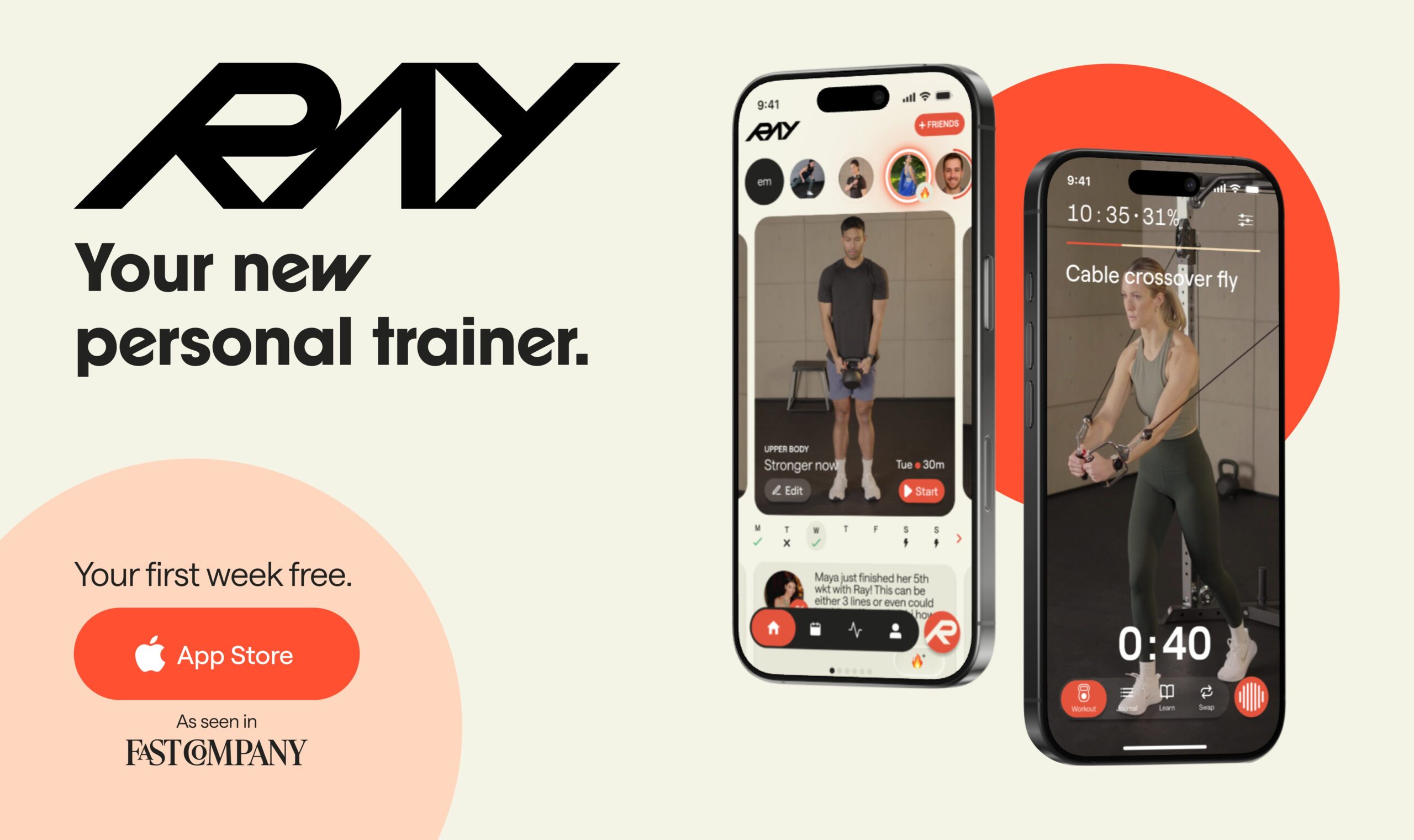
Adaptive Conversational Coaching: Ray utilizes advanced Natural Language Processing to interact with users just like a human trainer. You can speak to the app during a session to make instant adjustments, such as saying, “Ray, I only have 15 minutes today,” or “My lower back is feeling tight.” The AI immediately reconfigures the remaining sets and exercises to fit your current energy level and physical restrictions.
Computer Vision Rep Counting: By utilizing your smartphone’s camera, Ray tracks 35 distinct points on your body to automatically count repetitions and monitor your form. This hands-free approach allows you to focus on the intensity of the workout without the distraction of manual logging. The vision system is designed to provide real-time cues, ensuring that you maintain the correct posture to prevent injury.
Dynamic Daily Planning: Ray creates a custom program that evolves based on your progress and environment. If you are traveling and only have access to a hotel gym or just your body weight, Ray adapts the plan instantly. It remembers your performance history and automatically increases the load or complexity of exercises to ensure consistent progression over time.
Health Data Integration: The app syncs with Apple Health and other wearable ecosystems to incorporate your daily activity, sleep patterns, and recovery data into your training intensity recommendations. This ensures that your workouts are aligned with your body’s actual recovery status.
How It Works
Users begin by discussing their fitness goals, available equipment, and any physical limitations with Ray through a conversational interface. Ray then generates a baseline program. During a workout session, you prop your phone up so the camera can view your movements. As you perform each set, Ray’s voice guidance provides encouragement and technical cues, while the computer vision system tracks your reps in the background. If you need to “switch it up” or cut the workout short, you simply tell Ray, and the session is adjusted on the fly. All progress is automatically logged to your profile upon completion.
Use Cases
Busy Professionals with Unpredictable Schedules: For those who cannot commit to fixed training times, Ray provides 24/7 availability. If a meeting runs long, the AI can condense a 45-minute session into a high-intensity 20-minute blast.
Frequent Travelers: Ray excels at adapting to varied environments. Whether you have a full rack of dumbbells or zero equipment in a small hotel room, the AI re-plans the workout to utilize whatever is available.
Beginners Intimidated by the Gym: Ray provides the guidance of a private coach without the social pressure or high cost. The real-time form correction helps new lifters build confidence in their technique before transitioning to heavier weights.
Pros and Cons
Pros:
– Real-time flexibility that rivals expensive 1:1 human coaching.
– Computer vision eliminates the need for manual logging and keeps you focused.
– Zero decision-making required; the AI tells you exactly what to do next.
– Highly accessible entry price compared to in-person trainers ($600+/mo).
Cons:
– Requires consistent phone camera positioning, which can be cumbersome in crowded gyms.
– Computer vision accuracy may vary depending on lighting and room space.
– Lacks the high-level emotional support and nuanced physical spotting of a human coach.
Pricing
Early Adopter Access: Currently free for early users as the platform continues to refine its AI and computer vision models.
Standard Subscription (2026 Plans):
– Monthly: $24.99 per month.
– Quarterly: $59.99 per quarter.
– Yearly: $179.99 per year.
How Does It Compare?
Future
– Pricing: $199 per month.
– Core Difference: Pairs you with a real human coach who manages your plan via text and Apple Watch data. Unlike Ray, there is no real-time voice coaching or vision-based rep counting.
CoPilot
– Pricing: $99 per month.
– Core Difference: Focuses on the human coach-to-client relationship through check-ins. It relies on wearable sensors rather than computer vision for performance tracking.
Zing Coach
– Pricing: $19.99 per month.
– Core Difference: An AI-only app that uses a smartphone camera for an initial “AI Body Scan” (replacing DEXA) and flexibility tests, but focuses more on algorithm-driven plans than the live conversational adjustments found in Ray.
Fitbod
– Pricing: $12.99 per month.
– Core Difference: Uses a powerful algorithm to calculate sets and weights based on muscle recovery. However, it lacks any real-time voice coaching or visual form correction, requiring manual input for every set.
Final Thoughts
Ray represents a significant technological leap in the “GenUI” (Generative UI) fitness space for 2026. While previous apps felt like interactive spreadsheets, Ray feels like a reactive partner. By combining computer vision with natural dialogue, it solves the “motivation gap” for users who struggle with consistency. While it won’t replace elite-level human trainers for competitive athletes, for the vast majority of people, Ray provides the most sophisticated and adaptive coaching experience currently available on a mobile device.