
Table of Contents
- AI Infrastructure and Enterprise Deployment Accelerate Globally as Governments and Corporations Commit Billions: January 26, 2026
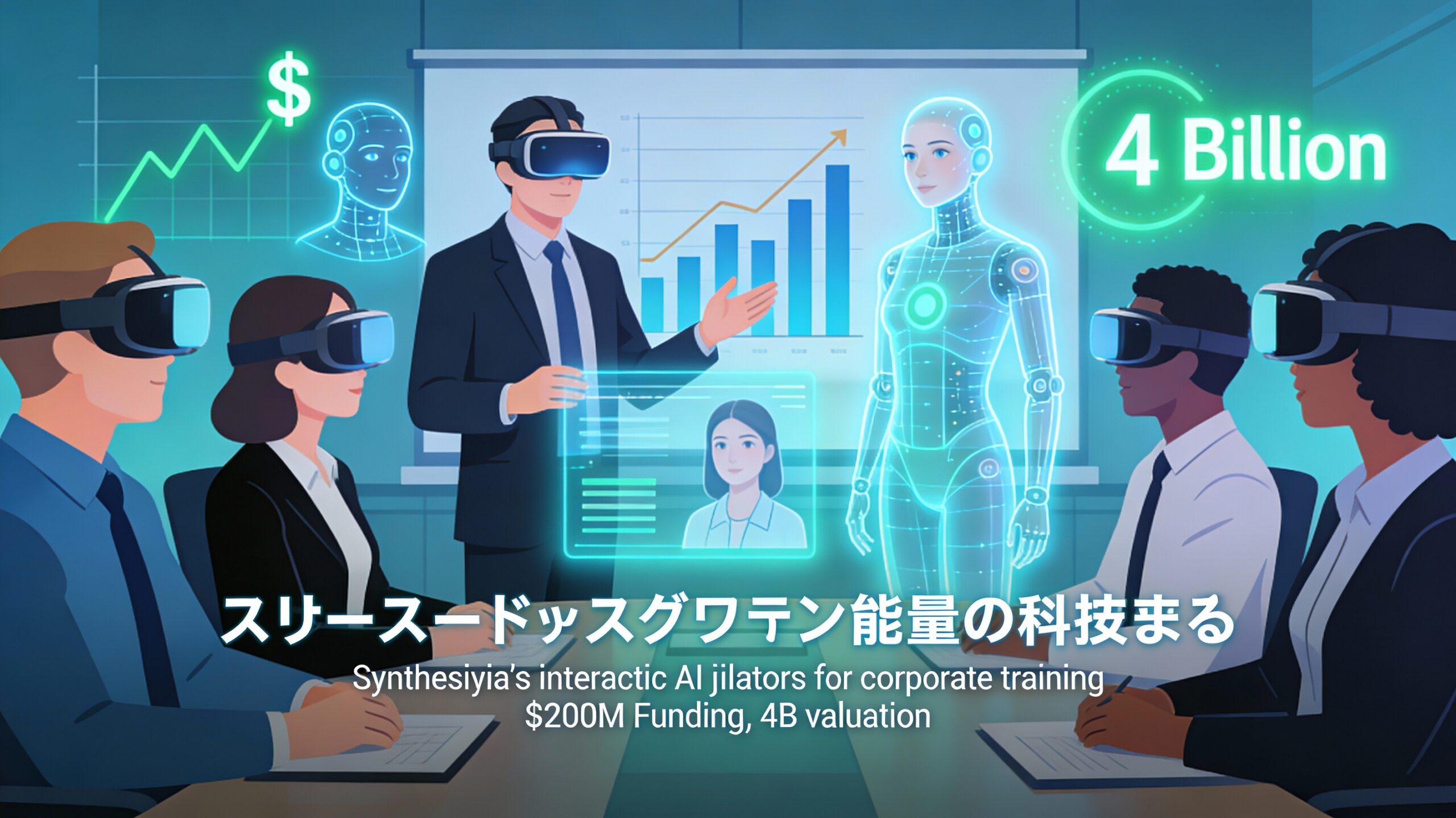
- 1. Synthesia Secures 0 Million at Billion Valuation, Pushing Interactive AI Avatars for Corporate Training
- 2. United Kingdom Invests £36 Million to Expand Cambridge DAWN Supercomputer Capacity Sixfold
- 3. New Jersey Finalizes Million NVIDIA Partnership for Statewide AI Supercomputer
- 4. Fujitsu Launches AI Platform Enabling Autonomous Management of Generative AI Lifecycle
- 5. MIT Technology Review Validates Generative Coding as 2026 Breakthrough Technology Alongside Nuclear Reactors and Gene Editing
- Conclusion: Infrastructure Investment Converges with Enterprise Deployment as AI Transitions to Production-Grade Infrastructure
AI Infrastructure and Enterprise Deployment Accelerate Globally as Governments and Corporations Commit Billions: January 26, 2026
January 26, 2026, marks a decisive moment in artificial intelligence’s transition from experimental technology to critical national and enterprise infrastructure, as converging announcements across three continents reveal unprecedented coordination between governments, technology corporations, and research institutions to build the compute capacity, talent pipelines, and operational frameworks necessary to sustain AI’s exponential growth trajectory. London-based Synthesia secured $200 million in Series E funding at a $4 billion valuation—led by Alphabet’s GV and backed by NVIDIA—to develop interactive AI avatar agents that transform corporate training from passive video consumption to conversational, personalized learning experiences, signaling investor confidence that agentic AI represents the next monetization frontier despite recent bubble warnings. Simultaneously, the United Kingdom government announced a £36 million investment to increase Cambridge’s DAWN supercomputer capacity sixfold by spring 2026, providing free access to researchers and startups as part of a broader £2 billion commitment to expand sovereign AI compute infrastructure twentyfold by 2030. Across the Atlantic, New Jersey finalized a $25 million partnership with NVIDIA to build a statewide AI supercomputer serving universities and community colleges, establishing a replicable model for U.S. state-level AI infrastructure development. Japan’s Fujitsu launched a comprehensive enterprise AI platform enabling autonomous management of the entire generative AI lifecycle—from model development through continuous improvement—with deployment beginning in February and official launch scheduled for July 2026. Completing the day’s developments, MIT Technology Review elevated generative coding to its prestigious “10 Breakthrough Technologies 2026” list alongside nuclear reactors and gene editing, validating that AI systems now write 25-30 percent of code at companies like Google and Microsoft and fundamentally transforming software development workflows. For policymakers, investors, technology executives, and researchers worldwide, January 26, 2026, crystallizes the reality that AI competition is now measured not in model performance benchmarks but in gigawatts of compute power, billions in infrastructure capital, and the organizational capacity to translate technical capabilities into operational value across education, healthcare, manufacturing, and public services.1. Synthesia Secures 0 Million at Billion Valuation, Pushing Interactive AI Avatars for Corporate Training
Synthesia, a London-based artificial intelligence company specializing in AI-generated video content, announced on January 26, 2026, that it had raised $200 million in Series E funding at a $4 billion valuation—nearly doubling its $2.1 billion valuation from January 2025—as the company pivots from static training videos to interactive AI avatar agents capable of answering questions, facilitating role-playing scenarios, and providing personalized explanations to employees.cnbc+4 The funding round was led by GV (Google Ventures), the venture capital arm of Alphabet, with participation from existing investors including NVentures (NVIDIA’s venture capital division), Accel, Kleiner Perkins, New Enterprise Associates, PSP Growth, and Air Street Capital, as well as new investors Hedosophia and Evantic—the venture fund established by former Sequoia investor Matt Miller. As part of the financing initiative, Synthesia facilitated a secondary share sale for employees in collaboration with NASDAQ, maintaining the $4 billion valuation.wsj+3 Founded in 2017 by a team of AI researchers and entrepreneurs from Stanford University and Cambridge University, Synthesia has built its business on text-to-video generation technology that enables enterprises to create training content at scale without traditional video production infrastructure. The company currently generates $150 million in annual recurring revenue (ARR) and anticipates exceeding $200 million by the end of 2026, driven by contracts that quadrupled in value over the past 12 months. Notably, Synthesia signed Microsoft as a customer toward the end of 2025, providing validation from one of the world’s largest technology enterprises.marketscreener+1 The strategic rationale for the funding centers on Synthesia’s evolution from passive video generation to interactive agentic AI. Co-founder and Chief Executive Victor Riparbelli articulated the market opportunity in a statement accompanying the announcement: “We observe a unique convergence of two significant transformations: a technological advancement with AI agents growing in capability, and a market transformation where enhancing skills and sharing internal knowledge have become priorities at the board level”. He added, “Market opportunities like this do not come along often. We are at a unique point in time where technology enables agents that can truly understand and respond, and where enterprises are under unprecedented pressure to reskill and upskill their workforce”.cnbc+1 The company’s product roadmap focuses on deploying AI agents—interactive avatars appearing in video format—that can respond to employee questions during training sessions, enabling learners to explore scenarios through role-play and receive customized explanations rather than passively consuming standardized corporate presentations. This capability addresses a persistent challenge in enterprise learning: the inability of traditional video content to adapt to individual learner needs, answer clarifying questions, or simulate realistic workplace scenarios that require judgment and decision-making.marketscreener+1 Daniel Kim, Synthesia’s Chief Financial Officer, told CNBC that the company has reached $150 million in ARR and expects to surpass $200 million by year-end 2026. The company offers a free version of its models with a 10-minute monthly video generation limit, alongside fixed monthly subscriptions and enterprise packages at custom prices for organizations requiring higher volumes or additional features.cnbc+1 The funding announcement occurs against a backdrop of continued venture capital enthusiasm for AI startups despite warnings from industry leaders about potential market overheating. OpenAI is reportedly negotiating a $50 billion funding round from sovereign wealth funds in the Middle East, Anthropic has secured a term sheet for a $10 billion raise, and Elon Musk’s xAI recently closed a $20 billion round—indicating that investor appetite for AI remains robust even as valuations reach unprecedented levels.[cnbc] A Synthesia spokesperson emphasized the competitive positioning enabled by the funding: “The funding round shows that investors continue to see promise in niche AI startups despite fears that high spending in the sector is creating a market bubble waiting to burst”. However, the spokesperson acknowledged that European AI startup valuations continue to lag U.S. counterparts significantly—Anthropic’s reported pre-money valuation of $350 billion dwarfs Synthesia’s $4 billion, illustrating the valuation premium commanded by U.S.-based foundation model developers.[marketscreener] Original Analysis: Synthesia’s Series E funding and strategic pivot to interactive AI agents represents a critical test of whether agentic AI—systems that can autonomously reason, respond, and adapt to user needs—will deliver the enterprise monetization that has proven elusive for many generative AI applications. The doubling of valuation from $2.1 billion to $4 billion within twelve months reflects investor confidence that corporate training represents a substantial addressable market with demonstrated willingness to pay for AI-powered solutions, particularly as demographic shifts and technological change accelerate workforce reskilling requirements. The backing from both NVIDIA (via NVentures) and Alphabet (via GV) is strategically significant: NVIDIA benefits from proliferation of compute-intensive AI applications regardless of which specific vendors prevail, while Alphabet gains visibility into enterprise AI deployment patterns and potential acquisition targets. The Microsoft customer win validates that Synthesia’s technology has crossed the threshold from startup experimentation to enterprise-grade reliability necessary for deployment at Fortune 500 scale. However, the fundamental challenge remains monetization velocity relative to capital intensity: achieving $200 million ARR is substantial, but whether this trajectory justifies a $4 billion valuation depends on sustained growth rates, retention economics, and competitive moat durability as larger platform companies (Microsoft, Google, Meta) integrate similar capabilities into existing enterprise suites. The shift from passive video generation to interactive agents also introduces new technical challenges around accuracy, reliability, and potential liability when AI systems provide personalized guidance that employees act upon—creating governance and risk management considerations that may constrain adoption velocity even as technical capabilities improve.2. United Kingdom Invests £36 Million to Expand Cambridge DAWN Supercomputer Capacity Sixfold
The United Kingdom government announced on January 26, 2026, a £36 million ($49 million) investment to increase the computing capacity of Cambridge’s DAWN supercomputer sixfold, with deployment expected in spring 2026 as part of a broader national strategy to expand sovereign AI compute infrastructure twentyfold by 2030.gov+3 The funding, disclosed by the Department for Science, Innovation and Technology (DSIT), will provide advanced AMD MI355X AI processors deployed by Dell Technologies, making cutting-edge AI chips available free of charge to UK researchers, small businesses, and technology startups through the AI Research Resource (AIRR) national program. The DAWN supercomputer, based at the University of Cambridge within the Oxford-Cambridge innovation corridor, currently supports more than 350 research projects spanning personalized cancer vaccine development, climate modeling, and environmental analysis.computerweekly+1 Minister for AI Kanishka Narayan framed the investment as addressing a critical constraint that has limited British innovation: “The UK is home to world-class AI talent, but too often our ambitious researchers and most promising startups have been held back by a lack of access to the computing power they need. This investment changes that—giving British innovators the tools to compete with the biggest players and develop AI that improves lives, from spotting diseases earlier to helping communities prepare for extreme weather, right across the country”.gov+1 The £36 million commitment is part of the government’s AI Opportunities Action Plan, which allocates over £2 billion toward public AI compute infrastructure throughout the UK, including plans to expand the AIRR program’s capacity twentyfold by 2030 and construct a national supercomputer in Edinburgh. In July 2025, Chancellor Rachel Reeves announced a roadmap to deliver 420 Exaflops of compute power by 2030, stating: “As technology advances, our plan for change is ensuring we are ahead of the curve, expanding our sovereign AI capabilities so we can make scientific breakthroughs, equip businesses with new tools for growth and create new jobs across the country”.computerweekly+1 Sir John Proice-Chancellor for Research at the University of Cambridge emphasized the strategic significance of the funding: “This funding represents a crucial step for the UK’s AI Research Resource, enhancing the capability of Cambridge’s DAWN supercomputer and fortifying our national computing ecosystem. It will provide researchers, clinicians, and innovators with the necessary tools to drive breakthroughs that enhance public services. The University of Cambridge is proud to collaborate with industry leaders like Dell to ensure that top-notch computing is accessible to those addressing society’s most intricate challenges, aiding the UK in shaping the next generation of AI for public benefit”.[interestingengineering] DSIT outlined specific applications expected to benefit from the enhanced computing capacity when deployment completes in spring 2026: faster and more accurate diagnostic tools enabling doctors to detect diseases at earlier stages; smarter technology to reduce waiting times and improve accessibility of public services; and enhanced climate modeling to help communities prepare for extreme weather events driven by climate change. The more powerful AMD MI355X chips will enable researchers to analyze substantially larger datasets, pursue more ambitious research questions, and explore entirely new project categories that were previously computationally infeasible.[computerweekly] The AIRR program, launched in July 2025, currently includes two major facilities: DAWN in Cambridge and Isambard-AI in Bristol. The program provides UK-based researchers, small businesses, and startups with complimentary access to supercomputing resources that are typically available only to the world’s largest technology corporations, addressing a competitive disadvantage that has historically constrained British AI development relative to U.S. and Chinese counterparts with greater access to computational infrastructure.[computerweekly] Cambridge’s location within the Oxford-Cambridge corridor—one of Europe’s most important centers for science, technology, and innovation—positions the DAWN expansion within a broader ecosystem of globally leading universities, research institutions, and rapidly growing technology companies. The government’s investment builds on this geographic concentration of talent and capital to create network effects that amplify the impact of public infrastructure spending.interestingengineering+2 Original Analysis: The UK’s £36 million DAWN supercomputer investment represents a strategic bet that sovereign compute infrastructure constitutes a prerequisite for maintaining competitive positioning in the global AI race, particularly for nations that cannot match the scale of private sector capital deployment by U.S. technology giants. The sixfold capacity expansion addresses a fundamental asymmetry: while American and Chinese researchers can access vast computational resources through corporate affiliations or government programs, European researchers have historically faced constraints that limited the ambition and scope of their projects. The “free access” model for researchers, startups, and small businesses attempts to democratize compute access in ways that may generate innovation externalities and talent retention benefits that justify public investment beyond immediate economic returns. However, the £36 million allocation—while significant for UK public spending—pales in comparison to the $475 billion that Microsoft, Amazon, Google, and Meta collectively plan to invest in AI infrastructure during 2026 alone, raising questions about whether sovereign compute programs can achieve sufficient scale to matter competitively. The spring 2026 deployment timeline is aggressive but necessary: the rapid pace of AI capability improvement means that compute infrastructure delayed by even 6-12 months risks obsolescence before deployment. The emphasis on practical applications—cancer vaccines, climate modeling, public service optimization—reflects political necessity to justify taxpayer-funded infrastructure through tangible societal benefits rather than abstract competitive positioning. For policymakers in other nations, the UK model demonstrates a replicable framework: targeted investments in strategic research clusters, free access models to maximize utilization, partnerships with hardware vendors (AMD, Dell) to access cutting-edge chips, and explicit linkage to economic development objectives around job creation and business growth.3. New Jersey Finalizes Million NVIDIA Partnership for Statewide AI Supercomputer
In his final major announcement as New Jersey’s 56th governor, Phil Murphy signed a memorandum of understanding on January 16, 2026, establishing a comprehensive partnership between the State of New Jersey, NVIDIA, and a consortium of universities and community colleges to build a $25 million statewide AI supercomputer and accelerate artificial intelligence research, education, and workforce development.njbiz+3 The agreement, executed at the Gateway Center in Newark, brings together state government, the technology corporation NVIDIA, the New Jersey AI Hub, research universities including Rutgers, Princeton, New Jersey Institute of Technology (NJIT), and Stevens Institute of Technology, plus the New Jersey Council of County Colleges under a unified framework designed to share AI infrastructure, expand research capacity, and align education with the rapidly evolving demands of the AI-driven economy.abc7ny+1 The $25 million state investment, approved by the New Jersey Legislature and managed by the New Jersey Economic Development Authority (NJEDA), will support development of a statewide supercomputer initiative providing students, researchers, and entrepreneurs with access to advanced computing infrastructure essential for hands-on learning, applied research, and workforce training. Murphy characterized the investment as “catalytic,” emphasizing that it will “eventually help equip our students, researchers and entrepreneurs with state-of-the-art resources to explore the possibilities of generative artificial intelligence—and prepare for tomorrow’s economy”.govtech+2 The memorandum of understanding is designed to outlast Murphy’s administration, with the outgoing governor working closely with Governor-elect Mikie Sherrill to ensure continuity. Sherrill, who was inaugurated on January 20, 2026, as New Jersey’s 57th governor, sent a message read by Murphy at the signing ceremony: “This project represents a historic opportunity to expand New Jersey’s economic and higher educational competitiveness—and create a new hub of artificial intelligence research and development right here in the Garden State. I’m excited to work with all of the partners involved to move this project forward collaboratively as governor. And I’m thankful to Gov. Murphy, his entire team, and Chris [Malachowsky] for their tireless work to get us to this point”.[njbiz] Chris Malachowsky, co-founder of NVIDIA and a New Jersey native, outlined the company’s commitment to supporting the state’s innovation initiatives: “State has set up AI Hub and great academic research institutions. We will use our resources, our expertise and our assets to strengthen that vision. We’re going to expand economic opportunities and maximize the benefits of AI and avoid the drawbacks of it”. Malachowsky emphasized the importance of education in ensuring that AI augments rather than displaces human workers, stating: “To avoid negative impacts of AI, we need to teach people how to be augmented by AI, not replaced by it”.choosenj+1 University leaders participating in the partnership articulated their institutional perspectives on the initiative’s significance. Rutgers University President William Tate IV described it as “exciting for Rutgers and all of our higher education partners,” noting that “entering into this agreement will be transformative for higher education for Rutgers and for our students and faculty. The opportunities for further incorporating AI into our work of higher education is extremely important.” When asked to explain his presence at the signing, Tate responded simply: “It’s opportunity. We look forward to the next steps in this process”.[njbiz] NJIT President Teik Lim provided a broader contextual framing: “In real time, we are witnessing the power of generative artificial intelligence and machine learning to transform industry, to transform lives, as well as rapid advancement and deployment of new AI-enabled tools in nearly every aspect of our lives and careers. I think we’re in a technological revolution. Developing the New Jersey supercomputer initiatives presents an opportunity for higher education, government, and industry to partner on a flagship statewide approach to advancing shared AI infrastructure, education and research capacity”. Lim enumerated expected outcomes including curricular collaboration, program expansion, AI skills training, infrastructure and platform design, certifications and career pathways, community engagement, research collaboration, and development of an innovative ecosystem.[njbiz] The New Jersey partnership represents the latest in a series of state-level collaborations with NVIDIA to advance AI education and economic development. California partnered with NVIDIA on AI integration in schools in 2024, Utah teamed with the company in March 2025 to advance AI education, and Mississippi established a partnership in July 2025 to support AI advancement. These multi-state engagements suggest an emerging model for U.S. state-level AI strategy: leveraging partnerships with leading technology companies to access expertise and equipment that individual states could not independently acquire or develop.[govtech] Original Analysis: The New Jersey-NVIDIA partnership establishes a replicable template for U.S. state-level AI infrastructure development that balances public investment with private sector expertise, equipment access, and workforce development frameworks. The $25 million state commitment is modest relative to federal spending scales but potentially transformative for the participating universities and community colleges, which historically lack access to cutting-edge AI compute resources available to elite coastal research institutions. The partnership structure—combining research universities (Rutgers, Princeton, NJIT, Stevens) with community colleges through the NJ Council of County Colleges—addresses a critical equity dimension by creating pathways for students from diverse socioeconomic backgrounds to access AI education and training rather than concentrating resources at elite institutions. The timing of the announcement—as Murphy’s final major initiative and with explicit buy-in from incoming Governor Sherrill—demonstrates bipartisan recognition that AI infrastructure constitutes essential economic development investment rather than partisan policy, potentially insulating the program from political disruption during gubernatorial transitions. NVIDIA’s motivation is straightforward: state partnerships create favorable regulatory environments, cultivate future talent pipelines, establish brand loyalty among emerging AI developers, and potentially generate procurement opportunities as state agencies adopt AI systems. For other states, the New Jersey model demonstrates that $25 million investments can leverage corporate partnerships to achieve outcomes that might otherwise require ten times the capital—though success depends on execution, ongoing operational funding, and whether the supercomputer capacity actually reaches students and researchers in accessible, educationally meaningful ways. The emphasis on “augmentation not replacement” rhetoric—teaching people to work with AI rather than be displaced by it—reflects political necessity but may underestimate the extent to which AI will structurally transform labor markets regardless of retraining program availability.4. Fujitsu Launches AI Platform Enabling Autonomous Management of Generative AI Lifecycle
Fujitsu announced on January 26, 2026, the launch of a dedicated enterprise AI platform that enables organizations to autonomously manage the entire generative AI lifecycle—including optimal model development, operation, incremental learning, and continuous improvement of models and agents—with preliminary trial registration beginning February 2, 2026, progressive feature rollouts throughout spring, and official launch anticipated in July 2026.[global] The platform, built around Takane—Fujitsu’s large language model offering high-precision Japanese language performance and image analysis capabilities—incorporates in-house fine-tuning features for continuous improvement of business-specific models, support for the Model Context Protocol (MCP), and inter-agent communication enabling seamless integration with existing enterprise systems and cooperative operation among multiple AI agents for sophisticated applications. Fujitsu plans to roll out the platform sequentially in Japan and Europe, with subsequent expansion to additional markets based on demand and regulatory readiness.[global] The technical architecture addresses a critical enterprise challenge: the complexity of managing generative AI systems from initial development through production deployment, ongoing operation, and continuous improvement as business requirements evolve. Fujitsu emphasized that the platform will “accelerate deployment for all AI scales from large enterprise AI to edge and physical AI,” enabling organizations to “continuously evolve generative AI to align with business changes, enabling its safe and reliable use across all industries and operations, ultimately fostering customer transformation and growth”.[global] A particularly noteworthy commitment centers on hallucination prevention—the phenomenon where AI systems generate plausible-sounding but factually incorrect or nonsensical outputs. Fujitsu stated: “Fujitsu plans to further strengthen technologies that prevent hallucinations, thereby improving the reliability of generated information”. This focus on reliability over raw capability reflects enterprise buyer priorities, where inaccuracy can create legal liability, regulatory noncompliance, or operational failures that outweigh the productivity benefits of generative AI deployment.[global] The platform’s support for MCP and inter-agent communication positions it to address the emerging paradigm of agentic AI—systems where multiple specialized AI agents collaborate to accomplish complex tasks requiring coordination across different domains, data sources, and organizational functions. Fujitsu noted plans to “containerize and offer its proprietary technologies as AI agents on demand,” suggesting a modular architecture where enterprises can selectively deploy capabilities tailored to specific workflows without adopting a monolithic system.[global] Prior to the official July 2026 launch, preliminary trials for select features including in-house fine-tuning and model quantization will begin accepting registrations on February 2, 2026, with features progressively rolling out starting in February. This phased approach enables Fujitsu to gather enterprise feedback, refine functionality based on real-world usage patterns, and identify integration challenges before committing to general availability.[global] The announcement aligns with broader strategic positioning articulated in Fujitsu’s 2026 predictions, which characterized 2026 as “the year of embedded intelligence.” In corporate blog posts published in late 2025 and early 2026, Fujitsu outlined a vision where domain-specific models and “physical AI”—small, specialized models running directly on robots, vehicles, and edge devices—increasingly connect IoT sensors with fleets of task-specific robots on factory floors, in mines, and across supply chains. This architecture enables machines to “sense, decide, and act in real time” using techniques like quantization and distillation to shrink large AI models for efficient edge deployment.[corporate-blog.global.fujitsu] Fujitsu envisions AI-driven platforms that “stop being a reporting tool and start running the business, autonomously shifting production to align with renewable energy or re-routing supply chains to avoid security risks,” such that “sustainability and security become the automatic drivers of profitability”. This framing positions AI not as a productivity enhancement layered atop existing processes but as foundational infrastructure that autonomously optimizes operations across multiple objectives simultaneously.[corporate-blog.global.fujitsu] Original Analysis: Fujitsu’s AI platform launch represents a sophisticated enterprise play targeting the operational complexity that has constrained generative AI adoption beyond pilot projects and narrow use cases. The emphasis on autonomous lifecycle management—from development through continuous improvement—addresses a critical pain point: most organizations lack the specialized talent and infrastructure to sustain generative AI systems after initial deployment, leading to model drift, degraded performance, and eventual abandonment. The hallucination prevention focus is strategically astute, as accuracy and reliability concerns constitute primary barriers to enterprise adoption in regulated industries where errors carry legal, financial, or safety consequences. The platform’s architecture supporting MCP and inter-agent communication positions Fujitsu for the anticipated shift toward agentic AI workflows, where value creation stems from coordination among specialized AI systems rather than individual model capabilities. However, Fujitsu faces substantial competitive challenges: Microsoft, Google, Amazon, and Oracle offer integrated cloud platforms with embedded AI capabilities and massive installed bases, while Fujitsu must convince enterprises to adopt a standalone AI lifecycle management platform that requires integration with existing systems. The sequential Japan-then-Europe rollout reflects both Fujitsu’s geographic strength (dominant position in Japanese enterprise market) and pragmatic recognition that U.S. market penetration against entrenched cloud incumbents would require different go-to-market strategies. The February trial registration and July official launch timeline is aggressive but necessary—delayed deployment risks losing momentum to competitors and missing the enterprise AI adoption wave as organizations finalize 2026-2027 technology roadmaps. For enterprises evaluating AI platforms, Fujitsu’s offering may appeal particularly to organizations with complex on-premises infrastructure, regulatory constraints limiting cloud adoption, or strategic preferences for vendor diversity beyond dominant U.S. cloud providers.5. MIT Technology Review Validates Generative Coding as 2026 Breakthrough Technology Alongside Nuclear Reactors and Gene Editing
MIT Technology Review placed “Generative Coding”—AI-powered software development tools that can write production-grade code from natural language descriptions—on its prestigious “10 Breakthrough Technologies 2026” list alongside nuclear reactors, gene editing, and commercial space stations, validating that AI code generation has transitioned from novelty to a technology that will “drive progress or incite the most change”.note+3 The recognition, published in the 25th anniversary edition of MIT Technology Review’s annual breakthrough technologies list around January 12-16, 2026, arrives as generative coding tools demonstrate unprecedented capability gains and achieve widespread enterprise adoption. Microsoft reports that AI now generates 30 percent of the company’s code, while Google discloses that AI produces more than 25 percent of its codebase. NVIDIA CEO Jensen Huang characterized the progress as “incredible,” and a Google engineer reportedly stated that “our team took one year to develop something that Claude Code reproduced in one hour”.[note] The technical capabilities undergirding this breakthrough are quantifiable through benchmarks like SWE-bench Verified, which tests AI systems’ ability to fix real bugs from actual GitHub repositories—not synthetic problems but genuine issues from popular open-source projects. Performance on this benchmark jumped from 33 percent to over 70 percent in a single year, with Claude Opus 4.5 achieving an 80.9 percent score in November 2025, meaning AI can now autonomously solve approximately four out of five real-world GitHub issues. This represents one of the fastest capability gains in artificial intelligence history and crosses a threshold where AI coding tools deliver measurable productivity improvements rather than marginal assistance.[orbit] The democratization implications are substantial. MIT Technology Review noted that generative coding enables non-coders to “knock up impressive-looking apps, games, websites”—a fundamental transformation in who can create software. The barrier to entry is no longer mastering programming syntax but rather learning to describe desired outcomes clearly using natural language. This shift has popularized the term “vibe coding,” coined by AI researcher Andrej Karpathy, referring to a workflow that emphasizes rapid iteration and reviewing AI-generated code rather than typing every line manually.aicerts+1 Leading AI coding tools including GitHub Copilot, Claude Code, and Gemini Code Assist have achieved widespread adoption among professional developers, with GitHub reporting that a significant share of new-generation developers regularly use these tools and experience average coding speed improvements of 20-50 percent. The tools excel at isolated tasks, boilerplate generation, test writing, documentation, and working with unfamiliar syntax—freeing developers to focus on architecture decisions, security-critical code, performance optimization, and deep codebase knowledge that remain challenging for current AI systems.tspasemiconductor.substack+1 However, MIT Technology Review’s validation is particularly valuable because it includes clear-eyed acknowledgment of limitations and risks. The publication documented that “AI hallucinates nonsense,” there is “no guarantee suggestions will be helpful or secure,” and code that “looks plausible may not always do what it’s designed to do”. MIT also highlighted workforce implications, warning of “fewer entry-level jobs for younger workers” as AI tools automate tasks that traditionally provided learning opportunities for junior developers.[orbit] Research on productivity gains reveals a significant perception gap: developers predicted they would be 20 percent faster using AI tools, perceived themselves as 20 percent faster, but were actually measured to be 19 percent slower—a perception gap of approximately 40 percentage points. This finding suggests that self-reported productivity improvements should be treated skeptically and that the value of AI coding tools may vary substantially based on task type, developer expertise, and codebase familiarity.[orbit] Companies including Cosine and Poolside are “still working on large codebase challenges,” indicating that full autonomy—AI systems capable of understanding and modifying complex, multi-component software systems—remains elusive. The current generation of tools delivers genuine value in specific contexts while potentially slowing down expert work in familiar codebases, creating a nuanced adoption calculus where organizations must evaluate trade-offs rather than assume universal productivity gains.[orbit] MIT Technology Review has historically identified transformative technologies years before mainstream recognition—the publication called out CRISPR gene editing before it revolutionized medicine and characterized mRNA vaccines as transformational before the COVID-19 pandemic made them household names. Industry observers note that “when MIT TR speaks, the industry listens,” suggesting that the generative coding designation will amplify research funding, accelerate curriculum updates in computer science education, and influence enterprise technology adoption roadmaps.[orbit] The forward outlook anticipates deeper IDE integration, contextual memory enabling AI systems to learn from past interactions and codebase patterns, cross-modal support spanning code, documentation, and visual design, and security tooling embedded inside development pipelines by default. As hyperscale data centers lower inference costs, always-on AI assistants become economically viable, and agentic workflows potentially automating full feature delivery from requirements to deployment may emerge within the next 12-24 months.[aicerts] Original Analysis: MIT Technology Review’s placement of generative coding alongside nuclear reactors and gene editing on its breakthrough technologies list represents institutional validation that AI-assisted software development has crossed the threshold from experimental tool to paradigm-shifting technology with societal implications extending far beyond developer productivity. The 30 percent of Microsoft code and 25 percent of Google code now AI-generated indicates that the world’s most sophisticated software organizations—with access to elite engineering talent—have determined that AI coding tools deliver net productivity benefits despite limitations and risks. The democratization narrative—enabling non-coders to build functional applications—is particularly consequential for innovation dynamics: if software creation becomes accessible to domain experts without programming backgrounds, the locus of innovation may shift from specialized software engineers to subject matter experts who understand problems deeply but previously lacked implementation capabilities. However, the measured productivity research showing developers actually 19 percent slower despite perceiving 20 percent gains exposes a critical challenge: organizational adoption based on perception rather than measurement may lead to substantial capital misallocation as companies invest in AI coding tools that provide minimal or negative productivity returns in specific contexts. The warning about fewer entry-level jobs is economically significant but politically fraught—if AI tools eliminate the learning pathways through which junior developers traditionally gain expertise, the software engineering profession may bifurcate into a small elite capable of architecting and overseeing AI systems and a larger population excluded from career progression because traditional entry points no longer exist. For technology executives, the MIT validation provides political cover to accelerate AI coding tool adoption while the measured productivity data suggests caution about universal deployment absent context-specific evaluation. The remaining challenges around large codebase understanding indicate that human developers remain essential for complex software systems, but the boundary between human-necessary and AI-capable work is moving rapidly, creating strategic urgency for workforce planning and skill development.Conclusion: Infrastructure Investment Converges with Enterprise Deployment as AI Transitions to Production-Grade Infrastructure
The constellation of developments on January 26, 2026—Synthesia’s $200 million raise for interactive AI avatars, the UK’s £36 million DAWN supercomputer expansion, New Jersey’s $25 million NVIDIA partnership, Fujitsu’s enterprise AI lifecycle platform, and MIT’s validation of generative coding—collectively signals that artificial intelligence has decisively transitioned from experimental technology to production-grade infrastructure demanding coordinated investment across governments, corporations, research institutions, and education systems. The convergence is striking: within a 24-hour period, announcements spanning London, Cambridge, New Jersey, Tokyo, and Cambridge (Massachusetts) reveal synchronized momentum across venture capital (Synthesia funding), public infrastructure (UK and New Jersey supercomputers), enterprise platforms (Fujitsu), and institutional validation (MIT Technology Review). This simultaneity suggests that AI development has reached an inflection point where technical capabilities, commercial viability, workforce readiness, and policy frameworks are aligning to enable scaled deployment rather than limited pilots. Synthesia’s $4 billion valuation—despite generating “only” $150 million in ARR—reflects investor confidence that interactive agentic AI represents a monetization frontier with substantially larger addressable markets than passive content generation. The backing from NVIDIA and Alphabet positions the startup within a strategic ecosystem where semiconductor manufacturers, cloud infrastructure providers, and application layer companies recognize mutual dependencies: NVIDIA benefits from proliferation of compute-intensive applications, Alphabet gains visibility into enterprise adoption patterns, and Synthesia accesses expertise and distribution channels that independent startups struggle to build. However, the valuation also exposes ongoing tensions between growth expectations and revenue realization—whether $200 million ARR by year-end justifies a $4 billion valuation depends on retention economics, competitive moat durability, and whether larger platform companies will integrate similar capabilities that commoditize standalone offerings. The UK and New Jersey supercomputer investments—£36 million and $25 million respectively—represent modest commitments relative to the $475 billion that Big Tech plans to invest in AI infrastructure during 2026, yet they address a critical strategic imperative: ensuring that researchers, startups, and students outside elite coastal technology hubs can access computational resources necessary to participate in AI development. The “free access” models adopted by both jurisdictions reflect recognition that compute infrastructure exhibits public goods characteristics—underinvestment by private markets due to inability to capture full social returns—justifying government intervention. The spring 2026 deployment timelines for both systems underscore urgency: the rapid pace of AI capability improvement means infrastructure delayed by even 6-12 months risks obsolescence before deployment. Fujitsu’s enterprise AI platform addresses operational complexity that has constrained generative AI adoption beyond pilot projects: most organizations lack specialized talent and infrastructure to sustain AI systems after initial deployment, leading to model drift, degraded performance, and eventual abandonment. The emphasis on hallucination prevention and lifecycle management reflects enterprise buyer priorities where accuracy and reliability concerns outweigh raw capability metrics. The platform’s February trial registration and July official launch creates competitive pressure on Microsoft, Google, Amazon, and Oracle to enhance their cloud platforms’ AI lifecycle management capabilities or risk losing enterprise customers seeking alternatives to U.S.-based cloud incumbents. MIT Technology Review’s generative coding validation carries particular weight given the publication’s track record identifying transformative technologies (CRISPR, mRNA vaccines) years before mainstream recognition. The finding that AI now generates 25-30 percent of code at Microsoft and Google validates that the world’s most sophisticated software organizations have determined AI coding tools deliver net productivity benefits despite limitations. However, measured research showing developers actually 19 percent slower despite perceiving 20 percent gains exposes critical challenges: organizational adoption based on perception rather than measurement may lead to substantial capital misallocation as companies invest in tools providing minimal or negative returns in specific contexts. From compliance, copyright, and strategic risk perspectives, several trends converge to create both challenges and opportunities. The rapid deployment of AI infrastructure—supercomputers, enterprise platforms, coding tools—is outpacing development of governance frameworks addressing accuracy verification, liability allocation, and intellectual property protection. Fujitsu’s hallucination prevention focus acknowledges that enterprise adoption in regulated industries requires reliability guarantees that current systems struggle to provide. The generative coding revolution raises unresolved questions about code ownership, liability for AI-generated bugs, and whether training on open-source repositories constitutes fair use—issues that will likely require judicial resolution as lawsuits proliferate. Strategic Outlook for Stakeholders: For investors, January 26, 2026, reveals a bifurcated market: venture capital continues flowing to application-layer AI startups (Synthesia’s $200 million) despite bubble warnings, while governments make modest but strategic infrastructure investments (UK £36 million, New Jersey $25 million) that may generate innovation externalities exceeding their nominal value. The critical judgment is whether enterprise AI monetization (Synthesia’s $200 million ARR target, Fujitsu’s enterprise platform) materializes at velocities justifying current valuations or whether a correction awaits as adoption rates disappoint relative to expectations. For technology executives, the convergence of infrastructure availability (supercomputers), enterprise platforms (Fujitsu), and validated tools (generative coding) creates conditions for scaled AI deployment—but success depends on organizational readiness dimensions beyond technology acquisition. The measured productivity research showing perception-reality gaps suggests that deployment decisions require rigorous evaluation of context-specific returns rather than assumptions that AI universally improves outcomes. For policymakers, the UK and New Jersey models demonstrate replicable frameworks for sovereign compute investment: targeted allocations to strategic research clusters, free access maximizing utilization, partnerships with hardware vendors accessing cutting-edge chips, and explicit linkage to economic development objectives. The modest scale ($25-50 million) makes these investments politically feasible while potentially generating outsized returns through talent retention and startup formation. For workers and educators, MIT’s generative coding validation confirms that AI will fundamentally reshape software development workflows, potentially eliminating traditional entry-level pathways while creating demand for skills in architecting, overseeing, and integrating AI systems. The warning about “fewer entry-level jobs for younger workers” demands serious policy responses around education redesign and alternative career pathways. The fundamental question confronting stakeholders on January 26, 2026, is whether the infrastructure investments, enterprise deployments, and workforce transformations underway reflect rational responses to genuine technological capabilities and market opportunities, or whether they constitute a collectively rational but individually wasteful cycle driven by competitive fear and technological enthusiasm temporarily decoupled from business fundamentals. The answer will determine whether 2026 is remembered as the year AI became foundational infrastructure or as the peak of unsustainable exuberance before correction. The synchronized momentum across continents and constituencies suggests conviction, but conviction alone does not guarantee outcomes align with expectations.Structured Data Markup Recommendations: For optimal SEO performance and search engine visibility, publishers should implement the following Schema.org markup: 1. NewsArticle Schema:
- headline, alternativeHeadline, image, datePublished (2026-01-26), dateModified
- author (Organization type for institutional authorship)
- publisher (Organization with logo)
- articleSection: “Artificial Intelligence”
- keywords: [“artificial intelligence,” “AI news,” “Synthesia,” “AI funding,” “NVIDIA,” “Cambridge supercomputer,” “DAWN,” “UK AI investment,” “New Jersey AI,” “Fujitsu AI platform,” “generative coding,” “MIT breakthrough technologies,” “AI infrastructure,” “enterprise AI,” “AI avatars,” “corporate training,” “sovereign compute,” “global AI trends,” “machine learning,” “AI industry”]
- Question: “How much funding did Synthesia raise and at what valuation?”
- Question: “What is the UK investing in the Cambridge DAWN supercomputer?”
- Question: “What is New Jersey’s partnership with NVIDIA about?”
- Question: “What did Fujitsu announce for enterprise AI management?”
- Question: “Why did MIT name generative coding a breakthrough technology?”
- For companies mentioned (Synthesia, NVIDIA, Alphabet/GV, Fujitsu, Microsoft, Google, AMD, Dell) with sameAs links to official websites
- For key figures (Victor Riparbelli, Kanishka Narayan, Phil Murphy, Mikie Sherrill, Chris Malachowsky) with sameAs links to official profiles
https://global.fujitsu/en-global/pr/news/2026/01/26-02 Nvidia VC arms backs AI startup Synthesia at $4 billion valuation – CNBC[cnbc]
https://www.cnbc.com/2026/01/26/nvidia-alphabet-vc-arms-back-synthesia.html Cambridge supercomputer set to get 6 times more powerful as government backs British AI innovation – UK Government[gov]
https://www.gov.uk/government/news/cambridge-supercomputer-set-to-get-6-times-more-powerful-as-government-backs-british-ai-innovation Murphy signs Nvidia AI pact in final major announcement – NJ Biz[njbiz]
https://njbiz.com/murphy-nvidia-ai-agreement-final-announcement/ 2026年1月25日のAI関連ニュース – Note (Japanese AI news roundup)[note]
https://note.com/no_ai_no_life/n/n053a626d1c2b Nvidia-Backed AI Startup Synthesia Raises Funding at $4 Billion Valuation – Wall Street Journal[wsj]
https://www.wsj.com/business/entrepreneurship/nvidia-backed-ai-startup-synthesia-raises-funding-at-4-billion-valuation-7941abae Nvidia-Backed AI Startup Synthesia Raises Funding at $4 Billion Valuation – MarketScreener[marketscreener]
https://www.marketscreener.com/news/nvidia-backed-ai-startup-synthesia-raises-funding-at-4-billion-valuation-ce7e5bdbd88eff24 Nvidia investment powers Synthesia AI avatars toward HR and training – Cryptopolitan[cryptopolitan]
https://www.cryptopolitan.com/synthesia-ai-avatars-toward-hr-and-training/ Dawn supercomputer gets sixfold boost thanks to £36m funding injection – Computer Weekly[computerweekly]
https://www.computerweekly.com/news/366637362/Dawn-supercomputer-gets-sixfold-boost-thanks-to-36m-funding-injection New Jersey Gov. Phil Murphy Teams With NVIDIA to Advance AI – GovTech[govtech]
https://www.govtech.com/artificial-intelligence/new-jersey-gov-phil-murphy-teams-with-nvidia-to-advance-ai New Jersey signs agreement with NVIDIA to create supercomputer – ChooseNJ[choosenj]
https://choosenj.com/nl/news/new-jersey-signs-agreement-with-nvidia-to-create-supercomputer/ Synthesia Raises $200 Million, Valuation Reaches $4 Billion – Intellectia.AI[intellectia]
https://intellectia.ai/news/stock/synthesia-raises-200-million-valuation-reaches-4-billion Cambridge’s Dawn supercomputer to get 6-fold power boost – Interesting Engineering[interestingengineering]
https://interestingengineering.com/innovation/cambridge-dawn-supercomputer-ai-chips NJ Governor Phil Murphy signs final initiative with NVIDIA – ABC7NY[abc7ny]
https://abc7ny.com/post/nj-governor-phil-murphy-signs-final-initiative-university-presidents-nvidia-create-ai-hub/18416646/ 2026 is the year of embedded intelligence – Fujitsu Blog[corporate-blog.global.fujitsu]
https://corporate-blog.global.fujitsu.com/apac/2026-01-08/01/ Fujitsu to Offer Fujitsu Cloud Service Generative AI Platform – Martech Vibe[martechvibe]
https://martechvibe.com/article/fujitsu-to-offer-fujitsu-cloud-service-generative-ai-platform/ MIT Names Generative Coding a 2026 Breakthrough Technology – LinkedIn[linkedin]
https://www.linkedin.com/posts/steveatwal_generative-coding-10-breakthrough-technologies-activity-7416898185329258497 AI Coding Just Got Its Biggest Validation Yet: MIT’s 2026 Breakthrough List – Orbit[orbit]
https://www.orbit.build/blog/mit-breakthrough-generative-coding MIT Declares AI Coding Tools 2026 Breakthrough – AI CERTs News[aicerts]
https://www.aicerts.ai/news/mit-declares-ai-coding-tools-2026-breakthrough/ 2026 Is Already Decided: MIT’s Top 10 Breakthrough Technologies – SemiVision (Substack)[tspasemiconductor.substack]
https://tspasemiconductor.substack.com/p/2026-is-already-decided-mits-top