
Table of Contents
Invofox 2.0
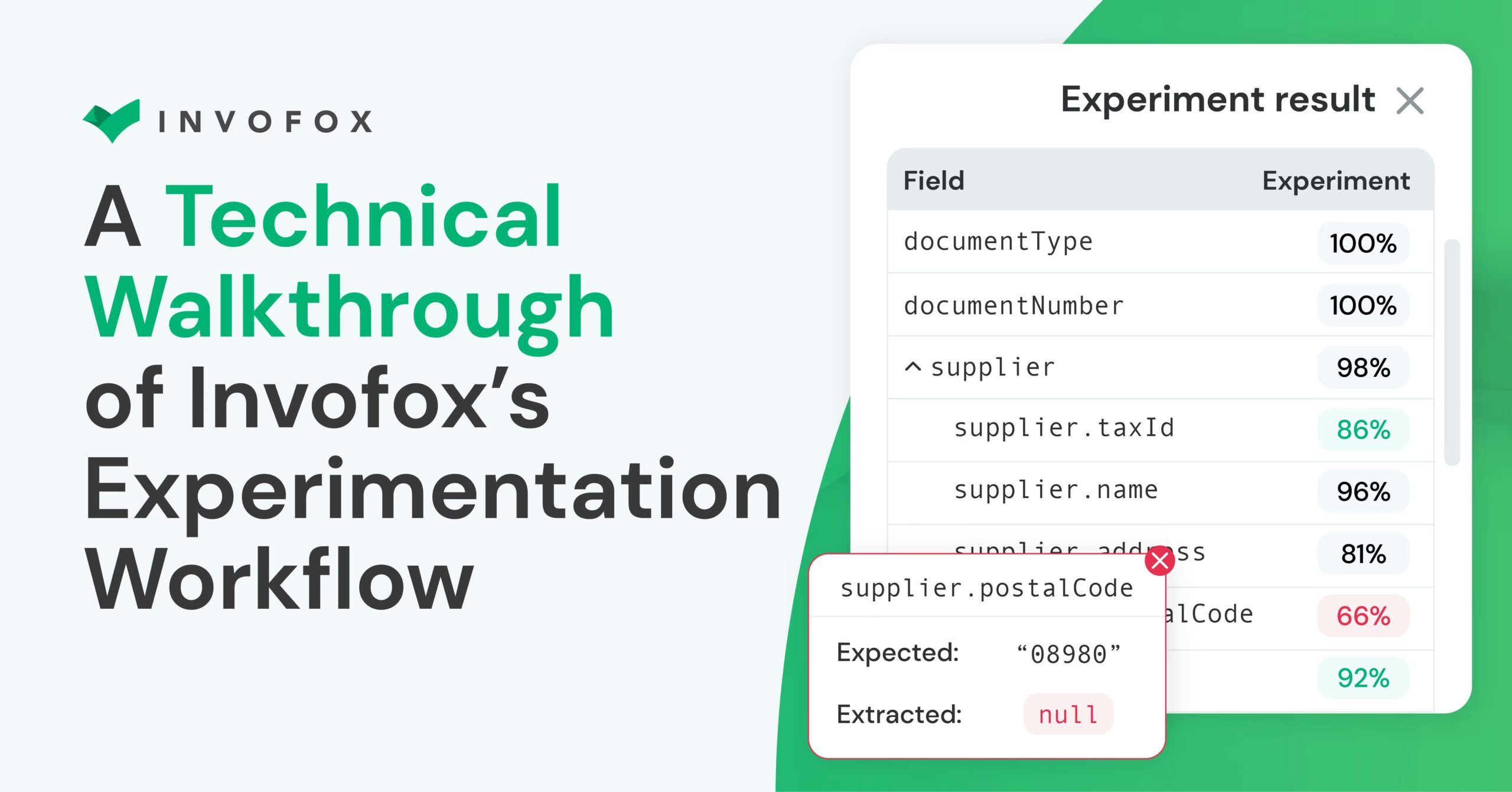
Invofox 2.0 is a production-grade document parsing API designed for developers building data extraction workflows from complex, high-variance documents (invoices, payslips, utility bills, and custom formats). This update emphasizes the transition from “demo-ready” to “production-ready” document AI. While many OCR and document extraction tools perform well with clean test samples, they falter when encountering messy real-world inputs like scanned PDFs, mixed templates, or handwritten annotations. Invofox 2.0 introduces a structured experimentation framework that exposes field-level and document-level accuracy metrics during testing, allowing engineering teams to validate model improvements before deploying them into live workflows.
Key Features
- Experimentation Workflow: A dedicated environment where teams can upload datasets of real documents, run extraction models, and analyze detailed accuracy reports at both the field level (e.g., “Invoice Number” extraction rate) and document level (e.g., “Fully Correct Invoice” rate). This enables A/B testing of model versions before production.
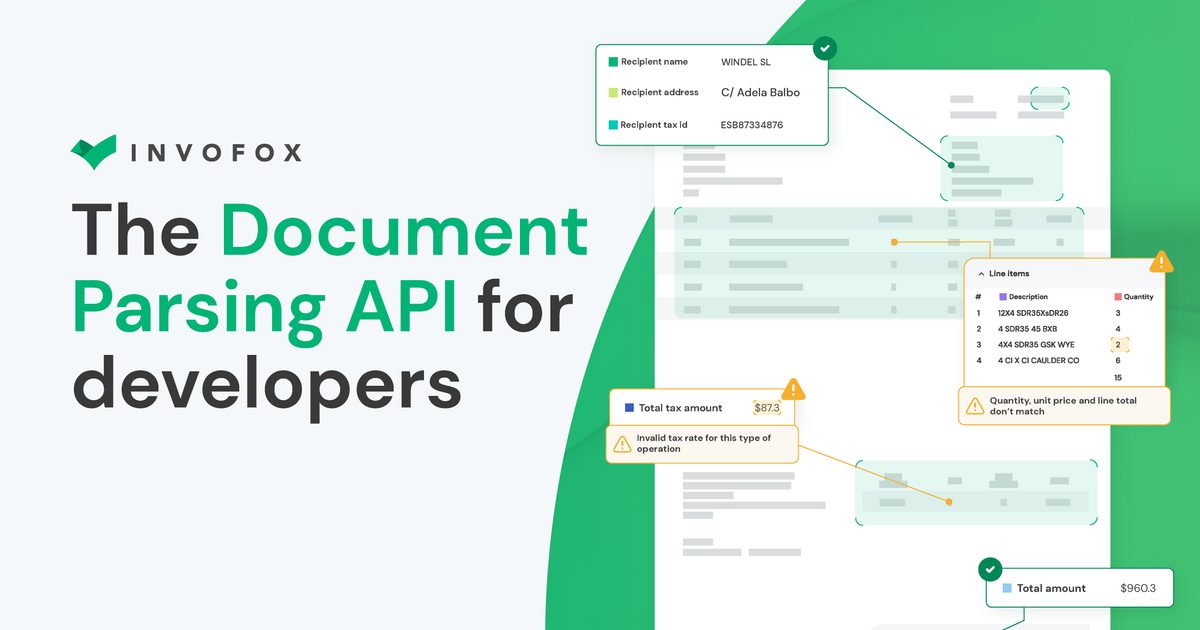
- Beyond OCR Validation: Unlike traditional OCR tools that simply extract text, Invofox includes configurable field-level validations (regex checks, format constraints) and cross-field validations (e.g., verifying that line-item totals sum to the invoice total). This catches logical inconsistencies that pure extraction would miss.
- Human-in-the-Loop (HITL) Hooks: Webhook support for handling extraction failures or low-confidence fields, allowing teams to route edge cases to human reviewers while automating high-confidence cases.
- Document Classification & Separation: Automatically identifies and separates document types from mixed batches (e.g., invoices vs. receipts in the same upload), reducing manual sorting.
- Pay-per-Result Pricing Option: In addition to traditional “pay-per-document” pricing, Invofox offers a “pay-per-result” model where you only pay when the extraction is 100% accurate, aligning costs directly with quality outcomes.
Primary Use Cases
- Enterprise Invoice Automation: Companies processing thousands of invoices monthly from diverse vendors with varying formats, where reliability and auditability are critical.
- Quality Assurance for Data Pipelines: Organizations building production data extraction workflows that need to measure and improve accuracy systematically before scaling.
- Custom Document Workflows: Businesses handling non-standard documents (loan applications, medical forms, property documents) that require tailored extraction schemas and validation rules.
Pros & Cons
- Pros: directly addresses the “demo vs. reality” accuracy gap that plagues most document AI tools; granular visibility into what is failing and why (field-level metrics); allows teams to iterate and validate improvements with confidence; flexible pricing aligned with outcomes (pay-per-result option); webhook-first design integrates seamlessly into existing software stacks.
- Cons: requires engineering resources to integrate and configure (this is an API, not a no-code tool); pricing details are not fully public on the website, requiring direct contact for detailed quotes; overkill for simple, one-off document parsing needs (better suited for high-volume, recurring workflows).
Pricing
- Pay-Per-Document: Standard usage-based pricing charged per document processed.
- Pay-Per-Result: Customers only pay when Invofox extracts the document with 100% accuracy, eliminating costs for failed extractions.
- Custom Enterprise Plans: Available for high-volume users with specific SLA, integration, and support requirements.
Note: Specific per-document rates are not publicly listed and require contacting the sales team.
How Does It Compare?
- Rossum AI: An enterprise-focused AI document processing platform with advanced machine learning for invoices and transactional documents. Comparison: Rossum starts at $18,000/year and is designed for large enterprises processing millions of documents annually. Invofox is more developer-centric, API-first, and offers flexible pay-per-result pricing that scales more affordably for mid-size companies or software startups embedding document parsing into their products.
- Docparser: A template-based parsing tool that uses rule-driven extraction rather than AI. Comparison: Docparser is best for structured, predictable documents where you can define parsing rules manually. Invofox leverages AI to handle high-variance, unstructured documents where templates constantly change (e.g., invoices from 500 different vendors).
- Google Document AI: Google’s cloud-based document extraction service. Comparison: Google Document AI is extremely powerful and scalable but requires significant integration effort and has complex pricing (per-page, per-processor). Invofox differentiates with its “experimentation workflow” that surfaces accuracy metrics during development and offers predictable per-document or per-result pricing.
- AWS Textract: Amazon’s OCR and extraction service. Comparison: Textract is a lower-level OCR API—it extracts text and tables but does not provide built-in validation, classification, or cross-field logic. Invofox adds these layers on top, making it closer to a “full-stack” document processing solution rather than just raw extraction.
Final Thoughts
Invofox 2.0 is purpose-built for software companies and engineering teams that need to embed reliable document extraction into their products. Its standout feature—the experimentation workflow with field-level accuracy visibility—solves a critical problem: how to systematically improve and validate document AI before deploying it to customers. This makes it particularly valuable for companies transitioning from manual data entry to automated pipelines, where trust and reliability are essential. While it requires more technical setup than consumer-facing tools like Docparser, its API-first design and outcome-aligned pricing make it a compelling choice for production-grade document automation.