
Table of Contents
AbleMouse Beyond Switch Edition
AbleMouse Beyond Switch Edition is an upcoming open-source assistive technology designed specifically for individuals with extreme physical limitations, such as total body paralysis (Locked-in Syndrome). Scheduled for release in Q1 2026, it translates single micro-movements—like a slight mouth opening or blink—into complete computer control through an intelligent hierarchical menu system.
What It Does
While standard assistive tools often require head movement or clear speech, Beyond Switch Edition works for users who may only have one voluntary muscle movement available. It functions as a “single-switch” interface where the user triggers actions by confirming selections on a scanning menu.
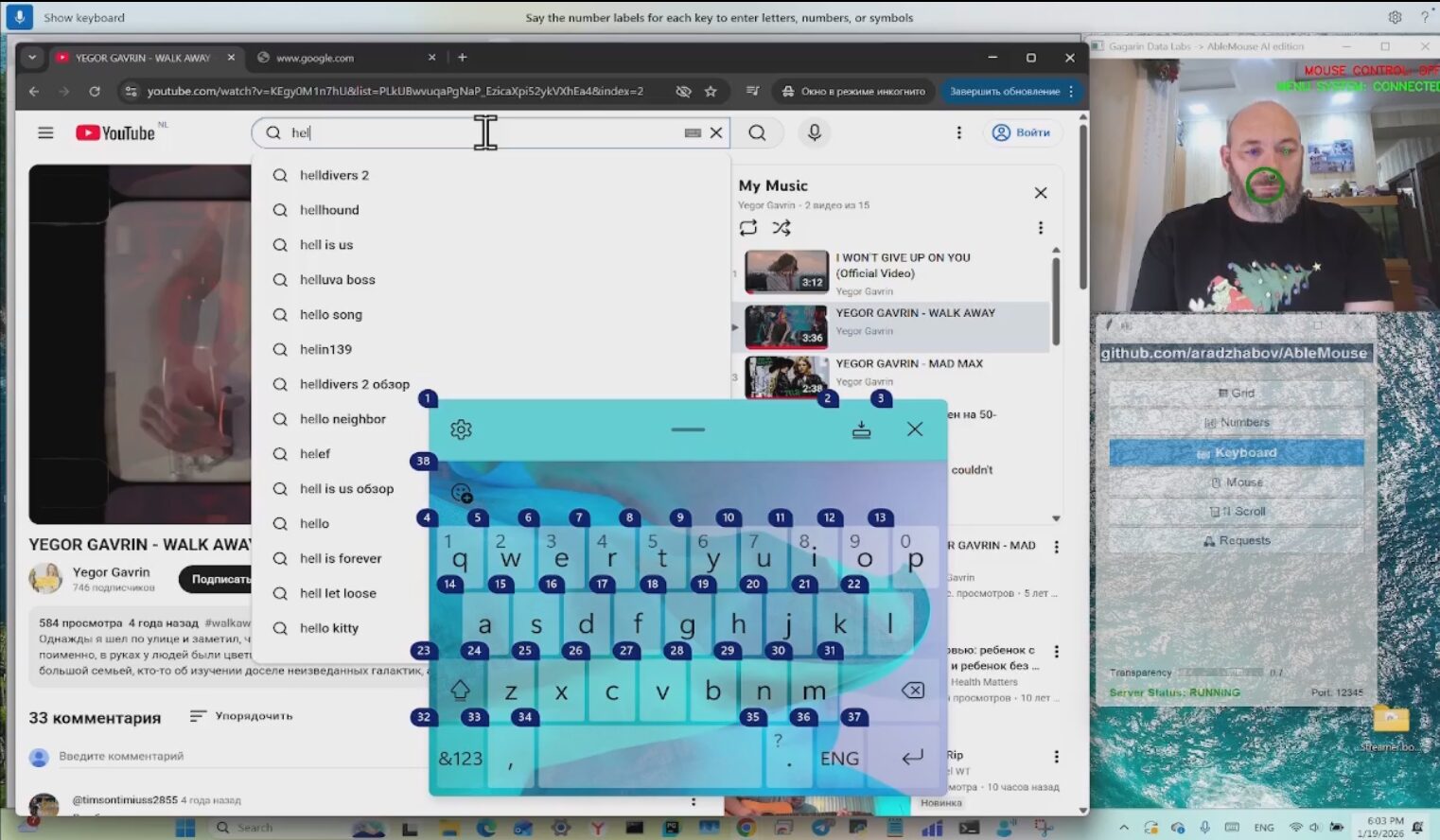
The system continuously cycles through options (click, type, scroll, open app) on a dedicated overlay. When the user activates their sensor (which can be anything from a DIY bite switch to a webcam detecting a blink), the system executes the highlighted action. It effectively bridges the gap between total immobility and digital independence without expensive proprietary hardware.
Core Features
Single-Input Navigation: Operates the entire PC using binary input (on/off signals). This allows control via any sensor that can detect a micro-movement, making it adaptable to the user’s specific remaining abilities.
Hierarchical Scanning Menu: A smart overlay menu scans through groups of actions (e.g., Navigation -> Mouse Move -> Up). Users wait for the desired option to highlight and then trigger their switch to select it.
Universal Sensor Compatibility: Designed to accept input from various sources, including basic mechanical switches, DIY capacitive sensors, or webcam-based gesture detection (via the core AbleMouse system).
Voice Command Generation: Includes features for non-verbal users to generate speech or trigger pre-set voice commands, facilitating communication alongside computer control.
Open Source & DIY Friendly: The software is free, and compatible hardware (based on ESP32 microcontrollers) can be built for under $10 using 3D printed parts and off-the-shelf electronics.
How It Works
The software displays a dynamic menu bar or grid on the screen. A cursor automatically moves across these options at a customizable speed.
1. Scan: The cursor highlights “Mouse Control,” then “Keyboard,” then “Apps.”
2. Select: The user blinks (or triggers their switch) when “Mouse Control” is highlighted.
3. Refine: The menu drills down to “Move Up,” “Move Down,” “Left Click.”
4. Execute: The user triggers the switch again on “Left Click” to perform the action.
This “scanning” method allows full access to complex operating system functions using only one verified movement.
Ideal Use Cases
Locked-in Syndrome: Users with zero limb mobility and inability to speak.
Severe ALS/MND: Late-stage progression where eye tracking may be fatiguing or calibration is difficult.
High Spinal Cord Injuries (C1/C2): Where head movement is impossible or restricted, preventing the use of standard head-tracking mice.
Strengths and Considerations
Strengths: Extremely low cost compared to medical-grade devices ($10 DIY vs. $5,000+). Open-source nature allows rapid community adaptation. Works on standard Windows PCs without specialized proprietary ports. Privacy-focused with no cloud data processing for basic inputs.
Considerations: The “scanning” interaction method is inherently slower than direct pointing (like eye tracking) and requires patience. Initial setup requires a technical caregiver to configure the sensitivity and menu hierarchy. Currently Windows-only (as of Q1 2026 release plan).
Pricing
Software: Free and Open Source (MIT License).
Hardware: DIY build cost is approximately $10–$20 depending on components (ESP32 board, sensors, 3D printing filament). No subscription fees.
How Does It Compare?
MouthPad^ (by Augmental): A sophisticated, retainer-like device worn inside the mouth that tracks tongue movement for cursor control. It offers faster, direct analog control (like a trackpad) but costs significantly more and requires intra-oral hardware. Best for users with good tongue mobility who want invisible, high-speed control.
Tobii Dynavox (Eye Tracking): The medical standard for eye-gaze control. It is faster and more natural for looking at items to select them but is extremely expensive ($5,000+) and can cause eye fatigue. AbleMouse offers a restful alternative that doesn’t strain the eyes.
Neuralink: An invasive brain-computer interface (BCI) requiring surgery. While it promises the highest bandwidth connection eventually, it is currently not widely available, carries surgical risks, and is in early trial stages. AbleMouse is a non-invasive, immediate solution.
EVA Facial Mouse: A software-based solution that tracks head movement via webcam to move the cursor. It requires good head control, which AbleMouse Beyond Switch Edition does not require, making AbleMouse the viable option for users who cannot move their head.
GlassOuse: A head-mounted device that translates head movement into mouse movement with a bite switch for clicking. Like EVA, it requires neck mobility. AbleMouse can replace the “head movement” part with menu scanning, accommodating more severe paralysis.
Final Thoughts
AbleMouse Beyond Switch Edition is a critical fallback technology for when other interfaces fail. While it may not match the speed of eye trackers or tongue mice, it provides a reliable lifeline for users with the most severe physical restrictions. By making this technology open-source and capable of running on $10 hardware, it democratizes access to digital life for those who are often priced out of medical-grade assistive tech. It serves as an essential “Plan B” or primary interface for total paralysis, proving that access to technology should be a right, not a luxury.