Overview
In today’s increasingly complex digital landscape, customer feedback arrives from everywhere—social media platforms like X and Reddit, app reviews, internal support systems, call transcripts, surveys, Discord communities—creating exponential volume that makes manual analysis impossible. Rather than requiring product teams to manually synthesize feedback across disconnected tools, AI Feedback from Amplitude centralizes this deluge into one unified platform and automatically identifies what matters. Launched in November 2025 following Amplitude’s July acquisition of Kraftful, AI Feedback combines proprietary LLM technology specifically trained on product feedback patterns with comprehensive multi-source integration and sophisticated semantic analysis. Unlike generic voice-of-customer solutions relying on off-the-shelf language models trained on general internet content, Amplitude’s system is purpose-built to transform massive volumes of unstructured customer feedback into prioritized, actionable insights linked directly to your product analytics and behavioral data.
Key Features
AI Feedback combines proprietary LLM technology with enterprise product analytics integration:
- Proprietary LLM Technology: Unlike most VoC solutions using off-the-shelf models (GPT, Claude, etc.) trained on general internet content, AI Feedback uses a large language model specifically trained on product feedback patterns. This specialized approach accurately identifies feature requests, complaints, bugs, and other product-specific insights from raw customer feedback.
- Unified Multi-Source Feedback Hub: Consolidates customer feedback from 15+ integrated sources—App Store/Google Play reviews, Zendesk, Intercom, Freshdesk, Salesforce Service, Gong call transcripts, Trustpilot, G2, Reddit, Discord, X, and custom CSV/Docs uploads—into one searchable platform eliminating tool fragmentation.
-
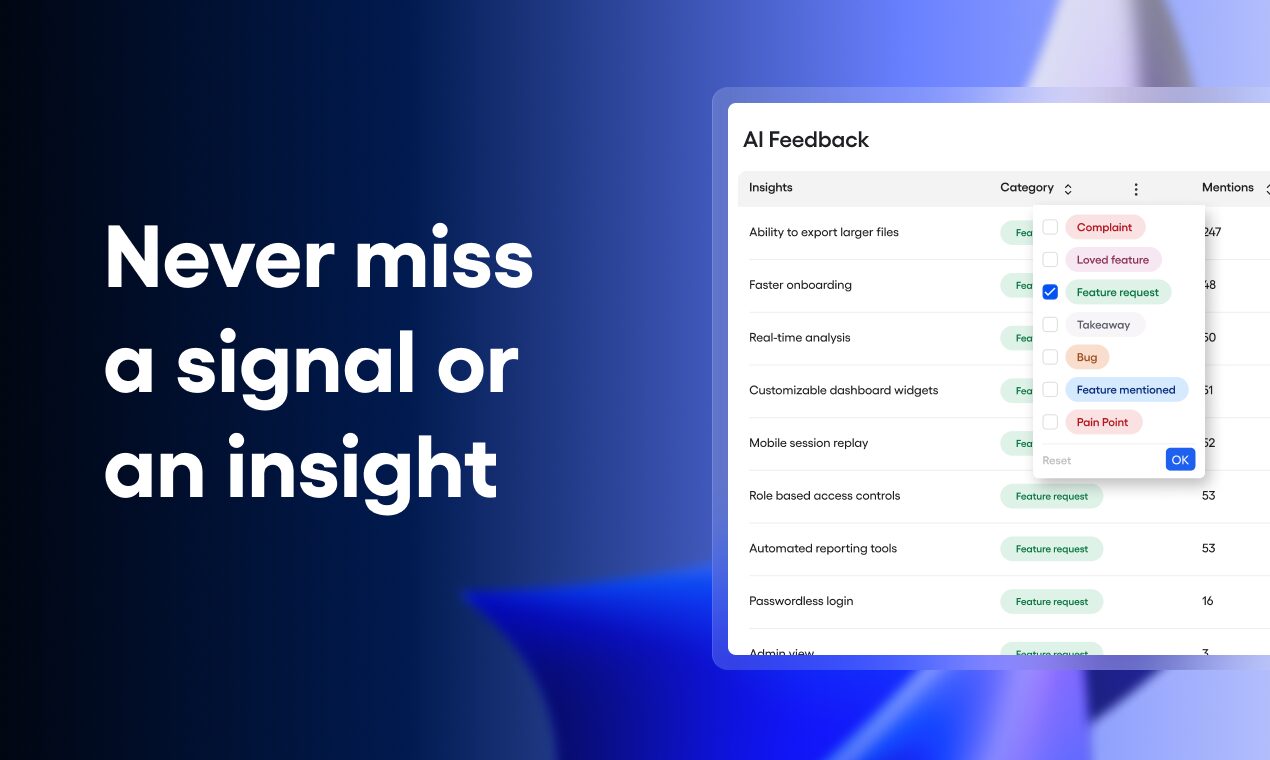
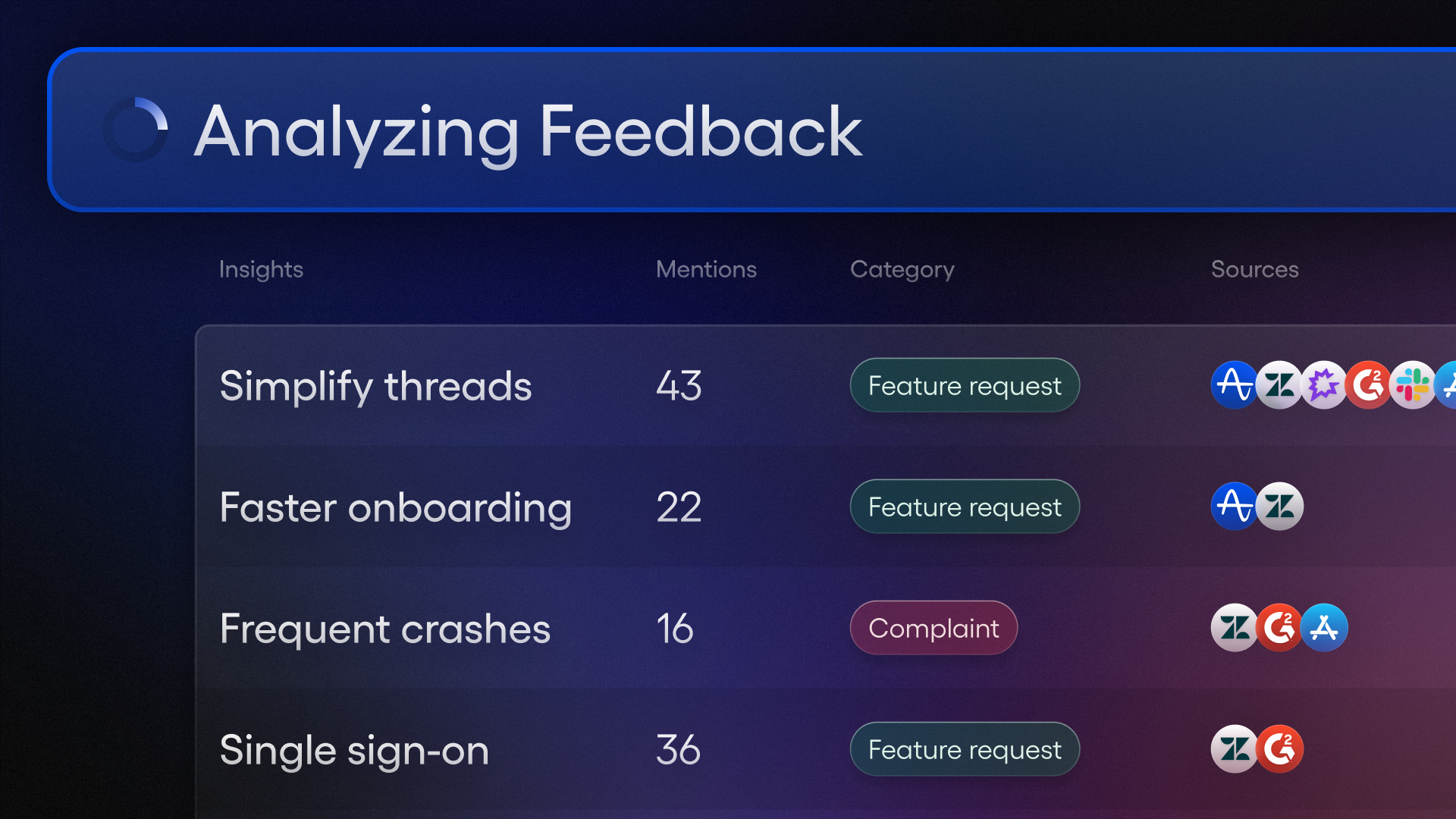
Intelligent Theme and Trend Extraction: Automatically categorizes unstructured feedback into actionable themes—feature requests, complaints, bugs, praise, pricing concerns—with frequency counts showing how many customers mentioned each theme. AI-powered trend spotting identifies emerging issues before they become widespread problems.
-
Semantic Search and Ask AI: Query feedback using natural language (“What are customers saying about performance?”) and receive instant AI-powered answers drawing from your complete feedback archive. Generate PRDs, feature summaries, or competitive comparisons by simply asking the AI.
-
Integration with Amplitude Analytics Ecosystem: Link customer feedback insights directly to product behavior data through Amplitude’s analytics, session replay, and experimentation capabilities. Understand whether customers reporting issues have actually stopped using features or if complaints correlate with specific user cohorts.
-
Real-Time Trend Monitoring and Alerts: Continuously monitor feedback sources and surface emerging issues, trending complaints, or spikes in specific feedback categories. Configure alerts to notify teams when feedback volume for specific topics exceeds thresholds or when critical issues emerge.
-
Cohort and Action Workflows: Create user cohorts directly from feedback insights (e.g., “users experiencing authentication issues”) and trigger Amplitude experiments, session replays, or Guides & Surveys to investigate. Close the loop from feedback to product action within unified platform.
-
Customer Success Collaboration: Map dissatisfaction to specific accounts, identifying which customers are at churn risk based on feedback sentiment and issue severity. Alert customer success teams to accounts requiring immediate attention based on emerging problems or repeated complaints.
-
Natural Language PRD Generation: Transform customer insights into structured product requirements. Provide the AI with specific feedback themes or customer needs, and it drafts user stories, feature specifications, and acceptance criteria automatically.
How It Works
AI Feedback operates through an integrated feedback analysis lifecycle:
Connect Your Feedback Sources: Authorize Amplitude to connect to your feedback channels—app store reviews, support systems (Zendesk, Intercom, Freshdesk), call recordings (Gong transcripts), social platforms (Reddit, X), survey tools, and any CSV or document files containing customer feedback.
Proprietary AI Analysis Begins: Amplitude’s proprietary LLM (trained specifically on product feedback patterns, not general internet content) processes all incoming feedback automatically. As new feedback arrives, the system continuously re-analyzes and updates insights.
Automatic Categorization and Prioritization: Feedback automatically sorts into coherent themes—feature requests, bugs, complaints, pricing concerns, competitive feedback, praise. The system quantifies how many customers mentioned each theme and surfaces highest-impact feedback based on mention frequency and contextual relevance.
Trend Detection and Alerts: AI continuously monitors feedback for emerging patterns. When mentions of specific issues spike, new trends emerge, or critical problems surface, the platform surfaces these changes and can trigger team alerts.
Semantic Query and AI Discussion: Use natural language to search your feedback—”What performance issues do customers report?” or “How do customers describe authentication problems?”—and receive instant AI-powered answers with supporting quotes from actual feedback.
Cross-Platform Product Context: Connect insights to Amplitude analytics to understand whether customers reporting issues correlate with behavioral changes. Identify which user segments experience specific problems and whether reported frustrations actually impact usage.
Action and Workflows: Trigger Guides & Surveys to gather more specific feedback on trending topics, run experiments to test potential solutions, or create session replays to watch how customers actually experience reported problems. All actions remain within unified Amplitude platform.
Use Cases
AI Feedback serves sophisticated product management scenarios:
- Product Roadmap Prioritization: Automatically identify most-requested features and highest-impact bugs based on customer feedback frequency and sentiment. Use quantified insights to guide prioritization discussions and resource allocation decisions grounded in actual customer demand.
-
Competitive Intelligence: Extract how customers talk about your competitors, market position, and alternative solutions. Understand competitive weaknesses driving customer interest and market positioning opportunities.
-
Support Quality Assurance: Identify recurring customer pain points and common support issues. Surface high-frequency support topics to product teams for resolution rather than perpetual support load.
-
Churn Risk Identification: Map customer dissatisfaction to specific accounts, identifying which customers are expressing frustration or experiencing problems that correlate with churn risk. Alert customer success teams to high-risk accounts requiring intervention.
-
Product Positioning and Marketing: Understand exactly how customers describe their needs and use cases. Use authentic customer language for positioning, marketing copy, and sales enablement to improve messaging relevance and resonance.
-
Onboarding Optimization: Analyze common customer frustrations and confusion during onboarding. Link feedback to behavioral data to understand which onboarding steps create friction and where customers need additional guidance.
-
Feature Release Validation: Track feedback sentiment and issue mentions after feature releases. Quickly identify when new features aren’t meeting expectations or are creating unexpected support burden.
-
Market Trend Identification: Spot emerging customer needs, market shifts, or external factors impacting customer satisfaction before they become widespread crises.
Pros & Cons
Advantages
- Purpose-Built for Product Feedback: Unlike generic VoC tools using general-purpose AI, Amplitude’s proprietary LLM is specifically trained on product feedback patterns, delivering more accurate theme extraction and actionable categorization.
-
Truly Multi-Channel Integration: Consolidates 15+ feedback sources into one platform, eliminating tool fragmentation and manual synthesis across disconnected systems.
-
Connected to Product Behavior: Integration with Amplitude analytics enables linking customer feedback to actual product behavior, usage patterns, and experimentation—providing complete context beyond just what customers say.
-
Actionable by Default: Automatically quantifies themes, identifies what matters, and surfaces actionable insights without requiring manual synthesis or interpretation.
-
Enterprise-Grade Privacy and Compliance: Data is processed only for inference, never for model training. Requests handled transiently with encryption in transit and at rest.
-
Semantic Search and Natural Language Interaction: Query feedback and generate insights using plain English rather than predefined report templates.
Disadvantages
-
Requires Amplitude as Primary Platform: Maximum value requires using Amplitude as your core analytics platform. Organizations using different analytics tools lose the critical connection between feedback and behavior data.
-
Pricing Model Requires Understanding: AI Feedback includes basic access across all Amplitude plans with limited feedback volume, but extended volume requires additional paid add-ons on Growth and Enterprise plans. Cost scales with feedback volume.
-
Emerging Platform: Launched November 2025 and integrated from recent Kraftful acquisition. Teams with mission-critical feedback analysis should validate stability and feature completeness before full reliance.
-
Best for Data-Rich Organizations: Derives maximum value when organizations generate substantial feedback volume across multiple channels. Smaller organizations with limited feedback may find basic features sufficient.
-
Integrations Cover Common Tools Only: Supports major platforms (Zendesk, Intercom, Salesforce, etc.) but custom or legacy support systems may require manual CSV import, adding friction.
How Does It Compare?
AI Feedback occupies a specialized position within customer feedback analysis, emphasizing multi-source aggregation with product analytics integration rather than targeted survey creation or participant recruitment.
Sprig specializes in targeted in-product and web surveys capturing real-time feedback at specific moments in the user journey. Sprig excels at designing moment-specific surveys to collect feedback when users are most engaged or experiencing specific frustrations. However, Sprig focuses on prospective feedback collection rather than analyzing existing feedback. Sprig’s strength lies in asking the right questions at optimal moments; AI Feedback’s strength lies in synthesizing what customers are already saying across all channels. Sprig is survey-first; AI Feedback is feedback aggregation and synthesis-first. Organizations often use both—Sprig for targeted collection, AI Feedback for synthesizing existing feedback.
Typeform functions as a general-purpose form and survey builder emphasizing beautiful design and high completion rates across diverse use cases (feedback, research, quizzes, applications). Typeform optimizes for survey creation, design, and response collection rather than automated analysis. Typeform requires manual data synthesis of collected responses or integration with external analytics tools. Typeform is form creation-focused; AI Feedback is feedback analysis-focused.
UserTesting provides human insight platform emphasizing user research through moderated tests, unmoderated studies, live intercepts, and participant network access. UserTesting is particularly strong for deeper qualitative research, usability testing, and accessing representative participant pools for structured research. UserTesting focuses on conducting research; AI Feedback focuses on analyzing existing feedback. UserTesting requires researchers to design studies and synthesize findings; AI Feedback automates synthesis from existing customer conversations. UserTesting serves dedicated research teams; AI Feedback serves product teams managing customer feedback.
Gong, Chorus, and Call Recording Platforms focus specifically on sales call analysis or customer interaction transcription. While these capture valuable feedback through call transcripts, they specialize in individual call analysis rather than comprehensive multi-source feedback synthesis and aggregation.
Qualtrics and Traditional VoC Platforms provide comprehensive customer experience management but emphasize organizational VoC programs and customer survey management rather than rapid, automated synthesis of existing feedback channels.
AI Feedback’s distinctive positioning emerges through: proprietary LLM technology specifically trained on product feedback (not general AI), true multi-source aggregation (15+ sources unified), connection to product behavior (integrated with analytics), and automated actionable synthesis (not requiring manual interpretation). While Sprig excels at targeted survey collection and UserTesting excels at structured research, AI Feedback uniquely combines rapid synthesis of existing customer feedback with connection to product analytics, enabling product teams to act on comprehensive customer voice without dedicated research infrastructure.
Final Thoughts
AI Feedback from Amplitude addresses a genuine organizational challenge—how to synthesize customer voice from exponentially increasing channels into actionable insights without creating manual overhead. Its combination of proprietary feedback-specific LLMs, comprehensive multi-source integration, automated categorization, and connection to product analytics creates compelling value for product organizations seeking to stay customer-centric while managing increasing feedback volume.
For product teams managing feedback across multiple channels, particularly those already using Amplitude analytics, AI Feedback delivers practical efficiency improvements by automating previously manual feedback synthesis and connecting customer voice directly to product behavior data.
However, organizations seeking targeted survey tools (Sprig), structured qualitative research (UserTesting), or general-purpose form builders (Typeform) should evaluate those specialized solutions for specific research needs. Organizations using different analytics platforms should carefully assess whether integrating AI Feedback justifies switching core analytics infrastructure. AI Feedback optimizes specifically for product teams already invested in Amplitude seeking to synthesize existing customer feedback at scale.