Table of Contents
- AI Industry at a Crossroads: Investment Warnings, Consumer Breakthroughs, and Workforce Transformation Define January 25, 2026
- 1. Google DeepMind CEO Demis Hassabis Issues Stark “Bubble-Like” Investment Warning
- 2. Apple Prepares February Unveiling of Gemini-Powered Siri, Signaling Consumer AI Mainstreaming
- 3. Humans& Secures 0 Million Seed Round, Testing Thesis That “Coordination” Represents AI’s Next Frontier
- 4. Big Tech AI Capital Expenditures Projected to Reach 5 Billion in 2026, Doubling in Two Years
- 5. Goldman Sachs Projects AI Will Automate 25 Percent of Work Hours, Displacing 6-7 Percent of Jobs
- Supplementary Development: Gallup Data Reveals Shallow AI Adoption Despite Growing Usage
- Conclusion: AI Industry Confronts Sustainability Questions as Investment Peaks and Deployment Lags
AI Industry at a Crossroads: Investment Warnings, Consumer Breakthroughs, and Workforce Transformation Define January 25, 2026
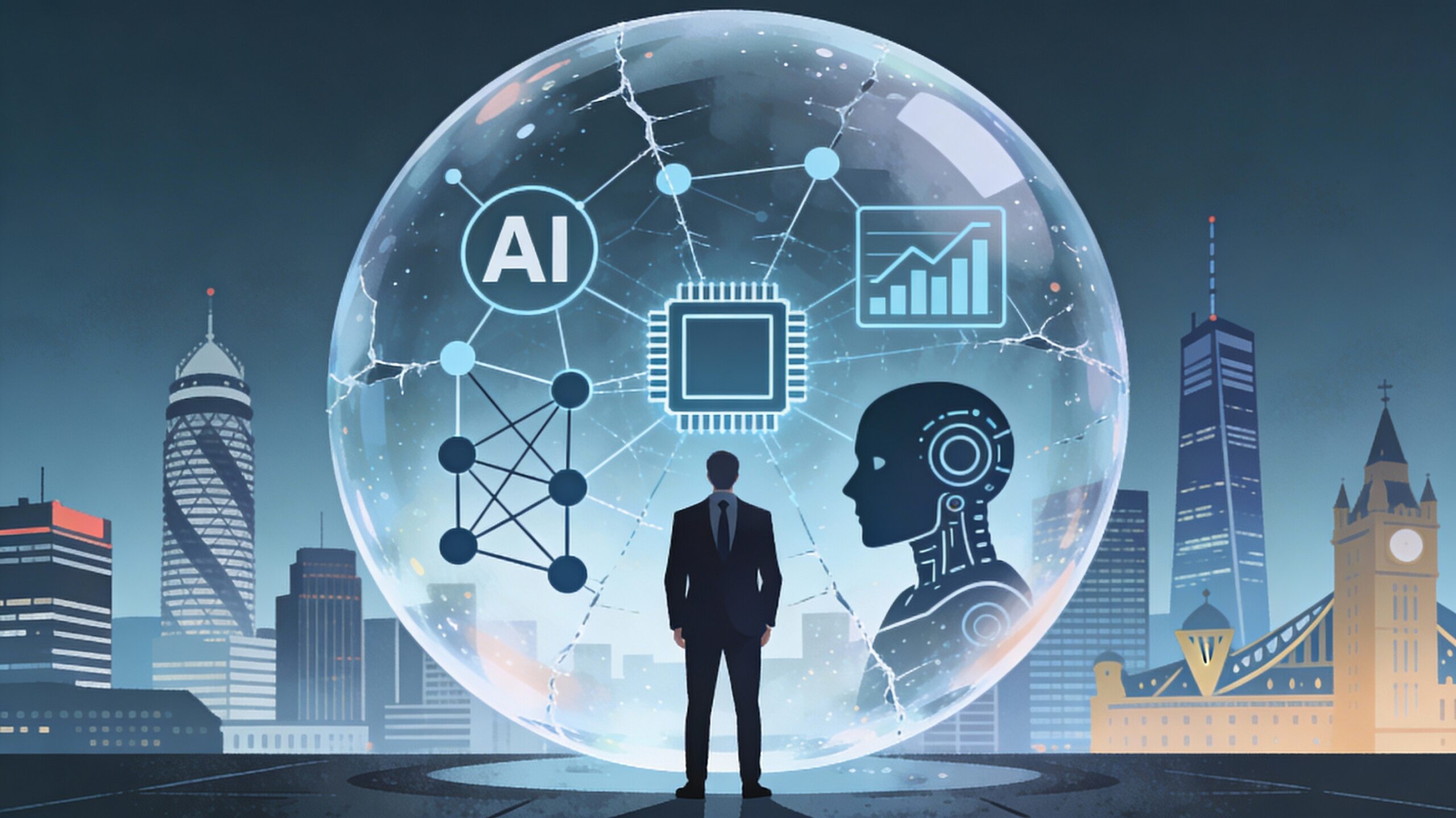
January 25, 2026, crystallizes a fundamental tension at the heart of the artificial intelligence industry as one of its most respected leaders openly questions investment sustainability while technology giants simultaneously commit to unprecedented capital expenditures exceeding $475 billion annually. Google DeepMind CEO and Nobel laureate Sir Demis Hassabis warned in a Financial Times interview published today that exuberance in parts of the AI sector looks increasingly “bubble-like,” with multibillion-dollar seed rounds flowing to startups “that don’t have a product or technology or anything yet”—a characterization that gains particular salience as Humans&, a coordination-focused AI lab, announces a $480 million seed round at a $4.48 billion valuation despite offering limited details on commercial products. Simultaneously, Apple prepares to unveil a Gemini-powered Siri assistant in late February, signaling that consumer-facing AI is finally transitioning from prototype to mainstream deployment after years of delays and false starts. Goldman Sachs analysts published detailed workforce modeling projecting that AI could automate nearly 25 percent of all work hours while driving 15 percent productivity gains and displacing 6-7 percent of jobs during the transition period, providing the most granular economic forecast yet of AI’s labor market impact. Meanwhile, Gallup data released today reveals that while 45 percent of U.S. employees now use AI at work occasionally, daily adoption remains stuck at just 10 percent, and nearly a quarter of workers don’t even know whether their organizations have implemented AI systems—exposing a profound disconnect between investment enthusiasm and operational reality. For investors, policymakers, technology executives, and workers worldwide, January 25, 2026, represents a moment of reckoning where the AI industry’s trajectory depends less on technical capabilities than on fundamental questions of capital allocation discipline, monetization viability, workforce adaptation, and the governance frameworks necessary to translate extraordinary spending into sustainable economic value.1. Google DeepMind CEO Demis Hassabis Issues Stark “Bubble-Like” Investment Warning
In a widely circulated interview with the Financial Times at the World Economic Forum in Davos published on January 24, 2026, Sir Demis Hassabis—CEO of Google DeepMind, co-founder of the pioneering AI laboratory, and 2024 Nobel laureate in Chemistry—delivered an unusually direct warning that investment patterns in segments of the artificial intelligence industry have become detached from commercial fundamentals and appear increasingly “bubble-like”.youtube+1[ft]“Multibillion-dollar seed rounds in new start-ups that don’t have a product or technology or anything yet do seem a little bit unsustainable,” Hassabis told the Financial Times, adding that the level of investment in some parts of the technology sector has become disconnected from practical business realities and may lead to “corrections in some parts of the market”. The comments represent a striking departure from the consensus optimism expressed by other technology leaders present at Davos, including NVIDIA CEO Jensen Huang and Microsoft CEO Satya Nadella, who “batted off concerns of over-investment in the sector”.ft+1Hassabis pointed specifically to the venture capital frenzy surrounding companies such as Thinking Machines Lab, founded by former OpenAI Chief Technology Officer Mira Murati, which achieved a $10 billion valuation just six months after its establishment despite providing few details about its projects or roadmap. That company has recently experienced the departure of several key staff members, raising questions about its long-term viability. Hassabis also noted broader investor concerns regarding the multibillion-dollar race to construct AI infrastructure, including “a series of debt-fuelled deals that rely on usage of the technology to keep growing”.linkedin+1Despite these warnings, Hassabis expressed confidence that Google’s scale, technological capabilities, and established business model position the company to weather any potential market correction. “If the bubble bursts we will be fine,” he stated. “We’ve got an amazing business that we can add AI features to and get more productivity out of”. Hassabis emphasized that demand for AI across Google’s product portfolio—exemplified by the company’s latest Gemini 3 model—is “stronger than ever,” and he characterized artificial intelligence as “the most transformative technology probably ever invented”.ft+1Google’s positioning has strengthened considerably over the past year. The company rebounded from a difficult period following OpenAI’s ChatGPT launch in late 2022, with its AI models now surpassing the performance of its smaller rival and the search giant closing the gap in chatbot user adoption. This momentum has driven parent company Alphabet’s valuation past $4 trillion, making it the second-largest company in the world after chipmaker NVIDIA.linkedin+1Addressing U.S.-China competition, Hassabis argued that Western firms maintain a lead in AI development despite the disruption caused by China’s DeepSeek, which surprised Silicon Valley approximately one year ago by developing a powerful, free-to-access AI model for a fraction of the cost of American competitors. “There’s been an overreaction in the west to DeepSeek,” Hassabis contended, suggesting that “the Chinese labs haven’t demonstrated their ability to innovate beyond the frontier yet”. He estimated that U.S. technology companies still enjoy a lead of “about six months” and noted that Chinese enterprises are “more focused on immediate applications” and prioritizing rapid revenue generation over the research-intensive frontier capabilities necessary to achieve artificial general intelligence—machines that can exceed human capabilities across all domains.[ft]Hassabis’s “Hard Fork” podcast interview, recorded in late 2025, provided additional context for his concerns. “It’s too binary a question,” he said when asked directly whether the AI sector is in bubble territory. “My view is that there are some parts of the AI industry that are probably in a bubble. If you look at seed investment rounds being multi-ten-billion-dollar rounds with basically nothing … that might be the first signs of some kind of bubble”. Yet he was quick to emphasize that many parts of AI remain healthy and full of genuine promise, pointing to Google’s new products including the Gemini app, NotebookLM, advances in robotics and gaming, and drug-discovery work at Isomorphic Labs as areas with long-term commercial potential.[dagens]Original Analysis: Hassabis’s intervention carries particular weight given his unique position as both a leading researcher who advanced the technical frontier of AI and a corporate executive responsible for deploying these systems at scale within one of the world’s largest technology companies. His willingness to publicly question investment sustainability—while simultaneously expressing confidence in Google’s position—suggests strategic positioning: establishing intellectual credibility and regulatory goodwill by acknowledging market excesses while ensuring that any resulting corrections disadvantage smaller, less-capitalized competitors more than dominant incumbents. The specific critique of “multibillion-dollar seed rounds” for companies without products targets the venture capital frenzy that has characterized 2025-2026, where pedigree and narrative have commanded valuations historically reserved for companies with demonstrated revenue traction. For investors, Hassabis’s warning functions as a reminder that the AI industry is bifurcating: established technology giants with diversified revenue streams, massive compute infrastructure, and integrated distribution can sustain AI investments even if monetization timelines extend, while startups dependent on continuous funding rounds face existential risk if capital markets tighten. The acknowledgment that China focuses on “immediate applications” versus frontier research also reveals a strategic narrative: framing U.S. leadership in terms of long-term capability development rather than near-term commercial deployment may provide rhetorical cover for the extended monetization timelines that concern investors.2. Apple Prepares February Unveiling of Gemini-Powered Siri, Signaling Consumer AI Mainstreaming
Apple plans to announce a significantly enhanced version of its Siri voice assistant in the second half of February 2026, powered by Google’s Gemini AI models, according to Bloomberg’s Mark Gurman in a report published on January 25, 2026—marking a critical milestone in the company’s multi-year effort to integrate advanced generative AI capabilities into its consumer products.engadget+3“The company has been planning an announcement of the new Siri in the second half of February, when it will give demonstrations of the functionality,” Gurman wrote in his weekly “Power On” newsletter. The report does not yet specify whether Apple will hold a full public event to showcase the Siri upgrades or conduct private briefings with media outlets. The enhanced Siri will be incorporated into iOS 26.4, which is expected to enter beta testing in February and receive a public release in March or early April, making the new capabilities available to all customers with an iPhone 15 Pro or newer within the next few months.macrumors+1The February announcement represents the first tangible manifestation of Apple’s recently formalized AI partnership with Google, announced in January 2026. According to prior reporting, Apple is paying approximately $1 billion annually to utilize Google’s AI technology. Discussions between the two companies first surfaced in August 2025, when Bloomberg reported that Apple was exploring the use of a custom Gemini model for Siri. Earlier this month, Apple cited Gemini as “the most capable foundation for delivering new user experiences,” signaling a strategic pivot after years of in-house AI development struggles.[economictimes]As previewed by Apple at its Worldwide Developers Conference (WWDC) in June 2024, the more personalized Siri “should be able to tap into personal data and on-screen content to fulfill tasks,” according to Gurman. At that conference, Apple demonstrated an iPhone user asking Siri about their mother’s flight status and lunch reservation plans based on information retrieved from the Mail and Messages apps—illustrating the system’s ability to synthesize data across applications to provide contextually relevant assistance.engadget+1However, the February release represents only an intermediate step in Apple’s broader Siri transformation. Gurman reports that Apple plans a more substantial unveiling at WWDC in June 2026, where the company will introduce a version of Siri that is “more conversational, in the style of other chatbots like ChatGPT”. This later iteration could operate directly on Google’s cloud infrastructure rather than relying primarily on on-device processing. The full conversational Siri is expected to ship with iOS 27, iPadOS 27, and macOS 27, which are anticipated to be available as beta releases in summer 2026. The internal codename for this project is “Campos”.techcrunch+1The timeline reflects significant delays from Apple’s original ambitions. The company first announced the more personalized version of Siri at WWDC 2024 but subsequently pushed back the release. Mike Rockwell, an Apple executive, reportedly told foundation team members during summer 2025 that an earlier Gurman report about delays was “bulls–t,” suggesting internal tensions regarding the project’s progress. The recent departure of Apple’s AI chief John Giannandrea, coupled with broader C-suite exits across the company’s AI and design teams since last year, underscores the organizational challenges Apple has faced in its AI strategy.techcrunch+1The Gemini partnership has not been universally welcomed. Tesla CEO and xAI founder Elon Musk publicly expressed displeasure with the Apple-Google collaboration, likely reflecting concerns about the competitive implications for his own AI ventures and broader technology ecosystem positioning.[economictimes]Original Analysis: Apple’s Gemini-powered Siri announcement represents a strategic acknowledgment that the company’s multi-year investment in proprietary AI infrastructure has failed to deliver competitive capabilities on a timeline aligned with market expectations. The decision to partner with Google—a company with which Apple maintains a complex relationship spanning search revenue sharing, mobile operating system competition, and regulatory scrutiny—signals that consumer AI has reached a maturity threshold where technical performance trumps ecosystem control considerations. For Google, the partnership provides invaluable distribution: embedding Gemini into hundreds of millions of iPhones creates user familiarity and behavioral lock-in that will be difficult for competitors to displace, even if Apple eventually develops proprietary capabilities. The February timing—ahead of the traditional June WWDC cycle—suggests urgency to demonstrate progress to developers, consumers, and investors who have grown skeptical of Apple’s AI roadmap. The two-stage rollout (February personalization features, June conversational capabilities) manages expectations while providing multiple announcement opportunities to sustain momentum. For the broader AI industry, Apple’s Gemini integration validates that foundation models have become commoditized infrastructure: competitive differentiation now stems from integration quality, user experience design, privacy frameworks, and ecosystem orchestration rather than model architecture alone. The $1 billion annual payment to Google establishes a benchmark for foundation model licensing economics at consumer scale, though the actual terms likely include complex revenue-sharing provisions tied to usage, cloud infrastructure costs, and joint development roadmaps.3. Humans& Secures 0 Million Seed Round, Testing Thesis That “Coordination” Represents AI’s Next Frontier
Humans&, a newly formed artificial intelligence laboratory founded by researchers and engineers from Anthropic, OpenAI, xAI, Google DeepMind, and Meta, announced on January 20, 2026, that it had raised $480 million in seed funding at a $4.48 billion valuation—one of the largest seed rounds in history and a stark test of investor appetite for AI startups positioned around ambitious technical theses rather than demonstrated products.techcrunch+3The funding round was led by SV Angel and co-founder Georges Harik, with participation from chipmaker NVIDIA, Amazon founder Jeff Bezos, Alphabet’s venture capital arm GV, and Emerson Collective, the investment firm founded by Laurene Powell Jobs. Georges Harik, who joined Google as its seventh employee and played instrumental roles in launching Gmail, initiating Google Docs, and leading the company’s acquisition of Android, brings both technical credibility and Silicon Valley networks to the venture.reuters+2Humans& positions itself around the thesis that “coordination is the next frontier for AI,” arguing that the industry is transitioning from the “first paradigm of scaling, where question-answering models were trained to be very smart at particular verticals,” to a “second wave of adoption where the average consumer or user is trying to figure out what to do with all these things,” according to co-founder Andi Peng, a former Anthropic employee, in an interview with TechCrunch.[techcrunch]The company’s stated ambition is to build a “central nervous system” for the human-plus-AI economy, developing a new foundation model architecture designed for social intelligence rather than information retrieval or code generation. This approach emphasizes memory and contextual understanding: “The model needs to remember things about itself, about you, and the better its memory, the better its user understanding,” Peng explained. Co-founder Zelikman stated: “We believe this is going to be a generational company, and we think that this has the potential to fundamentally change the future of how we interact with these models. We trust ourselves to do that, and we have a lot of faith in the team that we’ve assembled here”.[techcrunch]The company’s philosophy—framed as “AI should empower people, not replace them”—has dominated early media coverage. However, TechCrunch’s analysis suggests that the actual technical ambition is more novel than this branding implies: “building a new foundation model architecture designed for social intelligence, not just information retrieval or code generation”. The startup’s focus on long-term AI planning and collaborative systems differentiates it from the dominant paradigm of large language models optimized for query-response interactions.startupresearcher+2Despite the stellar founding team and substantial capital, Humans& faces significant challenges. The company will require “endless large sums of cash to fund the expensive endeavor that is training and scaling a new model,” creating dependency on continued investor enthusiasm and necessitating competition with major established players for scarce compute resources. Notably, the company has not disclosed specific product details or revenue strategies, a pattern that has drawn increasing scrutiny. TechCrunch noted in a separate analysis that “a new test for AI labs: Are you even trying to make money?” has emerged as an evaluation criterion, with investors beginning to question startups that raise massive rounds without articulating clear paths to monetization.note+1The Humans& seed round, while enormous, is not unprecedented in the current AI funding environment. Thinking Machines Lab, founded by former OpenAI CTO Mira Murati alongside top researchers from Meta and Google, raised $2 billion in July 2025 at a $12 billion valuation in what remains the largest seed round in history. However, the departure of half of Thinking Machines’ founding team across recent months suggests that massive capital and pedigree do not guarantee organizational cohesion or execution success.[techcrunch]Original Analysis: The Humans& funding announcement encapsulates the investment dynamics that prompted Demis Hassabis’s bubble warning: a startup with exceptional team credentials but no disclosed product, revenue model, or technical differentiation beyond high-level framing commands a $4.48 billion valuation in a seed round. The “coordination as next frontier” thesis is intellectually compelling—current AI systems struggle with multi-agent collaboration, long-term planning, and contextual memory—but translating this insight into a defensible commercial architecture remains unproven. The founding team’s pedigree from leading AI labs provides credibility that they understand frontier capabilities, but also raises questions about what proprietary insights or approaches justify building an independent company rather than pursuing these goals within their former employers’ resource-rich environments. For NVIDIA, investing in Humans& serves strategic portfolio diversification: as the primary supplier of AI compute infrastructure, the company benefits from proliferation of well-funded AI labs regardless of which specific architectures ultimately prevail. For other investors, the bet hinges on whether “coordination AI” represents a genuine paradigm requiring new architectural approaches or whether existing foundation models will incorporate these capabilities through continued scaling and fine-tuning. The lack of disclosed monetization strategy reflects a broader industry pattern where technical ambition and team pedigree have temporarily decoupled from conventional business fundamentals—a dynamic that can persist during periods of abundant capital but becomes untenable if investor sentiment shifts or capital availability contracts.4. Big Tech AI Capital Expenditures Projected to Reach 5 Billion in 2026, Doubling in Two Years
Microsoft, Amazon, Alphabet, and Meta are collectively expected to deploy approximately $475 billion in capital expenditures during 2026, more than double the $230 billion invested in 2024, according to a Bloomberg analysis published on January 25, 2026—representing an unprecedented concentration of corporate spending that will define technology infrastructure buildout for the remainder of the decade.bloomberg+3The projection underscores that “the earnings season unfolds against a backdrop of unprecedented capital spending by the technology sector,” with analysts expressing concern that “profit margins could remain under pressure” as companies prioritize AI infrastructure investments over near-term earnings optimization. Microsoft has indicated that its 2026 spending will exceed the $88.2 billion invested in fiscal year 2025 (ending June 2025), which itself represented 58 percent year-over-year growth. Meta has similarly raised its capital expenditure range, with the bulk earmarked for data centers supporting AI development and compensation tied to AI research.colitco+2Goldman Sachs estimates place the total capital spending figure even higher when including the full universe of hyperscaler companies, projecting approximately $527 billion for 2026, up from $465 billion at the start of the third-quarter 2025 earnings season. This figure represents a continuation of upward revisions that have characterized the AI infrastructure buildout: what began as a $250 billion estimate for 2025 has grown to exceed $405 billion—a 44.6 percent increase from initial projections—with similar upward revisions anticipated for 2026 forecasts.adweek+2The spending trajectory reflects accelerating rather than moderating growth. In the third quarter of 2025, Big Tech capital expenditures totaled $113.4 billion, representing 75 percent year-over-year growth and 19 percent sequential growth from the second quarter—the strongest growth rate of the year, accelerating 12 percentage points from the 63 percent growth recorded in the second quarter. While analysts expect this growth rate to decelerate to 49 percent in the fourth quarter of 2025 and moderate further to 25 percent by the end of 2026, the absolute dollar figures continue to climb.io-fund+1Microsoft executives have articulated confidence in return on investment, noting in recent earnings calls that “we’re seeing returns, obviously, in the Cloud business. You’ve heard us talk about the fact that we already are generating billions of dollars from AI in the quarter”. The company expects to “invest aggressively due to the strong demand from cloud customers as well as the growth opportunities across the company,” with management now projecting 2025 capital expenditures in the range of $91 billion to $93 billion, up from a previous estimate of $85 billion—representing approximately 75 percent year-over-year growth at the midpoint—with further increases expected in 2026.[io-fund]Goldman Sachs Research analyst Ryan Hammond noted that “the combination of continued corporate AI adoption and growing concerns about the AI infrastructure complex has increased recent investor focus on the next beneficiaries of the ever-expanding AI trade”. The firm’s framework for identifying potential AI productivity beneficiaries focuses on labor costs as a share of sales and exposure to AI automation as two key inputs, noting that stocks in this category have lagged both their earnings trajectory and the broader S&P 500 index, suggesting “an attractive risk-reward for investors seeking to expand their exposure to AI beyond the infrastructure layer”.[goldmansachs]Despite the scale of committed spending, questions about monetization timelines and return realization persist. The capital intensity of AI infrastructure, combined with the nascent state of many enterprise AI applications, creates tension between the urgency of competitive positioning and the uncertainty of revenue capture. As one industry analysis noted, “Many investors believe that AI adoption will eventually boost economic productivity growth and benefit an expanding universe of companies. But the practical focus of most investors has primarily been on the near-term earnings beneficiaries of the current boom in AI investment spending”.[goldmansachs]Original Analysis: The doubling of Big Tech capital expenditures from $230 billion in 2024 to $475 billion in 2026 represents one of the most concentrated corporate investment cycles in modern economic history, comparable in scale and strategic significance to the telecommunications infrastructure buildout of the 1990s or the post-war industrial expansion. However, a critical distinction separates this AI infrastructure wave from prior technology cycles: the primary investors are also the primary operators and, in many cases, the primary customers. Microsoft, Amazon, Google, and Meta are not merely funding infrastructure for third parties to utilize but are building vertically integrated AI capabilities spanning compute, models, applications, and distribution. This concentration creates both strategic advantages—vertical integration enables rapid iteration and cost optimization—and systemic risks—if monetization timelines extend beyond investor patience, the entire investment thesis becomes vulnerable to simultaneous reassessment across multiple companies. The 44.6 percent upward revision in 2025 capital expenditure estimates from initial projections suggests that competitive dynamics are driving spending beyond what companies originally anticipated as sufficient, potentially indicating a prisoner’s dilemma where each company must match competitors’ investments regardless of individual ROI calculations. Microsoft’s articulation of “billions of dollars” in AI-related cloud revenue provides preliminary validation that some monetization is occurring, but the ratio of capital deployed to revenue generated remains unclear. For investors evaluating whether current valuations are justified, the critical question is whether the $475 billion in 2026 spending represents rational allocation based on identified demand or defensive positioning driven by fear of being left behind—and whether the difference matters if all major players pursue the same strategy simultaneously.5. Goldman Sachs Projects AI Will Automate 25 Percent of Work Hours, Displacing 6-7 Percent of Jobs
Goldman Sachs analysts Joseph Briggs and Sarah Dong published a comprehensive report on January 18-19, 2026, titled “How Concerned Should We Be About a Job Apocalypse?” projecting that artificial intelligence could eventually automate nearly 25 percent of all work hours while driving a 15 percent increase in labor productivity, displacing 6-7 percent of jobs during the transition period but stopping short of triggering a complete employment collapse.letsdatascience+3The research, based on detailed analysis of U.S. Department of Labor occupational data, provides the most granular economic modeling to date of AI’s workforce impact. “We expect that the AI transition will lead to a meaningful amount of labour displacement,” the analysts wrote, while simultaneously emphasizing that historical relationships between technologically driven productivity gains and job loss suggest more nuanced outcomes than apocalyptic scenarios would indicate.[timesofindia.indiatimes]The Goldman Sachs model projects a peak increase in the unemployment rate of approximately 0.6 percentage points, corresponding to roughly one million additional unemployed workers at the transition’s highest point before new job creation begins to offset displacement. This estimate reflects the report’s central finding: while AI will fundamentally reshape work, it will not eliminate employment in aggregate but rather accelerate the ongoing transformation that has characterized labor markets throughout the technological era.digit+3White-collar occupations requiring repetitive cognitive work face the greatest exposure to automation. The report identifies clerical duties, data processing, entry-level coding, accounting, and legal research as among the most vulnerable roles as AI tools improve in capability and adoption. However, the analysts do not foresee uniform impact across all industries, noting significant variation based on task composition, regulatory constraints, and organizational readiness.indiatoday+1The Goldman Sachs analysis places current AI developments in historical context, referencing Nobel Prize-winning economist Wassily Leontief’s 1983 question about whether technology could become so advanced that “humans could go the way of horses”—referring to how tractors replaced horses in farming and transportation in the early 1900s. Could computers make human thinking obsolete the same way engines made horsepower unnecessary? The Goldman analysts conclude that people should be “concerned but not overly worried,” arguing that past periods of technological change have consistently created new occupations that were unimaginable before their emergence.[timesofindia.indiatimes]“Technological change is a main driver of long-run job growth via the creation of new occupations; only 40% of workers today are employed in occupations that existed 85 years ago, suggesting that AI will create new roles even as it renders others obsolete,” the report states. This historical pattern provides the foundation for the analysts’ measured optimism: while the pace of AI adoption may compress transition timelines relative to prior technology waves, the fundamental dynamic of job creation alongside job displacement is expected to persist.[timesofindia.indiatimes]The 15 percent productivity uplift forecast is particularly significant from a macroeconomic perspective. If realized, this productivity gain would represent one of the most substantial advances since the computerization wave of the 1990s and could drive meaningful GDP growth, wage increases for workers whose skills complement AI, and returns on the massive capital investments currently underway. However, the distribution of these gains across workers, companies, and geographies remains highly uncertain and depends significantly on policy choices regarding education, retraining programs, social safety nets, and labor market regulations.The Goldman Sachs report’s publication coincides with similar assessments from international institutions. At the World Economic Forum in Davos, International Monetary Fund Managing Director Kristalina Georgieva stated that “on average, 40% of jobs are affected by AI, either augmented, eliminated, or significantly altered,” characterizing the rise of AI as a “tsunami” impacting the workforce. The IMF’s framing emphasizes that even jobs not eliminated may be fundamentally transformed, requiring new skills, changing compensation structures, and altering worker bargaining power.[aibusinesshelp.co]Original Analysis: The Goldman Sachs workforce analysis represents a critical attempt to move beyond binary “job apocalypse” versus “no impact” framings toward quantified projections that enable policy and business planning. The 25 percent automation figure is striking but must be understood in context: automating a quarter of work hours does not translate to eliminating a quarter of jobs, as most occupations comprise diverse tasks with varying automation potential. The 6-7 percent net job displacement figure during the transition period is significant—equivalent to roughly one million workers at peak—but falls well short of the mass unemployment scenarios that dominate popular discourse. The 15 percent productivity uplift is the most consequential projection: if AI genuinely delivers this level of productivity improvement, it would justify substantial portions of the $475 billion annual capital expenditures Big Tech is deploying and create economic surpluses that could fund transition support programs. However, productivity gains are notoriously difficult to measure in real-time, particularly for knowledge work, and historical technology waves have often shown long lags between infrastructure deployment and productivity realization—the “productivity paradox” documented for computerization in the 1980s-1990s. The report’s reliance on historical patterns of job creation may underestimate the pace at which AI capabilities are advancing: if AI systems can increasingly perform the cognitive tasks that characterized “new jobs” in prior waves, the historical pattern of creation offsetting displacement may not hold. For policymakers, the critical insight is that even relatively modest displacement (6-7 percent) concentrated in specific occupations and geographies can create acute political and social pressures requiring proactive intervention, while the one-million worker peak unemployment figure—though small relative to total employment—represents human costs that demand serious policy responses beyond market-driven reallocation.Supplementary Development: Gallup Data Reveals Shallow AI Adoption Despite Growing Usage
Complementing the Goldman Sachs workforce projections, Gallup released workplace AI usage data on January 24-25, 2026, revealing that while 45 percent of U.S. employees now use AI at work at least occasionally—up from 40 percent in the second quarter of 2025—daily adoption remains limited at just 10 percent, and nearly a quarter of workers don’t know whether their organizations have implemented AI systems.gallup+2The data, covering the third quarter of 2025, shows that 23 percent of employees use AI a few times a week or more, up from 19 percent in the prior quarter, while daily use increased modestly from 8 percent to 10 percent. However, adoption patterns remain highly uneven across industries and roles. Technology and information systems employees report the highest usage, with more than 75 percent saying they use AI at least occasionally, followed by finance and professional services at approximately 60 percent. In contrast, only about one-third of retail, healthcare, and manufacturing employees report comparable usage, highlighting how access to AI tools is often tied to job type rather than overall workforce availability.allwork+2Perhaps most revealing, only 37 percent of employees say their employer has implemented AI to improve productivity or quality, while 40 percent say their organization has not adopted AI, and 24 percent responded that they “don’t know”. Uncertainty was highest among individual contributors, part-time workers, frontline employees, and those working fully on-site—groups farther from leadership and decision-making who are much less likely to be aware of AI initiatives.automationtoday+1The Gallup analysis suggests that many workers are using AI tools independently—such as personal chatbots or writing assistants—”without clear guidance or visibility into company-wide AI strategies”. Only 22 percent of organizations have communicated a clear plan for integrating AI, up from 15 percent in the prior year but still representing a significant communication gap. Among employees who do use AI, the most common tasks are practical and basic: summarizing or consolidating information, generating ideas, and learning new skills. Chatbots and virtual assistants are the most widely used AI tools, followed by writing and editing software, while more advanced tools such as coding assistants or data analytics platforms remain niche and are primarily used by frequent AI adopters.[allwork]The report concludes that “broader AI adoption depends less on tool availability and more on leadership support, clear communication, and thoughtful integration into everyday work. Without that structure, AI use is likely to remain fragmented rather than transformational”.[allwork]Conclusion: AI Industry Confronts Sustainability Questions as Investment Peaks and Deployment Lags
The constellation of developments on January 25, 2026—Demis Hassabis’s bubble warning, Apple’s imminent Gemini-Siri launch, Humans&’s record seed funding, Big Tech’s $475 billion capital expenditure commitments, Goldman Sachs’s detailed workforce impact projections, and Gallup’s documentation of shallow workplace adoption—collectively exposes fundamental tensions between investment enthusiasm and commercial reality, between technical capabilities and organizational readiness, and between competitive positioning imperatives and financial sustainability.Hassabis’s characterization of “bubble-like” investment in AI startups “that don’t have a product or technology or anything yet” gains particular resonance when juxtaposed with Humans&’s $480 million seed round at a $4.48 billion valuation despite limited product disclosure. While the startup’s founding team boasts exceptional credentials and its “coordination AI” thesis addresses genuine technical limitations, the valuation reflects investor willingness to commit capital based on narrative and pedigree rather than demonstrated traction—a dynamic that has characterized technology bubbles historically. Hassabis’s confidence that Google would survive any correction due to its “amazing business that we can add AI features to” reveals the strategic advantage of incumbency: diversified revenue streams and established customer relationships provide downside protection that pure-play AI startups lack.The $475 billion in annual Big Tech capital expenditures represents an investment cycle unprecedented in concentration and velocity, yet the monetization pathways remain incompletely articulated. Microsoft’s assertion of “billions of dollars” in AI-driven cloud revenue provides initial validation, but the ratio of capital deployed to revenue generated, and the timeline to positive returns, remain opaque. The 44.6 percent upward revision in 2025 capital expenditure estimates from initial projections suggests that competitive dynamics—rather than identified customer demand alone—are driving spending levels, potentially creating a prisoner’s dilemma where each company must match rivals’ investments regardless of individual ROI calculations.Apple’s decision to partner with Google for Gemini-powered Siri capabilities—after years of proprietary AI development and following the departure of its AI chief—signals that foundation models have become commoditized infrastructure where competitive differentiation stems from integration quality and user experience rather than architectural uniqueness. The February announcement, ahead of the traditional June WWDC timing, reflects urgency to demonstrate progress after repeated delays eroded stakeholder confidence. For Google, the partnership provides invaluable distribution into hundreds of millions of devices, creating user familiarity and behavioral patterns that will be difficult for competitors to displace even if Apple eventually develops proprietary capabilities.Goldman Sachs’s projection that AI will automate 25 percent of work hours while displacing 6-7 percent of jobs provides the most detailed economic modeling yet of workforce impact. The 15 percent productivity uplift forecast is particularly consequential: if realized, it would justify substantial portions of current AI infrastructure spending and generate economic surpluses that could fund transition support programs. However, the one-million worker peak unemployment figure—though modest relative to total employment—represents human costs concentrated in specific occupations and geographies that demand proactive policy responses. The historical pattern of job creation offsetting displacement may not hold if AI systems increasingly perform the cognitive tasks that characterized “new jobs” in prior technology waves.Gallup’s documentation that 24 percent of workers don’t know whether their organizations use AI, despite 45 percent occasionally using AI tools, exposes a profound organizational readiness gap. Many employees are adopting AI independently without clear guidance, creating fragmented rather than transformational deployment patterns. Only 22 percent of organizations have communicated clear AI integration plans, suggesting that the governance, change management, and leadership frameworks necessary to translate AI capabilities into productivity gains lag significantly behind tool availability.From a compliance, copyright, and strategic risk perspective, several trends converge to create both challenges and opportunities. The NVIDIA lawsuit allegations regarding pirated training data (discussed in prior days’ reporting) establish that intellectual property foundations underlying AI development face ongoing legal scrutiny. Hassabis’s bubble warning may prompt regulatory attention to valuation practices, particularly for startups receiving government subsidies or operating in sectors with systemic importance. The concentration of AI infrastructure spending among four companies—Microsoft, Amazon, Google, and Meta—raises antitrust considerations, particularly as these firms vertically integrate across compute, models, applications, and distribution. Goldman Sachs’s workforce displacement projections will inform policy debates on retraining programs, social safety nets, and labor market regulations, with outcomes varying significantly across jurisdictions.Strategic Outlook for Stakeholders:For investors, January 25, 2026, crystallizes a bifurcated AI landscape. Established technology giants with diversified revenue streams and integrated AI capabilities can sustain multi-year investment cycles even if monetization timelines extend. Pure-play AI startups face existential dependency on continued capital availability and must demonstrate differentiated capabilities or revenue traction before investor sentiment shifts. The “coordination AI” thesis exemplified by Humans& may represent a genuine paradigm requiring new architectures, or it may prove to be a capability that existing foundation models incorporate through continued scaling—the resolution of this question will determine whether current valuations are justified or represent speculative excess.For technology executives, the Gallup data on organizational readiness suggests that competitive advantage will stem not from AI tool acquisition but from change management, leadership communication, clear integration strategies, and governance frameworks that enable employees to productively engage with AI capabilities. The gap between tool availability and transformational deployment represents both a challenge and an opportunity: companies that solve organizational adoption challenges will capture productivity gains that justify AI investments, while those that treat AI as a technology procurement problem will see fragmented usage and limited returns.For policymakers, the Goldman Sachs workforce projections provide quantified baselines for designing transition support programs, retraining initiatives, and social safety nets. A 6-7 percent job displacement rate concentrated in specific occupations creates acute political pressures even if aggregate employment remains stable. The 15 percent productivity uplift potential justifies public investment in AI infrastructure and skills development, but realizing these gains requires deliberate choices about how productivity benefits are distributed across workers, capital owners, and consumers.For workers, the data confirms that AI will reshape rather than eliminate work, with impacts varying significantly by occupation, industry, and task composition. Continuous skill development, particularly in areas that complement rather than compete with AI capabilities, will be essential. The current shallow adoption patterns suggest a window for adaptation before AI becomes deeply embedded in organizational workflows, but this window is narrowing as capital deployment accelerates.The fundamental question facing the AI industry on January 25, 2026, is whether current investment levels reflect rational allocation based on identified demand and viable monetization pathways, or whether competitive fear and technological enthusiasm have temporarily decoupled spending from business fundamentals. Hassabis’s bubble warning suggests that even industry leaders recognize sustainability questions, yet the $475 billion in annual Big Tech spending continues to grow. The resolution of this tension—whether through validated productivity gains, market corrections, or regulatory interventions—will determine whether 2026 is remembered as the year AI transitioned from experimental technology to transformative infrastructure, or as the peak of unsustainable exuberance before an inevitable reckoning.Structured Data Markup Recommendations:For optimal SEO performance and search engine visibility, publishers should implement the following Schema.org markup:1. NewsArticle Schema:
- headline, alternativeHeadline, image, datePublished (2026-01-25), dateModified
- author (Organization type for institutional authorship)
- publisher (Organization with logo)
- articleSection: “Artificial Intelligence”
- keywords: [“artificial intelligence,” “AI news,” “Demis Hassabis,” “AI bubble,” “Google DeepMind,” “Apple Siri,” “Gemini AI,” “Humans& funding,” “AI investment,” “Big Tech capital expenditures,” “Goldman Sachs,” “AI job automation,” “workforce transformation,” “AI workplace adoption,” “Gallup AI survey,” “global AI trends,” “machine learning,” “AI industry,” “capital spending,” “AI productivity”]
- Question: “Why did Google DeepMind CEO warn about an AI investment bubble?”
- Question: “When will Apple unveil its Gemini-powered Siri assistant?”
- Question: “How much did Humans& raise in seed funding and what is their valuation?”
- Question: “How much are Big Tech companies spending on AI infrastructure in 2026?”
- Question: “What percentage of jobs will AI automate according to Goldman Sachs?”
- Question: “How many U.S. employees are using AI at work?”
- For companies mentioned (Google DeepMind, Apple, Humans&, Microsoft, Amazon, Meta, Goldman Sachs, Gallup) with sameAs links to official websites
- For key figures (Demis Hassabis, Mark Gurman, Joseph Briggs, Sarah Dong, Andi Peng, Georges Harik) with sameAs links to official profiles
https://www.bloomberg.com/news/articles/2026-01-25/big-tech-earnings-land-with-2026-s-ai-winners-still-in-question2026年1月25日 今朝のAIニュースまとめ – Note (Japanese AI news roundup)[note]
https://note.com/cotapon/n/n834c6c3e8c30UK AI News Roundup (Week Ending January 25, 2026) – AI Business Help[aibusinesshelp.co]
https://aibusinesshelp.co.uk/uk-ai-news-roundup-week-ending-january-25-2026Humans& thinks coordination is the next frontier for AI – TechCrunch[techcrunch]
https://techcrunch.com/2026/01/25/humans-thinks-coordination-is-the-next-frontier-for-ai-and-theyre-building-a-model-to-prove-itFrequent Use of AI in the Workplace Continued to Rise in Q4 – Gallup[gallup]
https://www.gallup.com/workplace/701195/frequent-workplace-continued-rise.aspx[youtube] Google DeepMind chief warns AI investment looks ‘bubble-like’ | FT Interview (YouTube)
https://www.youtube.com/watch?v=-RPbxvz6sB8DeepMind chief Demis Hassabis warns AI investment looks ‘bubble-like’ – Financial Times[ft]
https://www.ft.com/content/a1f04b0e-73c5-4358-a65e-09e9a6bba857DeepMind’s Demis Hassabis joins Bezos, Altman – Dagens[dagens]
https://www.dagens.com/technology/deepminds-demis-hassabis-joins-bezos-altman-warns-parts-of-the-ai-sector-are-already-in-a-bubbleApple reportedly plans to reveal its Gemini-powered Siri in February – Engadget[engadget]
https://www.engadget.com/ai/apple-reportedly-plans-to-reveal-its-gemini-powered-siri-in-february-174356923.htmlAI startup Humans& raises $480 million at $4.5 billion valuation in seed round – Reuters[reuters]
https://www.reuters.com/business/ai-startup-humans-raises-480-million-45-billion-valuation-seed-round-2026-01-20/DeepMind chief Demis Hassabis warns AI investment looks ‘bubble-like’ – LinkedIn[linkedin]
https://www.linkedin.com/posts/zachariasjoseph_deepmind-chief-demis-hassabis-warns-ai-investment-activity-7420781065709137921Apple will reportedly unveil its Gemini-powered Siri assistant in February – TechCrunch[techcrunch]
https://techcrunch.com/2026/01/25/apple-will-reportedly-unveil-its-gemini-powered-siri-assistant-in-february/AI Lab Humans& Raises $480M Seed Round from Nvidia, Bezos – Startup Researcher[startupresearcher]
https://www.startupresearcher.com/news/ai-lab-humans-raises-480-million-in-massive-seed-roundApple to unveil Gemini-powered Siri update in February – Economic Times[economictimes]
https://economictimes.com/tech/technology/apple-to-unveil-gemini-powered-siri-update-in-february-report/articleshow/127535692.cmsHumans&, a ‘human-centric’ AI startup founded by Anthropic, xAI, Google alums raised $480m seed round – TechCrunch[techcrunch]
https://techcrunch.com/2026/01/20/humans-a-human-centric-ai-startup-founded-by-anthropic-xai-google-alums-raised-480m-seed-roundHere’s When Apple Plans to Unveil a New Siri Powered by Google Gemini – MacRumors[macrumors]
https://www.macrumors.com/2026/01/25/siri-google-gemini-release-date/AI trillion-dollar gamble faces critical test – Futunn[news.futunn]
https://news.futunn.com/en/post/67870731/earnings-reports-of-the-magnificent-seven-to-be-released-thisBig Tech Earnings Meet Fed Decision This Week – Colitco[colitco]
https://colitco.com/big-tech-earnings-federal-reserve-meeting-jan-2026/Big Tech’s AI Spending Spree Is About to Get Awkward – ADWEEK[adweek]
https://www.adweek.com/media/big-tech-ai-spending-infrastructure-costs-2026/Goldman Sachs Predicts AI Automates Quarter Work Hours – Let’s Data Science[letsdatascience]
https://www.letsdatascience.com/news/goldman-sachs-predicts-ai-automates-quarter-work-hours-0c367c85U.S. Workplace AI Use Jumps to 45%, According to Gallup Data – Allwork.Space[allwork]
https://allwork.space/2025/12/u-s-workplace-ai-use-jumps-to-45-according-to-gallup-data/Why AI Companies May Invest More than $500 Billion in 2026 – Goldman Sachs[goldmansachs]
https://www.goldmansachs.com/insights/articles/why-ai-companies-may-invest-more-than-500-billion-in-2026Will AI take over jobs? Goldman Sachs predicts automation of 25% of work hours – Digit[digit]
https://www.digit.in/news/general/will-ai-take-over-jobs-goldman-sachs-predicts-automation-of-25-pct-of-work-hours.htmlBig Tech’s $405B Bet: Why AI Stocks Are Set Up for a Breakout – IO Fund[io-fund]
https://io-fund.com/ai-stocks/ai-platforms/big-techs-405b-betGoldman Sachs analysts warn 25% of all work hours could be automated by AI – Times of India[timesofindia.indiatimes]
https://timesofindia.indiatimes.com/technology/tech-news/goldman-sachs-analysts-warn-25-of-all-work-hours-could-be-automated-by-aiGallup: More Employees Using AI to Automate Work – Automation Today[automationtoday]
https://automationtoday.net/news/gallup-more-employees-using-ai-to-automate-work-but-adoption-remains-uneven-across-roles-and-industriesAI job apocalypse coming? Goldman Sachs warns AI could soon automate 25 percent of all work hours – India Today[indiatoday]
https://www.indiatoday.in/technology/news/story/ai-job-apocalypse-coming-goldman-sachs-warns-ai-could-soon-automate-25-percent-of-all-work-hours