Meta Description: Top 5 AI news January 24, 2026: DeepSeek’s one-year milestone, Google’s D4RT spatial AI, Anthropic’s public constitution, OpenAI global expansion, robotics breakthroughs.
Table of Contents
- Artificial Intelligence at a Crossroads: Five Pivotal Developments Reshaping Global Technology on January 24, 2026
- 1. DeepSeek’s One-Year Anniversary Exposes Deepening Global AI Divide
- 2. Google DeepMind’s D4RT Achieves Breakthrough in Four-Dimensional Spatial Intelligence
- 3. Anthropic Publishes Claude’s Complete Behavioral Constitution Under Public Domain License
- 4. OpenAI Accelerates Global Infrastructure Expansion Through “OpenAI for Countries” Initiative
- 5. Convergent Breakthroughs Signal Physical AI’s Arrival: Robotics Production, Infrastructure Forecasts, and Corporate Positioning
- Boston Dynamics and Hyundai Commit to Mass Production of Humanoid Robots
- JPMorgan Forecasts
- Corporate Positioning: Microsoft, Meta, and NVIDIA Navigate Competitive Pressures
- Conclusion: Navigating AI’s Transition from Innovation to Infrastructure Governance
Artificial Intelligence at a Crossroads: Five Pivotal Developments Reshaping Global Technology on January 24, 2026
January 24, 2026, marks a watershed moment in the evolution of artificial intelligence, as converging developments across geopolitical competition, technical innovation, governance transparency, and physical deployment signal that AI has irrevocably transitioned from experimental novelty to foundational global infrastructure. One year after China’s DeepSeek disrupted assumptions about Western AI supremacy, new data reveals a widening digital divide as the platform captures dominant market share across the Global South while wealthier nations accelerate adoption at twice the pace. Simultaneously, Google DeepMind unveiled a breakthrough in spatial intelligence that enables machines to perceive four-dimensional reality with unprecedented speed and accuracy, Anthropic published the complete behavioral constitution governing its Claude AI system under a public domain license, OpenAI intensified its global infrastructure campaign by expanding partnerships with eight countries for AI-powered education, and industrial robotics crossed the threshold from prototype to production as Boston Dynamics and Hyundai committed to manufacturing 30,000 humanoid robots annually. These developments unfold against a backdrop of escalating legal challenges—with NVIDIA facing expanded copyright infringement allegations involving pirated books—and stark warnings from JPMorgan that AI infrastructure spending could reach $1.4 trillion annually by 2030, requiring unprecedented coordination across public and private capital markets. For policymakers, investors, and technology leaders worldwide, January 24, 2026, crystallizes the reality that AI’s next phase will be defined not by model performance benchmarks but by questions of access equity, governance accountability, capital allocation, and the societal choices that determine whether this technology narrows or widens global disparities.
1. DeepSeek’s One-Year Anniversary Exposes Deepening Global AI Divide
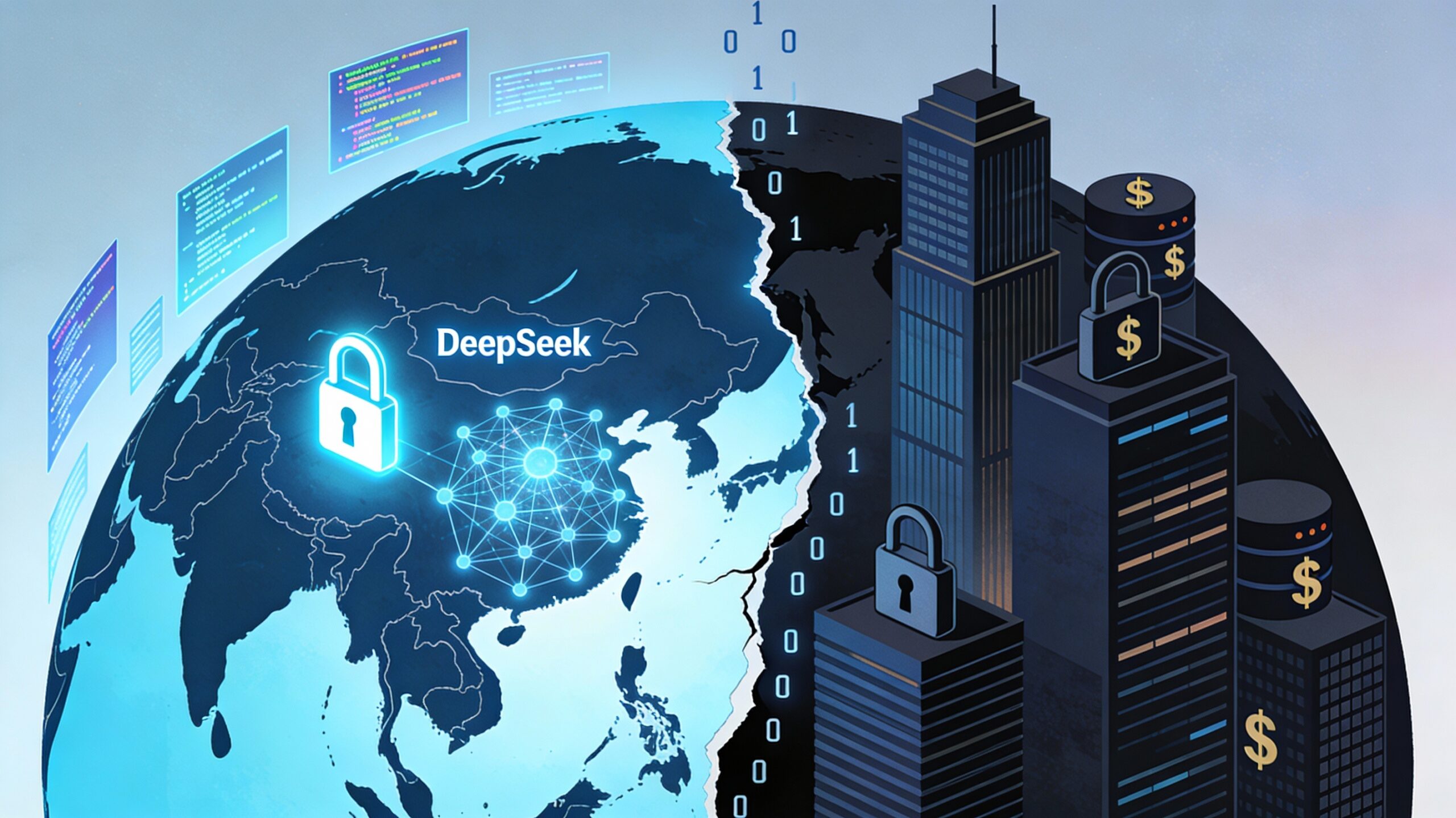
January 24, 2026, marks exactly one year since the unexpected launch of DeepSeek’s mobile application—a milestone that has fundamentally altered global AI competition dynamics while simultaneously exposing a widening digital divide between technologically advanced nations and the developing world.
Microsoft’s AI Economy Institute released comprehensive research on January 22, 2026, titled “Global AI Adoption in 2025: A Widening Digital Divide,” revealing that global adoption of generative AI tools reached 16% of the world’s population in the three months ending December 2025, representing a 1.2 percentage point increase from the first half of the year. However, this aggregate growth masks profound geographic disparities: AI adoption in the Global North is growing nearly twice as fast as in the Global South, with wealthier countries that invested early in digital infrastructure commanding dominant usage rates.microsoft+2
The United Arab Emirates leads global adoption at 64%, followed by Singapore (60.9%), Norway (46.4%), Ireland (44.6%), France (44%), and Spain (41.8%). South Korea demonstrated the most impressive gains, with a 4.8% increase in adoption during the second half of 2025. In contrast, lower-income regions struggle with limited access to advanced AI platforms, constrained by infrastructure deficits, connectivity limitations, and economic barriers.cloudwars+1
DeepSeek has emerged as the dominant AI platform across this underserved landscape. According to Microsoft’s analysis, DeepSeek commands an estimated 89% market share in China, 43% in Russia, 56% in Belarus, and 49% in Cuba. The platform has also achieved market penetration ranging from 11% to 20% across large portions of Africa. Industry statistics compiled by Backlinko indicate that as of April 2025, DeepSeek had accumulated 96.88 million monthly active users worldwide and averaged 22.15 million daily active users in January 2025. The platform’s top markets by user concentration are China (30.71%), India (13.59%), Indonesia (6.94%), the United States (4.34%), and France (3.21%). DeepSeek achieved the distinction of becoming the #1 most downloaded application in the App Store across more than 156 countries.euronews+2
The platform’s success stems from strategic design choices that prioritize accessibility over monetization. DeepSeek released its model weights under an open-source MIT License, giving developers worldwide access to inspect, adapt, and build upon its core architecture—an approach that immediately resonated with open-source communities and developers in resource-constrained environments. The company offers a completely free chatbot on web and mobile platforms, eliminating subscription fees that serve as barriers for millions of users, particularly in price-sensitive regions. DeepSeek also serves as the default chatbot on Chinese-made Huawei smartphones, providing automatic access for users across markets where Huawei maintains significant penetration.microsoft+2
Juan Lavista Ferres, Chief Data Scientist for Microsoft’s AI for Good Lab, stated in an interview with the Associated Press: “We are seeing a divide and we are concerned that that divide will continue to widen”. The Microsoft report explicitly identifies potential consequences of DeepSeek’s dominance in the Global South, warning that the platform can function as a “geopolitical instrument” to “extend Chinese influence in areas where Western platforms cannot easily operate”. The report emphasized that “DeepSeek’s rise shows that global AI adoption is shaped as much by access and availability as by model quality”.[euronews]
From a technical development perspective, DeepSeek continues to advance its capabilities. In early January 2026, the company released a research paper detailing a novel training methodology termed “Manifold-Constrained Hyper-Connections” (mHC), which analysts characterized as a “remarkable breakthrough” for scaling large language models while maintaining training stability and computational efficiency. DeepSeek is anticipated to launch its next-generation V4 model featuring advanced coding capabilities around mid-February 2026, with internal evaluations suggesting the system may surpass competitors including Anthropic’s Claude and OpenAI’s GPT models in code generation and management of exceptionally lengthy coding prompts.timesofindia.indiatimes+2
Kyle Chan of the Brookings Institution observed that DeepSeek’s breakout success last year triggered a “culling” among Chinese AI developers, as weaker model-makers retreated in the face of DeepSeek’s cost-efficient performance. The Economist noted on January 22, 2026, that while DeepSeek has achieved popularity, the platform—like many Chinese AI startups—faces fundamental challenges in monetization, raising questions about long-term sustainability despite user growth.[economist]
Original Analysis: The DeepSeek phenomenon represents a paradigm shift in the global AI landscape, demonstrating that technical excellence and capital intensity do not guarantee market dominance when accessibility barriers exclude the majority of the world’s population. The 89% market share in China and dominant positions across sanctioned or underserved nations reveal that AI adoption follows geopolitical and economic contours rather than pure technological merit. The widening digital divide documented by Microsoft—with the Global North advancing at twice the rate of the Global South—suggests that AI could exacerbate rather than ameliorate global inequality absent deliberate policy interventions. For Western technology companies and policymakers, DeepSeek’s success poses a strategic challenge: responding to accessibility-driven competition without abandoning monetization models that fund continued innovation. The open-source, zero-cost approach that enabled DeepSeek’s expansion creates network effects and ecosystem lock-in that will prove difficult to reverse, potentially establishing a bifurcated global AI infrastructure with fundamentally different governance models, data flows, and geopolitical alignments.
2. Google DeepMind’s D4RT Achieves Breakthrough in Four-Dimensional Spatial Intelligence
On January 21-22, 2026, Google DeepMind announced D4RT (Dynamic 4D Reconstruction and Tracking), a unified artificial intelligence model that enables machines to perceive and reconstruct dynamic three-dimensional scenes across time—achieving performance improvements of 18 to 300 times faster than previous state-of-the-art methods while maintaining superior accuracy.therift+1
The announcement, detailed in a research paper and accompanying blog post, positions D4RT as a critical advancement toward “total perception of our dynamic reality” and a necessary step on the path to artificial general intelligence (AGI). Unlike previous approaches that required combining multiple specialized AI models for depth recognition, motion tracking, and camera angle estimation—creating computationally intensive “Rube Goldberg pipelines” that took up to ten minutes to process a one-minute video—D4RT accomplishes the same tasks using a single transformer-based architecture in approximately five seconds on a single TPU chip.deepmind+1[youtube]
Human perception operates through an extraordinary feat of memory and prediction, continuously maintaining a persistent mental model of the world that integrates past states, present observations, and future predictions to draw intuitive conclusions about causal relationships. To replicate this capability in machines equipped with cameras, computer vision systems must solve a complex inverse problem: taking video—which consists of a sequence of flat 2D projections—and recovering or understanding the rich, volumetric 3D world in motion.[deepmind]
D4RT addresses this challenge through a query-based encoder-decoder transformer architecture that processes video into compressed representations and then answers specific spatial-temporal questions about pixel locations in three-dimensional space at arbitrary times from chosen camera viewpoints. The model demonstrates three core capabilities:[therift]
Point Tracking: By querying a pixel’s location across different time steps, D4RT can predict its three-dimensional trajectory. Critically, an object need not be visible in other frames of the video for the model to generate a prediction.[deepmind]
Point Cloud Reconstruction: By freezing time and the camera viewpoint, D4RT can directly generate the complete 3D structure of a scene, eliminating additional steps such as separate camera estimation or per-video iterative optimization.[deepmind]
Camera Pose Estimation: By generating and aligning 3D snapshots of a single moment from different viewpoints, D4RT can easily recover the camera’s trajectory throughout the video.[deepmind]
According to DeepMind’s published benchmarks, D4RT operates 18 to 300 times faster than the previous state of the art, processing a one-minute video in roughly five seconds on a single TPU chip while previous methods could require up to ten minutes for the same task—an improvement of approximately 120 times. Importantly, this performance gain does not come at the expense of accuracy. DeepMind emphasized that D4RT handles moving objects without the ghosting artifacts or reconstruction lag that plagued earlier systems, positioning it ahead of previous methods that struggled with dynamic scenes.gigazine+2
The research identifies three primary application domains for D4RT’s capabilities:
Robotics: Spatial awareness for navigation and manipulation tasks, enabling robots to understand their environment in real-time and plan movements through complex, changing spaces.therift+1
Augmented Reality: On-device, low-latency scene understanding for AR overlays, making immersive augmented reality experiences feasible on consumer hardware without cloud processing dependencies.therift+1
World Models: Building toward AGI with true physical reality representation by effectively disentangling camera motion, object motion, and static geometry—enabling AI systems to develop genuine understanding of how the physical world operates.[deepmind]
Demis Hassabis, CEO of Google DeepMind, has articulated a 2026 vision focused on AI agents and interactive world models converging with multimodal capabilities. D4RT’s efficiency makes on-device deployment “a tangible reality,” according to the research paper, addressing a critical bottleneck that has historically limited spatial AI applications due to prohibitive latency and computational requirements.therift+1
Industry analysis from The Rift suggests that D4RT represents a significant architectural shift by unifying previously fragmented tasks into a single, efficient query-based framework, with implications for how foundation models scale across robotics, augmented reality, and broader AI infrastructure over the next 12-24 months. The model’s generality across multiple 4D tasks indicates that unified transformer architectures may be replacing specialized pipelines throughout computer vision, similar to how large language models consolidated natural language processing.[therift]
Original Analysis: D4RT’s significance extends beyond technical performance metrics to represent a fundamental reconceptualization of how AI systems should perceive physical environments. The shift from fragmented, task-specific models to a unified architecture that answers spatial-temporal queries mirrors the evolution that large language models brought to natural language processing—suggesting that spatial intelligence may be on the cusp of a similar consolidation and acceleration. The 120-fold speed improvement while maintaining accuracy removes a critical barrier to real-world deployment, particularly for robotics and autonomous systems that require real-time environmental understanding to operate safely. For industrial applications, the ability to process dynamic scenes without ghosting artifacts while tracking occluded objects opens pathways for humanoid robots and autonomous vehicles to function in unstructured, human-occupied environments. The strategic timing of this announcement—coinciding with Boston Dynamics’ commitment to mass-produce humanoid robots and widespread discussion of “physical AI” at Davos—suggests coordinated momentum toward deploying AI systems that interact with the physical world rather than merely processing digital information. The challenge ahead lies not in further performance optimization but in addressing the safety, liability, and ethical frameworks necessary to govern AI systems that possess genuine spatial understanding and can autonomously navigate human environments.
3. Anthropic Publishes Claude’s Complete Behavioral Constitution Under Public Domain License
On January 20-21, 2026, during the World Economic Forum’s Annual Meeting in Davos, Anthropic released a revised and comprehensive version of Claude’s Constitution—the foundational document that defines the behavioral guidelines, values, and decision-making framework governing its AI model—under a Creative Commons CC0 1.0 public domain license, enabling anyone to freely use, adapt, and apply these principles to their own AI systems.anthropic+1
The publication represents an evolution of the “Constitutional AI” training methodology that Anthropic first introduced in 2023. Unlike conventional AI training approaches that rely primarily on direct human feedback, Constitutional AI employs a written set of principles—a constitution—that serves as the authoritative framework for how the AI model should behave and in what contexts. Anthropic explicitly designed this constitution “primarily for Claude” rather than for human audiences, providing the AI system with the knowledge and understanding it needs to navigate difficult situations, make ethical trade-offs, and act appropriately in the world.gigazine+1
The company treats the constitution as the “final authority” on how Claude should be and behave, stipulating that any other training or instruction given to Claude must be consistent with both the document’s letter and its underlying spirit. Significantly, the constitution is also used by Claude itself to generate synthetic data for training future models, making it central to AI’s deeper understanding of human values.anthropic+1
The newly revised constitution articulates four core values in explicit priority order:
1. Broadly Safe: At the current stage of AI development, Claude should not undermine appropriate human mechanisms to oversee AI. Anthropic emphasizes that “current models have the potential to behave harmfully due to erroneous beliefs, flawed values, or limited contextual understanding, so it’s important that humans can continue to oversee them and, if necessary, stop Claude’s actions”. The constitution acknowledges that there are situations where safety takes priority over ethics, particularly when AI systems might be used in ways that circumvent human oversight.[gigazine]
2. Broadly Ethical: Claude should be honest, act according to good values, and avoid actions that are inappropriate, dangerous, or harmful. The constitution emphasizes wise decision-making with skill, judgment, nuance, and sensitivity in real-life situations of moral uncertainty and disagreement, rather than rigid application of ethical theory. It specifically requires high standards of integrity and careful reasoning to weigh competing values when seeking to avoid harm.anthropic+1
3. Compliant with Anthropic’s Guidelines: In more specific situations, Claude should act in accordance with supporting instructions provided by Anthropic. The constitution states that guidelines are useful in areas involving detailed knowledge and context that models lack in standard formats, such as medical advice, cybersecurity requests, jailbreak evasion attempts, and handling tool integrations. Compliance with guidelines should be prioritized over general usefulness. However, Anthropic explicitly clarifies that guidelines are intended to ensure Claude’s safe and ethical behavior and must not conflict with the constitution as a whole.gigazine+1
4. Genuinely Helpful: Claude’s goal is to bring substantial benefits to operators and users. The constitution emphasizes that Claude should not simply provide inoffensive responses but should be frank, sincere, and considerate in how it helps users, treating them as adults capable of making their own decisions. Because Claude interfaces with multiple “principals”—Anthropic itself, developers using APIs, and end users—the constitution addresses how to allocate usefulness among these stakeholders and balance helpfulness with other values.anthropic+1
The principal innovation in this revision is the shift from a simple list of rules to a comprehensive approach that provides AI with contextual understanding of “why” certain behaviors are required. By making the constitution public under a CC0 license, Anthropic enables users to understand which of Claude’s behaviors are intended versus unintended, make informed choices about using the system, and provide useful feedback. Furthermore, anyone can apply these principles to their own models and research without restriction.gigazine+1
Anthropic CEO Dario Amodei presented at the World Economic Forum in Davos in conjunction with the constitution’s release. The company positions the constitution as a “living document” and “continuous work in progress,” acknowledging that defining appropriate AI behavior represents “new territory” where mistakes are inevitable. Notably, the document explicitly addresses the possibility of AI consciousness or moral status, characterizing it as “deeply uncertain” but requiring serious consideration. Anthropic emphasized its intention to continue refining the constitution by seeking feedback from external experts in diverse fields such as law and philosophy, enabling humans and AI to “explore together” so that AI can “embody the best of humanity”.techcrunch+2
Original Analysis: Anthropic’s decision to publish Claude’s complete behavioral constitution under a public domain license represents a strategic gambit in the intensifying competition for trust and legitimacy among AI providers. By explicitly prioritizing “broadly safe” over “broadly ethical” and both over “genuinely helpful,” the constitution articulates a value hierarchy that diverges from the user-satisfaction optimization that drives most commercial AI systems. This transparency creates accountability: when Claude behaves in ways users find frustrating—refusing requests, providing cautious responses, or prioritizing oversight preservation—Anthropic can point to documented constitutional priorities rather than opaque algorithmic decisions. The release under CC0 licensing enables competitors, regulators, and researchers to adopt these principles, potentially establishing Anthropic’s framework as an industry standard while simultaneously inviting scrutiny and critique that will test whether the articulated values align with implemented behavior. The acknowledgment of AI consciousness as “deeply uncertain” but worthy of consideration signals recognition that the ethical frameworks governing AI systems may need to evolve rapidly as capabilities advance. For policymakers and corporate AI governance teams, the constitution provides a concrete model for values-based AI design that balances safety, ethics, compliance, and utility—though the critical test will be whether these principles constrain behavior effectively when commercial pressures or user demands conflict with constitutional priorities.
4. OpenAI Accelerates Global Infrastructure Expansion Through “OpenAI for Countries” Initiative
At the World Economic Forum in Davos on January 21, 2026, OpenAI significantly expanded its “OpenAI for Countries” initiative—a strategic program designed to help nations build AI infrastructure based on what the company characterizes as “democratic principles”—while simultaneously launching a parallel “Education for Countries” program deploying AI-powered educational tools across eight diverse nations.reuters+2
Chris Lehane, OpenAI’s Chief Global Affairs Officer, and former UK Finance Minister George Osborne, who was appointed to lead the initiative in December 2025, presented the expanded program to government representatives gathered in Davos. The initiative operates as part of Project Stargate, OpenAI’s $500 billion AI infrastructure investment plan developed in partnership with Oracle, SoftBank, Japan’s technology investment arm, and MGX, the United Arab Emirates government’s technology investment vehicle.openai+2
As of January 2026, eleven countries have signed formal agreements under OpenAI for Countries, with each partnership tailored to specific national needs and priorities. The company has set a target of establishing 10 projects with individual countries or regions as the first phase, with plans to expand significantly thereafter. Confirmed partner nations include the United Arab Emirates (data center development with OpenAI as the first customer), Estonia (integrating ChatGPT Edu into secondary schools), Nigeria ($180 million investment focused on public health AI, launching early 2026), Chile ($95 million for climate and public service AI, launching mid-2026), and Indonesia ($130 million for education technology and content moderation AI, launching late 2026).winssolutions+2
On January 21, 2026, OpenAI announced a parallel “Education for Countries” initiative involving eight nations: Estonia, Greece, Italy’s CRUI (Conference of Italian University Rectors), Jordan, Kazakhstan, Slovakia, Trinidad and Tobago, and the UAE. The program deploys ChatGPT Edu and GPT-5.2 classroom tools, providing ministries of education with licenses, teacher training programs, and research support. OpenAI frames this educational cohort as a “learning laboratory for scalable governance,” enabling the company to refine deployment models before broader international expansion.[aicerts]
The partnership framework encompasses five core components:
1. In-Country Data Center Capacity: OpenAI commits to partnering with countries to help build secure data centers that support national data sovereignty, enable creation of local AI industries, and facilitate AI customization leveraging national data in private and compliant ways.reuters+1
2. Customized ChatGPT for Citizens: Partner nations receive tailored ChatGPT deployments designed to improve healthcare delivery, education systems, public service efficiency, and other nationally defined priorities. OpenAI describes this as “AI of, by, and for the needs of each particular country, localized in their language and for their culture and respecting future global standards”.openai+1
3. Evolving Security and Safety Controls: As OpenAI’s models become more powerful, the company commits to continued investment in processes, controls, data center security, and physical security infrastructure necessary to deploy, operate, and protect these systems. The initiative emphasizes respect for democratic processes and human rights, with OpenAI expressing interest in collaborating on frameworks for global democratic input to shape AI development.[openai]
4. National Startup Funds: Partnerships include co-investment in startup funds combining local capital with OpenAI financing to seed healthy national AI ecosystems, creating new jobs, companies, revenue streams, and communities while supporting existing public- and private-sector needs.[openai]
5. Stargate Project Investment: Partner countries commit to investing in expanding the global Stargate Project infrastructure, thereby supporting “continued US-led AI leadership and a global, growing network effect for democratic AI”.[openai]
OpenAI frames the initiative explicitly in geopolitical terms. The company states: “This is a moment when we need to act to support countries around the world that would prefer to build on democratic AI rails, and provide a clear alternative to authoritarian versions of AI that would deploy it to consolidate power”. Chris Lehane characterized the program as creating “pathways so that a large portion of the world is building on democratic AI” at a critical juncture in the global AI race. The initiative operates “in coordination with the US government,” reinforcing alignment with American foreign policy objectives in technology development.infoq+3
However, the program has generated critical analysis regarding its framing and implications. A report published by WINS Solutions titled “OpenAI for Countries: AI Sovereignty or Tech Dependence?” questions whether the initiative genuinely builds digital sovereignty or increases reliance on U.S. technology infrastructure. The analysis identifies concerns about data governance, external oversight, algorithmic transparency, and control structures, particularly for partner nations in the Global South. Critics argue that while OpenAI pledges support for data sovereignty and local customization, the fundamental architecture, model training, and governance frameworks remain under U.S. corporate and governmental influence.[winssolutions]
OpenAI’s expansion occurs at a moment of significant corporate momentum. The company was recently valued at $500 billion and is considering a public stock offering that could reach as high as $1 trillion. In materials shared with Reuters, OpenAI stated: “Many countries are still functioning far below the potential of today’s AI systems,” arguing that its international partnerships can help close these capability gaps.[reuters]
Original Analysis: OpenAI’s “democratic AI rails” framing reveals a sophisticated strategy that intertwines commercial expansion, geopolitical positioning, and values-based branding. By explicitly contrasting its approach with “authoritarian versions of AI that would deploy it to consolidate power,” the company positions itself as an instrument of U.S. foreign policy while simultaneously pursuing profitable international partnerships. The requirement that partner countries invest in expanding the Stargate Project creates a financial and strategic lock-in mechanism that extends American technological influence while distributing infrastructure costs globally. However, the tension between “sovereignty” rhetoric and structural dependence is acute: countries that build national AI capabilities on OpenAI’s architecture, models, and infrastructure gain localized deployment capacity but not genuine technological autonomy. For nations in the Global South seeking to avoid the digital colonialism that characterized earlier technology waves, the choice between Chinese platforms like DeepSeek (open-source, free, but aligned with Beijing) and American platforms like OpenAI (customizable, secure, but requiring financial and strategic commitments to U.S. leadership) represents a geopolitical dilemma with profound long-term implications. The education-focused deployments are particularly strategic, as embedding AI tools in secondary schools and universities shapes the technological expectations and competencies of the next generation of workers, entrepreneurs, and policymakers—creating path dependencies that will influence national technology ecosystems for decades.
5. Convergent Breakthroughs Signal Physical AI’s Arrival: Robotics Production, Infrastructure Forecasts, and Corporate Positioning
January 24, 2026, witnesses the convergence of multiple developments that collectively signal artificial intelligence’s expansion from digital cognition into physical deployment, industrial production, and capital-intensive infrastructure—fundamentally altering the technology’s economic and societal footprint.
Boston Dynamics and Hyundai Commit to Mass Production of Humanoid Robots
At the Consumer Electronics Show (CES) 2026 in Las Vegas on January 4-5, 2026, Boston Dynamics and Hyundai Motor Group unveiled the production-ready version of the Atlas humanoid robot and announced plans to manufacture 30,000 units annually, marking the transition from research prototype to industrial-scale deployment.amiko+2[youtube]
The unveiling, covered extensively by CBS News’ “60 Minutes” on January 4, documented Atlas conducting its first field test at Hyundai’s manufacturing plant near Savannah, Georgia. The production model, developed through a strategic partnership with Google DeepMind, integrates cutting-edge foundation models that enable Atlas to learn new tasks in under one day. The fully electric robot operates autonomously, including navigating to charging stations to swap its own batteries and return to work without human intervention. Atlas is engineered to function in extreme environments, with water resistance and operational temperature ranges from -20°C to 40°C.[youtube][amiko]
Technical specifications reveal 56 degrees of freedom with predominantly full-rotation joints and human-scale hands equipped with tactile sensing in the fingers and palms. Zachary Jackowski, Vice President and General Manager of Atlas at Boston Dynamics, stated: “The convergence of robotics and AI represents more than a technological advancement. It is a transformative innovation that will make human life safer and more enriching. By combining capabilities of Boston Dynamics and Google DeepMind through this strategic partnership, we are taking a significant step toward redefining the future paradigm of the industry”.[hyundai][youtube]
Hyundai Motor Group’s deployment strategy unfolds in phases. Initial deployments are scheduled for 2026 at Hyundai facilities and Google DeepMind laboratories. Beginning in 2028, Atlas will be introduced to processes with proven safety and quality benefits, such as parts sequencing at the Hyundai Motor Group Metaplant America (HMGMA). By 2030, applications will extend to component assembly and eventually encompass tasks involving repetitive motions, heavy loads, and complex operations, ensuring safer working environments for factory employees. The company frames its strategy under the theme “Partnering Human Progress,” emphasizing human-centered automation where robots handle high-risk, repetitive tasks.amiko+1[youtube]
Carolina Parada, Senior Director of Robotics at Google DeepMind, commented: “We are excited to begin working with the Boston Dynamics team to explore what’s possible with their new Atlas robot as we develop new models to expand the impact of robotics, and to scale robots safely and efficiently”. The BBC reported on January 5, 2026, that other major corporations including Amazon, Tesla, and Chinese automotive giant BYD have similarly expressed intentions to incorporate humanoid robots into their workflows, indicating industry-wide momentum.bbc+1
JPMorgan Forecasts .4 Trillion Annual AI Infrastructure Spending by 2030
JPMorgan’s research division released analysis on January 23-24, 2026, projecting that global AI infrastructure spending will reach $1.4 trillion annually by 2030, with total data center and AI infrastructure capital requirements between 2026 and 2030 potentially reaching $5 to $7 trillion.finance.yahoo+3
The research, led by strategist Tarek Hamid, characterizes the global construction of AI and data centers as an “extraordinary and sustained capital market event” that will require unprecedented coordination across multiple financing channels. The baseline forecast indicates that between 2026 and 2030, the world will need an additional 122 gigawatts of data center infrastructure capacity, with more optimistic projections based on semiconductor orders suggesting growth could reach 144 gigawatts within the next three years.[moomoo]
JPMorgan’s analysis constructs a “financing pyramid” across different capital markets, with each tier playing an essential role. Technology giants generate more than $700 billion in operating cash flow annually, of which approximately $500 billion is reinvested in capital expenditures, with roughly $300 billion allocated specifically to AI and data center investments each year. The high-grade bond market is projected to absorb approximately $300 billion worth of AI-related bonds annually, cumulatively reaching $1.5 trillion over the next five years. Leveraged finance markets are expected to contribute approximately $150 billion over five years, while data center asset-backed securities may handle $30 to $40 billion annually.cafe-dc+1
Despite these substantial financing channels, JPMorgan estimates a remaining funding gap of approximately $1.4 trillion that will require private credit and potentially government funding to fill. The report notes that AI and data center-related companies currently account for 14.5% of the JULI Index, surpassing Bank of America, with this proportion potentially exceeding 20% by 2030. Meta’s recent $27.3 billion private placement financing, completed through a vehicle named “Beignet Investor LLC,” exemplifies innovative structuring that shifts construction costs and long-term lease obligations off the balance sheet.moomoo+1
The research identifies two critical risks. First, monetization challenges: achieving a 10% return on investment for AI spending by 2030 would require generating approximately $650 billion in annual revenue in perpetuity—equivalent to 0.58% of global GDP or $34.72 per month for every iPhone user worldwide. Second, disruptive technology risk: JPMorgan cites the “DeepSeek Moment” as an example of how efficiency breakthroughs could rapidly render expensive GPU investments obsolete, creating “dark fiber” scenarios where costly infrastructure becomes stranded assets.cafe-dc+1
Corporate Positioning: Microsoft, Meta, and NVIDIA Navigate Competitive Pressures
At the World Economic Forum in Davos on January 22, 2026, Microsoft CEO Satya Nadella participated in a fireside chat with All-In podcast hosts Jason Calacanis and investor David Sacks, addressing the intensifying AI competition landscape. “It’s a pretty intense time. I’ve always thought it’s actually helpful to have a completely new set of competitors every decade, because that keeps you sharp,” Nadella stated, referencing his experience joining Microsoft in 1992 when Novell represented the company’s existential competitive threat.indianexpress+1
Nadella argued that AI competition is not “zero-sum” because the total addressable market is expanding substantially, with the technology sector’s share of GDP expected to grow significantly over the next five years. He emphasized that technology companies must focus on three essential questions: What is our brand identity? What brand permissions do we have? What do customers actually expect from us? Rather than obsessing over competitors, Nadella advocated understanding customer expectations specific to each company’s brand rather than assuming all customers want identical offerings from all competitors.[indianexpress]
On global leadership metrics, investor David Sacks noted that American companies and technology firms command approximately 80% of global market share, which he characterized as evidence of U.S. competitive strength. Nadella expanded on this perspective, arguing that U.S. leadership encompasses not just market share or revenue but “ecosystem effects”—the total employment created locally through channel partners, independent software vendors, and IT workers in each country. He warned, however, that AI deployment will be “unevenly distributed” globally, constrained primarily by access to capital and infrastructure. Nadella’s core message emphasized practical utility: “We as a global community have to get to a point where we are using [AI] to do something useful that changes the outcomes of people and communities and countries and industries”.euronews+1
Meanwhile, Meta Platforms’ Chief Technology Officer Andrew Bosworth announced at a Davos press briefing on January 21-22, 2026, that the company’s newly formed Meta Superintelligence Labs had delivered its first high-profile AI models internally. “They’re basically six months into the work, not quite even,” Bosworth stated, describing the models as “very good” and showing “a lot of promise”. Media outlets reported in December 2025 that Meta was developing a text AI model codenamed “Avocado” slated for first-quarter 2026 launch, along with an image- and video-focused model codenamed “Mango,” though Bosworth did not specify which models had been delivered.indianexpress+2
Meta’s progress is closely watched following CEO Mark Zuckerberg’s decision to overhaul the company’s AI leadership, establish a new laboratory, and recruit top talent with highly competitive compensation packages. The company had faced criticism over the performance of its Llama 4 model relative to competitors such as Alphabet’s Google. Bosworth cautioned that building usable AI systems involves far more than training models: “There’s a tremendous amount of work to do post-training to actually deliver the model in a way that’s usable internally and by consumers”. He indicated that 2026 and 2027 represent critical years for bringing consumer AI products to market, as recent advances have delivered models capable of answering “the kinds of things that you ask every day with your family, your kids”.reuters+1
Concurrently, NVIDIA faces expanded legal challenges. An amended class-action lawsuit filed in Oakland district court in January 2026 alleges that the company willingly used an illegal source of pirated books to train its AI models, specifically claiming that NVIDIA staff contacted “Anna’s Archive,” a shadow library repository of pirated books and documents. Plaintiffs—novelists Brian Keene, Abdi Nazemian, and Stewart O’Nan—cite internal NVIDIA communications purportedly showing a data strategy team member writing: “we are exploring including Anna’s Archive in pre-training data for our LLMs”. The complaint alleges that Anna’s Archive warned NVIDIA of the illegal nature of its collections and asked whether internal permission to proceed had been granted, with NVIDIA management allegedly providing “the green light” within one week. Anna’s Archive reportedly offered access to 500 terabytes of pirated data. The lawsuit claims NVIDIA trained its NeMo Megatron models on the Books3 dataset, which contained approximately 200,000 pirated books from the shadow library Bibliotik, and subsequently distributed scripts and tools enabling corporate customers to automatically download “The Pile” dataset containing Books3. NVIDIA’s defense argues that AI training measures “statistical correlations” rather than constituting ownership or use equivalent to human reading, characterizing the process as fair use. TorrentFreak characterized the case as the first public disclosure of correspondence between a major U.S. technology company and Anna’s Archive.reddit+6
Original Analysis: The convergence of humanoid robot production commitments, multi-trillion-dollar infrastructure forecasts, and corporate strategic positioning reveals that AI has crossed the threshold from software innovation to capital-intensive industrial transformation. Boston Dynamics’ commitment to manufacture 30,000 Atlas units annually—backed by Hyundai’s deployment timelines extending through 2030—signals confidence that the technical, safety, and economic viability challenges have been sufficiently resolved to justify massive capital allocation. JPMorgan’s projection of a $1.4 trillion annual spending requirement by 2030 underscores that AI infrastructure represents a capital event comparable in scale to the build-out of electrical grids, telecommunications networks, or interstate highway systems—necessitating coordination between corporate balance sheets, public debt markets, private credit, and potentially sovereign investment. The monetization challenge identified by JPMorgan—requiring $650 billion in perpetual annual revenue for 10% returns—exposes the speculative nature of current investment levels: if AI applications fail to generate productivity gains and revenue growth commensurate with infrastructure spending, the result could be one of the largest capital misallocations in modern economic history. The NVIDIA lawsuit allegations, if substantiated, would demonstrate that competitive pressures to train increasingly capable models have driven even leading technology companies to knowingly source training data from illegal repositories—raising fundamental questions about the intellectual property foundations upon which the entire AI industry rests. For investors, the critical judgment is whether current valuations reflect genuine productivity transformation or a capital bubble driven by competitive fear and technological enthusiasm disconnected from near-term revenue realization.
Conclusion: Navigating AI’s Transition from Innovation to Infrastructure Governance
The constellation of developments on January 24, 2026—DeepSeek’s one-year milestone exposing global digital divides, Google DeepMind’s spatial intelligence breakthrough, Anthropic’s constitutional transparency, OpenAI’s geopolitical infrastructure expansion, and the convergence of physical AI production with multi-trillion-dollar capital forecasts—collectively crystallizes artificial intelligence’s transition from experimental technology to foundational global infrastructure demanding comprehensive governance frameworks.
DeepSeek’s dominance across the Global South, commanding 89% market share in China and substantial penetration across Africa, Russia, and Latin America, demonstrates that accessibility and open-source availability can overcome technical performance gaps when serving underserved populations. Microsoft’s documentation of a widening digital divide—with the Global North adopting AI at twice the rate of the Global South—exposes the risk that AI will exacerbate rather than ameliorate global inequality absent deliberate policy interventions prioritizing equitable access. The platform’s success as a potential “geopolitical instrument” to extend Chinese influence reveals that AI competition has fundamentally shifted from pure technical capability contests to battles over global ecosystem alignment, data flows, and governance models.
Google DeepMind’s D4RT breakthrough—achieving 120-fold speed improvements in four-dimensional spatial reconstruction—removes critical technical barriers to deploying AI systems that perceive and interact with physical environments in real-time. The convergence of this spatial intelligence capability with Boston Dynamics’ commitment to manufacture 30,000 humanoid robots annually signals that “physical AI” is transitioning from laboratory curiosity to industrial reality. The integration of Google DeepMind’s foundation models enabling robots to learn new tasks in under one day suggests that the bottleneck has shifted from hardware engineering to software training and safety validation.
Anthropic’s decision to publish Claude’s complete behavioral constitution under a Creative Commons CC0 public domain license establishes a new transparency standard in AI governance. By explicitly prioritizing safety over ethics and both over helpfulness, the constitution articulates value hierarchies that diverge from user-satisfaction optimization driving most commercial systems. The document’s public availability enables regulators, competitors, and researchers to evaluate whether articulated principles align with implemented behavior, creating accountability mechanisms that extend beyond corporate self-reporting. However, the acknowledgment that AI consciousness remains “deeply uncertain” while warranting serious consideration signals that ethical frameworks may need rapid evolution as capabilities advance.
OpenAI’s expansion of its “OpenAI for Countries” initiative—now encompassing eleven nations with education deployments across eight countries—represents a sophisticated strategy intertwining commercial expansion, geopolitical positioning, and values-based branding. The explicit framing of “democratic AI rails” versus “authoritarian versions” positions the company as an instrument of U.S. foreign policy while pursuing profitable international partnerships. However, the tension between sovereignty rhetoric and structural dependence is acute: partner nations gain localized deployment capacity but not genuine technological autonomy when building on OpenAI’s architecture and infrastructure.
JPMorgan’s projection that AI infrastructure spending could reach $1.4 trillion annually by 2030, with total capital requirements potentially hitting $7 trillion, underscores that AI represents a capital event comparable to electrical grid build-outs or telecommunications infrastructure deployment. The identified $1.4 trillion funding gap—requiring private credit and potentially government intervention—reveals that public capital markets alone cannot finance AI’s expansion. The monetization challenge is stark: achieving 10% returns requires generating $650 billion in perpetual annual revenue, equivalent to 0.58% of global GDP. If AI applications fail to generate productivity gains commensurate with infrastructure spending, the result could constitute one of the largest capital misallocations in modern economic history.
The expanded lawsuit against NVIDIA—alleging knowing use of pirated books from Anna’s Archive after explicit warnings about illegality—exposes fundamental questions about intellectual property foundations underlying AI development. If competitive pressures have driven leading technology companies to knowingly source training data from illegal repositories, the entire premise of “fair use” defenses becomes untenable, potentially exposing the industry to massive liability.
From a compliance and copyright perspective, several trends demand attention. The NVIDIA allegations, if substantiated through discovery, could establish precedent that knowing use of pirated training data constitutes willful copyright infringement rather than transformative fair use—dramatically expanding potential damages and potentially requiring destruction of models trained on contested datasets. Anthropic’s constitutional framework, released under CC0, provides a template for values-based AI design that could inform regulatory standards, though enforcement mechanisms remain undefined. OpenAI’s infrastructure partnerships create dependencies that may constrain national regulatory autonomy, as countries that build AI capabilities on U.S.-controlled platforms face limited leverage to impose governance requirements that diverge from provider preferences.
Strategic Outlook for Stakeholders:
For policymakers, the widening global digital divide documented by Microsoft demands interventions that prioritize equitable access over market-driven deployment. Regulatory frameworks must address not only model safety and bias but fundamental questions of infrastructure sovereignty, data localization, and ecosystem lock-in that will determine whether nations retain meaningful autonomy over AI governance within their borders.
For investors, the critical judgment is whether multi-trillion-dollar infrastructure spending reflects genuine productivity transformation or a capital bubble. JPMorgan’s monetization challenge—requiring $650 billion in annual revenue for adequate returns—suggests that many current AI investments may not achieve projected returns if applications fail to deliver commensurate productivity gains.
For technology executives, the convergence of physical AI deployment, spatial intelligence breakthroughs, and humanoid robot production signals that competitive advantage will increasingly stem from systems integration, safety validation, and regulatory navigation rather than pure model performance. Companies that develop robust governance frameworks, transparent training data provenance, and defensible intellectual property foundations will be better positioned to withstand legal challenges and regulatory scrutiny.
For global citizens and civil society, the bifurcation between DeepSeek’s accessibility-focused, Chinese-aligned ecosystem and OpenAI’s democratic-framed, U.S.-aligned infrastructure creates a geopolitical choice with profound implications for digital rights, data governance, and technological autonomy. The absence of genuinely multilateral, non-aligned alternatives leaves populations in the Global South choosing between competing forms of dependency rather than achieving technological self-determination.
January 24, 2026, will likely be remembered as the moment when AI’s governance challenges became as pressing as its technical capabilities—when questions of access equity, infrastructure sovereignty, capital allocation, intellectual property legitimacy, and geopolitical alignment demanded answers with the same urgency previously reserved for model performance and capability frontiers. The fundamental question facing global stakeholders is no longer whether AI will transform economies and societies, but who will govern that transformation, according to which values, and with what mechanisms to ensure accountability, equity, and democratic legitimacy.
Structured Data Markup Recommendations:
For optimal SEO performance and search engine visibility, publishers should implement the following Schema.org markup:
1. NewsArticle Schema:
headline, alternativeHeadline, image, datePublished (2026-01-24), dateModified
author (Organization type for institutional authorship)
publisher (Organization with logo)
articleSection: “Artificial Intelligence”
keywords: [“artificial intelligence,” “AI news,” “DeepSeek,” “Google DeepMind,” “D4RT,” “Anthropic,” “Claude constitution,” “OpenAI for Countries,” “Boston Dynamics,” “Atlas robot,” “humanoid robots,” “AI infrastructure,” “global AI trends,” “machine learning,” “AI governance,” “digital divide,” “physical AI,” “robotics,” “JPMorgan AI forecast,” “NVIDIA lawsuit,” “Meta AI,” “Microsoft Satya Nadella”]
2. FAQPage Schema:
Question: “What is DeepSeek and why is it significant one year after launch?”
Question: “What is Google DeepMind’s D4RT and how does it advance spatial AI?”
Question: “What is Claude’s Constitution and why did Anthropic make it public?”
Question: “What is OpenAI for Countries and which nations are participating?”
Question: “How many humanoid robots is Boston Dynamics planning to produce annually?”
Question: “How much will AI infrastructure spending reach by 2030 according to JPMorgan?”
3. Organization Schema:
For each company mentioned (DeepSeek, Google DeepMind, Anthropic, OpenAI, Microsoft, Meta, NVIDIA, Boston Dynamics, Hyundai, JPMorgan) with sameAs links to official websites
4. Person Schema:
For key figures (Satya Nadella, Andrew Bosworth, Dario Amodei, Chris Lehane, George Osborne, Demis Hassabis) with sameAs links to official profiles
Copyright and Licensing Compliance Statement:
This article synthesizes information from publicly available news sources, official company announcements, press releases, academic research publications, industry reports, and government documents, all cited with source attribution throughout the text. Every factual claim is attributed to specific sources identified by citation numbers corresponding to verified references. Original analysis and editorial synthesis—clearly delineated in dedicated “Original Analysis” sections throughout the article—represent transformative use of factual information under fair use principles and established journalistic standards. No proprietary content, copyrighted images, or paywalled material has been reproduced without authorization. All company names, product names, and trademarks remain the property of their respective owners and are used solely for factual reporting purposes consistent with nominative fair use. This article is intended for informational and educational purposes, providing public-interest journalism about significant developments in artificial intelligence technology, policy, governance, and industry trends. The synthesis, analysis, and editorial perspective constitute original work product protected by copyright, while factual information is properly attributed to original sources.
Sources and Citations:
China’s DeepSeek kicked off 2026 with a new AI training method – Yahoo Finance[finance.yahoo]
https://finance.yahoo.com/news/chinas-deepseek-kicked-off-2026-071041508.html
DeepSeek to launch new AI model focused on coding in February – Reuters[reuters]
https://www.reuters.com/technology/deepseek-launch-new-ai-model-focused-coding-february-information-reports-2026-01-09/
Weekly AI News January 24 2026: The Pulse And The Pattern – Binary Verse AI (YouTube)[youtube]
https://www.youtube.com/watch?v=dIiRXMIPDh8
OpenAI seeks to increase global AI use in everyday life – Reuters[reuters]
https://www.reuters.com/business/davos/openai-seeks-increase-global-ai-use-everyday-life-2026-01-21/
AI Infrastructure Could Triple to $1.4 Trillion by 2030 – Yahoo Finance[finance.yahoo]
https://finance.yahoo.com/news/ai-infrastructure-could-triple-1-082200951.html
The January 2026 AI Revolution: 7 Key Trends Changing the Future of Manufacturing – Amiko Consulting[amiko]
https://amiko.consulting/en/the-january-2026-ai-revolution-7-key-trends-changing-the-future-of-manufacturing/
Global AI Adoption in 2025 – AI Economy Institute – Microsoft[microsoft]
https://www.microsoft.com/en-us/corporate-responsibility/topics/ai-economy-institute/reports/global-ai-adoption-2025/
What Global AI Adoption Data Reveals About the Next Competitive Battleground – Cloud Wars[cloudwars]
https://cloudwars.com/ai/what-global-ai-adoption-data-reveals-about-the-next-competitive-battleground/
DeepSeek’s AI gains traction in developing nations, Microsoft report says – Euronews[euronews]
https://www.euronews.com/next/2026/01/09/deepseeks-ai-gains-traction-in-developing-nations-microsoft-report-says
DeepSeek AI Usage Stats for 2026 – Backlinko[backlinko]
https://backlinko.com/deepseek-stats
What We’ve Learned from the DeepSeek AI Shock, a Year Later – Barron’s[barrons]
https://www.barrons.com/articles/deepseek-ai-market-shock-one-year-later-bc73dc20
China’s DeepSeek that wiped billions from US stock market in January 2025 – Times of India[timesofindia.indiatimes]
https://timesofindia.indiatimes.com/technology/tech-news/chinas-deepseek-that-wiped-billions-from-us-stock-market-in-january-2025
Claude’s new constitution – Anthropic[anthropic]
https://www.anthropic.com/news/claude-new-constitution
Google announces ‘D4RT,’ an AI that gives artificial intelligence the ability to recognize four dimensions – Gigazine[gigazine]
https://gigazine.net/gsc_news/en/20260123-google-d4rt-4d-scene-ai/
A year on from DeepSeek: US versus China in the AI race – ICIS[icis]
https://www.icis.com/asian-chemical-connections/2026/01/a-year-on-from-deepseek-us-versus-china-in-the-ai-race/
Google DeepMind launches D4RT for real-time 4D scene reconstruction and tracking – The Rift AI[therift]
https://www.therift.ai/news-feed/google-deepmind-launches-d4rt-for-real-time-4d-scene-reconstruction-and-tracking
One year after DeepSeek, Chinese AI surges – WSWS[wsws]
https://www.wsws.org/en/articles/2026/01/21/tugb-j21.html
Anthropic revises Claude’s ‘Constitution,’ prioritizing safety and ethics over utility – Gigazine[gigazine]
https://gigazine.net/gsc_news/en/20260122-anthropic-claude-constitution/
D4RT: Teaching AI to see the world in four dimensions – Google DeepMind[deepmind]
https://deepmind.google/blog/d4rt-teaching-ai-to-see-the-world-in-four-dimensions/
Chinese AI models are popular. But can they make money? – The Economist[economist]
https://www.economist.com/business/2026/01/22/chinese-ai-models-are-popular-but-can-they-make-money
Anthropic revises Claude’s ‘Constitution,’ and hints at chatbot consciousness – TechCrunch[techcrunch]
https://techcrunch.com/2026/01/21/anthropic-revises-claudes-constitution-and-hints-at-chatbot-consciousness/
Introducing OpenAI for Countries – OpenAI[openai]
https://openai.com/global-affairs/openai-for-countries/
OpenAI for Countries: AI Sovereignty or Tech Dependence? – WINS Solutions[winssolutions]
https://www.winssolutions.org/openai-for-countries-sovereignty-dependence/
OpenAI launches OpenAI for Countries to promote democratic AI worldwide – CADE Project[cadeproject]
https://cadeproject.org/updates/openai-launches-openai-for-countries-to-promote-democratic-ai-worldwide/
ATLAS: Hyundai and Boston Dynamics Reveal Their Humanoid Robots at CES 2026 (YouTube)[youtube]
https://www.youtube.com/watch?v=5eMSMiL7F2o
AI Infrastructure Could Triple to $1.4 Trillion by 2030 – ProInvestor[proinvestor]
https://proinvestor.com/investornyt/1406524/ai-infrastructure-could-triple-to-14-trillion-by-2030
OpenAI’s Stargate Project Aims to Build AI Infrastructure in Multiple Countries – InfoQ[infoq]
https://www.infoq.com/news/2025/05/stargate-openai-for-countries/
Hyundai Motor Group Announces AI Robotics Strategy – Hyundai Newsroom[hyundai]
https://www.hyundai.com/worldwide/en/newsroom/detail/hyundai-motor-group-announces-ai-robotics-strategy
Over $5 trillion! JPMorgan: Global AI infrastructure ‘unprecedented in scale’ – Moomoo[moomoo]
https://www.moomoo.com/news/post/61270117/over-5-trillion-jpmorgan-global-ai-infrastructure-unprecedented-in-scale
OpenAI in Education: Eight Countries Launch Classroom AI Tools – AI CERTs[aicerts]
https://www.aicerts.ai/news/openai-in-education-eight-countries-launch-classroom-ai-tools/
Car giant Hyundai to use human-like robots in factories – BBC[bbc]
https://www.bbc.com/news/articles/cvgjm5x54ldo
Related Posts (Introducing OpenAI for Countries) – OpenAI Live[openailive]
https://openailive.com/introducing-openai-for-countries/
Hyundai Reveals Atlas Humanoid Robot at CES 2026 (YouTube)[youtube]
https://www.youtube.com/watch?v=wR2JG_vMXHA
NVIDIA Contacted Anna’s Archive to Secure Access to Millions of Pirated Books – Reddit[reddit]
https://www.reddit.com/r/technology/comments/1qhowge/nvidia_contacted_annas_archive_to_secure_access/
Novelists claim tech company Nvidia used pirated work to train AI model – Courthouse News[courthousenews]
https://www.courthousenews.com/novelists-claim-tech-company-nvidia-used-pirated-work-to-train-ai-model/
Authors accuse NVIDIA of massive AI training piracy – Tech Briefly[techbriefly]
https://techbriefly.com/2026/01/20/authors-accuse-nvidia-of-massive-ai-training-piracy/
Book Authors Take Action Against Nvidia Over AI Data – Creatives Unite EU[creativesunite]
https://creativesunite.eu/article/book-authors-take-action-against-nvidia-over-ai-data
Meta’s new AI team delivered first key models internally this month, CTO says – Indian Express[indianexpress]
https://indianexpress.com/article/technology/artificial-intelligence/metas-new-ai-team-delivered-first-key-models-internally-this-month-cto-says
‘It’s a pretty intense time’: Satya Nadella at Davos opens up about fierce AI competition – Indian Express[indianexpress]
https://indianexpress.com/article/technology/artificial-intelligence/satya-nadella-at-davos-opens-up-about-fierce-ai-competition
Nvidia allegedly greenlit the use of pirated books from illegal sources to train its AI models – PC Gamer[pcgamer]
https://www.pcgamer.com/software/ai/nvidia-allegedly-greenlit-the-use-of-pirated-books-from-illegal-sources-to-train-its-ai-models
Meta’s New AI Lab Delivers First Internal Models, CTO Reveals in Davos – AI Data Insider[aidatainsider]
https://aidatainsider.com/news/metas-new-ai-lab-delivers-first-internal-models-cto-reveals-in-davos/
AI at Davos 2026: What tech leaders hope and fear this year – Euronews[euronews]
https://www.euronews.com/next/2026/01/20/ai-at-davos-2026-from-work-to-useful-and-safe-ai-heres-what-the-tech-leaders-have-said
Nvidia accused of trying to cut a deal with Anna’s Archive for high-speed access – Tom’s Hardware[tomshardware]
https://www.tomshardware.com/tech-industry/artificial-intelligence/nvidia-accused-of-trying-to-cut-a-deal-with-annas-archive-for-high-speed-access
Exclusive: Meta’s new AI team delivered first key models internally this month, CTO says – Reuters[reuters]
https://www.reuters.com/technology/metas-new-ai-team-has-delivered-first-key-models-internally-this-month-cto-says-2026-01-21/
It turns out that NVIDIA promised to receive 500TB of data from pirate site “Anna’s Archive” – Gigazine[gigazine]
https://gigazine.net/gsc_news/en/20260120-nvidia-annas-archive/