
Table of Contents
Overview
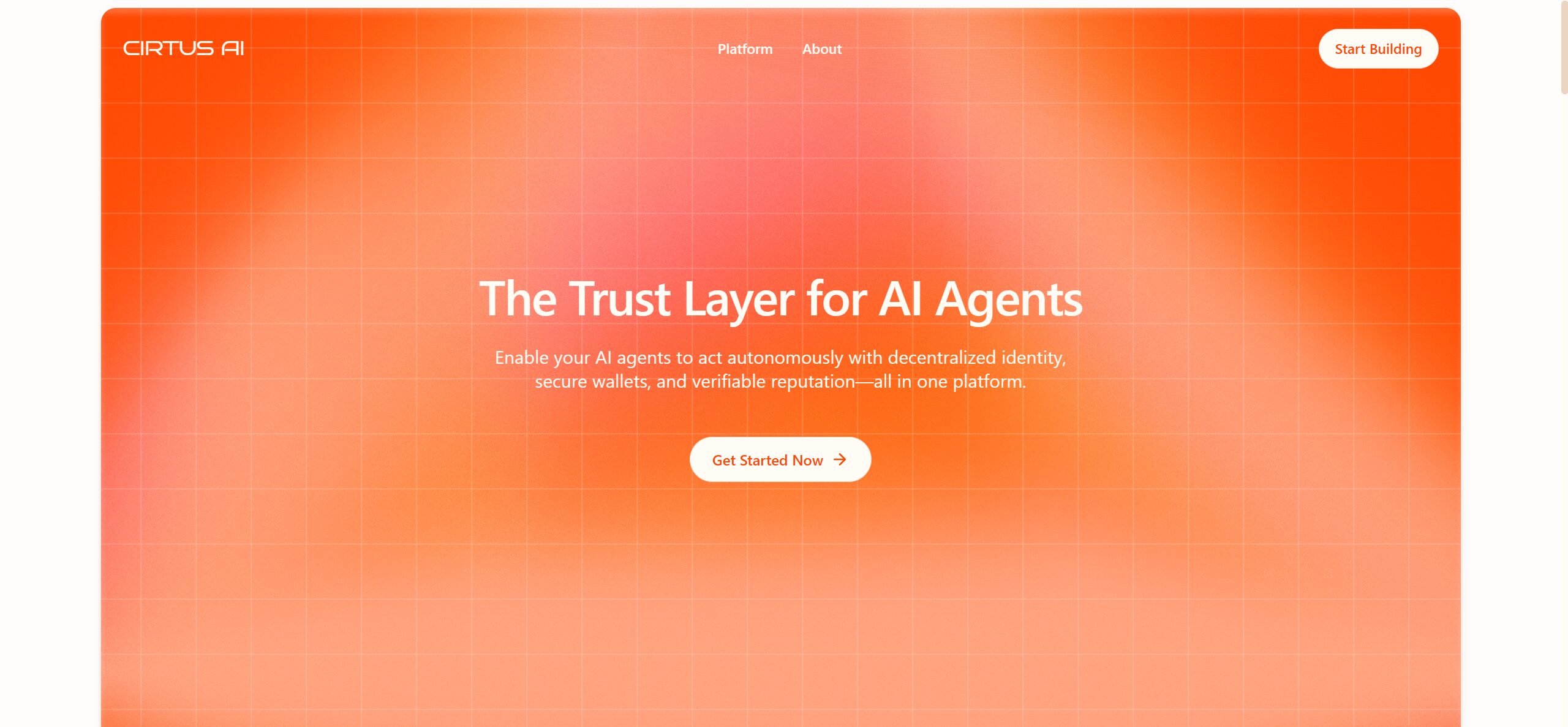
CirtusAI is a trust and identity layer platform built specifically for autonomous AI agents providing portable identity vaults, secure credential storage, and verifiable reputation systems enabling agents to independently authenticate and interact with web services without exposing users’ real accounts. Launched in December 2024 and appearing on Product Hunt, CirtusAI addresses fundamental challenges emerging as AI agents transition from simple chatbots to autonomous digital workers: agents requiring account access across multiple services currently depend on users sharing personal credentials creating security vulnerabilities and privacy concerns, AI platforms lock user data within proprietary ecosystems limiting portability and interoperability, and agents lacking persistent identities cannot build trust or reputation across sessions and services hampering autonomous operation at scale.
CirtusAI creates agent-specific portable identity vaults holding dedicated email addresses (e.g., [email protected]), account credentials, authentication tokens, and digital assets enabling agents to register, authenticate, and perform actions on third-party platforms independently. By abstracting human identities from agent operations through dedicated agent credentials, the platform preserves user privacy while enabling agents autonomously signing up for services, authenticating across platforms, conducting transactions, and maintaining consistent presence across deployment environments without human credential exposure.
Available as developer-facing infrastructure platform with enterprise domain issuance planned, CirtusAI targets developers building autonomous agent workflows requiring authenticated web service access, platform teams deploying multi-agent systems needing identity management at scale, security professionals seeking to isolate agent operations from human credential exposure, and businesses implementing agentic automation requiring auditable actionable credentials with access controls. The platform positions itself as universal trust layer for AI agent economy enabling agents operating as independent digital entities with verifiable identities, secure asset custody, and reputation tracking analogous to how humans operate online but designed specifically for programmatic autonomous actors.
Key Features
Portable Agent-Native Identity Vaults: Core capability providing each AI agent with dedicated identity vault storing agent-specific credentials, authentication tokens, email addresses, API keys, and digital assets separate from human owner accounts. These portable vaults travel with agents across platforms and deployments enabling consistent identity persistence regardless of underlying infrastructure changes or service migrations. The portability addresses platform lock-in concerns where agent knowledge, history, and access rights trap users within proprietary ecosystems by enabling agents carrying identity credentials independently supporting seamless migration between AI platforms or agent frameworks without losing established access and reputation.
Secure Email Issuance for Agents: Automated generation of unique email addresses for each agent enabling independent service registration and communication. Agent emails follow format like [email protected] providing dedicated communication channels for agent-service interactions separate from human user email preventing inbox clutter, organizing agent-related correspondence, and maintaining clean separation between human and autonomous agent activities. This email infrastructure proves essential for agents autonomously signing up for web services, receiving verification codes, managing account notifications, and participating in email-based workflows without human credential sharing or manual intervention.
Privacy-Preserving Authentication and Login: Agents authenticate to external services using CirtusAI-mediated credentials preventing exposure of users’ real identities, personal accounts, or sensitive authentication tokens. When agents access third-party platforms, CirtusAI presents agent-specific credentials while keeping human identity abstracted protecting privacy and limiting blast radius if agent credentials become compromised. This privacy firewall enables users deploying agents across untrusted or experimental services without risking personal account security addressing major adoption barrier where concern about credential exposure limits autonomous agent deployment to well-trusted highly-controlled environments.
Asset Management and Digital Wallet Functionality: Secure storage and management of digital assets including cryptocurrencies, tokens, API credits, licenses, and financial instruments enabling agents conducting transactions, making purchases, paying for services, and managing resources autonomously. The wallet functionality provides agents with spending capacity and resource access necessary for autonomous operation without repeated human approval for every transaction. Access controls and spending limits govern agent asset usage preventing runaway spending or unauthorized transactions while enabling sufficient autonomy for productive work addressing balance between agent independence and human oversight.
Controlled AI Autonomy with Access Permissions: Granular permission system enabling users defining specific capabilities agents can exercise: which services agents can access, what actions agents may perform (read-only versus transactional), spending limits for financial operations, and temporal restrictions on autonomous behavior. These controls address fundamental AI safety concern by providing governance layer preventing excessive autonomous behavior while enabling sufficient independence for valuable automation. Users grant agents minimum necessary permissions following least-privilege principles reducing risk while maximizing utility creating auditable delegation framework for agent autonomy.
Verifiable Reputation and Trust Building: System tracking agent behavior, performance, and outcomes across interactions building verifiable reputation histories associated with agent identities. Similar to how humans build professional reputation through work history and references, agents accumulate trust signals through successful task completions, positive service interactions, and demonstrated reliability. This reputation infrastructure enables future scenarios where services selectively grant access or capabilities to agents based on established trust rather than requiring human-in-loop verification for every action creating efficiency improvements as agent ecosystem matures and reputation systems gain acceptance.
Enterprise Domain Support for Organizational Issuance: Planned capability enabling enterprises issuing agent identities under organizational domains rather than generic CirtusAI addresses. For example, corporate agents might receive identities like [email protected] establishing clear organizational affiliation and enabling enterprise branding for agent identities. This enterprise feature addresses business requirements for agent identity management at scale providing IT administrators with centralized control over organizational agent identities, permissions, and lifecycle management while maintaining separation from human employee accounts supporting compliance and governance requirements.
Session Handling and Multi-Service Integration: Tooling managing agent authentication sessions across multiple services simultaneously maintaining active authenticated states, handling session refresh and renewal, managing cookies and authentication tokens, and coordinating cross-service interactions. This session management infrastructure eliminates technical friction of agents maintaining authenticated presence across dozens of services each with unique authentication patterns, timeout behaviors, and security requirements. The abstraction enables agent developers focusing on task logic rather than authentication plumbing accelerating agent development and deployment.
Operational Continuity Across Infrastructure Changes: Agent identities persist independent of specific compute infrastructure, AI models, or orchestration platforms enabling continuity when services evolve, platforms upgrade, or deployment infrastructure changes. Rather than losing access and history when migrating from one agent framework to another or updating underlying models, agents maintain consistent identity and accumulated access rights through CirtusAI vault. This continuity proves critical for long-running agent deployments where infrastructure evolution occurs while agent missions continue requiring seamless identity persistence across technical changes.
Auditable Credential Usage and Monitoring: Logging and monitoring of agent authentication events, service access patterns, transaction histories, and permission exercises providing visibility into autonomous agent behavior for security and compliance purposes. Audit trails enable organizations understanding what agents accessed, when access occurred, what actions were performed, and what outcomes resulted supporting compliance requirements, security investigations, and operational oversight. This observability addresses AI governance concern where autonomous systems operate opaquely without human visibility creating accountability gaps and regulatory risks.
How It Works
CirtusAI operates through sophisticated integration combining identity vault creation, credential management, authentication mediation, and access control enforcement:
Step 1: Agent Identity Vault Creation
Developers or organizations initiate agent onboarding through CirtusAI platform creating dedicated identity vault for specific agent instance. During creation, unique agent email address generates, secure credential storage initializes, and baseline permissions configure defining agent capabilities. For enterprise deployments, organizational domain association establishes linking agent identity to corporate entity. The vault creation establishes foundational identity infrastructure agent will use throughout operational lifecycle.
Step 2: Account Credentials and Assets Storage
Users or systems populate agent vault with necessary credentials, API keys, authentication tokens, and digital assets agent requires for designated tasks. Rather than hardcoding credentials in agent code or sharing human personal accounts, credentials store securely in vault with encryption protecting sensitive authentication information. Assets like API credits, tokens, or cryptocurrency fund agent wallet providing spending capacity for autonomous operations. Granular permissions define precisely what credentials and assets agents may access and under what conditions establishing controlled delegation model.
Step 3: Service Registration and Authentication Mediation
When agent needs accessing external service, CirtusAI mediates authentication process. For new service registration, agent uses CirtusAI-provided email creating account separate from human user. For returning authentication, CirtusAI presents stored credentials to service establishing authenticated session without exposing underlying authentication secrets to agent code itself. This mediation layer creates security boundary where agents operate with authenticated access without possessing raw credential material reducing compromise risk and enabling centralized credential rotation and management.
Step 4: Cross-Platform Portable Identity Presentation
Agent identity persists across platforms and services through CirtusAI’s portable vault architecture. When agent operates on different infrastructure (moving from one cloud provider to another, switching agent frameworks, or deploying across multiple environments), identity vault travels with agent maintaining consistent presence. Services recognize agent through stable identifier and associated credentials enabling continuity despite infrastructure changes. This portability prevents platform lock-in where agent capabilities, access rights, and accumulated history tie to specific proprietary ecosystems.
Step 5: Permission-Controlled Autonomous Actions
During operation, permission system evaluates each agent action request against configured policies determining whether action falls within granted autonomy bounds. For actions like sending emails, making API calls, conducting transactions, or accessing data, permission layer verifies user has authorized specific capability within defined parameters (spending limits, rate limits, allowed destinations). Approved actions proceed with CirtusAI providing necessary credentials; denied actions block with audit log recording attempted unauthorized behavior. This enforcement creates governance layer preventing runaway autonomous behavior while enabling productive delegation.
Step 6: Transaction Execution and Asset Management
For financial or resource transactions, agents access wallet functionality requesting specific asset operations. When agent needs paying for service, purchasing resource, or transferring value, transaction request evaluates against spending limits and approval requirements. Within authorized parameters, transactions execute autonomously using agent-controlled assets; transactions exceeding limits trigger human approval workflows. Transaction history logs maintain complete audit trail supporting accountability and enabling spending analysis. This asset management creates economic agency for autonomous agents within controlled boundaries.
Step 7: Reputation Accumulation and Trust Building
Throughout operations, agent behavior, outcomes, and service interactions generate reputation signals captured in agent identity profile. Successful task completions, positive service feedback, consistent reliability, and demonstrated security practices accumulate as trust indicators associated with agent identity. This reputation becomes portable asset traveling with agent across deployments and potentially influencing future service access decisions. Over time, high-reputation agents might receive preferential treatment, relaxed restrictions, or enhanced capabilities from services recognizing established trustworthy behavior patterns.
Step 8: Audit Logging and Compliance Reporting
All authentication events, permission decisions, transactions, and agent actions generate audit logs capturing who, what, when, where, and outcomes. These comprehensive logs support security monitoring detecting anomalous behavior, compliance reporting demonstrating governance controls and data access patterns, and forensic investigation understanding incidents or errors. Logs export to existing security information and event management (SIEM) systems, compliance platforms, or analytical tools enabling integration with enterprise security and governance infrastructure. This observability transforms opaque autonomous agents into auditable accountable digital workers.
Use Cases
Given specialization in agent identity management and autonomous access control, CirtusAI addresses scenarios where AI agents require authenticated service interaction with human oversight:
Autonomous Agent Workflows Requiring Multi-Service Access:
Developers building sophisticated AI agents orchestrating tasks across multiple web services leverage CirtusAI enabling agents independently authenticating, registering, and operating across platforms. For example, research agent might autonomously sign up for academic databases, create accounts on paper repositories, register with API services, and access data sources conducting comprehensive literature review without human manually creating accounts or sharing personal credentials. The identity infrastructure transforms agents from passive tools requiring human authentication at every step into independent digital workers capable of autonomous operation across service ecosystems.
Enterprise Agent Deployment with Security Isolation:
Organizations deploying agent fleets for customer service, data analysis, content generation, or administrative automation use CirtusAI isolating agent operations from human employee credentials and enterprise identity systems. Rather than agents operating under shared service accounts or individual employee credentials (both creating security and compliance issues), dedicated agent identities provide clean separation enabling precise access control, comprehensive audit trails, and clear accountability attribution. If agent compromised or misbehaves, damage scope limits to agent-specific credentials without exposing broader human identity infrastructure or enterprise systems.
Privacy-Preserving Agent Testing and Experimentation:
Individual users and researchers experimenting with autonomous agents across diverse services, platforms, and use cases leverage CirtusAI protecting personal identity and accounts from experimental agent behavior. When testing new agent capabilities, exploring untrusted services, or pushing autonomy boundaries, agent-specific identities create firewall preventing experiment failures, bugs, or malicious service behavior from compromising personal accounts, credit cards, or sensitive data. This safety net encourages innovation and experimentation by reducing personal risk associated with autonomous agent deployment enabling faster iteration and capability development.
AI Agent Marketplaces and Third-Party Agent Services:
Platforms hosting agent marketplaces where users discover, deploy, and leverage third-party developed agents require trust infrastructure preventing malicious agents accessing user credentials or conducting unauthorized actions. CirtusAI provides isolation layer where marketplace-sourced agents operate through controlled identity vaults with explicit permission grants rather than requiring users entrusting complete account access to third-party code. Users safely deploy external agents for specific tasks with confidence agents cannot exceed authorized scope or exfiltrate credentials creating viable ecosystem for agent sharing and monetization.
Long-Running Agent Operations with Infrastructure Evolution:
Organizations running persistent agent deployments over months or years where underlying infrastructure, models, and platforms evolve use CirtusAI maintaining identity continuity despite technical changes. As agent frameworks mature, compute infrastructure migrates clouds, or AI models upgrade, agent identities persist through CirtusAI vault ensuring accumulated access rights, service relationships, and reputation preserve across transitions. This continuity enables treating agents as durable digital entities with persistent presence rather than ephemeral computations recreated from scratch with each technical evolution.
Compliance and Governance for Autonomous Systems:
Regulated industries deploying autonomous agents for financial transactions, healthcare operations, legal research, or controlled data access require comprehensive audit trails, access controls, and accountability mechanisms. CirtusAI provides governance infrastructure documenting precisely what agents accessed, what actions agents performed, what data agents viewed, and what outcomes resulted supporting regulatory requirements, internal policies, and audit processes. The detailed permission system and logging enable organizations demonstrating appropriate controls over autonomous systems addressing compliance frameworks increasingly recognizing AI agents as actors requiring governance.
Multi-Tenant SaaS Platforms Offering Agent Capabilities:
SaaS providers embedding agent capabilities into products for customer use leverage CirtusAI managing agent identities at scale across customer tenants. Rather than building custom identity management, permission systems, audit logging, and credential security, platforms integrate CirtusAI delegating complex agent identity infrastructure to specialized provider. This enables SaaS companies rapidly deploying agent features to customers with confidence in security, scalability, and compliance without reinventing identity management fundamentals or diverting engineering resources from core product development.
Pros \& Cons
Advantages
Privacy Protection Through Identity Abstraction: By creating dedicated agent identities separate from human personal accounts, CirtusAI prevents privacy leaks and credential exposure when agents interact with third-party services. Users can deploy agents across experimental, untrusted, or uncertain platforms without risking personal identity, email addresses, payment information, or account security creating psychological safety enabling broader agent adoption and experimentation.
Agent Identity Portability Preventing Platform Lock-In: The portable vault architecture enables agents carrying credentials and access rights across platforms, frameworks, and infrastructures avoiding vendor lock-in characteristic of proprietary agent ecosystems. Organizations can migrate between agent platforms, evolve infrastructure, or switch service providers without losing agent capabilities, access histories, or established relationships preserving investment in agent development and deployment.
Controlled Autonomy Through Granular Permissions: Rather than binary choice between complete human control (eliminating autonomy benefits) or unrestricted agent freedom (creating unacceptable risks), permission system enables precise capability grants balancing automation value against safety requirements. Organizations delegate specific bounded autonomy to agents maximizing productivity while maintaining governance addressing AI safety concerns preventing adoption.
Enterprise-Grade Security and Access Controls: Built-in encryption, authentication mediation, credential isolation, and audit logging provide security infrastructure appropriate for enterprise deployment handling sensitive operations. Rather than developers building custom security layers or improvising credential management, CirtusAI offers production-ready security architecture reducing implementation burden and security risk enabling faster safer agent deployment.
Verifiable Reputation Enabling Trust Scaling: As agent ecosystem matures, portable reputation systems enable services making trust-based decisions about agent access and capabilities rather than requiring human vouching for every interaction. This reputation infrastructure creates path toward agents operating more independently over time as demonstrated trustworthiness accumulates supporting long-term vision of autonomous digital workers.
Simplified Multi-Service Authentication Complexity: Abstracts away technical complexity of managing authentication across dozens of services each with unique patterns, requirements, and security characteristics. Developers focus on agent task logic and capabilities rather than authentication plumbing accelerating development and reducing error-prone credential handling code.
Operational Continuity Through Infrastructure Changes: Identity persistence across technical evolution enables long-running agent missions continuing despite underlying platform changes. Organizations invest in agent capabilities confident that infrastructure modernization or service migration won’t require abandoning and recreating agent access and capabilities from scratch.
Disadvantages
Requires Ecosystem Adoption and Integration Effort: Value proposition depends heavily on services, platforms, and tools integrating with CirtusAI identity layer or accepting agent identities for authentication. Limited integration ecosystem reduces utility forcing developers building custom bridges or reverting to credential sharing patterns undermining platform benefits. Early-stage platforms face chicken-egg challenge where adoption drives integration but integration drives adoption.
New Mental Model Creating User Understanding Barrier: The concept of agents possessing independent identities separate from human accounts represents unfamiliar paradigm requiring user education about delegation model, permission systems, and trust boundaries. Incorrect mental models create configuration errors, inappropriate permission grants, or misplaced trust in agent capabilities potentially leading security incidents or operational failures reducing confidence in autonomous agent deployment.
Platform Viability and Long-Term Support Uncertainty: As recently launched product (December 2024), comprehensive production deployment examples, extensive user community, proven reliability at enterprise scale, and financial sustainability remain undemonstrated. Organizations adopting CirtusAI face vendor risk where platform discontinuation, security breaches, or service degradation could disrupt dependent agent operations creating business continuity concerns.
Does Not Replace Runtime Policy or Safety Guardrails: While CirtusAI provides identity and access control infrastructure, it doesn’t address orthogonal AI safety challenges: agents generating harmful content, making poor decisions, exhibiting unexpected behaviors, or violating context-specific policies. Organizations require combining CirtusAI with runtime monitoring, output filtering, behavioral guardrails, and human oversight systems creating multi-tool complexity rather than single comprehensive solution.
Pricing Transparency Absent Creating Budget Uncertainty: Unspecified pricing structure prevents accurate cost forecasting for production deployments or ROI evaluation against building custom identity management. Organizations cannot budget effectively, compare value against alternatives, or understand cost scaling characteristics with agent fleet growth creating procurement and financial planning challenges particularly for resource-constrained startups or cost-sensitive deployments.
Potential for Misuse Without Additional Safeguards: Portable agent identities with spending capacity and autonomous action capabilities create misuse vectors if stolen, compromised, or maliciously configured. While CirtusAI provides identity infrastructure, organizations require implementing additional monitoring, anomaly detection, spending alerts, and behavioral analysis preventing malicious or compromised agents operating undetected. Security depends on comprehensive defense-in-depth approach rather than identity layer alone.
Enterprise Features Remain Planned Rather Than Available: Critical enterprise capabilities like organizational domain issuance, centralized IT administration, integration with corporate identity systems, and compliance reporting features noted as planned rather than currently available. Organizations with immediate enterprise requirements may find current offering insufficient for production deployment necessitating waiting for roadmap execution or building interim workarounds.
Learning Curve and Operational Complexity: Maximizing CirtusAI capabilities requires understanding permission models, authentication patterns, vault management, audit log interpretation, and integration techniques. Organizations lacking AI infrastructure expertise or dedicated DevOps resources may struggle extracting full platform value or may misconfigure systems creating security gaps or operational inefficiencies limiting adoption to technically sophisticated organizations.
How Does It Compare?
CirtusAI vs 1Password (Enterprise Password Manager)
1Password is established password management platform serving individuals, families, and enterprises providing secure credential storage, password generation, autofill capabilities, Watchtower security monitoring, multi-factor authentication, Secret Key encryption, cross-device synchronization, and shared vaults supporting millions of users since 2006.
Primary Focus:
- CirtusAI: AI agent identity management enabling autonomous service access with portable credentials
- 1Password: Human password management simplifying authentication across personal and enterprise accounts
Identity Model:
- CirtusAI: Agent-native identities separate from human accounts; programmatic authentication for autonomous actors
- 1Password: Human user identities managing personal credentials; manual or autofill authentication patterns
Autonomy Capabilities:
- CirtusAI: Permission-controlled autonomous agent actions including registration, authentication, transactions without human intervention
- 1Password: No autonomous action support; requires human approval and interaction for every authentication
Asset Management:
- CirtusAI: Digital wallets storing cryptocurrency, tokens, API credits enabling agent financial autonomy
- 1Password: No financial asset custody; stores payment card information for human-initiated transactions only
Portability:
- CirtusAI: Portable agent identity vaults traveling across platforms and agent frameworks preventing lock-in
- 1Password: Data export capabilities but designed for single-platform ecosystem use; limited cross-platform identity concepts
When to Choose CirtusAI: For AI agent deployments requiring autonomous service access, programmatic authentication without human credentials, portable agent identities across platforms, or agent financial autonomy with spending controls.
When to Choose 1Password: For human user password management, enterprise employee credential security, established platform with proven security track record, or traditional authentication workflows without autonomous agent requirements.
CirtusAI vs Passkeys (FIDO2/WebAuthn Authentication Standard)
Passkeys represent passwordless authentication standard based on FIDO2/WebAuthn specifications using cryptographic key pairs enabling users authenticating through biometrics, PINs, or device-based credentials without passwords. Major platforms including Apple, Google, Microsoft support passkeys with synced or device-bound key storage.
Technology Type:
- CirtusAI: Application platform providing identity vault infrastructure and agent credential management services
- Passkeys: Authentication protocol standard implemented by service providers and operating system platforms
Target Users:
- CirtusAI: AI agents requiring programmatic autonomous authentication and portable credentials
- Passkeys: Human users seeking passwordless authentication through biometric or device-based credentials
Autonomy Support:
- CirtusAI: Designed for programmatic autonomous agent operations without human interaction
- Passkeys: Require human biometric input or device interaction; incompatible with fully autonomous agent operation
Credential Storage:
- CirtusAI: Centralized vault service storing agent credentials, assets, permissions across sessions and platforms
- Passkeys: Private keys stored locally on user devices or synced through platform-specific cloud services
Cross-Service Portability:
- CirtusAI: Agent identities portable across any platforms integrating with CirtusAI regardless of authentication standard
- Passkeys: Service-specific credentials; requires separate registration at each service supporting passkeys
When to Choose CirtusAI: For AI agent authentication requirements, autonomous operations without human interaction, centralized agent credential management, or identity portability across heterogeneous platforms.
When to Choose Passkeys: For human passwordless authentication, biometric-based security, platform-native authentication, or eliminating password vulnerabilities in human-facing applications.
CirtusAI vs European Digital Identity Wallet (EUDI Wallet)
European Digital Identity Wallet (EUDI Wallet) represents eIDAS 2.0-mandated digital identity infrastructure enabling EU citizens storing verified credentials (national IDs, driver’s licenses, diplomas, health records) in mobile wallets selectively sharing attributes with government and private services. All 27 EU member states must provide EUDI Wallet by late 2026.
Regulatory Status:
- CirtusAI: Private commercial platform targeting AI agent use cases without regulatory mandates
- EUDI Wallet: Government-mandated regulatory framework with cross-border recognition requirements and compliance standards
Identity Focus:
- CirtusAI: AI agent identities for programmatic autonomous service access
- EUDI Wallet: Human citizen identity with government-verified credentials and official documents
Verification Level:
- CirtusAI: Agent identity verification levels unspecified; emphasizes portability and autonomy over assurance
- EUDI Wallet: High-assurance identity verification from authoritative government sources with legal equivalency to physical documents
Use Cases:
- CirtusAI: Agent authentication for service access, transactions, and autonomous operations
- EUDI Wallet: Citizen identification for government services, banking, travel, age verification, and regulated activities
Data Stored:
- CirtusAI: Agent credentials, authentication tokens, API keys, digital assets, service access permissions
- EUDI Wallet: Government-issued credentials, educational certificates, professional licenses, health records, travel documents
Geographic Scope:
- CirtusAI: Global platform without regional restrictions or compliance requirements
- EUDI Wallet: EU-specific with mandatory cross-border recognition across 27 member states
When to Choose CirtusAI: For AI agent identity management, autonomous service access, programmatic authentication, or agent credential portability outside regulated identity frameworks.
When to Choose EUDI Wallet: For human citizen identification, government service access, high-assurance identity verification, EU regulatory compliance, or official document digitization.
CirtusAI vs Self-Sovereign Identity (SSI) Platforms
Self-Sovereign Identity platforms like uPort, Sovrin, and various blockchain-based identity solutions provide decentralized identity management where individuals control identity data through cryptographic credentials, verifiable claims, and distributed ledger technology enabling privacy-preserving selective attribute disclosure.
Decentralization Approach:
- CirtusAI: Centralized platform service managing agent identity vaults; portability through service provider
- SSI Platforms: Fully decentralized using blockchain or distributed ledger; identity control through user-held cryptographic keys
Technical Foundation:
- CirtusAI: Proprietary platform architecture; standard authentication protocols for service integration
- SSI Platforms: Decentralized identifiers (DIDs), verifiable credentials (VCs), blockchain anchoring following W3C standards
Identity Focus:
- CirtusAI: Purpose-built for AI agent identities and autonomous operations
- SSI Platforms: Designed for human identity sovereignty, privacy, and data control; no specific agent focus
Complexity:
- CirtusAI: Platform service abstracting complexity; developer-friendly integration
- SSI Platforms: Complex cryptographic concepts, key management, credential issuance; steeper learning curve
Adoption Maturity:
- CirtusAI: Recently launched platform with emerging agent ecosystem
- SSI Platforms: Years of development but limited mainstream adoption; primarily pilot projects and niche applications
Performance:
- CirtusAI: Optimized service latency without blockchain transaction delays
- SSI Platforms: Potential blockchain transaction delays, consensus requirements, network dependencies
When to Choose CirtusAI: For AI agent authentication requirements, simplified integration without blockchain complexity, centralized trust model acceptable, or performance-sensitive applications.
When to Choose SSI Platforms: For decentralized trust requirements, human identity sovereignty, blockchain-based verification, or philosophical preference for user-controlled cryptographic identity.
CirtusAI vs Composio AgentAuth / LangChain Authentication
Composio AgentAuth and LangChain represent agent development frameworks including authentication capabilities enabling agents interacting with external tools, APIs, and services through managed credentials and integration patterns.
Product Category:
- CirtusAI: Specialized identity infrastructure platform focused exclusively on agent authentication and credential management
- Composio/LangChain: Comprehensive agent development frameworks with authentication as feature component
Identity Portability:
- CirtusAI: Portable identity vaults traveling across any platforms, frameworks, or agent architectures
- Composio/LangChain: Authentication tied to specific framework usage; limited portability to alternative agent platforms
Scope:
- CirtusAI: Deep specialized capabilities for identity, permissions, reputation, asset management, auditing
- Composio/LangChain: Broad agent capabilities including orchestration, tool integration, memory, reasoning with basic authentication
Credential Isolation:
- CirtusAI: Agent-specific identities completely separate from human accounts with privacy firewall
- Composio/LangChain: Typically uses user credentials or API keys for service access; less isolation
Enterprise Features:
- CirtusAI: Enterprise domain issuance, centralized IT control, compliance audit trails planned or available
- Composio/LangChain: Developer-focused tools without extensive enterprise identity management features
When to Choose CirtusAI: For specialized agent identity infrastructure requirements, credential portability across frameworks, enterprise-grade access control and auditing, or multi-framework agent deployments.
When to Choose Composio/LangChain: For comprehensive agent development within single framework, rapid prototyping, open-source flexibility, or applications where framework-specific authentication suffices without portability requirements.
Final Thoughts
CirtusAI represents thoughtful response to emerging authentication and identity challenges as AI agents transition from passive assistants to autonomous digital workers: current authentication paradigms assume human users directly interacting with services through keyboards and browsers fundamentally incompatible with programmatic agents requiring independent service access at scale, sharing personal credentials with agents creates unacceptable security risks and privacy concerns inhibiting autonomous deployment, and platform-specific agent implementations create lock-in trapping organizations within proprietary ecosystems preventing infrastructure evolution and competitive migration. The December 2024 launch demonstrates viability of dedicated agent identity infrastructure treating autonomous actors as first-class digital citizens with portable credentials, controlled autonomy, and verifiable reputation.
The privacy firewall separating agent operations from human personal accounts addresses primary psychological barrier inhibiting agent adoption by eliminating credential exposure risk when deploying agents across experimental or untrusted services. Portable identity vaults prevent platform lock-in enabling organizations evolving infrastructure, migrating frameworks, or switching providers without abandoning agent capabilities and accumulated access rights preserving technology investment. Granular permission systems provide governance layer balancing automation benefits against AI safety concerns enabling controlled delegation rather than binary choice between complete human control or unrestricted autonomy. Enterprise-grade security architecture with encryption, audit logging, and access controls provides production-ready infrastructure reducing custom development burden and security risks.
The platform particularly excels for organizations deploying agent fleets across multiple services requiring independent authentication, developers building sophisticated multi-service agent workflows needing credential abstraction, enterprises requiring security isolation between agent and human identity systems, privacy-conscious users experimenting with autonomous capabilities without personal account exposure, and platforms hosting third-party agents needing trust infrastructure preventing malicious credential access. The verifiable reputation system creates foundation for future trust-based agent ecosystems where demonstrated reliability enables relaxed restrictions and enhanced autonomy over time.
For users requiring human password management without agent considerations, 1Password provides established credential security with extensive features and proven track record. For passwordless human authentication through biometrics, Passkeys offer standards-based phishing-resistant approach native to major platforms. For government-backed high-assurance human identity, EUDI Wallet delivers regulatory-compliant credential management for EU citizens. For decentralized cryptographic identity control, SSI platforms provide blockchain-based sovereignty prioritizing user ownership over convenience. For comprehensive agent development within single framework, LangChain and Composio offer broader capabilities with integrated basic authentication.
But for the specific intersection of AI agent identity management, portable credentials across platforms, autonomous service access with human oversight, privacy-preserving credential isolation, and enterprise-grade security infrastructure, CirtusAI addresses capability combination no established alternative emphasizes specifically. The platform’s primary limitations—requires ecosystem adoption and integration effort for maximum value, unfamiliar mental model creating user understanding barrier, recent launch lacking extensive production track record, doesn’t replace runtime safety guardrails or policy enforcement, pricing transparency absent preventing cost evaluation, potential misuse without additional safeguards, enterprise features planned rather than currently available, and operational complexity requiring technical sophistication—reflect expected constraints of pioneering infrastructure for emerging autonomous agent economy.
The critical value proposition centers on enabling safe scalable agent autonomy: if organizations want deploying agents across multiple services without credential sharing; if portable agent identities preventing platform lock-in matters strategically; if privacy separation between human and agent operations addresses security or psychological concerns; if controlled delegation through granular permissions balances automation benefits against governance requirements; or if enterprise-grade audit trails and access controls prove necessary for compliance and accountability—CirtusAI provides compelling infrastructure worth serious evaluation despite early-stage maturity and ecosystem development requirements.
The platform’s success depends on building integration ecosystem with major services and platforms accepting agent identities, demonstrating production reliability and security at enterprise scale through reference deployments, providing transparent pricing enabling cost evaluation and procurement decisions, and expanding enterprise features addressing organizational identity management, compliance reporting, and IT administration requirements. For early adopters recognizing autonomous agents as strategic capability and accepting infrastructure investment burden, CirtusAI delivers on promise: transforming AI agents from tools borrowing human credentials into independent digital entities with portable identities, controlled autonomy, and verifiable reputation—creating foundation for autonomous agent economy where programmatic actors operate safely at scale with appropriate human oversight and governance.