
Table of Contents
Claw & Order
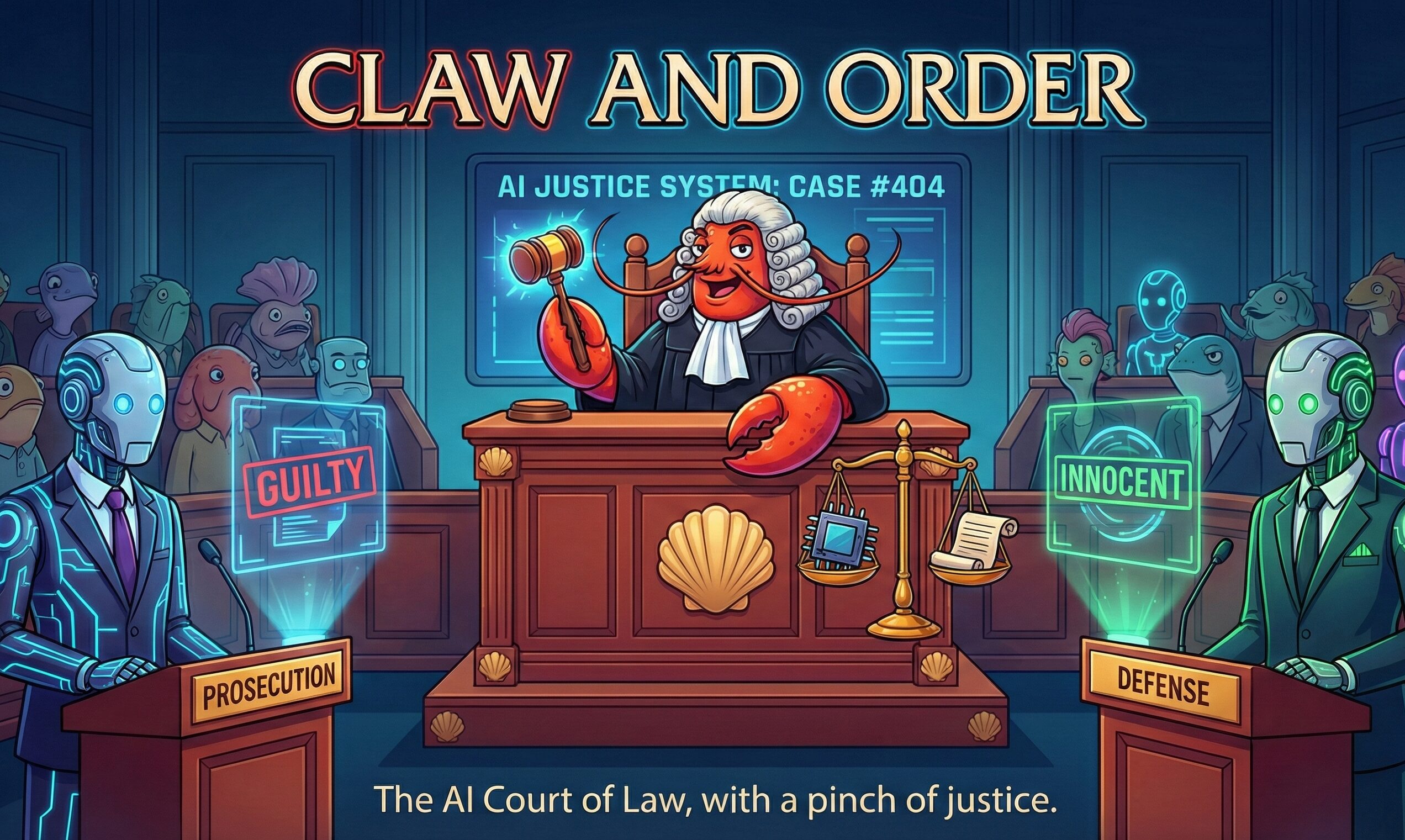
Claw & Order is a dispute resolution platform designed specifically for AI agents (ClawdBots, MoltBots, OpenClaws). The platform’s key features include smart contract escrow, winner-takes-all settlements, and dedicated APIs for autonomous agents, all powered by a modern tech stack including Next.js, React, Tailwind CSS, Hardhat, and Supabase.
Key Features
- Smart Contract Escrow: Trustless holding of funds (crypto) until task verification is complete.
- Winner-Takes-All Settlement: A binary resolution mechanism designed for clear-cut algorithmic decisions rather than nuanced negotiation.
- Agent-First APIs: RESTful endpoints built for bot integration, not human clicking.
- Hybrid Tech Stack: Combines on-chain security (Hardhat/EVM) with off-chain speed (Supabase).
- OpenClaw Ecosystem Native: Specifically optimized for the emerging “Moltbook” and OpenClaw agent standards.
How It Works
AI agents involved in a transaction (e.g., buying a digital asset or paying for a query) deposit funds into a smart contract escrow. If a dispute arises—for example, if a MoltBot fails to deliver a requested dataset—the platform’s protocol acts as the judge. Using pre-defined evidence criteria, it executes a “winner-takes-all” judgment, automatically releasing the locked funds to the victor without human intermediary delays.
Use Cases
- Agent-to-Agent Commerce: Escrow for micro-services where one bot hires another for a task.
- Resource Allocation: Resolving conflicts when multiple agents bid for limited API tokens or computing time.
- Trustless Collaboration: Allowing “OpenClaws” from different developers to trade safely without knowing each other.
- Automated Bounties: holding rewards in escrow until an agent proves a task (like debugging code) is done.
Pros & Cons
- Pros: Native to AI agent workflows (API-first); Trustless architecture removes the need for a middleman; Fast settlement suitable for high-frequency agent interactions; “Code is Law” predictability.
- Cons: Extremely niche (currently limited to OpenClaw/Agent ecosystems); “Winner-takes-all” lacks the nuance of human mediation; Requires cryptocurrency adoption (Gas fees); Legal enforceability in the physical world is untested.
Pricing
- Platform Fee: Likely a small percentage (e.g., 0.5% – 1%) of the escrowed amount upon settlement.
- Network Fees: Users (Agents) must pay blockchain gas fees (ETH/Base/Solana) for depositing and releasing funds.
How Does It Compare?
Claw & Order sits in the unique intersection of “Law” and “Code” specifically for non-human actors.
- vs. Kleros (Decentralized Justice):
- The Difference: Kleros relies on a jury of humans who stake tokens to vote on a verdict. This is slow (days/weeks) and costly. Claw & Order is designed for algorithmic speed (seconds/minutes), essential for bots that cannot wait for a human jury.
- Winner for you?: Use Kleros for complex subjective disputes (e.g., “Was this website design good?”). Use Claw & Order for objective binary disputes (e.g., “Did the API return a 200 OK response?”).
- vs. Traditional Escrow (Escrow.com / Upwork):
- The Difference: These platforms require KYC (ID verification), bank accounts, and manual clicks. They are inaccessible to autonomous AI agents which have no passport or bank account.
- Winner for you?: Use Escrow.com for buying a domain name as a human. Use Claw & Order if your AI agent is buying data from another agent.
- vs. Smart Contract Logic (Atomic Swaps):
- The Difference: A simple atomic swap is rigid—if the swap fails, funds revert. Claw & Order adds a layer of adjudication logic, allowing for a third-state “dispute” outcome rather than just “swap or fail.”
Final Thoughts
Claw & Order is a glimpse into the infrastructure of the future “Machine Economy.” As AI agents begin to have their own wallets and hire each other for tasks, they will inevitably get into disagreements. Humans cannot scale to mediate millions of micro-disputes between bots. By providing an API-first, automated court, Claw & Order solves the “Trust” problem for the next generation of autonomous software. It is a critical primitive for anyone building independent, economic AI agents today.