Table of Contents
Overview
In the current enterprise landscape, artificial intelligence often falls short not due to model limitations, but because it lacks a deep understanding of organizational data. Dawiso’s AI Context Layer addresses this fundamental gap by transforming standard data catalogs into an intelligent semantic foundation. By defining precise meaning, data ownership, and complex relationships, it provides the essential context required for AI to be both accurate and trustworthy. This framework ensures that AI agents deliver the right answers to the right users using the most relevant and governed data available.
Key Features
- Model Context Protocol (MCP) Integration: Connects AI agents directly to a governed data context layer, allowing them to dynamically query metadata, lineage, and business definitions at runtime.
- AI-Driven Domain Creation: Utilizes automated data categorization to intelligently group tables and columns based on identified metadata patterns, significantly reducing manual organization efforts.
- Automated Metadata Ingestion: Scans existing data sources to generate comprehensive business context and documentation at scale, turning raw data into AI-ready knowledge within hours.
- Human-in-the-Loop Governance: Combines automated AI enrichment with manual oversight, allowing domain experts to review and approve generated context to ensure 100% accuracy and trust.
- Intelligent Relationship Mapping: Automatically discovers dependencies and maps business term relationships to reveal how disparate data assets connect across the enterprise.
- Broad Ecosystem Connectivity: Features native integration with major data platforms including Snowflake, dbt, Microsoft Azure, and more.
How It Works
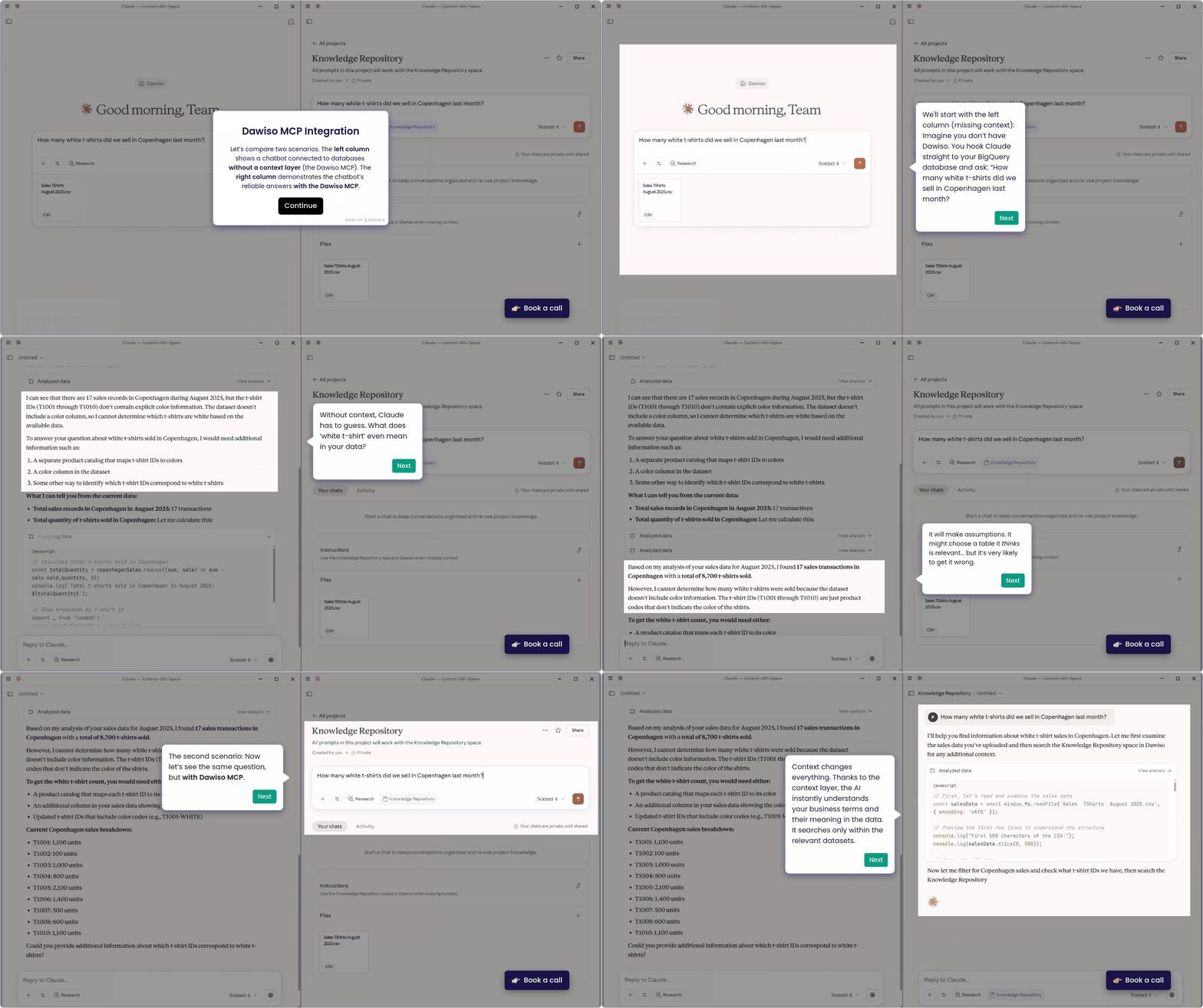
Dawiso operates by scanning the metadata of an organization’s existing data architecture and applying an AI enrichment layer to synthesize a “semantic map.” This map identifies who owns specific data, what business terms like “revenue” truly mean in that specific context, and how different datasets relate to one another. Through the implementation of the Model Context Protocol (MCP), these definitions are exposed to AI agents (such as chatbots or autonomous analysts). When a user asks a question, the agent queries the Dawiso MCP Server to retrieve the governed context, ensuring its reasoning is based on approved enterprise logic rather than general-purpose assumptions.
Use Cases
- Reducing RAG Hallucinations: Provides the semantic “ground truth” for Retrieval-Augmented Generation (RAG) systems, ensuring AI agents don’t misinterpret technical table names or outdated schemas.
- Data Governance Automation: Maps data ownership and approval workflows automatically, ensuring that only certified, up-to-date content is used for critical decision-making or AI training.
- Enterprise-Grade “Chat with Data”: Enables conversational analytics where users can ask complex questions in plain English and receive accurate answers that adhere to internal compliance and security policies.
- Onboarding and Knowledge Transfer: Acts as a 24/7 internal data expert, helping new team members or AI agents understand the complexity of the data landscape without constant human intervention.
Pros & Cons
Advantages
- High Context Accuracy: Bridges the gap between raw, technical metadata and high-level business understanding, making AI more reliable for production use.
- Scalable Knowledge Management: Replaces months of manual documentation with AI-generated descriptions that can be produced in hours.
- Open Standard Support: By utilizing MCP, Dawiso ensures compatibility with a growing ecosystem of AI tools like Claude, Cursor, and GitHub Copilot.
- Predictable Pricing: Offers a transparent per-user model that typically includes all connectors and governance features, avoiding the “surprise add-ons” common in legacy catalogs.
Disadvantages
- Enterprise Focus: The deep feature set and governance-heavy architecture may be overly complex for very small teams or simple project-based data needs.
- Implementation Effort: While metadata scanning is automated, establishing high-quality “human-in-the-loop” governance still requires a commitment from internal domain experts.
How Does It Compare?
Atlan / Alation
- Core Approach: Established data catalogs focused on human-facing discovery, governance, and collaboration.
- Key Distinction: While Atlan and Alation are powerful for human analysts, Dawiso specifically prioritizes the “AI Context Layer.” Its focus is on making metadata readable and queryable for AI agents via MCP, rather than just providing a portal for human users to search.
- Target Audience: Choose Atlan for broad human-centric governance; choose Dawiso for AI-native architectures and agentic workflows.
Microsoft Purview
- Core Approach: A unified data governance solution built specifically for the Microsoft 365 and Azure ecosystems.
- Key Distinction: Purview excels within the Microsoft stack but may lack the specialized AI agent integration and open-standard MCP server found in Dawiso. Dawiso offers a more vendor-neutral approach for multi-cloud environments.
Collibra
- Core Approach: An enterprise-grade platform for data intelligence, emphasizing compliance and large-scale governance workflows.
- Key Distinction: Collibra is a “heavyweight” solution that often requires significant professional services for setup. Dawiso is designed for faster AI-readiness, emphasizing automated AI enrichment over manual workflow configuration.
Secoda
- Best For: Modern data teams seeking a fast, user-friendly catalog with strong AI assistant features for analysts.
- Key Distinction: Secoda focuses on helping human data teams work faster. Dawiso focuses on the infrastructure layer that allows external AI agents to understand the entire data landscape autonomously.
Final Thoughts
Dawiso AI Context Layer represents a critical infrastructure shift for businesses moving from “experimenting with AI” to “deploying AI at scale.” By solving the “context problem” at the metadata level, it provides the missing link that allows autonomous agents to operate safely and accurately within complex enterprise environments. While it remains a sophisticated tool best suited for organizations with significant data assets, its focus on open standards and automated enrichment makes it a future-proof choice for any data leader. As the Model Context Protocol becomes the industry standard for agentic interoperability, Dawiso’s positioning as a dedicated context server makes it an essential part of the modern AI stack.