Table of Contents
Overview
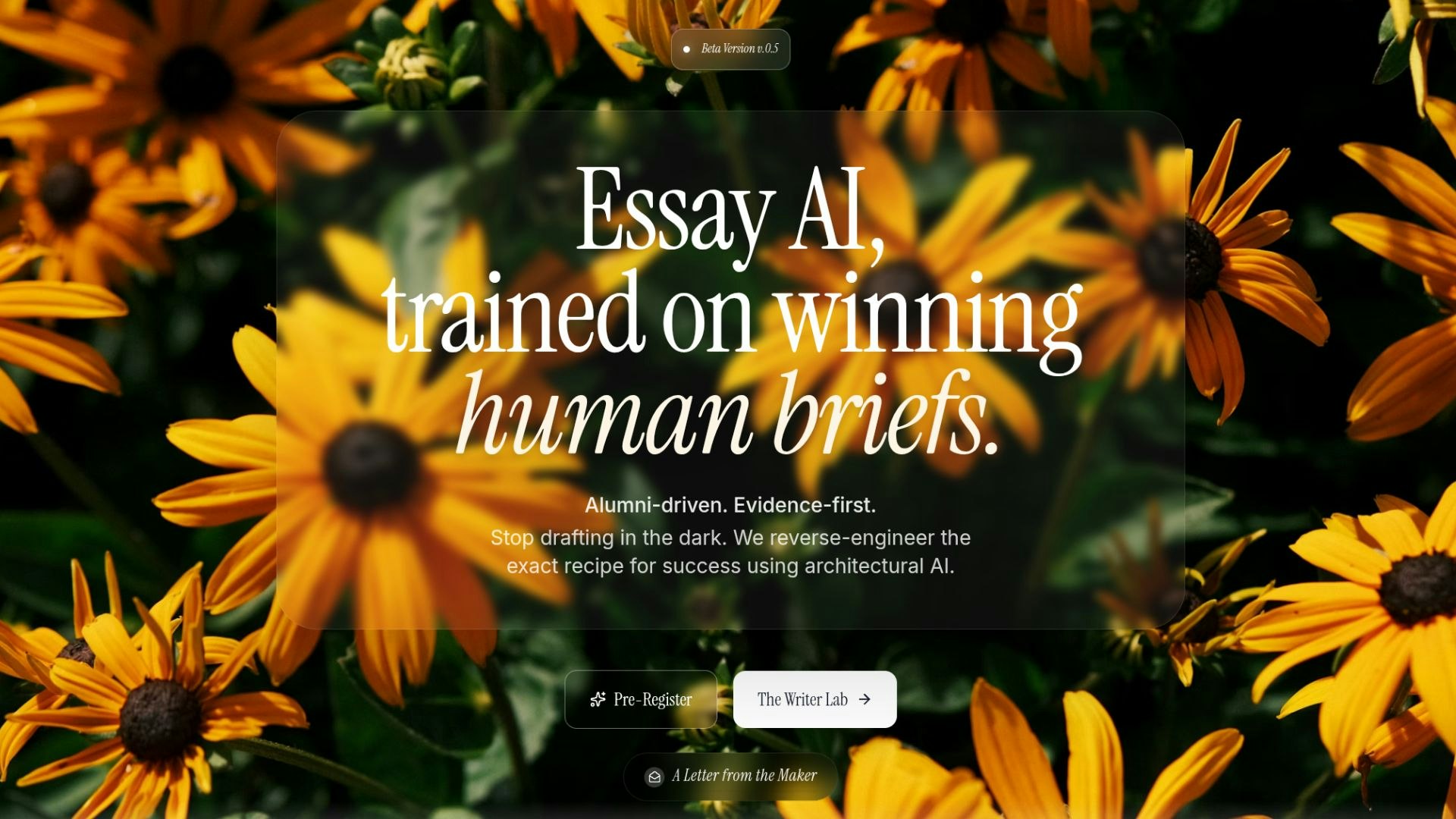
The core philosophy of EveryEssay centers on its “No source, no output” anti-hallucination protocol. The system is engineered to remain “locked” and will not provide writing guidance or structural suggestions unless it can map the recommendation to a specific, human-verified example of a successful outcome in its database. This ensures that every insight provided to the student is grounded in empirical proof of what has previously resonated with admissions committees at competitive institutions.
Rather than acting as an “essay generator” that produces ready-to-use text—which can lead to issues with academic integrity and admissions AI detection—EveryEssay functions as a strategic mentor. It identifies the underlying logic and thematic patterns that contributed to past successes, helping applicants reverse-engineer the “why” behind high-impact personal statements. This helps students retain their authentic voice while aligning their narrative with the qualitative metrics used by modern admissions reviewers.
Key Features
- Evidence-Based Model Training: Utilizes a specialized dataset of 1,200+ human-verified winning essays and acceptance letters to inform writing recommendations.
- No Source, No Output Anti-Hallucination: A strict safety lock that prevents the AI from generating advice unless it is backed by demonstrable proof from the database.
- Rubric-Driven Logic Extraction: Analyzes essays based on specific program rubrics, providing feedback that aligns with the evaluative standards of target universities or scholarships.
- Structural Pattern Analysis: Identifies successful narrative arcs and thematic structures from alumni submissions to help users build cohesive personal statements.
- Contributor-Backed Mentorship Hall: Offers a marketplace where users can seek paid human reviews from the same alumni who contributed to the training data.
- Anonymized Knowledge Retrieval: Employs pattern extraction techniques to protect the privacy of original contributors while making their successful writing logic accessible.
- Program-Specific Customization: Adapts guidance based on geographic location and specific degree programs to account for regional differences in admissions expectations.
- Interactive Logic Mapping: Visualizes the connection between a user’s draft and the successful patterns found in the “human-verified wins” database.
How It Works
The user experience begins with the student selecting their target program or scholarship. EveryEssay then retrieves the relevant evaluation rubrics and successful essay examples associated with that specific category. As the student enters their ideas or draft segments, the AI performs a comparative analysis against the “human-verified wins” database.
Instead of suggesting new sentences, the AI highlights which structural elements of the student’s draft are successfully mirroring proven patterns—or where they diverge. If a student asks for advice on a specific section, the “No source, no output” protocol checks for verified evidence before responding. The output is delivered as a strategic framework, explaining the logic behind why certain narrative choices work, thereby educating the user on the science of persuasive admissions writing.
Use Cases
- Elite College Admissions: Students applying to competitive universities can align their personal statements with the structural logic found in successful Ivy League or equivalent applications.
- Scholarship Applications: Applicants for high-stakes scholarships (such as Rhodes, Fulbright, or specialized corporate awards) can identify the thematic pillars that past winners utilized.
- Graduate School Statements of Purpose: Candidates for MBA, JD, or MD programs can ensure their professional narratives match the evaluative rubrics used by graduate admissions boards.
- Academic Mentorship: Educational consultants and high school advisors can use the tool to provide data-backed feedback to their students, reducing reliance on subjective “gut feelings.”
- International Student Support: Applicants from non-English speaking backgrounds can learn the specific narrative expectations and “logic of the win” required for Western university applications.
Pros and Cons
- Pros: Focuses on evidence-based strategic certainty rather than generic creative output. Reduces the risk of AI hallucinations through a strict proof-based lock. Educates the user on writing logic, which improves overall writing skills and maintains the student’s authentic voice.
- Cons: Training on past “wins” may bias the AI toward established conventions, potentially discouraging highly unconventional or experimental writing styles. The database-centric approach may be less effective for extremely niche programs where limited “success data” exists.
Pricing
EveryEssay utilizes a freemium model designed to provide accessibility while offering deep strategic insights for serious applicants:
- Free Tier: Provides access to basic structural analysis and a limited number of logic-checks against the public database of winning essays.
- Premium Subscription: Offers unlimited logic mapping, deep rubric-aligned feedback, and access to the full repository of 1,200+ successful examples and proprietary admissions rubrics.
- Mentorship Add-ons: One-on-one human reviews from alumni mentors are available as separate, paid services through the platform’s Mentorship Hall.
How Does It Compare?
- ChatGPT/Jasper (Generic AI): These tools rely on broad internet data and are prone to “hallucinating” advice or producing generic, “fluffy” text that lacks strategic depth. EveryEssay replaces this guesswork with a curated dataset of proven outcomes.
- CollegeVine: Primarily focuses on admissions chances and general mentoring. EveryEssay provides a more specialized, technical focus on the “logic of the essay” through its structural pattern analysis.
- Admitly/Grantable: Specialized tools for admissions and grants that often focus on workflow. EveryEssay differentiates itself through its “No source, no output” policy, ensuring every suggestion is tethered to a verified success.
- EssayGenius: Often provides templates and automated writing help. EveryEssay avoids templates in favor of reverse-engineering the logic behind original, successful writing, which helps students pass AI detection tests and maintain authenticity.
Final Thoughts
EveryEssay represents a shift in the AI writing market from generative assistance to strategic validation. By anchoring its output in human-verified “wins,” it addresses the growing demand for accountability and authenticity in the high-stakes world of admissions. While users should remain mindful of the need for personal creativity to stand out, the tool serves as a powerful scientific foundation for building a persuasive narrative. As admissions committees increasingly use AI themselves to screen applications, EveryEssay provides students with a data-backed counter-strategy to ensure their voice is heard clearly.
https://everyessay.com/