Table of Contents
Overview
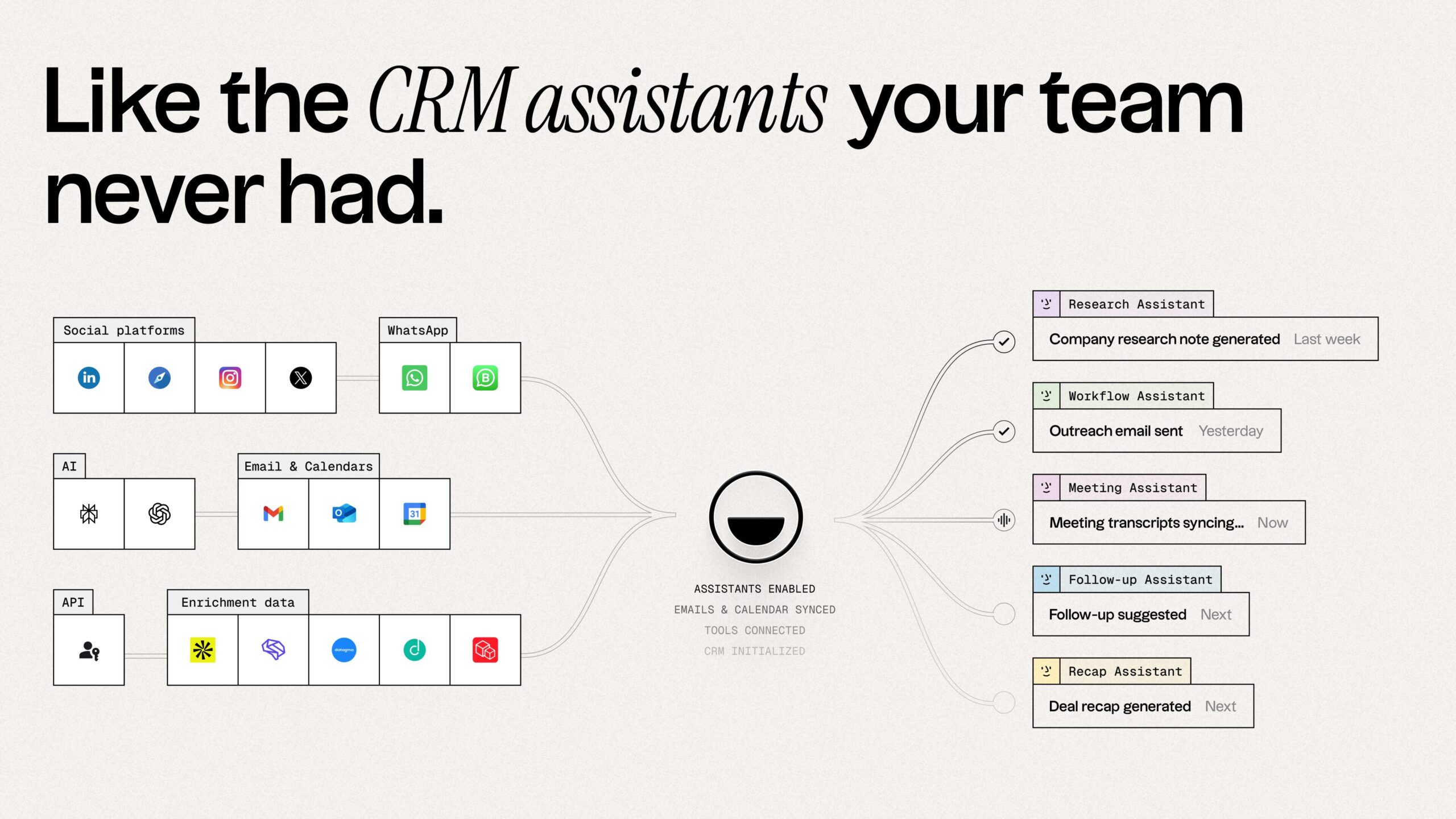
folk Assistants is a suite of AI agents embedded directly within the folk CRM, acting as a proactive partner for relationship management. Unlike traditional CRM automation that requires complex manual setup, these assistants work in the background to identify opportunities and reduce data entry. Whether it is detecting a stalled sales conversation, enriching a prospect’s profile with data from the web, or summarizing a long email thread, folk Assistants are designed to help users “never miss an opportunity” by delivering actionable suggestions and pre-drafted content directly into their workflow.
Key Features
The suite is composed of four specialized agents designed to handle specific CRM tasks:
- Follow-up Assistant: Automatically monitors email and WhatsApp conversations to detect when a deal has gone cold. It proactively notifies you and drafts a personalized follow-up message in your tone of voice.
- Research Assistant: Scans the web to find and verify missing data for companies in your pipeline, enriching profiles with key details without manual research.
- Recap Assistant: Instantly summarizes complex interaction histories and notes into concise briefs, helping you get up to speed on a contact before a meeting.
- Workflow Assistant: Automates the drafting and sending of personalized email campaigns based on specific triggers, ensuring consistent outreach at scale.
How It Works
The system operates as an intelligent layer on top of your contact database:
- Monitoring: The AI constantly scans connected communication channels (Gmail, Outlook, WhatsApp) and your CRM data.
- Triggering: When it identifies a relevant event—like a prospect who hasn’t replied in 5 days or a new company added with missing info—it activates the specific assistant.
- Action: It presents a “ready-to-go” suggestion, such as a drafted email or an enriched profile, which the user can approve or edit with a single click.
Use Cases
These assistants are particularly valuable for high-touch relationship roles:
- Sales Prospecting: Automatically enriching lead lists and queuing up personalized outreach messages for hundreds of contacts.
- Fundraising & Investor Relations: Ensuring no conversation with a VC falls through the cracks by receiving proactive reminders to follow up on stalled threads.
- Network Management: Keeping a large professional network warm by leveraging AI to track engagement and suggest timely reconnections.
Pros & Cons
A balanced look at the tool’s strengths and limitations.
Advantages
- Zero Setup: Unlike “Workflow” tools that require building logic trees, these assistants work out-of-the-box with pre-built AI models.
- Context Aware: The AI reads the actual content of emails to generate relevant replies, rather than just using generic templates.
- Integrated Workflow: Actions are suggested directly where you work (in the CRM or via notification), removing the need to switch tabs.
Disadvantages
- Platform Lock-in: These features are exclusive to folk; you cannot use the “Follow-up Assistant” if you keep your data in Salesforce or HubSpot.
- Credit Limits: AI usage (enrichment and generation) is typically metered by “credits” which reset monthly, potentially requiring plan upgrades for heavy users.
How Does It Compare?
folk Assistants compete with both traditional CRMs and modern AI tools. Here is the breakdown:
- Vs. HubSpot / Salesforce:
Legacy CRMs like HubSpot rely on rigid “Workflows” (If X happens, do Y). You have to build these yourself. folk Assistants are more “agentic”—they proactively read your emails and make intelligent suggestions without you needing to program the logic. Folk is significantly easier to set up but less customizable for complex enterprise operations. - Vs. Clay:
Clay is the market leader for “Data Enrichment” and “AI Research,” offering deeper waterfall enrichment capabilities (checking 50+ data sources). While folk’s Research Assistant is convenient because it is built-in, Clay is more powerful for pure data heavy-lifting. - Vs. Attio:
Attio is another modern, flexible CRM that focuses on “data objects” and customization. While Attio is powerful for building custom CRM structures, folk focuses more heavily on the “relationship intelligence” layer—like analyzing email sentiment and suggesting follow-ups—making it often preferred by network-heavy users (VCs, agencies).
Final Thoughts
folk Assistants transform the CRM from a passive database into an active partner. By offloading the mental load of “remembering to follow up” and the manual grunt work of “copy-pasting data,” it allows users to focus purely on building relationships. While it may not replace the deep enterprise features of a Salesforce, it offers a far superior user experience for small teams and deal-makers who value speed and intelligence over complexity.