
Table of Contents
- GitHub Copilot CLI: Comprehensive Service Analysis
- 1. Executive Snapshot
- 2. Impact \& Evidence
- 3. Technical Blueprint
- 4. Trust \& Governance
- 5. Unique Capabilities
- 6. Adoption Pathways
- 7. Use Case Portfolio
- 8. Balanced Analysis
- 9. Transparent Pricing
- 10. Market Positioning
- 11. Leadership Profile
- 12. Community \& Endorsements
- 13. Strategic Outlook
- Final Thoughts
GitHub Copilot CLI: Comprehensive Service Analysis
1. Executive Snapshot
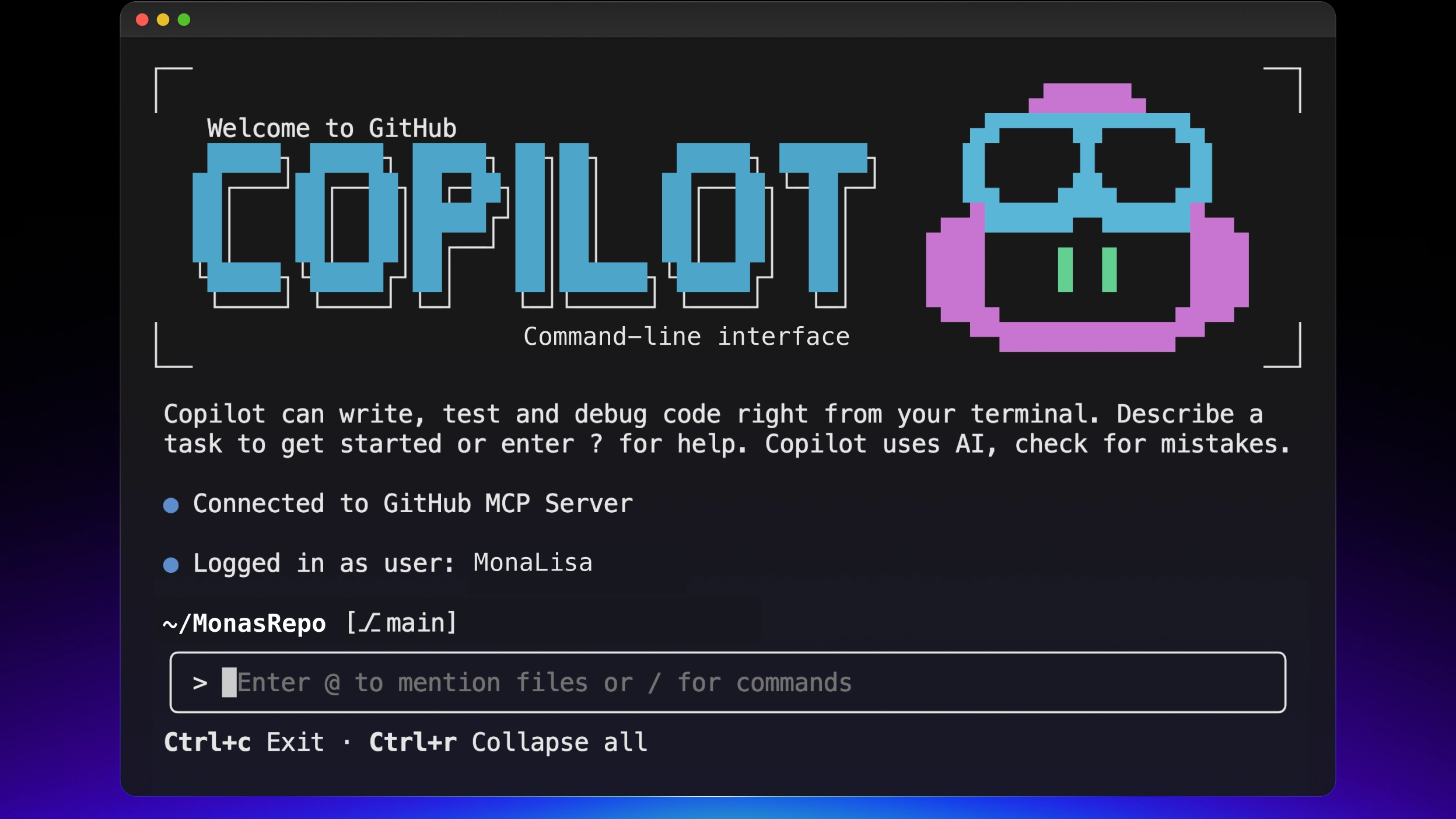
GitHub Copilot CLI represents a revolutionary approach to terminal-based development, bringing AI-powered coding assistance directly to command-line environments. Launched in public preview on September 25, 2024, this terminal-native agent transforms how developers interact with GitHub’s ecosystem while maintaining complete autonomy over development workflows.
The service builds upon GitHub Copilot’s foundation, which serves over 1.3 million paid users across 50,000+ organizations worldwide. As a core component of Microsoft’s CoreAI platform, GitHub Copilot CLI extends the proven capabilities of the world’s most widely adopted AI coding assistant into terminal environments, enabling seamless integration with existing development practices.
Key achievements include immediate availability across Linux, macOS, and Windows (via WSL), with native Windows PowerShell support in experimental status. The platform leverages GitHub’s existing authentication infrastructure, eliminating setup friction while maintaining enterprise-grade security standards. With built-in Model Context Protocol support and extensible architecture, the CLI agent positions itself as a foundational tool for the future of agentic development workflows.
2. Impact \& Evidence
Enterprise adoption data demonstrates substantial productivity improvements across organizations implementing GitHub Copilot solutions. Accenture’s comprehensive study revealed that 90% of developers experienced enhanced job satisfaction, with 88% reporting measurable productivity gains when using Copilot-powered tools. The research indicates a 15% increase in pull request merge rates, suggesting improved code quality alongside accelerated development cycles.
Quantitative performance metrics show impressive results: developers complete coding tasks 55% faster on average, with controlled experiments demonstrating completion times of 1 hour 11 minutes compared to 2 hours 41 minutes without assistance. Organizations report a 10.6% increase in pull request volume and a 3.5-hour reduction in development cycle times following Copilot adoption.
Third-party validations come from major enterprises including Goldman Sachs, Accenture deploying to 50,000 developers, and notable healthcare implementations across 100+ systems using related Copilot technologies. The evidence suggests consistent value delivery across diverse organizational contexts, with particularly strong results in legacy code maintenance, feature development, and developer onboarding scenarios.
3. Technical Blueprint
The system architecture leverages GitHub’s proven infrastructure, delivering sub-200 millisecond response times for hundreds of millions of daily requests through HTTP/2 optimization and custom load balancing. The platform operates as an agentic framework powered by advanced language models, with Claude Sonnet 4 as the default but supporting model switching across OpenAI’s GPT-5-Codex, Claude Opus 4.1, and Gemini 2.5 Pro.
Integration capabilities extend through the Model Context Protocol, enabling connection with custom MCP servers while maintaining security boundaries. The GitHub MCP server provides native access to repositories, issues, and pull requests through authenticated API connections. Enterprise deployments benefit from automatic inheritance of organizational policies and governance settings.
Scalability metrics demonstrate GitHub’s commitment to performance, with the underlying Copilot infrastructure serving 400+ million completions daily while maintaining enterprise-grade reliability. The CLI architecture supports session persistence across interactions, enabling contextual continuity for complex multi-step development tasks while requiring explicit approval for all file modifications and command executions.
4. Trust \& Governance
Security certifications include SOC 2 Type I compliance, with GitHub’s ISO 27001 certification scope expanded to include Copilot Business and Enterprise offerings as of May 2024. The platform operates under GitHub’s established security framework, with SOC 2 Type II reports planned for late 2024 covering comprehensive operational controls.
Data privacy measures ensure that Copilot Business and Enterprise plans do not use code submissions for model training, addressing primary enterprise concerns about intellectual property protection. All code interactions remain within Microsoft’s Azure cloud infrastructure, with no data retention beyond suggestion delivery for paid subscription tiers.
Regulatory compliance extends through GitHub’s existing frameworks, including FedRAMP considerations and international data protection standards. The platform includes built-in governance features allowing organization administrators to configure access policies, manage user permissions, and maintain audit trails for compliance documentation requirements.
5. Unique Capabilities
Terminal-Native Agent Architecture: The CLI provides autonomous task execution capabilities within command-line environments, distinguishing it from IDE-focused alternatives through direct integration with system-level operations and repository management.
GitHub Ecosystem Integration: Native access to GitHub repositories, issues, and pull requests through authenticated connections enables seamless workflow integration without context switching between tools or interfaces.
Model Context Protocol Extensibility: Built-in MCP support allows custom server integration, expanding agent capabilities beyond default GitHub functionality through community-contributed and enterprise-specific tool connections.
Explicit Approval Framework: Every file modification and command execution requires user confirmation, ensuring developers maintain complete control over automated actions while benefiting from intelligent assistance and suggestions.
6. Adoption Pathways
Integration workflow begins with simple npm installation using npm install -g @github/copilot, followed by GitHub credential authentication. The system automatically inherits existing Copilot subscription benefits and organizational policy configurations, eliminating complex setup requirements.
Customization options include repository-specific instruction files through .github/copilot-instructions.md and path-specific configurations via .github/copilot-instructions/**/*.instructions.md patterns. Organizations can configure MCP servers through repository settings, enabling team-specific tool integrations while maintaining security boundaries.
Onboarding support includes comprehensive documentation, community forums, and enterprise-specific guidance through GitHub’s professional services offerings. The CLI maintains backward compatibility with existing GitHub CLI workflows while introducing enhanced AI-powered capabilities through natural language interfaces.
7. Use Case Portfolio
Enterprise implementations focus on legacy codebase maintenance, cross-platform development setup, and multi-step feature implementations. Organizations report particular value in security-related fixes, dependency upgrades, and targeted refactoring scenarios where the CLI’s autonomous capabilities excel.
Academic and research deployments leverage the platform’s ability to explain unfamiliar code, generate documentation, and provide development environment setup assistance. Educational institutions find value in the tool’s capacity to bridge knowledge gaps while maintaining learning objectives through required approval workflows.
ROI assessments demonstrate substantial returns, with enterprise scenarios showing 2,089% ROI based on productivity gains versus subscription costs. Early-stage startups report even higher returns at 3,190% through accelerated development timelines and reduced time-to-market for critical features.
8. Balanced Analysis
Strengths include seamless GitHub ecosystem integration, proven enterprise adoption patterns, and robust security frameworks inherited from GitHub’s established platform. The explicit approval system addresses automation concerns while maintaining developer autonomy, and the MCP architecture provides genuine extensibility for custom workflows.
Limitations include current dependency on internet connectivity for cloud-based processing, experimental Windows PowerShell support, and the need for organizational policy configuration in enterprise environments. The public preview status indicates ongoing development, with some advanced features like subagents and direct VS Code integration planned for future releases rather than immediate availability.
Mitigation strategies involve leveraging existing GitHub Enterprise infrastructure, implementing gradual rollout approaches, and utilizing community-contributed MCP servers to extend functionality while development continues on core platform capabilities.
9. Transparent Pricing
Plan structures integrate with existing Copilot subscriptions: Free tier provides 50 premium requests monthly, Pro at \$10/month offers 300 premium requests with unlimited basic interactions, Pro+ at \$39/month includes 1,500 premium requests with full model access, and Business/Enterprise plans provide organizational management capabilities.
Total Cost of Ownership projections show favorable economics for teams of 10+ developers, with enterprise implementations typically achieving positive ROI within 3-6 months. Additional costs include potential MCP server hosting for custom integrations and training time for team adoption, though GitHub’s familiar interface reduces learning curve requirements.
Pricing transparency includes clear per-request costs for premium model usage at \$0.04 per additional request beyond plan limits, enabling predictable budget planning for organizations with varying usage patterns.
10. Market Positioning
| Feature | GitHub Copilot CLI | Cursor | Codeium Windsurf |
|---|---|---|---|
| Model Coverage | GPT-5-Codex, Claude 4.1, Gemini 2.5 Pro | GPT-4o, o1, Claude 3.5 Sonnet | Claude 3.5, GPT-4, custom Llama |
| Pricing per User | \$10-39/month | \$20/month | Free-\$12/month |
| Enterprise Features | GitHub-native, SOC2, ISO 27001 | Custom deployment options | On-premises available |
| Terminal Integration | Native CLI agent | IDE-focused | IDE-focused |
| Analyst Recognition | Leader in developer tools space | Rising challenger | Growing alternative |
Unique differentiators include native GitHub integration, established enterprise trust relationships, and terminal-first architecture addressing specific gaps in current AI coding assistance market approaches.
11. Leadership Profile
Current GitHub leadership operates under Microsoft’s CoreAI organization following CEO Thomas Dohmke’s announced departure at the end of 2024. The transition integrates GitHub more closely with Microsoft’s AI initiatives while maintaining the platform’s developer-focused culture and community engagement.
Key technical leadership includes teams responsible for the underlying Copilot architecture, which demonstrates expertise in large-scale AI system deployment, low-latency response optimization, and enterprise security implementation. Patent portfolios encompass core code generation technologies, contextual assistance mechanisms, and security frameworks that power the CLI implementation.
The leadership team’s expertise spans AI model integration, developer tooling, and enterprise software delivery, positioning the organization to continue advancing CLI capabilities while maintaining platform reliability and security standards.
12. Community \& Endorsements
Industry partnerships include major technology companies integrating MCP servers into the GitHub Registry, with Figma, Postman, HashiCorp, and Dynatrace contributing official integrations. These partnerships demonstrate ecosystem commitment to the Model Context Protocol standard that underpins CLI extensibility.
Media recognition includes coverage in major technology publications highlighting the CLI’s innovative approach to terminal-based development assistance. Awards and acknowledgments span GitHub’s broader Copilot platform, including recognition for developer productivity improvements and enterprise adoption success stories.
Community contributions through the GitHub MCP Registry provide expanding ecosystem value, with open-source server development enabling custom integrations while maintaining security and quality standards through community moderation and GitHub’s backing infrastructure.
13. Strategic Outlook
Future roadmap developments include subagent capabilities for complex multi-step workflows, direct VS Code integration possibilities, and expanded model portfolio integration as new AI capabilities become available. The platform evolution aligns with Microsoft’s broader CoreAI strategy while maintaining GitHub’s developer-centric approach.
Market trends indicate increasing demand for agentic development tools, with terminal-based assistance representing a natural evolution of current IDE-focused approaches. The MCP ecosystem expansion suggests growing standardization around AI agent integration patterns, positioning GitHub’s CLI implementation advantageously.
Strategic recommendations emphasize gradual adoption approaches, leveraging existing GitHub investments, and exploring custom MCP server development to maximize organizational value from the platform’s extensible architecture capabilities.
Final Thoughts
GitHub Copilot CLI represents a significant evolution in AI-assisted development, uniquely positioned through GitHub’s ecosystem integration and Microsoft’s enterprise capabilities. The terminal-native approach addresses genuine developer workflow gaps while maintaining the security and governance standards required for enterprise adoption. With proven productivity benefits, transparent pricing, and extensible architecture through MCP, the platform establishes a strong foundation for the future of agentic development workflows. Organizations already invested in GitHub’s ecosystem will find natural value, while the growing MCP server ecosystem provides compelling extensibility for diverse development requirements.