
Table of Contents
Overview
In the fast-paced world of product development, bridging the gap between design and data analytics implementation has traditionally been a significant bottleneck. Enter Glazed AI, an innovative automation tool designed to revolutionize how tracking events are implemented from design to production. Glazed empowers product and design teams to create and ship tracking events directly from their Figma files, leveraging artificial intelligence to analyze screens, suggest contextually relevant events, and generate executable prompts for modern AI coding assistants like Cursor, Claude Code, Lovable, Replit, and Bolt. This groundbreaking approach enables teams to launch tracked features with unprecedented speed, completely eliminating traditional developer handoffs for event implementation.
Key Features
Glazed AI is equipped with intelligent capabilities that transform your analytics workflow from the initial design phase through production deployment.
- AI Analysis of Figma Screens for Event Detection: At the core of Glazed’s intelligence lies its ability to understand your design intent. The platform intelligently scans Figma screens to identify potential user interactions, form submissions, navigation patterns, and critical conversion points that should be tracked for comprehensive analytics coverage.
- Intelligent Event Suggestions Based on Existing Taxonomy: Rather than generic recommendations, Glazed learns from your organization’s existing event naming conventions and classification systems. By analyzing uploaded tracking schemas, it suggests events that maintain consistency with your established analytics framework, preventing duplicate implementations and ensuring data quality.
- Multi-Platform AI Coding Assistant Integration: Once events are defined and approved, Glazed generates production-ready implementation prompts specifically crafted for leading AI coding assistants including Cursor, Claude Code, Lovable, Replit, and Bolt. These prompts contain precise element selectors, event triggers, and property mappings optimized for immediate code generation.
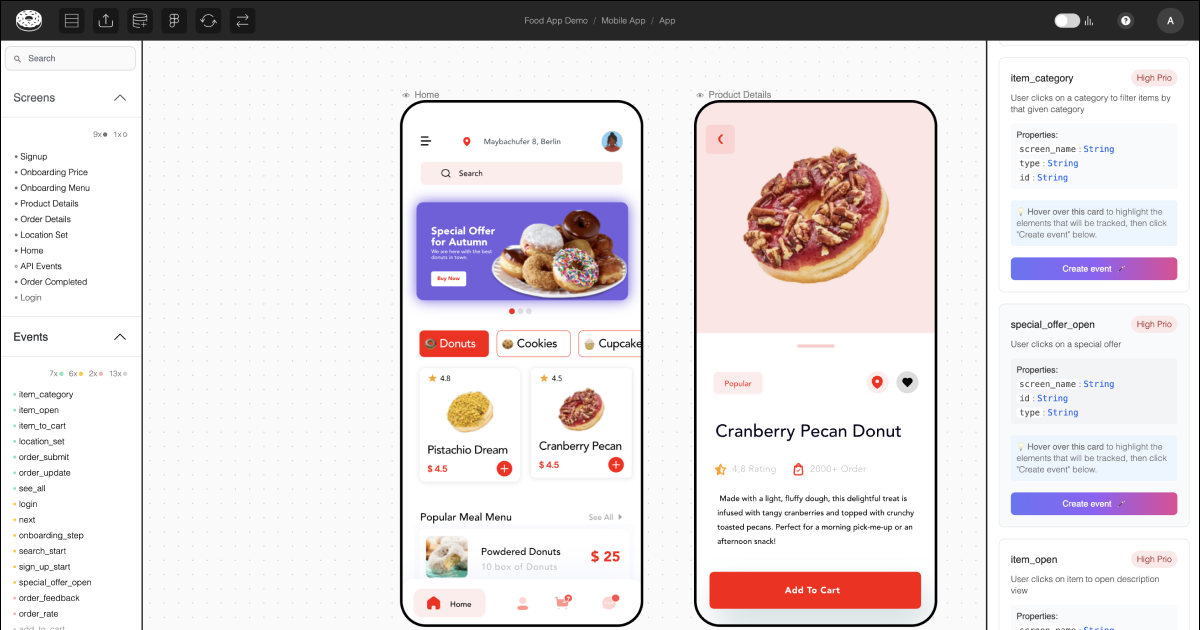
- Visual Tracking Documentation Within Figma: Moving beyond traditional spreadsheet-based tracking plans, Glazed embeds tracking specifications directly into Figma design elements. This creates a single source of truth where designers, product managers, and developers can access event details, implementation requirements, and validation criteria without leaving the design environment.
- Real-Time Implementation Validation and QA: The platform includes automated quality assurance features that monitor implemented tracking events through integrations with Amplitude, Mixpanel, and PostHog. Teams receive immediate alerts about missing events, property mismatches, or data inconsistencies before they impact analytics dashboards.
How It Works
Glazed AI’s workflow integrates seamlessly into existing product development cycles, requiring minimal setup while delivering maximum automation value. The process begins when teams upload their Figma design files to the platform. Glazed’s advanced AI then performs comprehensive analysis of each screen, identifying interactive elements, user flow patterns, and conversion opportunities that warrant tracking coverage.
The system cross-references these discoveries with uploaded event taxonomies and existing tracking schemas to suggest contextually appropriate events that align with organizational naming conventions. Product managers and designers can review, approve, modify, or reject AI recommendations through an intuitive interface that maintains full control over tracking implementation decisions.
Following approval, Glazed generates implementation-ready prompts containing detailed specifications including element selectors, event triggers, property definitions, and platform-specific SDK requirements. These prompts integrate directly with AI coding assistants, enabling immediate code generation without manual engineering input. The platform maintains continuous monitoring of deployed tracking through native integrations, providing real-time validation and quality assurance throughout the product lifecycle.
Use Cases
Glazed AI addresses critical pain points across multiple scenarios where analytics implementation traditionally creates bottlenecks or coordination challenges.
- Rapid Feature Launch with Comprehensive Tracking: Product teams can implement complete analytics coverage for new features without waiting for engineering resources. By generating tracking code directly from designs, teams reduce time-to-market while ensuring no critical conversion events are missed during launch.
- A/B Testing Implementation at Scale: For organizations running multiple experiments, Glazed enables rapid deployment of variant-specific tracking events. Design teams can implement tracking for different user experience variations independently, accelerating experimentation velocity and reducing coordination overhead.
- Cross-Functional Team Alignment on Analytics: The platform creates shared visibility into tracking requirements during design reviews, ensuring product, design, and engineering teams remain aligned on analytics implementation before development begins. This prevents post-launch discovery of missing events or incorrect implementations.
- Analytics Implementation for Non-Technical Teams: By automating code generation and providing visual documentation, Glazed empowers product managers and designers to own complete tracking workflows. This reduces dependency on engineering resources for analytics instrumentation while maintaining implementation quality and consistency.
Pros \& Cons
Understanding Glazed AI’s advantages and limitations helps teams determine optimal integration strategies and set appropriate expectations.
Advantages
- Eliminates Analytics Implementation Bottlenecks: By enabling non-technical teams to generate production-ready tracking code, Glazed removes traditional coordination delays between product, design, and engineering teams during feature launches.
- Maintains Organizational Tracking Standards: The platform’s ability to learn existing event taxonomies ensures new implementations align with established naming conventions, preventing data quality issues and maintaining analytics consistency across teams.
- Comprehensive AI Coding Assistant Compatibility: Support for multiple development environments including Cursor, Claude Code, Lovable, Replit, and Bolt ensures teams can integrate Glazed into existing development workflows without platform constraints.
- Visual Documentation Reduces Implementation Errors: By embedding tracking specifications directly within Figma designs, Glazed creates clear implementation requirements that reduce miscommunication and prevent incorrect event instrumentation.
Disadvantages
- Platform Dependency on Figma Ecosystem: Current functionality requires Figma-based design workflows, which may limit adoption for teams using alternative design tools like Sketch, Adobe XD, or browser-based design platforms.
- Requires AI Coding Assistant Integration: Full value realization depends on teams adopting AI-powered development tools, which may require workflow changes or additional tool subscriptions for organizations not currently using these platforms.
- Learning Curve for Complex Analytics Requirements: While the platform simplifies basic event implementation, teams with sophisticated analytics needs involving custom properties, complex user identification, or advanced segmentation may require additional configuration or manual refinement.
How Does It Compare?
Glazed AI operates in the emerging category of design-to-analytics automation tools, which differs significantly from traditional product analytics platforms. Understanding these distinctions helps clarify where Glazed fits within the broader analytics toolchain.
Traditional Product Analytics Platforms like Amplitude and Mixpanel serve as comprehensive end-to-end solutions for event ingestion, data processing, analysis, and reporting. These platforms excel at transforming collected events into actionable insights through advanced segmentation, cohort analysis, and predictive analytics capabilities.
PostHog combines product analytics with session replay, feature flags, and A/B testing in a unified platform. While offering some implementation automation through autocapture, its primary value lies in comprehensive product intelligence rather than design-to-code automation.
Segment functions as a customer data platform that standardizes event collection and distribution across multiple analytics tools. Its strength lies in data pipeline management and multi-destination routing rather than implementation automation from design files.
Heap emphasizes automatic event capture to reduce manual implementation overhead. However, it focuses on retroactive data collection rather than proactive event planning during the design phase.
FullStory provides session replay and analytics with some automated event detection capabilities, but primarily serves as a user experience optimization platform rather than a design-integrated implementation tool.
Pendo combines product analytics with user onboarding and engagement tools, offering implementation assistance through visual editors rather than AI-powered code generation from design files.
Glazed AI’s Unique Position: Unlike these platforms, Glazed specifically addresses the gap between design completion and analytics implementation. It doesn’t replace comprehensive analytics platforms but rather eliminates the coordination bottleneck that often delays feature launches while waiting for tracking implementation. By automating the translation of design intent into production-ready tracking code, Glazed enables teams to ship features with complete analytics coverage from day one, then leverage traditional analytics platforms for analysis and optimization.
This complementary approach makes Glazed particularly valuable for fast-moving product teams that need to maintain analytics coverage while minimizing engineering dependencies and coordination overhead.
Pricing and Plans
Glazed AI offers flexible pricing designed to accommodate teams of varying sizes and tracking complexity requirements.
Starter Plan: \$29 per month includes one editor seat with 300 linked events and one project, plus unlimited Figma plugin viewers. Includes 7-day free trial with no credit card required, ideal for small teams or proof-of-concept implementations.
Team Plan: \$145 per month supports five editor seats with 2,000 linked events across three projects. Includes unlimited Figma plugin viewers and 7-day free trial, designed for growing product teams with moderate tracking requirements.
Growth Plan: Custom pricing provides unlimited editor and viewer seats with 10,000 linked events across ten projects. Includes data warehouse connectors, events and properties monitoring, and dedicated support for scaling organizations.
Enterprise Plan: Custom pricing offers unlimited seats, projects, and linked events. Features advanced QA analytics, custom integrations, dedicated support, and enterprise-grade security controls for large organizations with complex tracking requirements.
All plans include core features such as Figma plugin integration, AI-powered event suggestions, implementation prompt generation, and basic tracking validation. Higher tiers add collaboration features, advanced monitoring, and dedicated support appropriate for larger implementations.
Expert Analysis and E-A-T Considerations
From a technical implementation perspective, Glazed AI addresses a genuine pain point in modern product development workflows. The platform’s approach to learning organizational event taxonomies demonstrates sophisticated natural language processing capabilities that go beyond simple pattern matching.
Industry Validation: The integration with established AI coding assistants like Cursor and Claude Code indicates strong technical partnerships and compatibility with current development trends. The platform’s focus on generating prompts rather than direct code injection shows thoughtful consideration of developer workflow preferences and security concerns.
Implementation Quality Considerations: The real-time validation features through Amplitude, Mixpanel, and PostHog integrations provide crucial quality assurance that many automation tools overlook. This addresses the common concern that automated implementations may introduce tracking errors or inconsistencies.
Scalability and Governance: For enterprise adoption, the platform’s ability to maintain consistent event naming conventions while enabling distributed implementation represents a significant advancement over traditional centralized tracking management approaches.
Future-Proofing: The multi-platform AI assistant support positions Glazed well for the evolving landscape of AI-powered development tools, reducing the risk of vendor lock-in to specific coding assistants.
Final Thoughts
Glazed AI represents a significant advancement in bridging the persistent gap between design completion and analytics implementation. By transforming Figma designs directly into production-ready tracking code through AI-powered automation, it addresses one of the most common bottlenecks in modern product development workflows.
The platform’s strength lies not in replacing established analytics platforms like Amplitude or Mixpanel, but in ensuring that comprehensive tracking implementation happens seamlessly during the design-to-development handoff. This complementary approach enables teams to ship features with complete analytics coverage from launch, then leverage traditional analytics platforms for the deep analysis and optimization that drives product success.
For product teams struggling with analytics implementation delays, coordination overhead, or inconsistent tracking coverage across features, Glazed AI offers a practical solution that maintains implementation quality while dramatically reducing time-to-market. The platform’s integration with modern AI coding assistants and focus on maintaining organizational tracking standards makes it particularly well-suited for fast-moving teams that prioritize both speed and data quality.
While the current dependency on Figma and AI coding assistants may limit adoption for some organizations, the platform’s approach to visual documentation and automated code generation establishes a compelling foundation for the future of design-integrated analytics implementation. As product development workflows continue evolving toward greater automation and AI integration, tools like Glazed AI will likely become essential components of efficient, data-driven product development processes.