Table of Contents
Overview
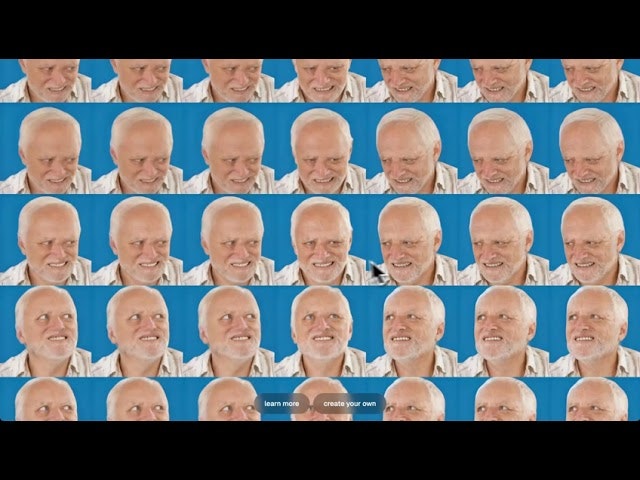
In the vibrant ecosystem of creative AI experimentation, some of the most engaging projects emerge not from commercial necessity but from playful curiosity and technical exploration. iisee.me represents precisely this spirit—a delightfully experimental web application created by Sergiu Chiriacei that transforms ordinary portrait photographs into interactive grids of animated faces, each tracking your cursor’s every movement across the screen. Remarkably built in under eight hours as a weekend project, this tool demonstrates how modern AI infrastructure and generative models enable rapid prototyping of visually captivating experiences. Rather than solving productivity challenges or addressing business problems, iisee.me prioritizes immediate engagement, visual novelty, and the simple joy of watching dozens of AI-generated faces follow your mouse in synchronized motion.
Key Features
Despite its rapid development timeline, iisee.me delivers several technical capabilities that create its distinctive interactive experience:
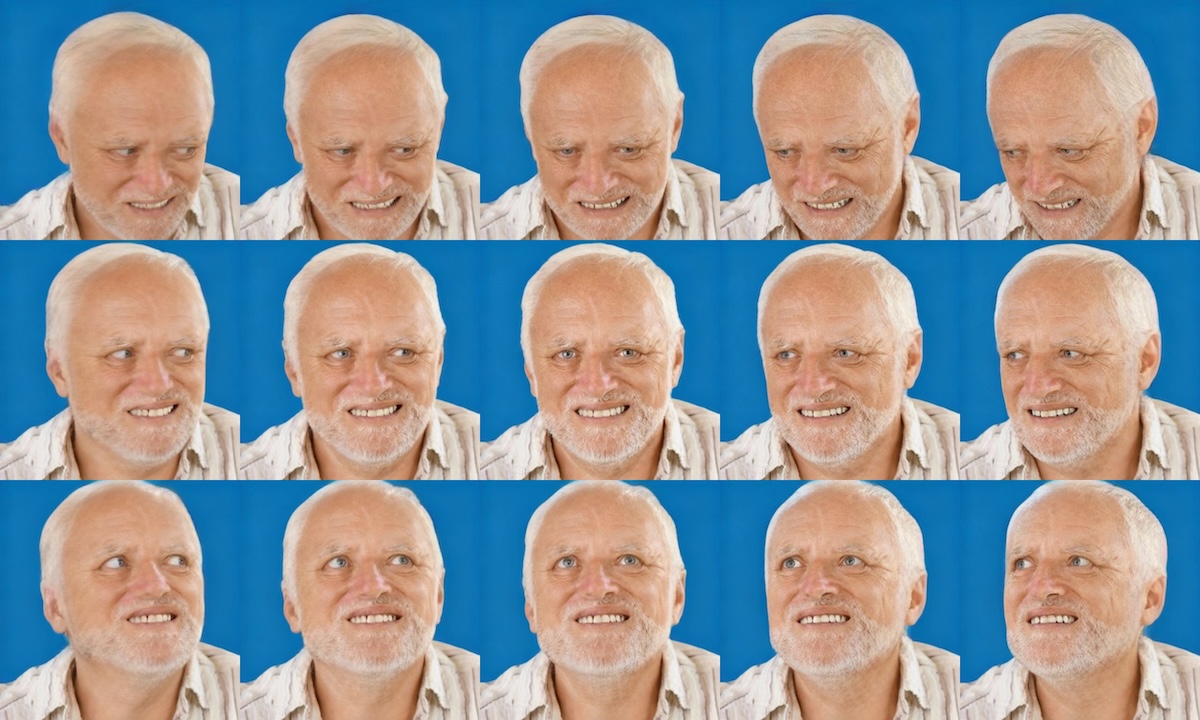
- Automated face grid generation: Upload a portrait photograph, and the system analyzes facial features using computer vision algorithms to generate a matrix of face tiles that preserve key characteristics while introducing expression variations.
- Real-time cursor tracking animation: Every face in the grid employs coordinate-based affine transformations to track mouse position, with smooth animation interpolation creating responsive, synchronized movement across the entire display.
- Expression-editor AI model integration: Leverages Replicate’s expression-editor model to generate face variations with different expressions, yaw angles, pitch positions, and pupil directions, creating diversity within the grid.
- Client-side WebGL acceleration: Processes images entirely in your browser using WebGL optimization, enabling sub-2-second generation times for standard resolution photos without server uploads during processing.
- Zero-friction user experience: Requires no account creation, registration, or payment—simply upload a photo and immediately interact with the generated face grid.
- Shareable results: Generated face grids can be shared directly, making them suitable for social media content, digital art portfolios, or playful demonstrations of AI capabilities.
How It Works
iisee.me’s operational workflow prioritizes simplicity and immediate gratification. Users visit the website and upload a portrait photograph through a straightforward interface. The system analyzes the uploaded image using facial recognition and segmentation algorithms, identifying key facial landmarks and features. It then generates multiple variations of the face using Replicate’s expression-editor model, creating different expressions, head orientations, and gaze directions. These variations are arranged into a responsive grid displayed in the browser. The animation layer continuously monitors cursor position and applies affine transformations to each face tile, calculating the appropriate yaw, pitch, and eye direction to simulate the appearance of tracking. WebGL acceleration ensures smooth, real-time performance as dozens of faces simultaneously follow cursor movement. The entire process—from upload to interactive display—completes in approximately two seconds for standard resolution images, all processed client-side in the browser.
Use Cases
While iisee.me deliberately prioritizes entertainment over utility, it serves several creative and educational purposes:
- Interactive social media content: Create shareable, engaging visual content for Instagram, Twitter, TikTok, or other platforms where novel visual experiences attract attention and engagement.
- AI capabilities demonstration: Educators, workshop facilitators, or AI enthusiasts can use iisee.me to illustrate generative models, facial synthesis, and real-time interactive animation in an accessible, immediately understandable format.
- Creative portfolio pieces: Digital artists, designers, and interactive media creators can incorporate iisee.me-generated grids into portfolios or exhibitions as examples of playful AI integration.
- Rapid prototyping inspiration: Developers and designers can study iisee.me as a case study in what’s achievable with modern AI infrastructure (Replicate, WebGL, generative models) in extremely short development timeframes.
- Icebreakers and conversation starters: The unusual visual effect creates memorable experiences suitable for virtual meetings, presentations, or digital events where engagement and novelty are priorities.
- Experimental art creation: Artists exploring AI-human interaction, surveillance themes, or gaze dynamics can use iisee.me as a starting point or inspiration for more elaborate installations.
Pros \& Cons
Advantages
- Exceptional development speed: The eight-hour build time demonstrates how modern AI infrastructure (pre-trained models, cloud hosting, WebGL libraries) enables extraordinarily rapid prototyping.
- Zero barriers to experimentation: No registration, payment, or technical knowledge required—anyone can immediately experience the interactive effect.
- Instantly engaging visual effect: The synchronized face tracking creates immediate fascination and encourages extended interaction and sharing.
- Technical accessibility: Client-side processing eliminates server dependency and reduces infrastructure costs while maintaining privacy during generation.
- Inspirational for creators: Demonstrates what individual developers can achieve in short timeframes, potentially inspiring similar experimental projects.
Disadvantages
- Entertainment-focused scope: Not designed for practical applications, productivity enhancement, or commercial use cases—purely an experimental novelty.
- Limited customization options: Users cannot control grid size, face variations, expression ranges, or animation parameters—the experience is standardized.
- Privacy considerations: Uploading personal photographs to third-party services raises data retention and usage questions; privacy policy and data handling practices are not prominently displayed.
- Occasional technical limitations: Some users reported generation delays or bugs with certain image types, though updates have addressed many early issues.
- Narrow functionality: The tool does exactly one thing well, without expansion features, export options, or integration capabilities with other creative tools.
How Does It Compare?
The creative AI experiment ecosystem includes numerous playful projects and interactive experiences, though few directly replicate iisee.me’s specific functionality:
This Person Does Not Exist represents perhaps the most famous AI face experiment, using StyleGAN3 technology to generate photorealistic faces of non-existent people. Each page refresh produces an entirely new synthetic face. While both projects use generative face models, This Person Does Not Exist focuses on realism and generation quality rather than interactivity. Studies have shown that AI-generated faces from such systems now appear more “human” to observers than actual photographs, raising fascinating questions about perception and authenticity. iisee.me differs by prioritizing interactive engagement over photorealism.
Gaze Pong emerged directly as iisee.me’s spiritual successor—a Reddit developer built this variation where AI-generated faces watch a pong ball bounce across the screen rather than following a cursor. Gaze Pong demonstrates how iisee.me’s concept can be remixed for different contexts, using pre-generated sprite sheets of face orientations for efficient browser performance. The project illustrates the ripple effect of creative experiments inspiring derivative works.
Google Arts \& Culture AI Experiments offers a curated collection of playful AI interactions, including tools like “Sparky” that combine everyday objects into imaginative creations, interactive artwork explorations with AI-powered hotspots, and experimental interfaces for cultural content. While more polished and backed by significant resources, Google’s experiments share iisee.me’s philosophy: using AI for creative exploration, education, and delight rather than pure utility.
Generative art platforms like Generart, generative.app, and TouchDesigner serve creators building algorithmic art, parametric designs, and interactive installations. These tools provide substantially more control, customization, and professional-grade output suitable for galleries, performances, or commercial projects. However, they require learning curves, technical understanding, and significant time investment—the opposite of iisee.me’s instant-gratification approach.
Face tracking software in professional contexts (Reallusion, Face++, Microsoft Azure Face, DeepAR) provides production-ready capabilities for AR filters, motion capture, emotion detection, and animation. These enterprise tools offer sophisticated APIs, extensive documentation, and integration capabilities, but serve entirely different use cases than playful experimentation. Their complexity and cost structure position them for serious applications rather than weekend projects.
Interactive AI art experiments broadly—from GLIF’s no-code AI prototyping platform to various playful installations shown at design weeks and creative conferences—share iisee.me’s experimental DNA. The broader movement emphasizes rapid iteration, accessible AI integration, and prioritizing experience over utility. iisee.me’s strength lies not in uniqueness but in execution: it delivers its specific interactive effect extremely well, with minimal friction, in a shareable format that requires no installation or expertise.
iisee.me’s distinctive positioning centers on its unapologetic simplicity and focus. It does one thing—create face grids that track your mouse—and does it immediately, freely, and memorably. For developers studying rapid prototyping, educators demonstrating AI capabilities, or anyone seeking a delightful minute of visual experimentation, iisee.me provides an accessible, polished example of playful AI exploration.
Final Thoughts
iisee.me perfectly encapsulates the value of creative experimentation in AI development. Not every project requires business justification, market analysis, or scalability planning. Some of the most memorable contributions to digital culture emerge from pure curiosity: “What if faces could track my mouse?” This eight-hour experiment demonstrates several important principles: modern AI infrastructure (Replicate, pre-trained models, WebGL) dramatically lowers barriers to building interactive experiences; playful projects can generate significant engagement and inspiration despite narrow functionality; and rapid prototyping creates value not just through the end product but through the example it sets. The project inspired immediate derivatives like Gaze Pong and sparked conversations across design and development communities about accessible AI experimentation. For anyone exploring AI’s creative possibilities, building portfolio pieces, or simply seeking a delightfully absurd minute of entertainment, iisee.me delivers its promise with charm and technical efficiency. It reminds us that in an era of AI hype focused on productivity and disruption, there remains genuine value in projects built simply because they’re fun.