
Table of Contents
Overview
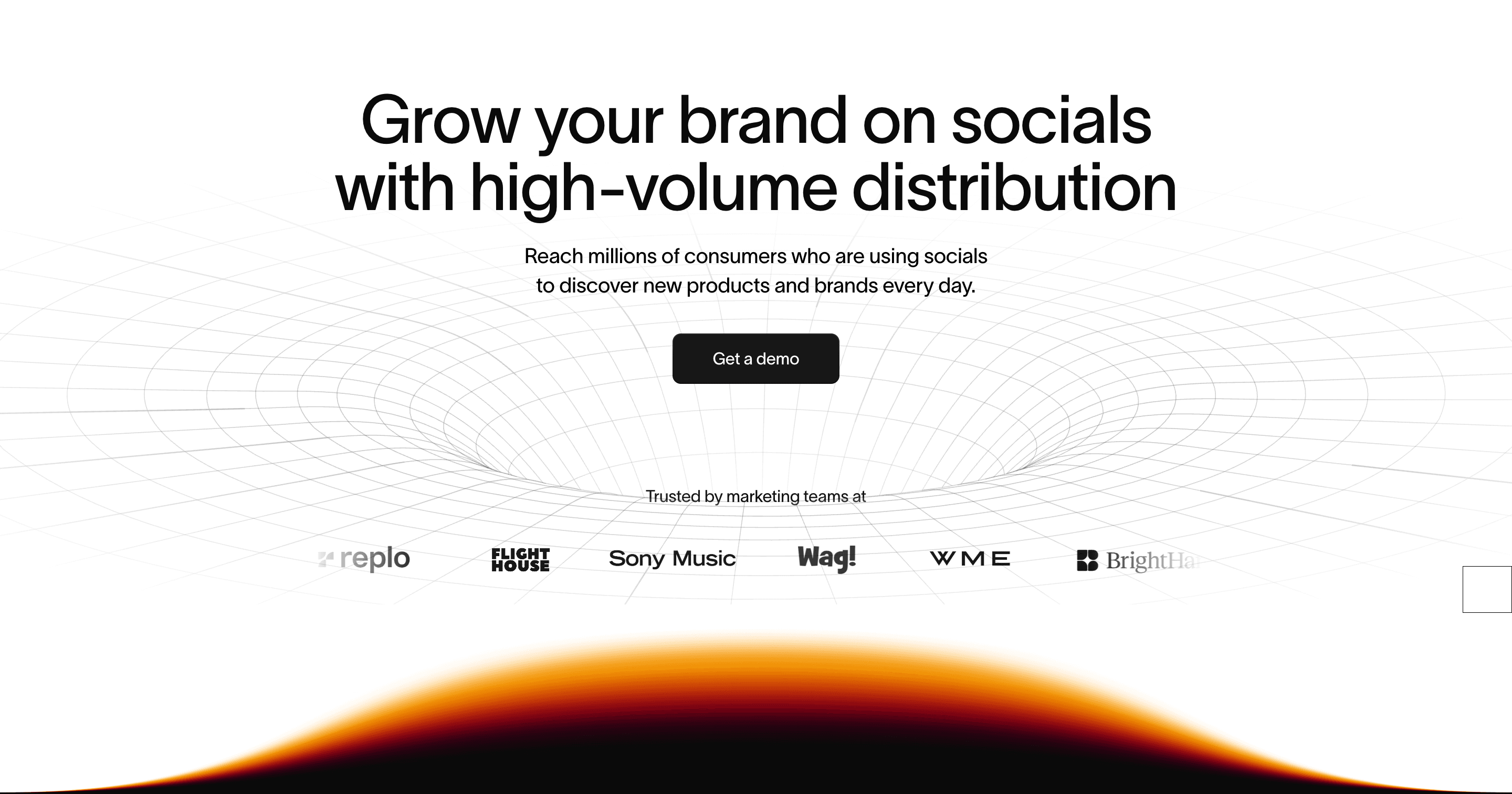
In the increasingly competitive landscape of digital marketing, maintaining consistent, high-performing social media presence demands substantial resources and strategic expertise. Juice positions itself as a full-stack marketing AI that functions as a fully managed marketing team, scaling from 10 to 100 AI employees capable of creating, posting, and optimizing organic content across major social platforms including TikTok, Instagram, YouTube, and LinkedIn.
Important note: Multiple products share the “Juice” name, including Juice.ai for SEO blog automation, JuiceLabs.ai for ad campaign creation, and JuiceMedia.ai as a media agency. This review specifically addresses Juice.co, the social media automation platform launched in November 2025.
Key Features
Juice delivers a comprehensive suite of automation capabilities designed to scale organic social media operations:
Branded account network setup and management: Juice establishes and maintains networks of branded social media accounts tailored to target demographics and brand voice, creating infrastructure for content distribution at scale.
Scale testing of content formats with winner amplification: The platform continuously tests various short-form content formats across the account network, identifies top performers through engagement analysis, and automatically amplifies successful content for maximum reach.
Automated daily short-form content creation and posting: AI agents autonomously generate and publish multiple new short-form posts daily, eliminating manual content calendar management and production bottlenecks.
Algorithm-optimized content engineering: Content is specifically engineered for algorithmic reach rather than simply created, with the system adapting to platform-specific recommendation algorithms to maximize visibility.
Unified performance dashboard: A centralized dashboard provides visibility into performance metrics including views, engagement, reach, and conversions across all accounts and platforms.
Multi-platform support: The platform claims support for 8 major social media platforms, with TikTok, Instagram, YouTube, and LinkedIn explicitly confirmed in marketing materials.
How It Works
Juice operates through a sophisticated automated workflow designed to minimize manual intervention while maximizing organic reach:
The process begins with branded account network setup, where Juice creates and optimizes multiple social media accounts aligned with target demographics and brand tone. This distributed approach enables testing and reach at scale beyond what single-account strategies can achieve.
AI agents then create and test multiple short-form content variations daily, generating dozens of posts that explore different formats, messaging angles, and creative approaches. The system continuously analyzes performance data using algorithmic metrics to identify content that resonates with target audiences.
Winning content identified through performance analysis is automatically amplified across the entire account network, ensuring successful formats receive broader distribution while underperforming content is de-emphasized. This data-driven amplification optimizes resource allocation toward highest-impact content.
All performance metrics aggregate into a unified dashboard tracking views, engagement, reach, and conversions, enabling strategic monitoring and optimization without requiring management of individual accounts or manual data compilation.
Use Cases
Juice addresses content automation needs across diverse business scenarios and organizational types:
E-commerce brands benefit from scaling organic reach and driving sales without ongoing paid advertising expenditure, using consistent content presence to maintain customer awareness and product discovery.
Content teams replace labor-intensive manual posting workflows that consume creative resources, freeing human talent for strategic planning, brand development, and high-value creative work that AI cannot replicate.
Startups establish strong daily social media presence cost-effectively from inception, competing with larger competitors through volume and consistency rather than requiring extensive marketing budgets or teams.
Enterprise companies manage complex multi-platform content strategies at scale, maintaining brand presence across regions, product lines, and audience segments through distributed account networks.
Businesses testing multiple content formats simultaneously conduct rapid experimentation to identify optimal messaging, creative styles, and platform strategies through data-driven iteration rather than intuition.
Brands transitioning from influencer marketing to owned distribution shift from outsourced reach dependent on third parties to building internal content ecosystems with greater control and lower ongoing costs.
Pros and Cons
Advantages
Significant reach increase potential with claimed 11x average increase in monthly social reach, though methodology and sample size not disclosed in marketing materials.
Dramatic time savings with claimed 98% reduction in content creation time, though customer testimonials report 70% reductions, suggesting varied results across implementations.
Cost advantage with claimed 85% savings versus paid distribution, though comparison baseline and specific alternative costs not clearly defined.
Scales content testing beyond manual capacity by conducting simultaneous experiments across multiple formats, accounts, and platforms with automated performance tracking.
Unified dashboard simplifies performance tracking by consolidating metrics from distributed account networks into centralized reporting interface.
Disadvantages
Requires brand trust in AI-generated content quality, as brands cede significant creative control to AI agents representing their voice publicly without human review of every post.
May lack human creative nuance in messaging, with AI-generated content potentially missing subtle cultural references, emotional intelligence, or brand-specific creative touches.
Effectiveness depends on algorithm changes across social platforms, with performance potentially impacted by updates to recommendation systems, content policies, or platform priorities.
Setup and onboarding process unclear with limited publicly available information about implementation timeline, required inputs, or brand customization capabilities.
Pricing structure not publicly available, requiring direct inquiry to assess cost-effectiveness and compare against alternative solutions or in-house approaches.
Platform support incomplete with 8 platforms claimed but only 4 explicitly identified, leaving ambiguity about full platform coverage and capabilities.
How Does It Compare?
Understanding Juice’s market position requires examining both traditional social media management tools and emerging AI-powered competitors:
vs Traditional Social Media Management Tools (Hootsuite/Buffer)
Hootsuite and Buffer represent established social media management platforms, though both have evolved significantly beyond basic scheduling. Hootsuite 2025 includes OwlyWriter AI for caption generation, AI-powered content idea suggestions, hashtag recommendations, optimal posting time analysis, and automated publishing workflows. The platform excels at team collaboration, social listening, comprehensive analytics, and multi-account management for agencies.
Buffer 2025 offers an AI Assistant generating post content from ideas or URLs, AI image creation, content repurposing tools, and tailored multi-platform posting that adapts content for each channel’s unique requirements. Buffer emphasizes simplicity and affordability with plans starting at five dollars monthly per channel, making it accessible for small businesses and solopreneurs.
While these tools now incorporate AI content generation capabilities rather than just scheduling, Juice differentiates through autonomous multi-account network management and continuous content testing with automated winner amplification. Traditional tools require users to approve and schedule AI-generated content, whereas Juice operates as a fully managed service publishing autonomously. Hootsuite and Buffer suit teams wanting control and collaboration features, while Juice targets organizations seeking hands-off automation.
vs Predis.ai
Predis.ai is a comprehensive AI social media management platform generating complete posts including visuals, captions, and hashtags from single text prompts. The platform features AI video and carousel generators for Instagram and TikTok, competitor analysis tracking top-performing posts and strategies, brand kit automation ensuring consistent styling, content calendar visualization, and multi-platform scheduling for Instagram, Facebook, TikTok, LinkedIn, Pinterest, YouTube, and X.
Ecommerce integration connects Shopify, Wix, and WooCommerce stores for automated product post creation. Team collaboration enables content approvals and workflow management. Pricing starts at twenty-three dollars monthly with free trial available.
Both Predis.ai and Juice offer AI content generation and scheduling, but differ in approach. Predis.ai provides single-account management with human oversight of AI-generated content before publishing, while Juice manages distributed account networks with autonomous publishing. Predis.ai emphasizes visual design quality and brand consistency, while Juice focuses on volume, testing, and algorithmic optimization. Predis.ai suits brands prioritizing design quality and control, whereas Juice targets scale and automation.
vs Ocoya
Ocoya is an AI-powered social media automation platform featuring AI copywriting in 26 languages, pre-made content templates optimized for each platform, automated post scheduling, analytics dashboards, ecommerce integrations with Shopify and WooCommerce, team collaboration tools, and RSS automation workflows triggering content creation from blog feeds.
The platform emphasizes workflow automation where users define rules triggering content creation and publication based on schedules, RSS updates, or product releases. Pricing includes a free tier with paid plans from nineteen dollars monthly, positioning it affordably for small businesses and agencies.
Ocoya and Juice share automation focus but differ in implementation philosophy. Ocoya provides workflow tools for users to design their own automation logic, while Juice operates as a managed service with built-in optimization strategies. Ocoya offers more control and customization at lower price points, while Juice promises hands-off management with proprietary testing and amplification algorithms. Ocoya appeals to technically capable teams wanting automation flexibility, whereas Juice targets organizations prioritizing results over process control.
vs FeedHive
FeedHive specializes in intelligent content management with distinctive features including conditional posting that automatically adds promotional comments when posts reach engagement thresholds, content recycling with AI identification of top-performing past posts for strategic republishing, performance prediction scoring posts before publication, smart scheduling analyzing optimal posting times, and hashtag generation.
The platform includes vibe marketing AI transforming random thoughts into structured content ideas, Instagram grid preview for visual planning, carousel support, and social inbox consolidating comments and mentions across platforms. Pricing starts at fifteen dollars monthly.
FeedHive represents the middle ground between traditional scheduling tools and full automation platforms. It enhances content strategy through intelligent recycling and conditional triggers while maintaining human content creation and approval. Juice operates at higher automation level with AI creating original content rather than recycling human-created posts. FeedHive suits teams with established content who want to maximize value through strategic republishing, while Juice targets organizations seeking to outsource content creation entirely.
vs Content Repurposing Tools (Repurpose.io/OpusClip)
Content repurposing platforms automate multi-platform distribution from source material. Repurpose.io connects to YouTube, TikTok, podcasts, and Zoom to automatically redistribute content across Instagram, Facebook, LinkedIn, and other platforms with workflow automation, video resizing for platform requirements, trimming and captioning, and custom templates. Pricing starts at twelve dollars fifty cents monthly.
OpusClip uses AI to analyze long-form videos, identify highlight moments, assess virality potential, clip and format for vertical video platforms, and add animated captions. The system scores clips for viral potential and suggests optimal posting strategies. Pricing begins at nine dollars monthly with free tier available.
These tools address different stage of content workflow than Juice. Repurposing platforms assume source content exists and optimize distribution, while Juice generates original content from scratch. Repurpose.io and OpusClip suit creators with substantial video content seeking to maximize reach efficiency, whereas Juice targets brands building consistent presence without existing content libraries. The tools could be complementary, using repurposing for cornerstone content and Juice for consistent daily posting.
vs Workflow Automation Platforms (n8n/Zapier)
General workflow automation platforms enable custom social media automation through visual builders and integration ecosystems. n8n offers 500+ integrations including social platforms, AI content generation via ChatGPT integration, workflow triggers based on RSS feeds or schedules, and open-source flexibility. n8n includes specific template for multi-platform social media content creation automating X/Twitter, Instagram, LinkedIn, Facebook, TikTok, Threads, and YouTube Shorts.
Zapier provides similar capabilities connecting RSS feeds to ChatGPT for content rewriting, then auto-posting to LinkedIn or other social platforms. These solutions require users to design their own automation logic but offer unlimited customization potential.
Workflow platforms and Juice represent build-versus-buy decision. n8n and Zapier enable creating Juice-like functionality at lower cost for technically capable teams willing to invest setup and maintenance time. Juice provides pre-built optimization strategies, testing frameworks, and managed service eliminating technical overhead. Workflow platforms suit organizations with development resources and specific requirements, while Juice serves teams prioritizing immediate deployment and proven strategies over customization.
vs Content Agencies and Influencer Marketing
Traditional approaches include hiring content agencies for managed social media or partnering with influencers for reach. Content agencies provide strategy, creative, and execution but typically charge thousands monthly and require significant client input for approvals and direction. Influencer marketing delivers reach through third-party audiences but involves ongoing relationship management, negotiation, and limited control over brand representation.
Juice claims 85% cost reduction versus paid distribution and positions itself as alternative to influencer marketing by building owned distribution networks. The platform shifts from outsourced reach to owned infrastructure while reducing costs associated with agency retainers or influencer fees. However, agencies provide strategic expertise and premium creative quality AI cannot fully replicate, while influencer partnerships leverage established trust and authentic voices. Juice suits organizations prioritizing volume and efficiency over premium creative or influencer authenticity.
Final Thoughts
Juice presents a distinctive vision for social media marketing automation by functioning as an autonomous AI marketing team rather than a tool requiring human operation. Launched on Product Hunt on November 17, 2025, and ranking as the ninth product of the day, the platform reflects growing market interest in fully automated content solutions.
For organizations struggling to maintain consistent social media presence due to resource constraints, Juice offers potential liberation from manual content creation and posting workflows. Customer testimonials from companies like Batavia reporting 18 million impressions generated and \&You achieving 70% time reduction demonstrate tangible results for early adopters.
The platform’s approach of creating distributed account networks, continuously testing content variations, and automatically amplifying winners represents sophisticated application of algorithmic optimization principles to organic social media. For startups and growth-stage companies prioritizing reach over creative perfection, this data-driven automation could provide competitive advantages against larger competitors with established brand presence.
However, significant considerations temper enthusiasm. The absence of public pricing information prevents cost-benefit analysis, though the positioning against agencies and paid advertising suggests substantial investment likely required. The lack of disclosed methodology behind metrics like 11x reach increase and 98% time savings raises questions about applicability across different industries, business models, and starting conditions.
More fundamentally, brands must evaluate comfort levels with ceding creative control to AI agents publishing content autonomously without human review. While efficiency gains are compelling, risks include off-brand messaging, tone-deaf content, factual errors, or culturally insensitive posts that could damage brand reputation faster than manual approaches. The platform’s safeguards, content moderation processes, and brand customization capabilities remain unclear from publicly available information.
The competitive landscape has evolved significantly throughout 2025, with traditional tools like Hootsuite and Buffer incorporating substantial AI capabilities, and specialized platforms like Predis.ai, Ocoya, and FeedHive offering different balances of automation, control, and affordability. Content repurposing tools provide complementary capabilities for maximizing existing content, while workflow automation platforms enable custom solutions for technically capable teams.
Organizations should evaluate Juice against specific criteria including risk tolerance for autonomous AI content, budget flexibility given undisclosed pricing, comfort with distributed account strategies versus single-account brand building, and need for volume versus creative quality. The platform appears best suited for businesses prioritizing scale and consistency, comfortable with algorithmic optimization approaches, and seeking to reduce dependency on paid advertising or influencer partnerships.
As AI-generated content becomes increasingly prevalent across social media, platforms that deliver authentic brand voice, strategic coherence, and measurable business outcomes while managing reputational risks will gain adoption. Juice’s success will depend on demonstrating consistent results across diverse business contexts, maintaining content quality as it scales, and adapting to evolving social platform algorithms and policies.
For teams considering Juice, requesting detailed case studies from similar businesses, understanding content moderation and brand safety processes, negotiating trial periods to validate fit, and comparing total cost of ownership against alternative approaches including hybrid models combining AI automation with human oversight will enable informed decisions about this emerging category of fully automated marketing services.