Table of Contents
Overview
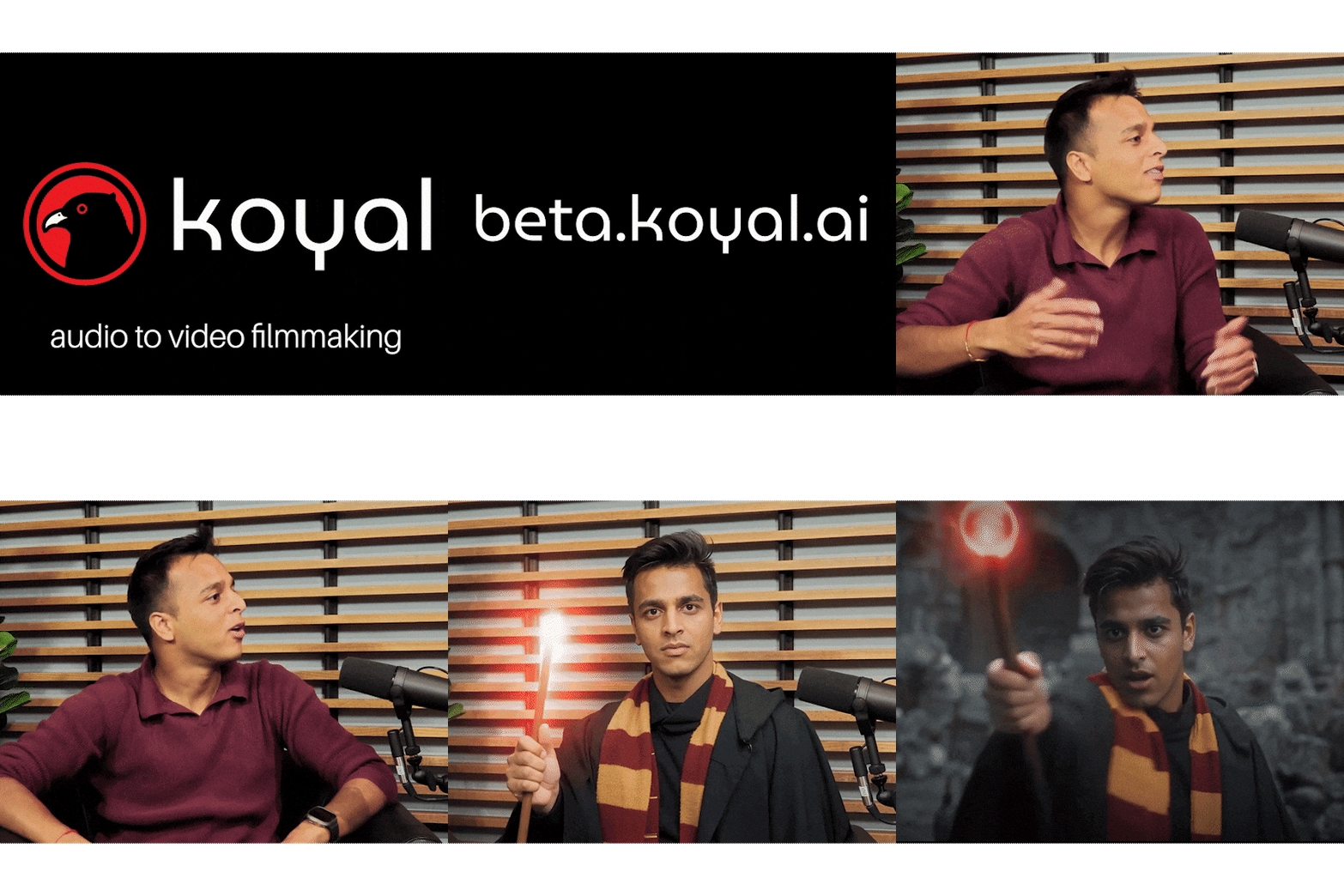
Koyal is an agentic AI filmmaking platform that transforms audio into complete cinematic videos with consistent characters, settings, and storylines. Developed by Carnegie Mellon University graduates Mehul and Gauri Agarwal and backed by Y Combinator (F25 batch), the platform addresses a fundamental challenge in AI video generation: maintaining narrative coherence and character consistency throughout entire films. By orchestrating multiple advanced video models through an intelligent agentic layer, Koyal enables creators to produce polished video content from audio sources without cameras or complex editing workflows.
Key Features
Koyal delivers a comprehensive suite of tools designed for audio-first video production:
Audio-to-Cinematic Video Generation: Converts podcasts, scripts, narration, or music into full-length videos in a single automated workflow, eliminating the need for manual clip stitching.
Character and Environment Consistency: Maintains visual coherence across characters (including user likenesses), locations, and stylistic elements throughout the entire production using state-of-the-art consistency algorithms.
Agentic Orchestration: Employs an intelligent system layer powered by CHARCHA (proprietary personalization engine presented at NeurIPS 2024) that coordinates underlying video models, plans scenes, and proactively prevents common AI artifacts.
Advanced Editing Controls: Provides storyboard-level editing capabilities where users can adjust lighting, camera angles, emotional tone, and scene settings with natural language directions like “make it more hopeful” or “change the setting to night.”
Custom Asset Integration: Supports uploading logos, screenshots, products, and other branded elements that maintain visual continuity across scenes (V2 feature).
Location and Asset Consistency: Ensures environments and props remain locked throughout productions, preventing random background shifts (V2 feature).
Direct Audio Recording: Built-in recording functionality allows users to create voiceovers directly within the platform.
Performance Optimization: V2 delivers 30 percent faster generation speeds compared to previous versions.
How It Works
Koyal’s production pipeline follows a streamlined four-step process inspired by Pixar’s audio-first storytelling methodology. Users begin by uploading audio (MP3, WAV, AAC formats up to 120 minutes) or recording directly in the platform. The system then transcribes and analyzes the audio to extract emotional tone, pacing, narrative structure, and contextual elements. Next, users define creative parameters including visual style, character descriptions, and setting preferences. Koyal’s agentic layer then orchestrates the production: segmenting the narrative into scenes, generating consistent characters and environments, coordinating camera movements, and applying genre-specific cinematic filters based on vocal tone analysis. Throughout this process, the CHARCHA personalization engine ensures contextual awareness and maintains character consistency across all frames. Users can then refine individual scenes through the visual storyboard interface, making adjustments without complex prompts. Finally, the platform renders the complete video with automatic lip-syncing, frame-rate matching, and resolution scaling up to 4K, delivering a single coherent film ready for distribution.
Use Cases
The platform serves diverse content creation needs across multiple sectors:
Independent Creators and Podcasters: Transform audio podcasts, audio dramas, and narrative recordings into fully visualized video series, expanding content reach without video production expertise or equipment.
YouTubers and Social Media Influencers: Produce consistent, serialized video content optimized for platforms like YouTube, TikTok, and Instagram without filming, lighting setups, or extensive shooting schedules.
Brands and Marketing Teams: Generate compelling narrative-driven marketing videos, product demonstrations, and brand storytelling content from existing voiceovers, audio advertisements, or corporate narratives.
Filmmakers and Storytellers: Rapidly prototype visual concepts, storyboard sequences, and preview scene transitions using audio narration, streamlining pre-production workflows and accelerating creative iteration.
Educators and Training Professionals: Convert educational audio content, lectures, and training materials into engaging video lessons with consistent visual elements.
Music Artists and Labels: Create music videos and visual albums from audio tracks, as demonstrated through collaborations with Grammy and Oscar-winning artists including A.R. Rahman, Ricky Kej, and Shankar Mahadevan.
Pros and Cons
Advantages
Democratizes Cinematic Production: Significantly lowers technical barriers to creating coherent, professional-quality video content, making filmmaking accessible to creators without traditional production resources.
Superior Narrative Consistency: Excels beyond raw video generation models by maintaining character likenesses, environmental continuity, and visual style coherence throughout entire productions rather than isolated clips.
Audio-First Workflow Integration: Aligns naturally with how storytellers, podcasters, and musicians already create content, allowing narrative development to drive visual production rather than the reverse.
Rapid Production Cycles: Enables creation of complete videos in minutes rather than days or weeks, dramatically reducing time-to-market for content creators and brands.
Integrated Creative Control: Provides intuitive editing capabilities that allow scene-by-scene refinement without requiring knowledge of complex video editing software or prompt engineering techniques.
Disadvantages
Model Dependency: Output quality and creative control remain constrained by the capabilities of underlying video generation models and the ongoing evolution of Koyal’s agentic orchestration layer.
Computational Resource Requirements: Generating high-quality, long-form cinematic videos demands significant processing power, which may translate to higher costs for extended or frequent productions.
Early-Stage Platform Maturity: As a recently launched tool undergoing rapid development, users should anticipate workflow changes, interface updates, and evolving feature sets as the platform matures.
Limited to Audio-Driven Content: The platform’s specialization in audio-to-video conversion means it may not suit creators whose workflows begin with visual concepts rather than audio narratives.
Learning Curve for Optimization: While simpler than traditional editing, users still need to understand how to effectively communicate creative direction and optimize results through the platform’s editing tools.
How Does It Compare?
Koyal occupies a distinctive position in the AI video generation landscape, differentiating itself from both raw video models and traditional video creation tools through its audio-first, narrative-complete approach.
Compared to foundational video generation models like Runway Gen-3/Gen-4, Pika Labs 2.1, Kling AI, and Luma AI Dream Machine, Koyal abstracts away the complexity of prompt engineering and multi-clip orchestration. While these platforms excel at generating short, high-quality video clips (typically 5-16 seconds), they require users to manually generate multiple clips and stitch them together in editing software to create coherent narratives. Runway offers strong editing capabilities and 1080p output but demands technical skill for extended content. Pika Labs provides excellent motion control and creative features but focuses on isolated clip generation. Kling AI delivers cinematic quality with professional camera controls for up to 3-minute videos, while Luma specializes in 3D content and realistic scene generation. Koyal’s advantage lies in producing complete, narrative-driven films from a single audio input with maintained character and setting consistency across the entire duration.
Against OpenAI Sora 2 (released September 30, 2025) and Google Veo 3.1 (released October 15, 2025), Koyal differentiates through its specialized audio-to-film workflow and agentic orchestration. Sora 2 offers groundbreaking synchronized native audio, 4K resolution, physics-aware motion, and multi-shot coherence, setting the benchmark for cinematic realism in text-to-video generation. Veo 3.1 similarly provides 4K output, synchronized audio, exceptional prompt adherence, and advanced editing capabilities through Google’s Flow platform including ingredient-to-video, frames-to-video, and scene extension features. Both platforms focus on generating individual high-fidelity scenes or short sequences from text or image prompts. Koyal, however, specializes in transforming existing audio narratives into complete films, handling scene planning, character consistency, and narrative flow autonomously throughout productions that can extend to feature-length content.
Compared to avatar-based video platforms like Synthesia, HeyGen, Elai, and Wondershare Virbo, Koyal targets a fundamentally different use case. These tools excel at creating presentation-style videos with AI avatars reading scripts, primarily for corporate training, marketing explainers, and educational content. Synthesia offers 140+ languages and extensive branding capabilities; HeyGen provides realistic avatars with natural gestures and 70+ language support; Elai delivers interactive video features and voice cloning in 75+ languages; while Virbo focuses on rapid avatar video creation for social media. These platforms prioritize efficient corporate communication and scalable training content with consistent presenters. Koyal instead emphasizes cinematic storytelling with dynamic scenes, multiple characters, environment changes, and narrative progression driven by audio content rather than scripted presentations.
Against comprehensive AI video generators like InVideo AI, Pictory, Descript, Fliki, and Steve AI, Koyal distinguishes itself through cinematic quality and character consistency. InVideo AI (v3.0) and Pictory focus on converting text, blog posts, and prompts into social media content and marketing videos with extensive template libraries and quick turnaround times. Descript specializes in transcript-based video editing with collaborative features, filler word removal, and overdub capabilities ideal for podcast and interview content. Fliki offers 2000+ voices in 80+ languages with AI avatar integration and blog-to-video conversion. Steve AI provides multiple video styles (animation, live-action, talking head) optimized for marketing and social platforms. While these platforms offer speed and versatility for various content types, Koyal focuses specifically on producing feature-quality films with consistent characters and cinematic production values from audio sources, serving creators prioritizing narrative storytelling over template-based content generation.
Koyal’s unique positioning centers on its agentic orchestration that handles the complete filmmaking pipeline—from audio analysis and scene segmentation to character consistency and cinematic styling—in one integrated workflow, specifically optimized for creators whose content begins with audio narratives rather than visual concepts or text scripts.
Final Thoughts
Koyal represents a significant advancement in accessible cinematic video production, bridging the gap between audio storytelling and professional visual content creation. The platform’s intelligent orchestration of video generation models, combined with its proprietary CHARCHA personalization engine, addresses persistent challenges in AI video generation—particularly character consistency and narrative coherence—that have limited the practical application of earlier tools. By adopting an audio-first philosophy inspired by professional animation studios like Pixar, Koyal aligns with the natural creative workflows of podcasters, musicians, educators, and storytellers who develop their narratives through sound before visualizing them.
The platform’s partnerships with major entertainment entities including Universal Music India, T-Series, Grammy and Oscar-winning artists, and Bollywood production houses including Maddock Entertainment and Collective Artists Network demonstrate real-world validation beyond typical early-stage AI tools. The creation of music videos generating over 1.5 million views each for established artists like A.R. Rahman showcases Koyal’s capability to meet professional production standards. Its adoption by educational institutions including PACE IIT and Medical, Narayana Group, and PhysicsWallah, as well as 22 Y Combinator companies for product launch videos, illustrates versatility across diverse content requirements.
While the platform remains in its early evolution with ongoing feature development and workflow refinement, the rapid iteration evidenced by the V2 release—delivering 30 percent faster generation, location consistency, and custom asset integration—suggests a commitment to addressing user feedback and improving practical usability. The November 2025 Product Hunt launch receiving 314 upvotes and 69 substantive discussions indicates genuine market interest beyond novelty appeal. For creators seeking to produce narrative-driven video content from audio sources without traditional production infrastructure, Koyal offers a compelling proposition that emphasizes storytelling and creative vision over technical video editing expertise. As underlying video generation models continue advancing and Koyal’s agentic systems evolve, the platform is positioned to become increasingly powerful for audio-first creators, brands, and filmmakers looking to scale video production while maintaining cinematic quality and narrative coherence.