
Table of Contents
Overview
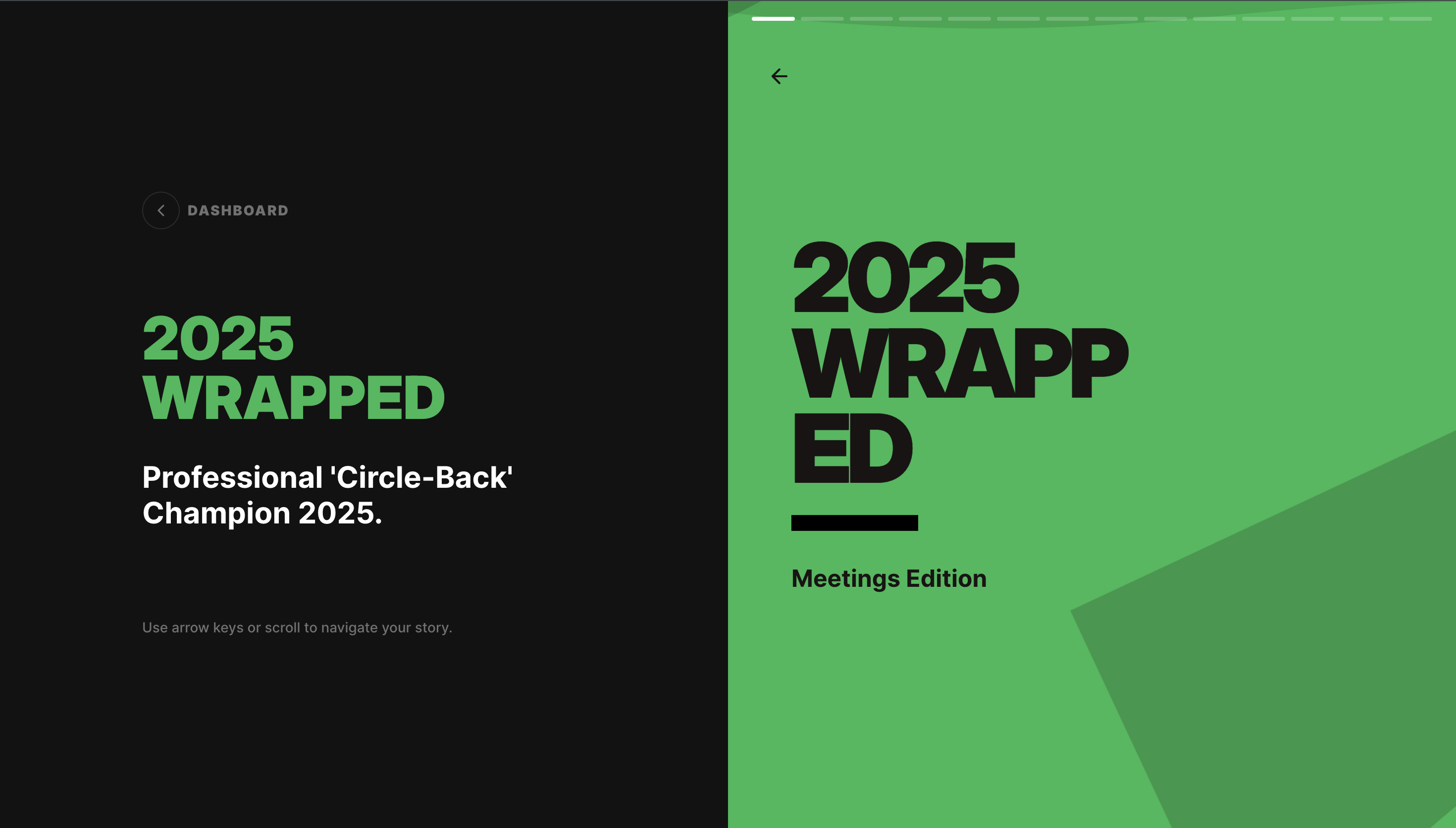
Calendar overload has become a defining feature of modern professional life, with the average knowledge worker spending over 18 hours per week in meetings according to recent studies. Yet determining whether this time investment drives genuine productivity or simply perpetuates meeting culture remains difficult without concrete data. Meetings Wrapped is a calendar analytics tool developed by Sagar Chauhan and launched in December 2025 that transforms calendar metadata into visual year-end summaries modeled after Spotify’s popular Wrapped format.
Rather than offering real-time scheduling optimization, Meetings Wrapped serves as a retrospective analysis tool that answers questions like: How many total meetings did I attend this year? Which colleagues did I meet with most frequently? What percentage of meetings fell below 30 minutes and might have been handled asynchronously? By connecting to Google Calendar through OAuth authentication (with Outlook integration planned), the tool scans past calendar events and generates shareable visualizations highlighting meeting habits, time allocation patterns, and potential inefficiencies.
The tool’s “meetings that could have been emails” analysis uses algorithmic heuristics based on meeting duration, attendee count, and recurrence patterns to flag potentially low-value meetings—not by comparing to actual email communications, but by applying rule-based criteria that correlate with meetings better suited to asynchronous communication. A public leaderboard adds a gamified social element, ranking users by total meeting hours and enabling peer comparison across organizations.
Key Features
Calendar Efficiency Analysis: Meetings Wrapped processes calendar metadata including meeting duration, frequency, participant lists, and scheduling patterns to identify potential inefficiencies. The tool’s signature “could have been email” detection applies algorithmic scoring based on meeting characteristics: duration under 30 minutes suggests potential for asynchronous communication, attendee count over 5 people indicates possible information-sharing rather than decision-making sessions, recurring patterns reveal habitual meetings that may have outlived their purpose, and keyword analysis of meeting titles flags update-oriented gatherings.
The algorithm assigns replaceability scores combining these factors, though the exact weighting and threshold logic is not publicly documented. Users should recognize this represents pattern-based heuristics rather than nuanced context awareness—a 25-minute standup may be valuable while a 45-minute brainstorm could be inefficient, context the tool cannot fully capture.
Spotify Wrapped-Style Visualization: Following the popular year-end review format pioneered by Spotify, Meetings Wrapped presents meeting data through engaging visual reports featuring total meeting count, cumulative hours in meetings, average meetings per week, longest single meeting duration, most frequent meeting partners (top collaborators), meeting time distribution by day of week and hour, recurring vs. ad-hoc meeting ratios, and meeting type categorization.
The visualization prioritizes shareability and aesthetic appeal over granular analytics, making insights accessible to non-technical users and suitable for social media sharing or casual reflection.
Public Leaderboard System: A distinguishing feature absent from most calendar tools, Meetings Wrapped includes a competitive leaderboard that ranks users by total meeting hours (MtgHrs) and productivity-adjusted scores. The leaderboard aggregates anonymized metrics across organizations, creating cross-company benchmarking that reveals how individual meeting loads compare to broader professional norms.
Users can opt into leaderboard participation, with real-time updates powered by WebSocket connections. Rankings weight meeting hours 70%, unique meeting count 20%, and consistency scores 10%, with industry normalization attempting fair comparison across sectors. Privacy-conscious users should evaluate whether this public data sharing aligns with organizational policies and personal comfort levels.
Google Calendar Integration: The tool implements OAuth 2.0 authentication for read-only access to Google Calendar, eliminating manual data entry. The connection process is straightforward: users authorize calendar access, select the analysis period (typically full calendar year), initiate scan of calendar events, and receive generated report within minutes.
The read-only permission scope means Meetings Wrapped cannot modify calendar entries, add events, or access email content—only meeting metadata (titles, duration, participant lists, recurrence patterns) is processed. Outlook and Microsoft Teams calendar integration is listed on the development roadmap for Q4 2025/Q1 2026.
API Access for Developers: Meetings Wrapped offers API endpoints enabling developers and teams to programmatically pull meeting summaries, integrate analytics into custom dashboards, automate periodic reporting, and build workflows triggered by meeting patterns.
This developer-friendly approach suggests potential for enterprise applications where meeting culture analysis could inform organizational policy, manager dashboards, or productivity coaching systems.
Shareable Reports: Generated visualizations can be exported or shared directly to social media, team channels, or personal archives. The shareable format encourages reflection and conversation about meeting culture within teams, though users should consider organizational norms around sharing productivity data publicly.
Customizable Filtering: Users can filter analysis by date ranges (quarterly, monthly, custom periods), specific calendars (separating work, personal, project-specific calendars), meeting types or keywords, and participant groups.
This flexibility enables targeted analysis such as examining meeting load during specific project phases, comparing pre and post-reorganization patterns, or isolating client-facing vs. internal meetings.
How It Works
Using Meetings Wrapped requires minimal technical knowledge. After navigating to wrap.sagarchauhan.in, users initiate the OAuth authentication flow by selecting “Connect Google Calendar.” The authorization screen explains requested permissions (read-only calendar access) and data usage policies.
Upon granting access, users select analysis parameters including time period for review (default: current calendar year), calendar sources to include (work calendar, personal calendar, or both), and leaderboard participation preferences (opt-in or privacy mode).
The tool then scans the specified calendar range, extracting metadata from calendar events. Processing time varies with calendar size but typically completes within 2-5 minutes for a full year of data. The backend applies algorithmic analysis including meeting duration calculations, attendee count aggregation, recurrence pattern identification, time-of-day and day-of-week distribution analysis, and replaceability scoring based on duration, attendee, and keyword heuristics.
Results are compiled into the Wrapped-style visual report featuring key statistics, comparative metrics (vs. previous periods or leaderboard averages), trend visualizations, top collaborators ranking, and shareable summary cards.
Users can export raw data in CSV or JSON formats for custom analysis in spreadsheet applications or business intelligence tools. The platform does not store calendar data long-term beyond what’s necessary for generating reports—once the analysis completes, detailed event information is purged while aggregated statistics may be retained for leaderboard functionality.
Use Cases
Year-End Productivity Reflection: As calendar year concludes, professionals can use Meetings Wrapped to review annual meeting patterns, identifying growth areas and inefficiencies. Questions answered include: Did meeting load increase or decrease compared to previous year? Which months featured highest meeting density? Which recurring meetings consumed significant time? The retrospective view provides foundation for New Year productivity resolutions informed by actual data rather than impressions.
Meeting Culture Audits: Managers and team leads can analyze team-wide meeting patterns (with appropriate consent and transparency) to identify organizational inefficiencies such as excessive all-hands meetings, redundant status updates better handled asynchronously, unproductive recurring meetings lacking clear agendas, and individual contributors overwhelmed by collaborative demands.
This organizational diagnostic can inform policies like “No Meeting Wednesdays,” mandatory agenda requirements, recurring meeting audits, or default meeting duration changes (25 and 50 minutes rather than 30 and 60).
Personal Time Management Insights: Individual contributors can examine their meeting footprints to understand how collaborative demands affect focus time, productivity, and work-life balance. Insights might reveal patterns like mornings consumed by meetings while deep work occurs late afternoon, specific days chronically overbooked while others underutilized, or certain meeting types consistently running over scheduled time.
This self-awareness enables proactive calendar management such as blocking focus time preemptively, negotiating meeting frequency reductions, or declining low-value recurring invitations.
Burnout Risk Identification: Excessive meeting load correlates with burnout, context-switching fatigue, and diminished productivity. By quantifying meeting hours and visualizing trends over time, Meetings Wrapped can serve as early warning system when meeting density crosses into unsustainable territory.
Red flags include sustained weeks exceeding 20-25 hours in meetings, declining focus time availability, increasing frequency of back-to-back meeting schedules with no breaks, or steadily growing meeting counts without corresponding reduction in other work expectations.
Accountability and Transparency: In distributed or hybrid work environments, visible meeting data can foster accountability around inclusive collaboration practices, equitable meeting load distribution, and respectful scheduling norms. Public leaderboards (used thoughtfully) might highlight individuals carrying disproportionate meeting burdens or teams creating excessive coordination overhead.
However, this use case requires careful cultural framing to avoid punitive interpretations or gaming the metrics (e.g., artificially reducing meeting invitations while shifting communication burden to email or chat).
Pros \& Cons
Advantages
Engaging, Accessible Visualization: The Spotify Wrapped-inspired design transforms potentially dry calendar analytics into visually appealing, easily digestible content. Unlike enterprise analytics dashboards requiring interpretation skills, Meetings Wrapped’s presentation is immediately understandable to non-technical users. The aesthetic design encourages sharing and discussion, potentially catalyzing team conversations about meeting culture that might not otherwise occur.
Low Barrier to Entry: Free at launch with simple OAuth authentication, Meetings Wrapped requires zero financial investment and minimal setup friction. Users can generate insights within minutes without purchasing software licenses, setting up complex integrations, or learning specialized analysis tools.
Burnout Risk Awareness: By quantifying meeting load and highlighting patterns, the tool provides concrete evidence of potential overcommitment. Seeing “you spent 660 meetings averaging 13 per week” makes abstract meeting fatigue tangible, potentially motivating boundary-setting conversations with managers or teammates that subjective feelings alone might not trigger.
Social Benchmarking via Leaderboard: The competitive leaderboard offers unique perspective on whether individual meeting loads are typical or exceptional relative to peers. This external reference point can validate feelings of being meeting-overloaded or alternatively reveal room for increased collaboration if meeting participation trails organizational norms.
Developer-Friendly API: API access democratizes calendar analytics, enabling technical teams to build custom solutions, integrate meeting data into existing productivity dashboards, or create automated workflows based on meeting patterns without reinventing data extraction infrastructure.
Privacy-Conscious Architecture: Read-only OAuth access, explicit consent requirements, and data purging policies demonstrate thoughtful privacy design. The tool requests minimal necessary permissions rather than broad calendar control, and users retain ownership over whether to participate in public leaderboards.
Disadvantages
Limited Real-Time Utility: Meetings Wrapped excels at retrospective analysis but offers minimal value for day-to-day calendar management. Users seeking proactive scheduling assistance, focus time optimization, or meeting conflict resolution need complementary tools rather than relying solely on year-end reviews. The insights generated are valuable for reflection but don’t directly prevent future calendar dysfunction.
Algorithmic Limitations in “Could Be Email” Detection: The replaceability scoring relies on crude heuristics—duration, attendee count, keywords—that miss crucial context. A 20-minute daily standup might be invaluable for team cohesion despite meeting “email-worthy” criteria, while a 90-minute strategy session could be wasteful despite exceeding thresholds. The tool cannot assess meeting quality, decision outcomes, relationship-building value, or cultural significance that determine actual utility.
Privacy and Data Sharing Considerations: While OAuth permissions are read-only, users must trust the developer with calendar access—a significant permission encompassing meeting titles, participant lists, scheduling patterns, and potentially sensitive organizational information. The public leaderboard, even with anonymization, reveals meeting behavior to external parties. Organizations with strict data governance policies may prohibit use of third-party calendar analysis tools regardless of stated privacy protections.
Gamification Risks: The leaderboard’s competitive framing could incentivize counterproductive behavior such as artificially declining meeting invitations to improve rankings, shaming colleagues with high meeting counts rather than addressing systemic causes, or creating unhealthy competition around metrics divorced from actual productivity.
Well-intentioned “fewer meetings are better” messaging might penalize roles legitimately requiring high collaboration (customer success, program management, leadership) while rewarding heads-down roles with naturally fewer meetings.
Very New Product with Limited Track Record: Launched December 2025, Meetings Wrapped has only weeks of real-world usage. Bugs, edge cases, unexpected behaviors, and feature limitations will inevitably emerge. Early adopters should anticipate discovering issues and recognize that long-term development roadmap, support responsiveness, and feature evolution remain uncertain with a solo developer project.
Google Calendar Dependency: Current limitation to Google Calendar excludes Outlook and Exchange users, representing significant professional market. While Outlook integration is planned, timeline uncertainty means many potential users cannot currently benefit.
Lack of Actionable Recommendations: The tool identifies patterns but provides limited guidance on how to improve. Users receive data about excessive meetings but not frameworks for negotiating reductions, templates for asynchronous alternatives, or best practices for meeting efficiency. The visualization sparks awareness but requires users to independently devise remediation strategies.
How Does It Compare?
Meetings Wrapped enters a 2026 calendar productivity tool market spanning reactive analytics, proactive optimization, and AI-powered scheduling assistance. Understanding its competitive positioning requires examining tools across multiple categories:
Retrospective Calendar Analytics
MineTime Insight (Academic Research Tool – 2019)
- Type: Research project for personal calendar visualization
- Features: Multiple coordinated views for calendar exploration, long-term and short-term scheduling decision support, personal visual analytics approach
- Target: Not necessarily visualization experts
- Focus: Actionable statistics from calendar data, reflection-oriented design
- vs. Meetings Wrapped: MineTime Insight is research-focused academic work demonstrating calendar analytics concepts; Meetings Wrapped is consumer-facing product with social sharing emphasis
Reclaim.ai Calendar Analytics
- Type: Enterprise calendar optimization platform with analytics module
- Core Function: AI-powered automatic scheduling + retrospective reporting
- Analytics Features: Automatic time tracking across meetings/tasks/personal time, detailed categorization (1:1s, team meetings, focus work, breaks), weekly/monthly reports on time allocation, productivity scoring, meeting quality assessments
- Pricing: Free tier available; paid plans for advanced features
- Target: Individuals and teams seeking both optimization and analytics
- vs. Meetings Wrapped: Reclaim.ai provides ongoing analytics as part of active scheduling tool; Meetings Wrapped is standalone year-end review without optimization. Reclaim offers deeper granularity but requires continuous use; Meetings Wrapped delivers one-time insights with minimal commitment.
TimeTackle Calendar Export \& Analytics
- Core Function: Extract calendar data for detailed reporting and invoicing
- Features: Export meetings to Excel/CSV/PDF/Google Sheets, scheduled automatic exports to email, filter by calendar/keyword/color/participant/timeframe, sum hours by project/client/type, meeting frequency and type analysis
- Integrations: Zapier, Make.com, Google Sheets
- Focus: Billing and timesheet generation from calendar data
- vs. Meetings Wrapped: TimeTackle emphasizes export and billing workflows; Meetings Wrapped emphasizes visualization and social sharing
TimeNavi Calendar Sidebar
- Type: Browser extension for Google Calendar
- Features: Automatic time tracking within calendar interface, sidebar summary of time usage (project/task/tag), tags and color-coding for event categorization, weekly planning with focus blocks, weekly/monthly allocation trends, download capabilities for billing/auditing
- Integration: Works directly within Google Calendar interface
- vs. Meetings Wrapped: TimeNavi is ongoing companion to calendar use; Meetings Wrapped is periodic retrospective analysis
Proactive Calendar Optimization and AI Scheduling
Clockwise
- Core Function: AI-powered calendar optimization for focus time
- Features: Automatic meeting rescheduling to create focus blocks, team scheduling coordination, analytics on focus time gained, meeting efficiency metrics, smart breaks between meetings
- Approach: Proactive intervention rather than passive analysis
- Target: Teams seeking to defend focus time systematically
- vs. Meetings Wrapped: Clockwise actively manages calendar to optimize future; Meetings Wrapped analyzes past without intervention. Complementary rather than competitive—Clockwise prevents problems; Meetings Wrapped reveals them retrospectively.
Vimcal
- Core Function: Fast, keyboard-driven calendar with AI scheduling assistant
- Features: Natural language event creation, group scheduling with availability polling, meeting templates, booking pages, focus time protection, calendar analytics, time zone management, social integrations
- Target: Power users wanting speed and efficiency
- vs. Meetings Wrapped: Vimcal is replacement calendar interface with optimization features; Meetings Wrapped analyzes existing calendar data without requiring platform switch
Calendar.ai (formerly x.ai)
- Core Function: AI meeting scheduling assistant
- Features: Natural language scheduling via email, automatic coordination of complex multi-party meetings, calendar integration, timezone handling, rescheduling management
- Target: Executives and professionals scheduling many external meetings
- vs. Meetings Wrapped: Calendar.ai handles scheduling logistics; Meetings Wrapped provides retrospective analysis
Motion
- Core Function: AI-powered task and calendar management
- Features: Automatic scheduling of tasks based on priority, intelligent calendar optimization, project management integration, focus time creation, deadline tracking
- Target: Individuals managing complex project portfolios
- vs. Meetings Wrapped: Motion is comprehensive productivity system; Meetings Wrapped is lightweight analytics layer
Time Tracking and Productivity Analytics
Memtime
- Core Function: Automatic time tracking that captures all computer activity
- Features: Tracks application usage and document editing automatically, compares planned calendar time with actual activity, creates time entries from captured data, no manual timers required
- Privacy: Data visible only to user
- vs. Meetings Wrapped: Memtime tracks actual work beyond calendar; Meetings Wrapped analyzes calendar metadata only
Timely
- Core Function: AI-powered automatic time tracking
- Features: Syncs with Google Calendar showing planned vs. actual time, AI suggestions for time entries based on calendar and app usage, autonomous tracking without manual input, categorization by project/client, billable hours tracking, team capacity planning
- Target: Teams and freelancers needing accurate time tracking
- vs. Meetings Wrapped: Timely provides ongoing productivity monitoring for billing/project management; Meetings Wrapped offers year-end meeting-specific review
Clockify
- Core Function: Manual time tracking with calendar integration
- Features: Start/stop timer for tasks, comparison of planned (calendar) vs. actual (tracked) time, project assignment and billable rate tracking, team timesheets and approvals, 80+ tool integrations
- Approach: Requires active timer use
- vs. Meetings Wrapped: Clockify is active time tracking system; Meetings Wrapped is passive calendar analysis
Competitive Positioning Summary
Meetings Wrapped’s Market Position:
Meetings Wrapped occupies a unique niche: lightweight, one-time, shareable calendar analytics with social elements. It is not a comprehensive calendar management platform (Vimcal, Motion), not an ongoing productivity tracking system (Reclaim.ai, Memtime, Timely), and not a scheduling optimization tool (Clockwise, Calendar.ai). Rather, it serves as a year-end awareness tool prioritizing engagement and virality over depth.
The Spotify Wrapped format is Meetings Wrapped’s primary differentiator—other tools provide more detailed analytics but lack the aesthetic appeal and shareability that drives user engagement and organic growth. The public leaderboard adds social comparison absent from privacy-focused alternatives.
Best Fit for Meetings Wrapped:
- Individual professionals seeking quick, engaging year-end calendar review without ongoing tool commitment
- Teams wanting to spark conversations about meeting culture through shareable visualizations
- Users satisfied with high-level insights rather than granular, actionable analytics
- Social media users comfortable sharing productivity data publicly
- Organizations exploring meeting culture issues and seeking diagnostic entry point
Better Alternatives:
- For ongoing calendar optimization: Clockwise, Reclaim.ai, Motion
- For comprehensive time tracking: Memtime, Timely, TMetric
- For billing and invoicing from calendar data: TimeTackle, Clockify
- For advanced scheduling automation: Calendar.ai, Vimcal
- For enterprise-grade calendar analytics: Reclaim.ai Teams, Microsoft Viva Insights
Complementary Tools:
Meetings Wrapped works well alongside active scheduling tools. Users might employ Clockwise or Reclaim.ai for daily calendar management throughout the year, then use Meetings Wrapped for year-end retrospective analysis and social sharing. The tools serve different temporal scopes (real-time vs. retrospective) and different purposes (optimization vs. awareness).
Final Thoughts
Meetings Wrapped successfully translates the popular Spotify Wrapped format to the professional productivity domain, creating an engaging entry point for calendar reflection that might otherwise be neglected. For a free tool launched in December 2025, it delivers meaningful value: quantifying meeting load, surfacing top collaborators, identifying potential inefficiencies, and providing shareable visualizations that spark conversations about meeting culture.
The tool’s greatest strength is accessibility. Unlike enterprise productivity platforms requiring ongoing commitment, setup complexity, or financial investment, Meetings Wrapped offers instant gratification—connect your calendar, receive your Wrapped report, reflect on findings, share with colleagues if desired, and move on. This lightweight approach lowers barriers to calendar self-awareness, potentially reaching audiences who would never install comprehensive time tracking or calendar optimization tools.
However, prospective users should understand Meetings Wrapped’s limitations. This is not AI-powered intelligence but rather algorithmic pattern detection using rule-based heuristics. The “meetings that could have been emails” scoring cannot assess meeting quality, decision-making effectiveness, relationship-building value, or cultural significance—it simply flags meetings matching duration and attendee criteria statistically associated with potential inefficiency. Users must apply judgment to determine which flagged meetings were genuinely wasteful versus appropriately brief or collaborative.
The retrospective-only design means Meetings Wrapped reveals problems without solving them. Users receive data about excessive meetings but not frameworks for negotiation, templates for asynchronous alternatives, or systematic interventions for calendar protection. The visualization sparks awareness—a valuable first step—but requires users to independently devise remediation strategies or pair Meetings Wrapped with complementary tools offering proactive optimization (Clockwise, Reclaim.ai, Motion).
Privacy considerations warrant thoughtful evaluation. While OAuth permissions are read-only and the developer has stated data handling policies, calendar access represents significant trust—meeting metadata reveals organizational structure, collaboration patterns, and potentially sensitive information. The public leaderboard, even with anonymization, exposes meeting behavior to external parties. Organizations with strict data governance should evaluate policies before employees connect company calendars to third-party services.
The December 2025 launch date means Meetings Wrapped has minimal track record. Early adopters should anticipate discovering bugs, feature limitations, and unexpected behaviors. Long-term development trajectory, support responsiveness, and feature evolution remain uncertain with a solo developer project. Users building critical workflows around the tool or expecting enterprise-grade reliability should proceed cautiously.
For individual professionals seeking quick, engaging year-end calendar review without significant commitment, Meetings Wrapped delivers clear value at zero cost. The Spotify Wrapped aesthetic makes calendar analytics approachable and shareable, potentially reaching audiences who find traditional productivity tools intimidating. Teams wanting to spark conversations about meeting culture will find the visualizations useful discussion starters.
However, users needing ongoing calendar optimization, granular analytics, actionable recommendations, or enterprise security assurances should explore more comprehensive alternatives like Reclaim.ai, Clockwise, or Microsoft Viva Insights. Meetings Wrapped excels as a lightweight awareness tool but cannot replace systematic calendar management platforms for users seriously committed to optimizing their time.