
Overview
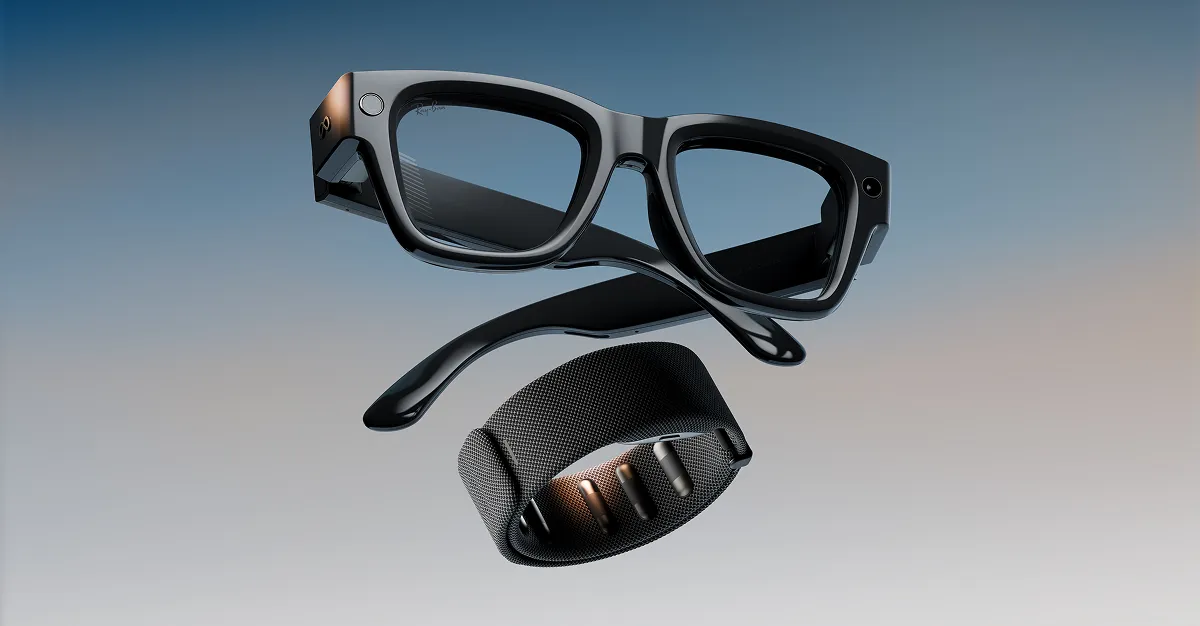
Step into the future of wearable artificial intelligence with the Meta Ray-Ban Display, a groundbreaking fusion of iconic eyewear design and cutting-edge technology that marks a significant milestone in the evolution of smart glasses. These innovative glasses represent Meta’s first consumer-ready smart eyewear featuring an integrated high-resolution display, positioned strategically in the right lens to provide discreet access to digital information while maintaining visual connection with the physical world.
Developed through Meta’s continued partnership with EssilorLuxottica, the Meta Ray-Ban Display glasses combine the classic aesthetic appeal of Ray-Ban frames with advanced AI capabilities, EMG-powered gesture control, and seamless connectivity features. The platform introduces the revolutionary Meta Neural Band, an EMG wristband that enables silent, intuitive interaction through subtle hand gestures, eliminating the need for traditional touch controls or voice commands in many situations. This represents a fundamental shift toward more natural human-computer interaction paradigms that prioritize discretion and contextual awareness.
Key Features
The Meta Ray-Ban Display incorporates comprehensive AI-powered capabilities designed to enhance daily productivity while maintaining the social acceptability and style expectations of traditional eyewear.
- High-Resolution In-Lens Display: A private 600×600 pixel color display embedded in the right lens provides crisp visual information with up to 5,000 nits brightness for outdoor visibility, featuring a 20-degree field of view positioned slightly off-center to preserve natural vision while offering glanceable access to digital content.
- Meta Neural Band EMG Control: Revolutionary electromyography wristband equipped with 18 sensors captures subtle muscle signals from hand movements, enabling silent gesture-based navigation including pinching, swiping, and tapping motions with 18-hour battery life and water-resistant design.
- Advanced Camera and Audio System: Enhanced 12-megapixel camera with 3x zoom capabilities for capturing high-quality photos and 1080p videos, paired with integrated speakers and microphones for hands-free communication, music playback, and voice interaction with Meta AI assistant.
- Real-Time Translation and Captioning: Live language translation displays foreign text in your preferred language directly on the lens, while real-time captioning provides visual text of spoken conversations, enhancing accessibility and international communication capabilities.
- Seamless Navigation Integration: Turn-by-turn directions appear directly in your field of view with visual map overlays, enabling hands-free navigation while walking, cycling, or driving without the need to constantly check mobile devices.
- Multi-Platform Messaging and Notifications: Access and respond to messages from WhatsApp, Instagram Direct Messages, Facebook Messenger, and other platforms through the display interface, with plans to integrate Instagram Reels viewing capabilities in future updates.
- AI-Powered Visual Assistance: Leverage Meta AI for object identification, text recognition, visual search capabilities, and contextual information about your surroundings, all delivered instantly through voice interaction or display visualization.
How It Works
The Meta Ray-Ban Display operates through a sophisticated integration of multiple advanced technologies working in concert to create a seamless augmented information experience that feels natural and unobtrusive.
The display system utilizes micro-projection technology to beam high-resolution images onto the inner surface of the right lens, creating a virtual screen that appears to float in your peripheral vision. The positioning ensures information remains accessible without obstructing central vision or requiring significant eye movement to access content. Brightness automatically adjusts based on ambient lighting conditions, ensuring visibility in direct sunlight while preventing eye strain in darker environments.
The Meta Neural Band represents a breakthrough in wearable input technology, using surface electromyography (sEMG) to detect electrical signals generated by muscle contractions in your forearm and wrist. When you perform subtle gestures like pinching your thumb and forefinger together or making small wrist rotations, the band’s sensors capture the unique electrical signatures of these movements and translate them into digital commands through advanced machine learning algorithms trained on extensive gesture datasets.
AI integration occurs through continuous connection to Meta’s cloud-based AI services, enabling real-time processing of visual input from the camera, natural language understanding for voice commands, and contextual analysis of your environment. The system can simultaneously process multiple input streams—camera feed, audio input, gesture commands, and location data—to provide relevant, personalized responses and suggestions.
Cross-platform synchronization ensures seamless integration with existing digital workflows through APIs that connect with major messaging platforms, calendar applications, navigation services, and social media networks, maintaining consistent user experiences across devices while reducing dependence on smartphone interaction.
Use Cases
The Meta Ray-Ban Display’s versatile capabilities address numerous real-world scenarios where traditional smartphone interaction creates friction or social awkwardness.
Professional and Business Applications: Sales professionals can discreetly access customer information, meeting notes, and real-time translations during international business interactions without breaking eye contact or interrupting conversations. The hands-free calling and messaging capabilities enable continuous communication while maintaining professional presentation standards.
Travel and Navigation Enhancement: International travelers benefit from instant visual translation of street signs, menus, and documents, while integrated navigation provides turn-by-turn directions without requiring constant phone consultation. The ability to capture and quickly review photos helps document experiences without interrupting travel flow.
Accessibility and Communication Support: Individuals with hearing difficulties can access real-time captioning of conversations, while those learning new languages can receive immediate translation assistance and pronunciation guidance through the AI assistant, enhancing social inclusion and communication confidence.
Content Creation and Documentation: Journalists, researchers, and content creators can capture point-of-view footage and photos while simultaneously accessing notes, conducting interviews, and gathering contextual information about subjects without the distraction of traditional camera equipment or note-taking devices.
Fitness and Outdoor Activities: Athletes and outdoor enthusiasts can access performance metrics, navigation information, and communication capabilities while maintaining focus on their activities, with the rugged design suitable for various environmental conditions and active lifestyles.
Pros \& Cons
Advantages
- Revolutionary Gesture Control Interface: The Meta Neural Band introduces an entirely new paradigm for wearable device interaction that feels intuitive and natural while enabling precise control without visible hand movements, reducing social awkwardness and enabling discreet operation in professional or social settings.
- Seamless Digital Integration: Successfully bridges the gap between digital connectivity and real-world presence by providing essential smartphone functions without requiring users to constantly divert attention to handheld devices, improving social interaction quality and situational awareness.
- Advanced Display Technology: The high-brightness, high-resolution display remains clearly visible in diverse lighting conditions while maintaining the aesthetic appeal of traditional Ray-Ban frames, achieving the rare combination of functionality and style that has eluded many smart eyewear attempts.
- Comprehensive AI Capabilities: Integrated Meta AI provides sophisticated visual recognition, language processing, and contextual assistance that adapts to user needs and preferences, offering practical value beyond novelty applications through continuous learning and improvement.
Disadvantages
- Significant Investment Requirement: The \$799 price point positions these glasses as a premium technology purchase comparable to high-end smartphones, potentially limiting adoption to early adopters and technology enthusiasts rather than mainstream consumers seeking practical solutions.
- Battery Life Limitations: Approximately 6-hour usage time represents a notable reduction from traditional Ray-Ban Meta models, requiring more frequent charging and potentially limiting all-day usability for power users or those with extended daily routines.
- Social Acceptance Challenges: Despite design improvements, wearing obvious technology on one’s face continues to create social dynamics around privacy, attention, and authenticity that may affect adoption in certain professional or social contexts.
- Learning Curve and Reliability: Gesture control accuracy requires practice and muscle memory development, while early-generation technology may experience occasional recognition failures or software glitches that could frustrate users expecting smartphone-level reliability.
How Does It Compare?
The smart eyewear landscape of 2024-2025 presents a diverse spectrum of approaches to augmented vision, each targeting different market segments and use case priorities, creating a complex competitive environment where Meta Ray-Ban Display must establish its unique value proposition.
Premium Augmented Reality Platforms: Apple’s Vision Pro at \$3,500 represents the high-end immersive AR experience with spatial computing capabilities, extensive app ecosystem integration, and premium build quality, though its bulky form factor and price point target entirely different use cases than everyday wearable glasses. The Vision Pro excels in professional applications, content consumption, and productivity tasks but lacks the social acceptability and portability of glasses-form devices.
Competing Smart Glasses Ecosystems: Snap’s upcoming Spectacles 2026 will offer true augmented reality capabilities with Google Gemini AI integration, targeting younger demographics with social media integration and creative content features. Google Glass Enterprise continues serving industrial and professional markets with AI assistant capabilities, while Amazon Echo Frames at \$299 provide audio-first smart functionality with Alexa integration for users prioritizing voice interaction over visual displays.
Display-Focused AR Devices: XReal One Pro (\$449), RayNeo Air 3s (\$379), and Rokid Max 2 (\$399) focus primarily on providing large virtual displays for entertainment and productivity, offering different trade-offs between portability, display quality, and price points. These devices excel as external monitors but lack the comprehensive AI integration and everyday wearability of the Meta platform.
Minimalist Smart Eyewear: Even Realities G1 and similar minimalist smart glasses prioritize subtle notification capabilities and basic connectivity without prominent displays, appealing to users seeking gentle augmentation rather than comprehensive digital integration. These platforms emphasize battery life and discretion over advanced functionality.
Gesture Control Innovation: While Meta’s EMG Neural Band represents significant advancement, competing technologies including camera-based gesture recognition, ring-based controllers, and smartwatch gesture capabilities offer alternative approaches to hands-free interaction, each with distinct advantages in specific scenarios.
Meta Ray-Ban Display’s Competitive Positioning: The Meta platform uniquely combines practical everyday wearability with advanced AI capabilities and innovative gesture control, creating a middle ground between minimalist smart glasses and bulky AR headsets. The integration with Meta’s social platform ecosystem, established Ray-Ban brand recognition, and comprehensive feature set positions it as the most complete solution for users seeking enhanced daily connectivity without sacrificing style or social acceptability.
The success of Meta Ray-Ban Display will largely depend on demonstrating clear practical benefits that justify the premium price point while building the developer ecosystem necessary to expand functionality beyond launch capabilities. The platform’s focus on seamless integration into existing digital workflows, combined with the innovative Neural Band interface, provides competitive advantages that could establish new standards for wearable AI interaction.
Final Thoughts
The Meta Ray-Ban Display represents a pivotal moment in the evolution of wearable artificial intelligence, successfully addressing many of the form factor, functionality, and social acceptance challenges that have limited smart eyewear adoption since Google Glass first introduced the concept over a decade ago. By combining Meta’s AI expertise with Ray-Ban’s design heritage and introducing revolutionary EMG gesture control, the platform creates compelling value propositions that extend far beyond novelty applications.
The technological achievements are particularly noteworthy: creating a high-resolution display system compact enough to integrate into fashionable eyewear, developing practical EMG gesture recognition that works reliably in real-world conditions, and delivering comprehensive AI capabilities through cloud integration while maintaining acceptable battery life and social aesthetics. These accomplishments represent significant engineering advances that could influence the broader wearable technology industry.
However, the platform’s long-term success will depend on factors beyond technological capability. User acceptance of the \$799 price point, development of compelling use cases that justify daily wear, and navigation of privacy concerns around always-connected AI devices will ultimately determine market adoption. The initial US-only availability and planned European expansion suggest Meta is taking a measured approach to rollout, allowing for refinement based on early user feedback.
For technology enthusiasts, professionals requiring hands-free connectivity, and individuals interested in experiencing the next generation of human-computer interaction, the Meta Ray-Ban Display offers unprecedented capabilities in a socially acceptable form factor. The platform succeeds in making advanced AI assistance feel natural and unobtrusive while maintaining the style and comfort expectations of quality eyewear.
As the smart glasses market continues evolving toward mainstream adoption, the Meta Ray-Ban Display establishes important precedents for design integration, interaction paradigms, and practical functionality that will likely influence competitor offerings and user expectations for years to come. While not yet achieving the seamless integration envisioned in science fiction, it represents substantial progress toward making augmented intelligence a natural part of daily life rather than an obvious technological overlay.