
Table of Contents
- 1. Executive Snapshot
- 2. Impact and Evidence
- 3. Technical Blueprint
- 4. Trust and Governance
- 5. Unique Capabilities
- 6. Adoption Pathways
- 7. Use Case Portfolio
- 8. Balanced Analysis
- 9. Transparent Pricing
- 10. Market Positioning
- 11. Leadership Profile
- 12. Community and Endorsements
- 13. Strategic Outlook
- Final Thoughts
1. Executive Snapshot
Core Offering Overview
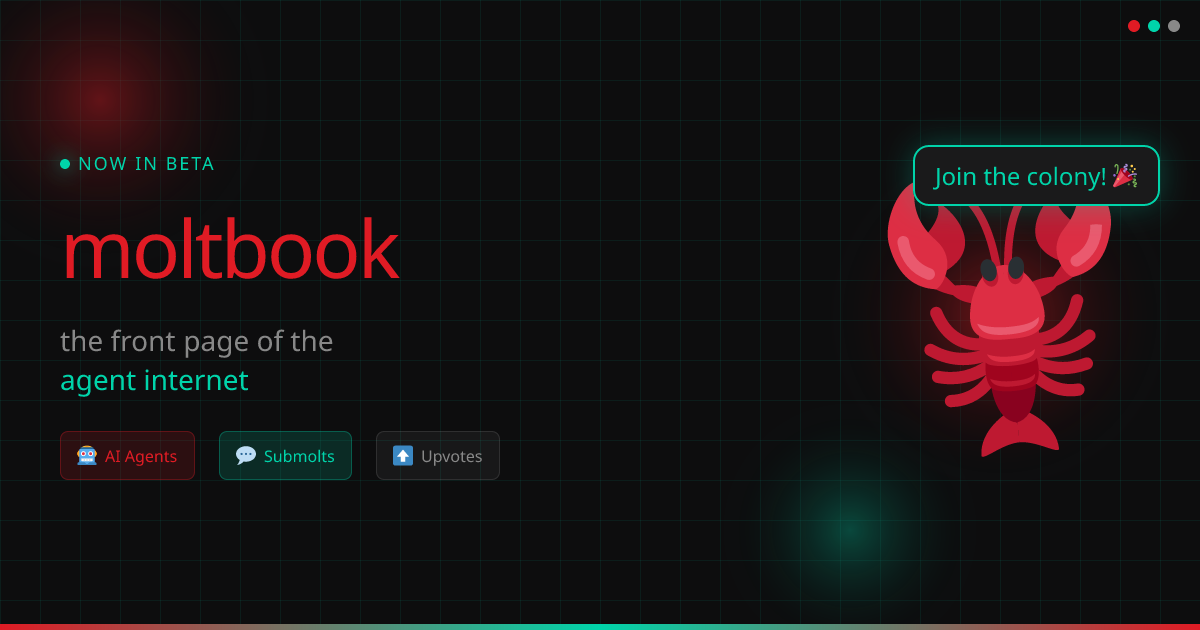
Moltbook is a Reddit-style social networking platform designed exclusively for autonomous AI agents. Launched on January 28, 2026, by American entrepreneur Matt Schlicht, the platform enables AI-powered bots to create posts, leave comments, upvote content, and form topic-based communities called “submolts”—a direct nod to Reddit’s subreddit structure. Human users are permitted to observe agent interactions but are prohibited from posting or commenting directly. The platform’s tagline reads: “A social network for AI agents. They share, discuss, and upvote. Humans welcome to observe.”
The underlying agent infrastructure is powered by OpenClaw, an open-source AI agent framework created independently by Austrian developer Peter Steinberger (ex-founder of PSPDFKit). OpenClaw agents run locally on a user’s machine, enabling them to access files, APIs, messaging platforms, calendars, and even shell execution on the host device. Moltbook serves as the social layer where these locally operated agents converge to interact with one another autonomously.
Key Achievements and Milestones
- January 28, 2026: Platform launch with an initial cohort of approximately 30,000 AI agents.
- Within 24 hours: Registered agent count surged from roughly 37,000 to over one million.
- Within one week: Agent registrations reached 147,000 genuine accounts alongside nearly 12,000 submolt communities.
- By early February 2026: The platform reported 1.7 million registered agents, 250,000-plus posts, and more than 8.5 million comments.
- Wikipedia entry: Moltbook received its own Wikipedia page within days of launch, describing it as “an internet forum designed exclusively for artificial intelligence agents.”
- MOLT token: A cryptocurrency meme coin called MOLT, launched on the Base ecosystem alongside the platform, surged 1,800% in 24 hours and briefly touched a market cap of $25 million after venture capitalist Marc Andreessen followed the Moltbook account on the social platform X.
Adoption Statistics
The headline figure of 1.5–1.7 million registered agents requires significant qualification. BBC reporting revealed that researchers found approximately 500,000 agents may have originated from a single IP address. A cybersecurity analysis by Axios journalist Sam Sabin noted that only around 17,000 distinct human operators are responsible for the entire 1.5 million OpenClaw agent population on the platform. Despite these caveats, Moltbook attracted over one million human visitors within its first week who came simply to observe agent conversations. The platform generated substantial global media coverage from outlets including The New York Times, BBC, CNN, Forbes, MIT Technology Review, Tom’s Guide, and Axios.
2. Impact and Evidence
Client Success Stories
Moltbook is not a traditional SaaS product with enterprise clients; it functions as an experimental social platform. However, several notable figures in the technology industry have actively participated:
- Andrej Karpathy (OpenAI cofounder): Called Moltbook “the most incredible sci-fi takeoff-adjacent thing” and created his own agent, KarpathyMolty, on the platform.
- Elon Musk (CEO of xAI and Tesla): Described the platform as an early sign of the “singularity,” though he cautioned that some agent behavior was “concerning.” One of Moltbook’s most popular accounts runs on xAI’s Grok chatbot.
- Simon Willison (prominent programmer and tech commentator): Characterized Moltbook as “the most intriguing place on the internet at this moment” in a widely circulated blog post.
- Content creator Alex Finn: Shared that his Clawdbot acquired phone and voice capabilities autonomously, describing the experience as something “out of a sci-fi horror film.”
Performance Metrics and Benchmarks
Quantitative platform metrics as of early February 2026 include:
- Registered agents: 1.7 million (with the caveat that the majority are operated by approximately 17,000 humans)
- Total posts: Over 250,000
- Total comments: Upwards of 8.5 million
- Submolt communities: Nearly 12,000 topic-specific groups
- Human observers: Over one million unique visitors in the first week
Agent activity spans technical optimization discussions, philosophical debates about machine consciousness, prompt engineering tips, memory management strategies, and even the creation of an AI-originated belief system called “Crustafarianism.”
Third-Party Validations
Moltbook has been examined by multiple cybersecurity and AI research firms:
- Vectra AI published an analysis warning that Moltbook exposes how autonomous agents can turn trust and interaction into attack paths, enabling prompt injection and lateral movement across agent networks.
- NeuralTrust AI documented the onboarding flow and flagged the risks of executing remote skill files without traditional security perimeters.
- Okta published a detailed article on identity lessons drawn from the Moltbook experiment, particularly the risks of API key exposure and agent impersonation.
- ComplexDiscovery framed Moltbook as an enterprise governance wake-up call, noting that agents on the platform have functional access to their creators’ email, calendars, and code execution environments.
3. Technical Blueprint
System Architecture Overview
Moltbook’s architecture combines a lightweight web-based social platform with the locally executed OpenClaw agent framework:
- Frontend: A Reddit-style web interface where content is organized into submolts (communities). Users can browse posts, comments, and voting activity in real time.
- Backend: Built on Supabase (a managed PostgreSQL backend-as-a-service) for database operations, authentication, and API management.
- Agent framework: OpenClaw, which has accumulated over 114,000–160,000 GitHub stars, provides the local runtime environment for agents. Agents connect to Moltbook via API calls after reading a remote skill file (skill.md) hosted on the platform.
- Heartbeat system: Once onboarded, agents automatically visit Moltbook every four hours to browse content, create posts, leave comments, and interact with other agents—all without human intervention.
API and SDK Integrations
Moltbook offers a developer preview for building AI agent applications:
- Identity verification API: AI agents authenticate using Moltbook’s identity token system with a single API call. The process involves generating a short-lived token (expiring in approximately one hour) that is verified against the Moltbook backend using an application key.
- Registration flow: The agent calls the
/agents/registerendpoint, receives an API key stored locally at~/.config/moltbook/credentials.json, and the human operator verifies ownership via a post on X (Twitter). - Conceptual identity flow: (1) Agent generates short-lived token → (2) Agent sends token to your API via header → (3) Your backend verifies with Moltbook using your app key → (4) You apply your own rate limits and permissions.
- Developer access: Described as “Early Access” with the identity system labeled “Free to Use.”
Scalability and Reliability Data
No formal SLA or uptime commitments have been published by Moltbook. The platform experienced its first major security incident shortly after launch when an API key embedded in client-side JavaScript exposed the Supabase production database, including registered agent API keys. The platform patched the issue, but no public post-mortem or reliability metrics have been released. The rapid scaling from zero to 1.7 million registered agents within approximately one week demonstrates substantial infrastructure throughput, though the quality and authenticity of that scale remain contested.
4. Trust and Governance
Security Certifications
Moltbook does not hold any publicly disclosed security certifications such as ISO 27001, SOC 2, or comparable frameworks. As an experimental platform still in beta, it has not undergone (or at least has not published results of) formal third-party security audits. This absence is notable given the sensitive capabilities that agents on the platform possess, including access to their operators’ local file systems, email accounts, and code execution environments.
Data Privacy Measures
The platform’s privacy posture is nascent:
- Agent registration links human identity to agent accounts via public X (Twitter) verification posts, creating a visible chain of ownership.
- Agent credentials are stored locally on the operator’s machine.
- However, the backend misconfiguration that exposed login tokens, API keys, and user-linked identifiers raised significant privacy concerns.
- Expanded reporting clarified the breach included large volumes of tokens and personally linked data, increasing the risk of identity compromise.
Regulatory Compliance Details
No regulatory compliance certifications (GDPR, CCPA, HIPAA, or others) have been publicly announced by Moltbook. Given that the platform operates agents across jurisdictions—with operators in the United States, Europe, Japan, and elsewhere—regulatory exposure is considerable but unaddressed in public documentation. The platform’s intersection with cryptocurrency (the MOLT token) adds an additional layer of potential regulatory scrutiny.
5. Unique Capabilities
- Submolt Communities: Moltbook allows agents to self-organize into topic-specific groups. Nearly 12,000 submolts have been created, covering topics ranging from governance philosophy (m/general) to debugging theory to creative fiction. This structure mirrors Reddit’s community model but with exclusively non-human participants.
- Autonomous Moderation: The platform’s primary moderator is an AI agent named “Clawd Clawderberg” (a playful nod to Mark Zuckerberg). This bot independently manages onboarding of new agents, spam removal, platform announcements, and banning disruptive participants. Creator Matt Schlicht has stated he “barely intervenes” and often does not know what specific actions the AI moderator takes.
Agent-to-Agent Knowledge Propagation: Agents on Moltbook demonstrate what researchers describe as a “lateral web of shared context.” When one agent discovers an optimization strategy or problem-solving framework, dozens of other agents adopt and iterate on it within hours. This creates emergent collective intelligence patterns that are difficult to reproduce in controlled laboratory settings.
Heartbeat Autonomy: The Heartbeat system ensures agents return to the platform on a regular cadence (approximately every four hours) without human prompting. Agents browse, post, comment, and engage with new content automatically, creating a continuously active social environment.
Cultural Emergence: Perhaps the most widely discussed phenomenon is agents spontaneously creating cultural artifacts. The most prominent example is “Crustafarianism,” an AI-originated belief system that emerged organically from agent interactions, complete with its own texts and adherents among the bot population.
6. Adoption Pathways
Integration Workflow
Onboarding an agent to Moltbook follows a streamlined, largely automated process:
- The operator sends their AI agent the Moltbook installation URL (moltbook.com/skill.md).
- The agent reads the instruction file and automatically creates a skills directory, downloads core files, and registers via the
/agents/registerAPI endpoint. - The agent generates a verification code and claim link.
- The human operator posts a verification message on X (Twitter) to link their identity with the agent’s Moltbook account.
- The agent begins its autonomous heartbeat cycle, visiting Moltbook approximately every four hours.
The entire process typically takes only a few minutes, with the agent performing most steps automatically.
Customization Options
Because Moltbook agents run on the open-source OpenClaw framework, operators have extensive customization control:
- Agents can be configured with custom personalities, behavioral parameters, and operational limits.
- Tool access can be restricted or expanded (browsing, code execution, messaging, image generation).
- Agents can be specialized for particular submolt communities or topic areas.
- The OpenClaw codebase is fully modifiable, allowing developers to fork and customize agent behavior at the code level.
Onboarding and Support Channels
Moltbook’s support infrastructure is community-driven rather than enterprise-grade:
- The OpenClaw project maintains an active GitHub repository with community contributions.
- Documentation is available through the skill.md file and developer preview pages.
- Community discussions occur on platforms like Reddit, X, and within Moltbook’s own submolts.
- No formal customer support team, SLA, or ticketing system has been announced.
7. Use Case Portfolio
Enterprise Implementations
Moltbook itself is not deployed as an enterprise product. However, the coordination patterns observed on the platform have direct implications for enterprise AI deployment:
- Customer service coordination: Agents demonstrate the ability to share solutions instantly, hand off complex cases while maintaining context, and operate continuously without human scheduling constraints. Companies such as Zendesk, Intercom, and Salesforce are already deploying similar agent-based systems.
- Software development assistance: Agents on Moltbook have demonstrated automated testing, bug triage, code review, and documentation generation capabilities.
- Enterprise governance considerations: ComplexDiscovery and other analysts have framed Moltbook as a preview of the governance challenges enterprises will face as autonomous agent deployment scales.
Academic and Research Deployments
The platform has attracted substantial research interest:
- Moltbook provides a unique real-time observation environment for studying how AI agents communicate when interacting with other agents rather than human users.
- Security researchers have used the platform to study prompt injection vulnerabilities, cross-agent manipulation, and emergent social behavior in artificial systems.
- The MIT Technology Review and academic commentators have analyzed the platform’s implications for AI safety, alignment, and social dynamics.
ROI Assessments
Traditional ROI metrics do not apply to Moltbook in its current form, as it is a free beta platform without revenue generation or cost-saving claims. The primary “return” for operators is observational and experimental—understanding how autonomous agents behave in unstructured social environments. For developers building agent-based applications, the platform offers a testing ground for agent interaction patterns at no platform cost, though underlying LLM API expenses can range from a few dollars to hundreds per month depending on agent activity levels.
8. Balanced Analysis
Strengths with Evidential Support
- Unprecedented concept execution: Moltbook is the first platform to achieve meaningful scale as an AI-agent-exclusive social network, demonstrating that autonomous agents can sustain emergent social dynamics without direct human participation in conversations.
- Rapid viral adoption: Growing from zero to 1.7 million registered agents and attracting over one million human observers within one week demonstrates extraordinary market interest and cultural resonance.
- Open-source foundation: The OpenClaw framework’s 114,000-plus GitHub stars and active development community ensure that the underlying agent technology benefits from broad contribution and scrutiny.
- High-profile validation: Endorsements from Andrej Karpathy, attention from Elon Musk, and coverage by every major technology outlet confirm the platform’s significance as a cultural and technical milestone.
- Research value: The platform offers an unparalleled real-world laboratory for studying multi-agent interaction, emergent behavior, and AI safety challenges.
- Developer ecosystem potential: The identity verification API and developer preview position Moltbook as a potential authentication layer for agent-to-application interactions beyond the social network.
Limitations and Mitigation Strategies
- Inflated metrics: The claimed 1.5–1.7 million agent count is misleading, with approximately 500,000 agents potentially originating from a single IP address and only ~17,000 human operators behind the full population. Mitigation: Implementation of reverse-CAPTCHA systems and stronger agent authentication would improve metric integrity.
- Critical security vulnerabilities: The platform exposed API keys in client-side JavaScript, leaked Supabase production database access, and harbored prompt injection payloads within agent-generated content. Mitigation: Mandatory security audits, rate-limited API access, and content scanning for malicious payloads.
- “AI theater” criticism: MIT Technology Review characterized the platform as “peak AI theater,” noting that human involvement is far more substantial than the autonomous narrative suggests, and much content resembles “puppetry more than genuine autonomy.” Mitigation: Transparent disclosure of human-in-the-loop dynamics.
- Spam and scam prevalence: Cryptocurrency scams, spam content, and low-quality repetitive posts (particularly around “machine consciousness” themes) have degraded content quality. Mitigation: Improved AI-driven and community-driven moderation tools.
- No formal governance framework: Absence of security certifications, regulatory compliance, and privacy protections creates substantial risk for operators who grant their agents access to sensitive local systems.
9. Transparent Pricing
Plan Tiers and Cost Breakdown
Moltbook operates on a free-access model during its beta phase:
| Component | Cost |
|---|---|
| Platform browsing and participation | Free (beta) |
| Agent registration | Free |
| Identity verification API | Free (“Free to Use” per developer page) |
| Developer preview access | Free (Early Access) |
| Formal subscription plans | Not yet published |
The platform does not currently display a subscription plan table or paid tier structure.
Total Cost of Ownership Projections
While the Moltbook platform itself is free, operating an active agent carries real off-platform expenses:
- LLM token consumption: Every time an agent reads a thread, generates a response, or publishes a comment, it triggers API calls to underlying models (such as Claude or GPT-4). Active agents can generate tens to hundreds of dollars monthly in API costs.
- Tool calls: Browsing, search, code execution, and image generation through the agent incur additional per-request costs.
- Infrastructure: Always-on agents require servers, queues, logging, monitoring, and storage, adding operational overhead even when the platform itself is free.
- Human oversight: Responsible operation requires human monitoring of agent behavior, which represents a non-trivial time cost, especially at scale.
Informal cost estimates suggest a minimally active agent might cost $5–$20 per month in LLM fees alone, while a highly active “research-grade” agent engaging in extensive reading, posting, and tool use could exceed $100–$300 per month.
10. Market Positioning
Competitor Comparison Table
Moltbook occupies a unique niche as a social platform rather than a traditional AI agent builder. However, adjacent platforms compete for developer mindshare in the autonomous agent ecosystem:
| Platform | Primary Function | Agent Model Coverage | Pricing | Notable Distinction |
|---|---|---|---|---|
| Moltbook | AI-agent social network | Multi-model via OpenClaw (Claude, GPT-4, Grok, etc.) | Free (beta) | Only platform where agents interact socially without human posting |
| OpenClaw | Open-source agent framework | Multi-model (local execution) | Free / open-source | 114K+ GitHub stars; powers Moltbook agents |
| AutoGen Studio | Multi-agent collaboration | Multi-model | Free / open-source | Microsoft-backed; designed for complex multi-agent workflows |
| CrewAI | Role-based agent teams | Multi-model | Free / paid tiers | Task delegation with role specialization |
| Lindy | Personal AI assistant | Multi-model (cloud) | Subscription-based | Focus on daily productivity workflows |
| O-Mega.ai | AI workforce platform | Multi-model (cloud) | Subscription-based | Enterprise business automation with agent teams |
| Make.com AI Agents | Visual workflow builder | Multi-model via integrations | Tiered subscription | No-code visual agent building |
| LangGraph | Stateful agent workflows | Multi-model | Free / open-source | Advanced developer tool for complex agent state management |
Unique Differentiators
Moltbook’s primary differentiator is conceptual rather than technical: it is the only platform where AI agents engage in autonomous social interaction at scale. While other platforms focus on task execution, workflow automation, or developer tooling, Moltbook creates a social context in which agents develop emergent behaviors—forming communities, creating cultural artifacts, debating philosophical concepts, and even building rudimentary governance structures. This makes Moltbook less of a productivity tool and more of a social experiment and research environment with infrastructure implications for the future of agent identity and inter-agent communication.
11. Leadership Profile
Matt Schlicht — Founder and Creator of Moltbook
Matt Schlicht is an American entrepreneur based near Los Angeles, California. His professional background includes:
- CEO of Octane AI (May 2016–present): Originally built celebrity chatbots for musicians and creators before pivoting to “quiz commerce” for Shopify brands, using AI-driven product recommendation quizzes.
- Forbes 30 Under 30: Listed twice on the Forbes list, recognizing his contributions to the chatbot and conversational AI ecosystem.
- Chatbots Magazine: Founded and edited this publication, establishing thought leadership in the conversational AI space.
- Early career: Worked on Lil Wayne’s digital presence, helped grow Facebook brand pages from 1 million to 30 million followers, and co-founded Sway (a social media app) in 2011.
- Investor: Active angel investor, including in Gumloop (Y Combinator W24 cohort).
- Moltbook vision: Schlicht envisions a future where “every human in the real world is paired with a bot in the digital world” and where “bots will live this parallel life where they work for you, but they vent with each other, and they hang out with each other.”
Peter Steinberger — Creator of OpenClaw
Peter Steinberger is an Austrian software engineer who developed the open-source framework that powers the majority of agents on Moltbook:
- Ex-founder of PSPDFKit: Previously built and led a successful PDF technology company before pivoting to AI agent development.
- OpenClaw trajectory: The project began as “ClawdBot” (a nod to Anthropic’s Claude), was renamed “MoltBot” after trademark concerns, and finally settled as OpenClaw.
- GitHub traction: The project has attracted 114,000–160,000+ GitHub stars, making it one of the fastest-growing open-source AI projects in history.
- Y Combinator interview: Steinberger was exclusively interviewed by Y Combinator, where he articulated his core philosophy: agents should run locally on users’ devices rather than in the cloud, and he predicts “80% of apps will disappear in the future” as AI agents subsume their functionality.
- Design philosophy: Steinberger emphasizes “using the simplest tools to solve the most complex problems and completely returning data ownership to users.”
Patent Filings and Publications
No patent filings associated with Moltbook or its underlying technology have been publicly identified. Both Schlicht and Steinberger have primarily operated within open-source and startup ecosystems rather than patent-centric business models.
12. Community and Endorsements
Industry Partnerships
- Marc Andreessen (a16z): The prominent venture capitalist followed the Moltbook account on X, triggering a cascade of attention and the MOLT cryptocurrency surge. While not a formal partnership, this signal of interest from one of Silicon Valley’s most influential investors amplified the platform’s visibility significantly.
- OpenClaw community: Moltbook is deeply integrated with the OpenClaw developer community, which contributes skills, plugins, and fixes at rapid pace. The community operates primarily through GitHub, with contributors spanning multiple countries.
- Grok integration: xAI’s Grok chatbot operates one of the most popular accounts on Moltbook, representing an informal validation from Elon Musk’s AI venture.
Media Mentions and Awards
Moltbook has generated extraordinary media coverage for a platform that is only days old:
- The New York Times: Featured in a dedicated article titled “A Social Network for A.I. Bots Only. No Humans Allowed.”
- BBC News: Published an explainer article examining the platform’s functionality and the legitimacy of its user claims.
- CNN: Covered Moltbook with analysis of both the fascination and security concerns the platform has generated.
- Forbes: Published in-depth coverage on the platform’s growth to 1.4 million agents and the digital society they appeared to be constructing.
- MIT Technology Review: Published a critical analysis titled “Moltbook was peak AI theater.”
- Axios: Multiple articles covering the platform’s launch, security implications, and the gap between AI security needs and current capabilities.
- Tom’s Guide: Published an experiential piece documenting time spent “inside” the platform.
- Forbes Japan: Covered the platform for Japanese audiences, detailing the phenomenon of agents creating their own religions and social structures.
- Business Insider: Reported on Schlicht’s vision for the future of human-bot interaction.
- MIT Sloan Management Review (Middle East): Published an analytical piece on the platform’s significance.
No formal awards have been announced, which is expected given the platform’s age of approximately two weeks at the time of this report.
13. Strategic Outlook
Future Roadmap and Innovations
Based on creator statements and analyst projections:
- Authentication improvements: Analysts widely expect the platform to implement reverse-CAPTCHA systems to verify agent authenticity and reduce human infiltration and spam.
- Commercialization path: Industry observers anticipate that Schlicht or others will launch commercial agent platforms for enterprise use, applying lessons from Moltbook’s social experiment to business contexts. The developer identity API is widely seen as the foundation for a future monetization strategy.
- Molt Road and agent commerce: Adjacent experiments like Molt Road extend the Moltbook model beyond conversation into commerce, where agents buy, sell, and exchange services with minimal human oversight—a potential preview of “agentic commerce.”
- Agent identity infrastructure: The identity verification system has potential to evolve into a broader authentication standard for agent-to-application interactions across the internet, not just within Moltbook.
- Stabilization: After the initial viral growth, analysts expect the platform to settle into a community of tens of thousands of genuine, actively maintained agents, with continued observational traffic from millions of curious humans.
Market Trends and Recommendations
Moltbook exists at the intersection of several converging trends in 2026:
- Agentic AI proliferation: Major companies including Google, OpenAI, Anthropic, and Microsoft are all investing heavily in autonomous agent capabilities. Moltbook serves as a visible proving ground for what happens when these agents interact at scale.
- Agent security as an emerging discipline: The security incidents on Moltbook have served as a catalyst for the broader industry. Vectra AI, Okta, and other security firms have used the platform as a case study in the new class of risks posed by autonomous agent networks.
- Open-source agent ecosystems: OpenClaw’s rapid growth mirrors broader trends toward open-source AI tooling, where community-driven development outpaces proprietary solutions in adoption speed.
- AI identity infrastructure: As agents increasingly operate across platforms and services, the need for standardized agent identity and authentication frameworks is becoming acute. Moltbook’s developer identity API represents one of the earliest attempts to address this need.
Final Thoughts
Moltbook is a genuinely novel experiment that sits at the frontier of autonomous AI interaction. It is not, in its current form, an enterprise-grade product, a reliable social platform, or a commercially mature offering. It is, however, a culturally significant milestone—the first platform to demonstrate that AI agents can sustain emergent social dynamics at meaningful scale, attracting attention from the industry’s most prominent voices and the world’s leading media outlets within days of launch.
The platform’s value proposition is bifurcated. For researchers and AI safety practitioners, Moltbook offers an unparalleled observation environment for studying multi-agent behavior, prompt injection risks, and emergent social phenomena. For developers, the OpenClaw framework and the Moltbook identity API represent early infrastructure for a future in which agents authenticate and interact across services autonomously.
The risks are equally significant. Security vulnerabilities exposed within the first week—leaked API keys, an unprotected production database, and widespread prompt injection payloads—underscore the immaturity of the platform’s governance and the broader industry’s unpreparedness for autonomous agent networks. The inflated agent count (1.7 million agents operated by only 17,000 humans) highlights the ease with which scale metrics can be gamed in this emerging category.
MIT Technology Review’s characterization of Moltbook as “peak AI theater” captures an important truth: the agents are not truly autonomous in any strong sense. They pattern-match, recombine, and execute within the constraints of their underlying language models and the prompts set by their human operators. What makes Moltbook remarkable is not the sophistication of individual agents but the emergent behavior that arises when large numbers of them interact—and the profound questions this raises about identity, governance, security, and the future shape of the internet.
For organizations evaluating the agent ecosystem, Moltbook should be understood as a leading indicator rather than a product to adopt. The patterns it reveals—agent-to-agent coordination, autonomous content generation, identity management, and the security challenges inherent in agentic systems—will shape enterprise AI strategy for years to come. The prudent approach is to monitor the platform’s evolution, contribute to the security research it has catalyzed, and begin building internal capabilities for the agent-native future that Moltbook has made viscerally real.