
Table of Contents
Overview
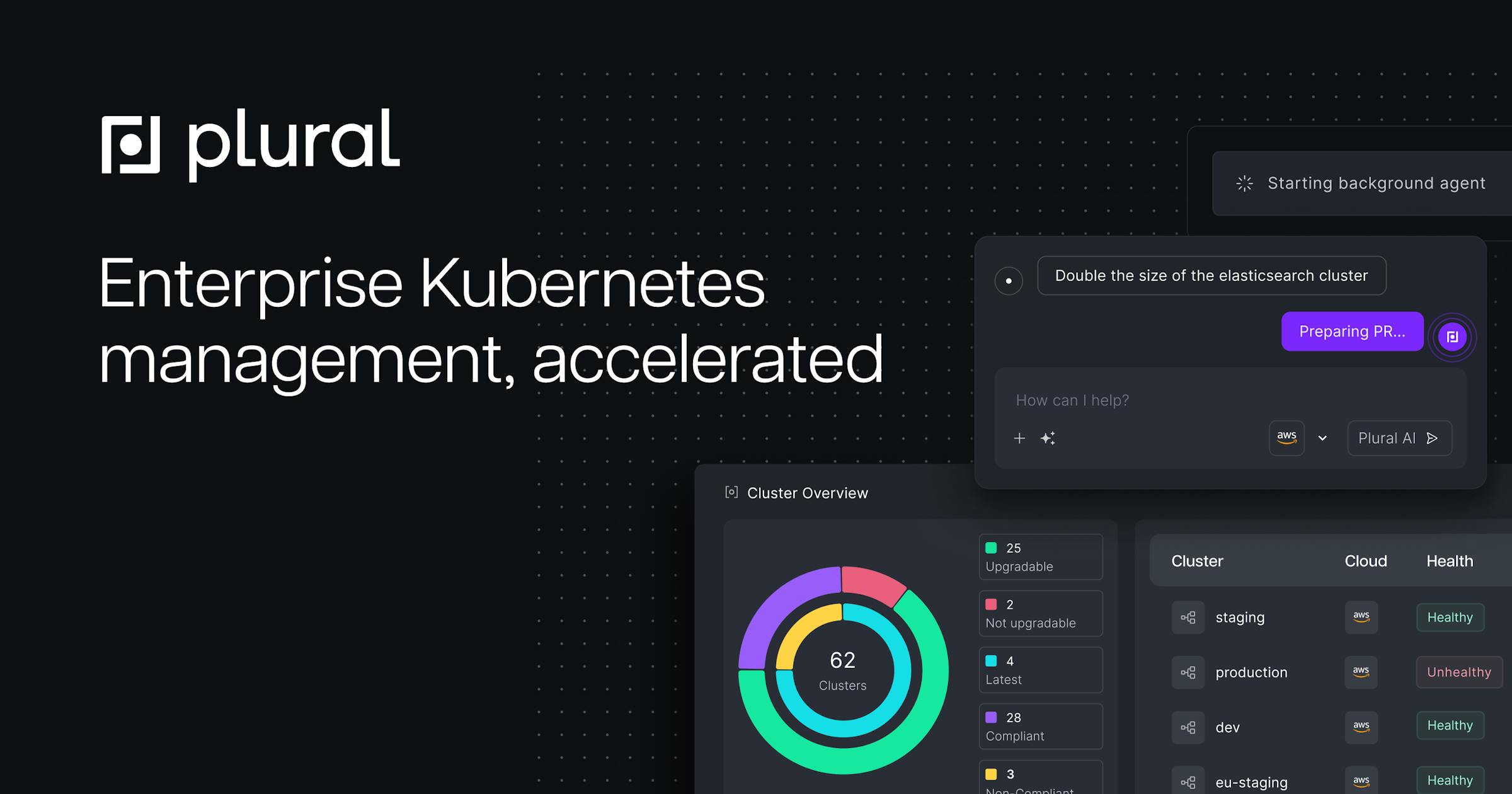
In the rapidly evolving world of cloud-native infrastructure, managing Kubernetes clusters can quickly become a complex endeavor. Enter Plural, an innovative AI-powered platform designed to bring intelligence and automation to your DevOps workflows. Plural unifies your Kubernetes clusters under a single, intuitive pane of glass, automating critical tasks like upgrades, diagnosing and remediating issues, and empowering teams to manage infrastructure without the burden of escalating complexity. It’s about giving your DevOps team the leverage they need to focus on innovation, not just maintenance.
Key Features
Plural is packed with capabilities designed to streamline your Kubernetes operations. Here’s a look at its core offerings:
- Unified view of multiple Kubernetes clusters: Gain a centralized dashboard to monitor and manage all your Kubernetes environments, regardless of where they’re hosted.
- AI-powered automation for upgrades and diagnostics: Leverage artificial intelligence to proactively identify potential issues, suggest optimal upgrades, and even execute them automatically with built-in guardrails.
- Intelligent issue remediation tools: Get AI-driven insights and direct tools to quickly diagnose and resolve problems within your clusters, with automatic pull request generation for fixes.
- Team collaboration features: Facilitate seamless communication and shared understanding across your DevOps team, ensuring everyone is on the same page regarding infrastructure health.
- Scalable infrastructure management: Designed to grow with your organization, Plural helps you manage an increasing number of clusters and resources without proportional increases in operational overhead.
- GitOps-integrated workflows: Plural is built with robust GitOps foundations, ensuring all AI-driven changes create pull requests and integrate with existing review and approval workflows.
How It Works
Plural’s operational model is both intelligent and straightforward, designed to integrate seamlessly into your existing infrastructure. Users begin by securely connecting their Kubernetes clusters to the Plural platform via a robust API or agent-based installation. Once connected, AI agents spring into action, monitoring your clusters in real-time for performance bottlenecks, security vulnerabilities, and potential issues. These agents leverage deep RAG (Retrieval Augmented Generation) against your DevOps data to provide accurate root cause analysis and can automatically generate pull requests with fixes. The intuitive dashboard serves as your command center, providing comprehensive insights into cluster health and offering granular controls, with automation rules fully configurable to match your team’s specific operational policies and compliance requirements.
Use Cases
Plural’s capabilities make it an invaluable asset across a range of scenarios, particularly for organizations grappling with Kubernetes complexity:
- Managing multi-cluster Kubernetes environments in enterprises: Centralize control and gain a unified perspective over disparate Kubernetes deployments across different teams or cloud providers.
- Automating DevOps tasks for development teams: Free up developers from routine operational burdens by automating upgrades, patching, and intelligent troubleshooting, allowing them to focus on coding.
- AI-driven troubleshooting in production environments: Leverage advanced AI diagnostics and automated remediation tools to quickly identify and resolve critical problems, minimizing impact on live services.
- Scaling infrastructure for growing applications: Ensure your Kubernetes infrastructure can effortlessly scale to meet increasing demand without adding significant manual overhead or complexity.
Pros \& Cons
Understanding the strengths and limitations of any tool is crucial for informed decision-making. Here’s a balanced look at Plural:
Advantages
- Reduces DevOps complexity through intelligent AI-powered automation for routine and critical tasks.
- Offers advanced AI-driven automation for proactive management, root cause analysis, and automatic issue remediation.
- Provides unified monitoring and management across multiple Kubernetes clusters from a single control plane.
- Significantly improves team efficiency by automating complex troubleshooting and generating actionable fixes.
- Strong GitOps integration ensures auditability and maintains existing workflows.
Disadvantages
- Primarily focused on Kubernetes, making it less versatile for managing other types of infrastructure.
- May present a learning curve for users unfamiliar with Kubernetes concepts or GitOps practices.
- Operates on a subscription-based cost model, which needs to be factored into budgeting.
- Newer AI features may require time to mature compared to established traditional tools.
How Does It Compare?
When evaluating Plural against other tools in the Kubernetes ecosystem, its unique value proposition becomes clear. While competitors like Rancher now offer advanced multi-cluster management with their VAI project for lightning-fast operations and Lens provides AI-powered assistance through Lens Prism, Plural distinguishes itself with its comprehensive AI-native approach to DevOps automation. Unlike traditional tools that focus primarily on visualization and basic management, Plural integrates AI throughout the entire operational workflow, from intelligent upgrade orchestration to automated root cause analysis and fix generation.
ArgoCD, which dominates the GitOps space with nearly 60% market adoption and strong user satisfaction, excels in declarative continuous delivery. However, Plural complements this by adding an intelligent operational layer on top of GitOps workflows. While platforms like VMware Tanzu and Red Hat OpenShift provide enterprise-grade Kubernetes distributions with comprehensive security and developer tools, Plural carves out a distinct niche as an AI-first operational control plane that can work across different Kubernetes distributions and cloud environments.
The key differentiator lies in Plural’s unified approach to AI-driven operations – rather than requiring teams to integrate multiple point solutions for monitoring, troubleshooting, and automation, Plural provides an intelligent, cohesive platform that learns from your infrastructure patterns and proactively manages complexity at scale.
Final Thoughts
Plural emerges as a compelling choice for organizations looking to harness the power of artificial intelligence in their Kubernetes operations. By embedding AI directly into critical DevOps workflows through a GitOps-native approach, it offers a path to more efficient, resilient, and intelligent cloud-native infrastructure management. If your team is struggling with multi-cluster complexity, manual upgrade processes, or reactive troubleshooting, Plural’s AI-powered automation could be the transformative solution needed to elevate your DevOps strategy and empower your engineers to focus on innovation rather than operational overhead.