Table of Contents
Overview
SciSpace BioMed Agent is a domain-native AI agent specifically engineered for biomedical research workflows launched December 7, 2025 on Product Hunt (achieving #2 Product of the Day with 420 upvotes and 101 comments). Developed by SciSpace (formerly Typeset) as specialized layer built atop their existing general-purpose SciSpace Agent, BioMed Agent directly addresses the fundamental fragmentation plaguing biomedical research: single workflows typically require 15+ tools, 12+ databases, and manual stitching across incompatible file formats creating friction that slows discovery, limits innovation, and constrains scientific productivity.
By integrating 150+ specialized biomedical software systems and 100+ academic databases, clinical genomics resources, and omics analysis suites, SciSpace BioMed Agent acts as orchestrating AI co-scientist executing complete end-to-end research workflows from single natural language prompts. The system reads scientific papers, ingests diverse datasets (genomics, clinical records, wearables, imaging), interprets laboratory protocols, calls appropriate external analysis tools automatically, and synthesizes results into experimental designs, variant interpretations, cloning strategies, or therapeutic hypotheses maintaining transparent reasoning chains enabling verification.
SciSpace BioMed Agent targets academic labs (genetics, genomics, cell biology, microbiology, pharmacology, systems biology), clinician-scientists focused on rare diseases and translational genomics, biotech and pharmaceutical teams involved in target discovery and drug repurposing, and students/trainees seeking expert-level analytical pipelines without extensive bioinformatics programming expertise. The platform aims democratizing advanced biomedical research capabilities currently requiring specialized computational skills, expensive software licenses, or fragmented tool ecosystems preventing efficient scientific progress. By automating repetitive tasks, interpreting multi-modal datasets, and augmenting human reasoning with deep biological insights, BioMed Agent enables researchers focusing more on hypothesis generation, critical thinking, and experimental interpretation rather than technical tool management.
Key Features
- Integration with 150+ Biomedical Software and 100+ Academic Databases: SciSpace BioMed Agent provides unprecedented ecosystem integration accessing molecular biology software (primer design, CRISPR tools, cloning simulators), genomics platforms (variant interpretation, population databases like gnomAD and ClinVar), clinical resources (PubMed, clinical trial registries), omics analysis suites (scRNA-seq, bulk RNA-seq, proteomics), pathway databases (KEGG, Reactome), drug databases (DrugBank, ChEMBL), and protein resources (UniProt, PDB). This comprehensive connectivity eliminates manual tool switching, file format conversions, or disjointed workflows enabling seamless multi-step analyses orchestrated through single conversational interface.
- CRISPR Pooled Screen Design and Guide RNA Optimization: The agent automates complete CRISPR experimental design including guide RNA (gRNA) design with on-target and off-target scoring, homology-directed repair (HDR) template creation, pooled library layout configuration, vector selection recommendations, cloning strategy development, readout configuration planning, and statistical analysis frameworks. Users can prompt “design and analyze a pooled CRISPR screen for PD-1 response in T cells” receiving comprehensive experimental protocol grounded in appropriate CRISPR databases and design principles without manually navigating multiple specialized tools.
- Molecular Cloning Strategy and Primer Design: BioMed Agent designs end-to-end molecular cloning workflows including primer design with melting temperature optimization, restriction enzyme site analysis, cloning method selection (restriction-based, Gibson assembly, Golden Gate, TOPO cloning), vector compatibility checking, insert orientation verification, and validation sequencing planning. The system generates publication-ready cloning protocols with step-by-step wet-lab instructions, reagent lists, and expected outcomes supporting immediate bench implementation.
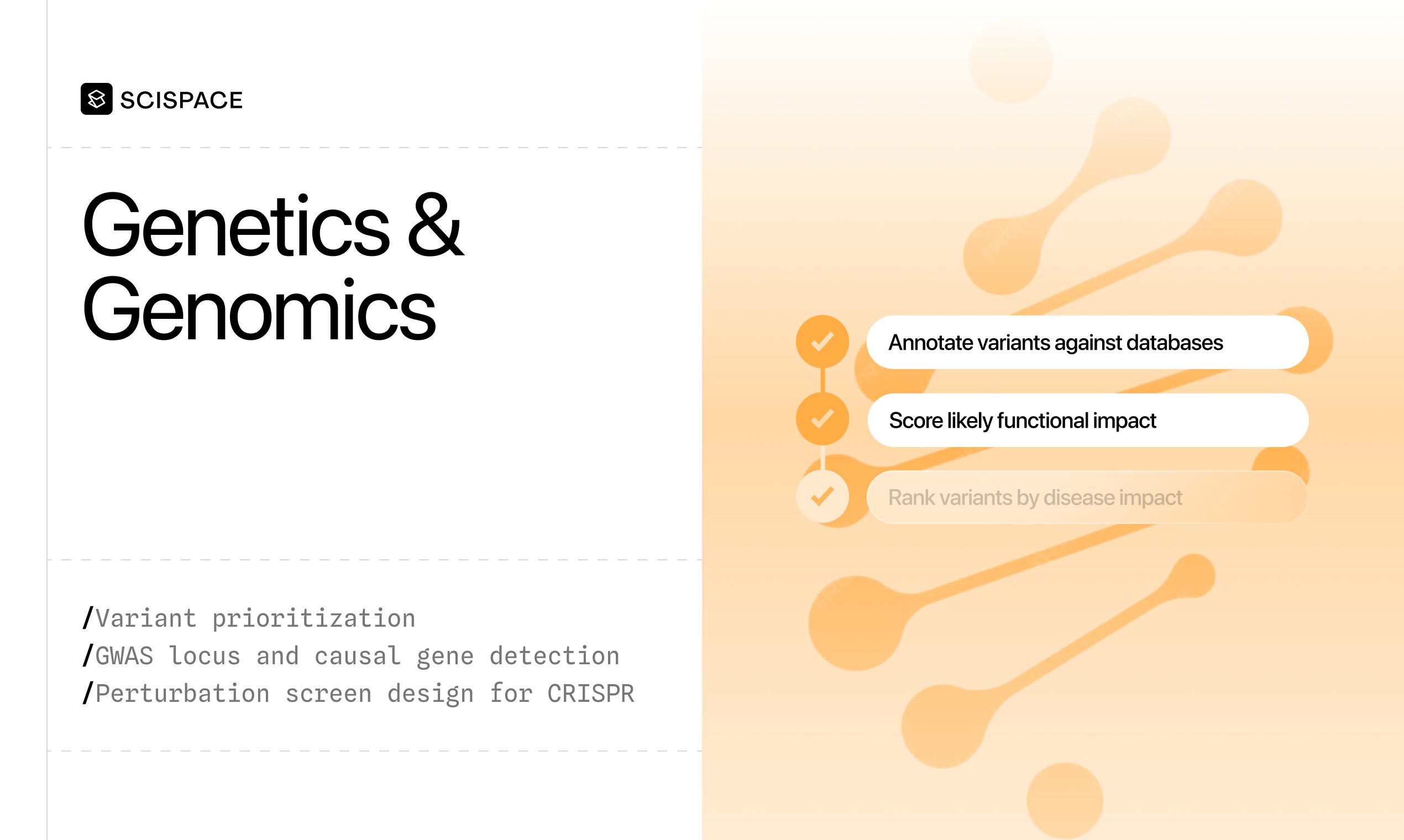
- Variant Interpretation for Clinical and Research Genomics: The agent prioritizes genomic variants for hereditary conditions automatically cross-referencing ClinVar pathogenicity annotations, gnomAD population frequency data, ACMG/AMP classification guidelines, conservation scores, functional prediction algorithms (SIFT, PolyPhen), and prior research evidence. It provides structured reasoning explaining why specific variants are pathogenic, likely pathogenic, or benign with transparent rationale citing supporting databases enabling clinicians and researchers making informed diagnostic or research prioritization decisions without manual multi-database consultations.
- scRNA-seq Clustering and Cell-Type Annotation: For single-cell RNA sequencing workflows, BioMed Agent performs quality control filtering, normalization, dimensionality reduction (PCA, UMAP, t-SNE), clustering algorithm selection and optimization, differential expression analysis, and automated cell-type annotation leveraging reference databases (Cell Ontology, CellMarker). Users upload raw count matrices receiving annotated cell populations, marker gene lists, and biological interpretations accelerating single-cell analysis pipelines typically requiring extensive bioinformatics scripting.
- Drug-Target Mapping and ADMET Profiling: The agent facilitates drug discovery workflows analyzing drug-target interactions, compound ADMET properties (Absorption, Distribution, Metabolism, Excretion, Toxicity), off-target effects, drug repurposing opportunities, and therapeutic mechanism hypotheses. It integrates pharmacological databases (DrugBank, ChEMBL, PubChem), molecular docking predictions, and literature evidence synthesizing actionable therapeutic insights from fragmented pharmacological data sources.
- Multi-Omics Integration and Pathway Analysis: BioMed Agent processes integrated omics datasets (genomics, transcriptomics, proteomics, metabolomics) identifying enriched pathways, regulatory networks, and biological themes. It performs Gene Ontology enrichment, KEGG pathway mapping, protein-protein interaction network construction, and cross-omics correlation analysis translating high-dimensional biological data into interpretable mechanisms and testable hypotheses.
- Literature Review Automation and Evidence Synthesis: The system automatically searches biomedical literature across PubMed, preprint servers, and clinical trial databases extracting relevant findings, synthesizing evidence, identifying knowledge gaps, and generating literature review summaries. Unlike generic AI assistants hallucinating references, BioMed Agent grounds responses in actual publications with citation tracking and evidence trails supporting rigorous scientific writing and grant preparation.
- Wet-Lab Protocol Interpretation and Troubleshooting: BioMed Agent interprets experimental protocols from published methods, identifies potential technical issues, suggests optimization strategies, and adapts protocols for alternative reagents or equipment. This capability assists reproducing published experiments, optimizing conditions, or troubleshooting failed procedures through AI understanding of laboratory techniques and biological principles.
- Rare Disease Mechanism Exploration and Therapeutic Discovery: For rare disease research, the agent connects genetic variants, molecular pathways, phenotypic manifestations, and potential therapeutic interventions. It reasons across genomic data, clinical presentations, model organism studies, and pharmacological databases proposing mechanistic hypotheses and repurposing candidates accelerating discovery in understudied conditions with limited prior knowledge.
- Publication-Ready Biomedical Illustration Generation: Recently launched capability enables generating high-quality scientific figures directly from natural language prompts. Researchers can create clinical trial phase diagrams, cellular pathway illustrations (MHC-I antigen presentation, SARS-CoV-2 entry mechanisms), disease pathology visualizations (mitochondrial dysfunction in neurodegeneration), or custom biological processes. Generated illustrations are editable, revisable, and match journal submission requirements eliminating Adobe Illustrator bottlenecks for researchers without graphic design skills.
- Transparent Reasoning and Reproducible Workflows: Unlike black-box AI systems, BioMed Agent maintains explicit reasoning chains showing tool selections, database queries, analysis steps, and conclusion derivations. This transparency enables scientific verification, reproducibility assessment, and understanding of AI decision-making processes critical for rigorous biomedical research where blind trust in computational outputs is inappropriate.
How It Works
SciSpace BioMed Agent operates through sophisticated multi-agent orchestration architecture combining large language model reasoning with retrieval-augmented planning and code-based execution:
Step 1: Natural Language Query and Intent Understanding
Researchers input biomedical questions or workflow requests through conversational interface using natural language prompts. Examples: “Prioritize exome variants for hereditary breast cancer and provide rationale,” “Design a pooled CRISPR screen for gene targets affecting T cell exhaustion,” “Analyze this scRNA-seq dataset and annotate cell types,” or “Create illustration showing antigen processing via MHC-I pathway.” BioMed Agent’s language understanding layer processes prompts identifying biological domain (genomics, cell biology, pharmacology), required analyses, expected outputs, and complexity level.
Step 2: Action Discovery and Tool Selection
The agent employs action discovery system mapping biomedical tasks to appropriate tools and databases from its 150+ software integrations and 100+ database connections. This orchestration layer understands which molecular biology tools handle primer design, which genomics platforms provide variant annotations, which analysis suites process scRNA-seq data, and which pathway databases enrich gene lists. The agent constructs multi-step workflow plans decomposing complex requests into logically-sequenced sub-tasks each matched to optimal tools.
Step 3: Retrieval-Augmented Planning with Domain Knowledge
BioMed Agent leverages retrieval-augmented generation accessing biomedical literature, protocol repositories, and knowledge graphs contextualizing requests. For variant interpretation queries, it retrieves ACMG guidelines, population frequency thresholds, and functional prediction criteria. For cloning design requests, it accesses primer design principles, enzyme compatibility matrices, and vector systems. This retrieved knowledge grounds planning in established biomedical practices rather than generic AI reasoning disconnected from domain standards.
Step 4: Code-Based Execution and Tool Orchestration
The agent generates executable code (Python, R, shell scripts) interfacing with bioinformatics tools automatically. It invokes alignment algorithms, statistical analysis packages, visualization libraries, and database APIs translating high-level intentions into concrete computational operations. For genomic analysis, it might call VCF file parsers, variant effect predictors, population frequency annotators, and pathogenicity classifiers piping outputs through analytical chains without manual intervention.
Step 5: Multi-Modal Data Ingestion and Processing
BioMed Agent ingests diverse data types including sequence files (FASTQ, BAM, VCF), expression matrices (CSV, TSV, h5ad), protein structures (PDB), chemical compounds (SMILES, MOL), clinical records (FHIR), and published literature (PDF, XML). It handles format conversions, quality control, normalization, and preprocessing automatically adapting workflows to data characteristics without requiring users specifying technical parameters.
Step 6: Results Synthesis and Biological Interpretation
After executing analytical workflows, the agent synthesizes results into biologically meaningful interpretations. Rather than presenting raw statistical outputs, it explains significance, contextualizes findings within biological knowledge, proposes mechanistic explanations, and suggests experimental follow-ups. For variant analysis, it doesn’t merely list pathogenicity scores—it explains molecular consequences, disease associations, and diagnostic implications in accessible scientific language.
Step 7: Transparent Reasoning Chain and Reproducibility Documentation
Throughout execution, BioMed Agent maintains detailed reasoning logs showing tool selections, parameter choices, database queries, analysis steps, and interpretive logic. Users can audit decision-making processes verifying scientific appropriateness and identifying potential issues. This transparency supports reproducible research enabling others replicating analyses or understanding computational methodologies underlying published findings.
Step 8: Iterative Refinement and Follow-Up Queries
The conversational interface enables iterative workflows where researchers refine analyses through follow-up prompts. Users can request alternative analysis parameters, additional visualizations, deeper literature exploration, or modified experimental designs without restarting workflows. This iterative capability mimics natural scientific reasoning cycles where initial analyses inform subsequent questions.
Use Cases
Given its specialized biomedical orchestration capabilities, SciSpace BioMed Agent addresses numerous research scenarios where tool fragmentation creates productivity barriers:
Clinical Genomic Variant Interpretation for Rare Diseases:
- Clinician-scientists upload patient exome or genome VCF files receiving prioritized candidate variants with pathogenicity assessments, inheritance pattern analysis, phenotype matching, and therapeutic implications
- The agent cross-references ClinVar, gnomAD, OMIM, Human Phenotype Ontology, and literature evidence providing diagnostic hypotheses for undiagnosed rare disease cases
- Reduces manual variant filtering from days to minutes enabling faster genetic diagnosis and precision medicine implementation
CRISPR Screen Design and Analysis for Functional Genomics:
- Researchers planning pooled CRISPR screens receive complete experimental designs including gRNA libraries, vector recommendations, quality control metrics, sequencing strategies, and statistical analysis frameworks
- The agent optimizes guide RNA selection balancing on-target efficacy against off-target effects using computational scoring algorithms
- Automates computational components of CRISPR screens democratizing genome-scale functional genomics for labs without dedicated bioinformaticians
Single-Cell RNA-Seq Analysis for Cell Atlas Projects:
- Upload raw scRNA-seq count matrices receiving quality-controlled, normalized, clustered, and annotated datasets with cell-type identifications, marker genes, and biological interpretations
- The agent applies cutting-edge scRNA-seq analysis methods without requiring command-line programming or algorithm parameter optimization
- Accelerates cell atlas generation, developmental biology studies, and tumor microenvironment characterization
Drug Repurposing and Target Discovery for Therapeutic Development:
- Pharmaceutical researchers query disease mechanisms receiving drug repurposing candidates with mechanistic rationales, target profiles, and clinical trial precedents
- The agent connects genetic associations, pathway dysregulation, approved drug mechanisms, and patient stratification biomarkers proposing therapeutic strategies
- Reduces early-stage drug discovery timelines identifying repurposing opportunities missed by human curation
Molecular Cloning Workflow Design for Synthetic Biology:
- Researchers specify desired constructs (expression plasmids, viral vectors, CRISPR systems) receiving complete cloning protocols with primer sequences, enzyme selections, assembly strategies, and validation plans
- The agent designs primers meeting thermodynamic criteria, checks restriction site compatibility, and optimizes codon usage automatically
- Eliminates manual primer design iterations and cloning strategy troubleshooting accelerating construct generation
Multi-Omics Integration for Systems Biology:
- Systems biologists upload genomics, transcriptomics, proteomics, and metabolomics datasets receiving integrated pathway analyses, regulatory network models, and biological theme identifications
- The agent performs cross-omics correlation, enrichment analysis, and knowledge graph construction synthesizing holistic biological understanding
- Reveals emergent systems-level insights invisible within single-omics analyses
Literature Review Automation for Grant Writing and Manuscript Preparation:
- Researchers specify review topics receiving comprehensive literature syntheses with evidence summaries, knowledge gap identifications, and citation tracking
- The agent searches PubMed, bioRxiv, clinical trial registries extracting relevant findings organized by themes or chronologically
- Accelerates background research, grant preliminary data compilation, and manuscript introduction/discussion writing
Protocol Optimization and Experimental Troubleshooting:
- Scientists upload failing experimental protocols receiving troubleshooting suggestions, optimization recommendations, and alternative reagent options
- The agent understands common experimental pitfalls, technical limitations, and best practices across wet-lab techniques
- Reduces experimental iteration cycles through AI-assisted protocol refinement
Pros \& Cons
Advantages
- Comprehensive Tool and Database Integration Eliminating Workflow Fragmentation: The 150+ software and 100+ database connections provide unprecedented ecosystem coverage reducing biomedical research from 15-tool workflows into unified conversational interface. This integration eliminates format conversion bottlenecks, authentication hassles, and context switching overhead dramatically improving research efficiency.
- Domain-Specific AI Understanding Biomedical Concepts: Unlike generic AI assistants requiring extensive prompt engineering to understand biological terminology, BioMed Agent inherently comprehends genes, pathways, drugs, diseases, and clinical workflows. This domain specialization enables accurate interpretation of biomedical queries and appropriate tool selection without misunderstanding scientific context.
- Transparent Reasoning Chains Supporting Scientific Verification: The explicit reasoning logs showing tool selections, database queries, and analytical steps enable researchers auditing AI decisions verifying scientific appropriateness. This transparency contrasts with black-box AI systems where outputs lack interpretability critical for rigorous research requiring reproducibility and peer review.
- Automates Repetitive Bioinformatics Tasks Without Programming Requirements: BioMed Agent democratizes computational biology enabling wet-lab scientists, clinicians, and trainees performing sophisticated analyses without Python/R programming expertise. This accessibility expands research capabilities for smaller labs lacking dedicated bioinformatics support.
- End-to-End Workflow Execution from Single Prompts: The orchestration architecture chains multiple tools automatically executing complete analyses from raw data through interpretation without manual intermediate steps. Users describe desired outcomes receiving publication-ready results rather than managing technical execution details.
- Publication-Ready Biomedical Illustration Generation: The recently-added illustration capability eliminates graphic design bottlenecks enabling researchers creating journal-quality figures from natural language descriptions. This feature addresses common pain point where scientific communication requires Adobe Illustrator skills many researchers lack.
- Supports Rare Disease Research Where Knowledge Is Sparse: For understudied conditions with limited literature, BioMed Agent’s ability connecting disparate evidence sources (genetic databases, model organisms, pathway knowledge) enables hypothesis generation impossible through traditional literature searches benefiting orphan disease research.
- Accelerates Hypothesis Generation and Experimental Design: By automating literature review, data analysis, and protocol design, the agent reduces time from question to experimental plan enabling faster research cycles and increased scientific productivity.
Disadvantages
- Best Value Only for Users with Biomedical Background: While BioMed Agent simplifies computational aspects, understanding whether analyses are scientifically appropriate, interpreting biological significance, and designing follow-up experiments requires domain expertise. Non-experts may misuse tools or misinterpret outputs without sufficient biomedical knowledge creating potential for incorrect conclusions.
- Learning Curve to Trust and Verify Complex Outputs: Given BioMed Agent’s sophisticated analyses, users must invest time understanding reasoning chains, validating outputs against known standards, and assessing when AI suggestions are appropriate versus inappropriate. Blind trust in AI recommendations without verification creates scientific rigor risks especially for clinical applications.
- Early-Stage Product Launched December 2025 with Limited Track Record: As recently-released specialized agent, BioMed Agent lacks extensive production usage, comprehensive user reviews, or proven reliability across diverse edge cases. Early adopters face potential undiscovered bugs, incomplete tool integrations, or workflow limitations becoming apparent through broader deployment.
- Black Box Problem Despite Reasoning Chains: While transparency improved versus generic LLMs, the underlying AI decision-making processes remain partially opaque. Understanding why specific tools were selected or how biological interpretations were derived may not always be completely clear despite reasoning logs potentially limiting scientific trust for highly sensitive applications.
- Requires Continuous Updates for Rapidly Evolving Biomedical Tools: The 150+ tool integrations and 100+ databases require ongoing maintenance as bioinformatics software updates, databases expand, and new methodologies emerge. Lag in integration updates could result in outdated analytical approaches or missing cutting-edge capabilities frustrating users expecting state-of-the-art methods.
- Quality Depends on Integration Depth and Tool Availability: Not all 150+ tool integrations may provide identical functionality depth. Some integrations might be superficial API calls versus deep workflow orchestration limiting capabilities for specialized analyses. Users may discover specific advanced features unavailable despite tool nominally being “integrated.”
- Pricing Transparency Limited Beyond General SciSpace Tiers: Full pricing structure for BioMed Agent specifically (versus general SciSpace Agent) remains incompletely disclosed. Users cannot accurately forecast costs for biomedical-specific features, usage limits, or enterprise deployment without detailed pricing documentation potentially creating budget uncertainty for institutional adoption.
- Hallucination Risks Despite Database Grounding: While grounded in databases and literature, AI-generated interpretations or experimental recommendations could still contain errors, misinterpretations, or inappropriate suggestions requiring expert validation. Biomedical applications where incorrect outputs have patient safety or research integrity implications demand cautious verification of all agent outputs.
- May Not Replace Specialized Bioinformatics Expertise for Complex Analyses: For cutting-edge computational biology requiring novel algorithm development, custom pipeline construction, or deep statistical methodology expertise, BioMed Agent’s orchestration capabilities may prove insufficient compared to dedicated bioinformaticians writing bespoke analyses.
How Does It Compare?
SciSpace BioMed Agent vs. BioGPT (Microsoft’s Biomedical Language Model)
BioGPT is Microsoft’s generative pre-trained transformer specialized for biomedical text trained on 15 million PubMed abstracts achieving state-of-the-art performance on biomedical NLP tasks including relation extraction, question answering, and text generation.
Core Functionality:
- SciSpace BioMed Agent: Comprehensive orchestrating agent executing complete research workflows integrating 150+ tools and 100+ databases from data ingestion through experimental design
- BioGPT: Specialized language model for biomedical text generation, question answering, and literature mining without workflow orchestration or tool integration
Tool Integration:
- SciSpace BioMed Agent: Extensive ecosystem connectivity calling molecular biology software, genomics platforms, clinical databases, and omics analysis suites automatically
- BioGPT: Pure language model without native tool calling, database access, or bioinformatics software integration; requires manual external tool usage
Workflow Execution:
- SciSpace BioMed Agent: Executes multi-step biomedical analyses end-to-end including data processing, statistical analysis, visualization, and interpretation
- BioGPT: Generates text answering biomedical questions or describing concepts but cannot execute computational workflows, analyze datasets, or produce experimental designs
Output Types:
- SciSpace BioMed Agent: Produces analyzed datasets, statistical results, experimental protocols, cloning designs, variant interpretations, illustrations, and actionable insights
- BioGPT: Generates biomedical text including research summaries, term descriptions, hypothesis generation, and literature-based responses
Use Case Alignment:
- SciSpace BioMed Agent: End-to-end research assistance from raw data through experimental implementation requiring workflow automation
- BioGPT: Biomedical writing assistance, literature comprehension, hypothesis articulation, and knowledge extraction from text
Benchmark Performance:
- SciSpace BioMed Agent: Performance measured by workflow completion success, analysis accuracy, experimental design validity
- BioGPT: 44.98% F1 on BC5CDR, 38.42% on KD-DTI, 40.76% on DDI relation extraction; 78.2-81.0% accuracy on PubMedQA benchmark
When to Choose SciSpace BioMed Agent: For complete research workflow automation integrating data analysis, experimental design, and multi-tool orchestration requiring unified biomedical research platform.
When to Choose BioGPT: For biomedical text generation, literature mining, question answering, or natural language understanding tasks without requiring computational workflow execution.
SciSpace BioMed Agent vs. Benchling (Molecular Biology Software Platform)
Benchling is comprehensive cloud-based molecular biology platform providing DNA/RNA/protein design tools, sequence alignment, CRISPR design, cloning simulation, notebook integration, and inventory management serving 200,000+ scientists across biotech R\&D.
Platform Philosophy:
- SciSpace BioMed Agent: AI-first conversational agent orchestrating external tools and databases through natural language prompts emphasizing automation
- Benchling: Traditional software platform with GUI-based tools requiring manual operation, parameter selection, and workflow configuration by users
Tool Breadth:
- SciSpace BioMed Agent: Integrates 150+ external biomedical tools and 100+ databases creating ecosystem-wide connectivity across specialized domains
- Benchling: Native suite of molecular biology tools (sequence design, cloning, CRISPR, alignments, primer design) with focused depth versus breadth
Interaction Model:
- SciSpace BioMed Agent: Natural language conversational interface where users describe desired outcomes receiving automated workflow execution
- Benchling: Point-and-click graphical interface where users manually select tools, configure parameters, and execute steps sequentially
Data Management:
- SciSpace BioMed Agent: Analysis-focused orchestration with results delivery; less emphasis on persistent data organization or inventory management
- Benchling: Comprehensive data management including Registry for sequence storage, Notebook for documentation, Inventory for sample tracking creating integrated LIMS-like environment
Collaboration Features:
- SciSpace BioMed Agent: Limited collaboration features focused on individual research assistance
- Benchling: Extensive collaboration capabilities including shared projects, permissions systems, version control, team workflows, and cross-organizational data sharing
Pricing:
- SciSpace BioMed Agent: Tied to SciSpace subscription tiers; specific BioMed Agent pricing not fully disclosed
- Benchling: Free academic tier; enterprise pricing for commercial users with tiered features based on organization size and requirements
Target Users:
- SciSpace BioMed Agent: Researchers prioritizing analysis automation, AI-assisted experimental design, and computational workflow orchestration
- Benchling: Molecular biologists requiring comprehensive sequence design tools, data organization, inventory tracking, and team collaboration infrastructure
Specialization:
- SciSpace BioMed Agent: Broad biomedical coverage including genomics, clinical research, omics, drug discovery beyond molecular biology
- Benchling: Deep molecular biology specialization with industry-leading cloning, CRISPR, and sequence design capabilities
When to Choose SciSpace BioMed Agent: For AI-driven research automation across diverse biomedical domains requiring workflow orchestration and multi-tool integration through conversational interface.
When to Choose Benchling: For comprehensive molecular biology design, team collaboration, data/inventory management, and deep GUI-based sequence manipulation without requiring AI orchestration.
SciSpace BioMed Agent vs. Geneious (Bioinformatics Software Platform)
Geneious Prime is desktop bioinformatics software providing molecular cloning, primer design, NGS analysis, genomics, multiple alignments, de novo assembly, phylogenetics, and sequence visualization with extensible plugin architecture and shared database capabilities.
Deployment Model:
- SciSpace BioMed Agent: Cloud-based web platform accessible through browser; conversational AI interface; tool orchestration across external services
- Geneious Prime: Desktop application (Windows, Mac, Linux) with local data processing; traditional GUI; integrated native analysis engines
Analysis Approach:
- SciSpace BioMed Agent: AI agent automatically selects appropriate tools, chains analyses, and interprets results from natural language queries
- Geneious Prime: User-driven manual selection of analysis tools, parameter configuration, and interpretation; algorithmic advisors assist but don’t automate
Tool Architecture:
- SciSpace BioMed Agent: Orchestrates 150+ external biomedical tools and 100+ databases through API integrations and code generation
- Geneious Prime: Native analysis engines for core bioinformatics with plugin ecosystem extending functionality; self-contained versus orchestrating external tools
Workflow Philosophy:
- SciSpace BioMed Agent: Conversational AI automates multi-step workflows end-to-end from single prompts reducing manual intervention
- Geneious Prime: Interactive manual workflows where users execute steps sequentially with control over each parameter and decision point
Domain Coverage:
- SciSpace BioMed Agent: Broad biomedical research including clinical genomics, drug discovery, multi-omics, rare diseases, therapeutic discovery beyond pure bioinformatics
- Geneious Prime: Focused bioinformatics specialization in sequence analysis, molecular cloning, genomics, phylogenetics without clinical or pharmaceutical scope
Collaboration:
- SciSpace BioMed Agent: Individual research focus with limited team collaboration infrastructure
- Geneious Prime: Geneious Server Database enables shared databases, folder-based organization, access control, and team data management
Offline Capability:
- SciSpace BioMed Agent: Requires internet connection for cloud-based agent and database access
- Geneious Prime: Desktop application functions fully offline after installation with local data processing and analysis
Pricing:
- SciSpace BioMed Agent: SciSpace subscription-based; specific BioMed Agent pricing not fully disclosed
- Geneious Prime: Commercial licenses for desktop software; academic discounts available; one-time or subscription licensing options
When to Choose SciSpace BioMed Agent: For AI-powered biomedical research automation across clinical, pharmaceutical, and multi-omics domains requiring conversational interface and workflow orchestration.
When to Choose Geneious Prime: For comprehensive desktop bioinformatics with manual control, offline capability, team database sharing, and focused sequence analysis/molecular biology specialization.
SciSpace BioMed Agent vs. General LLMs with Plugins (ChatGPT, Claude)
General LLMs (ChatGPT with plugins, Claude with tools, Gemini) provide broad conversational AI capabilities across domains with some plugin ecosystems enabling external tool access and web search.
Domain Specialization:
- SciSpace BioMed Agent: Purpose-built for biomedical research understanding genes, pathways, protocols, clinical workflows; trained/fine-tuned on biomedical corpora
- General LLMs: Broad general knowledge with biomedical understanding from training data but not domain-optimized; generic reasoning without specialized biomedical expertise
Tool Integration Depth:
- SciSpace BioMed Agent: Deep integration with 150+ specialized biomedical tools and 100+ scientific databases with native bioinformatics software orchestration
- General LLMs: Generic plugin ecosystems (web search, code execution, file analysis) without specialized bioinformatics tool access or biomedical database integration
Biomedical Accuracy:
- SciSpace BioMed Agent: Grounded in domain databases (ClinVar, gnomAD, PubMed) reducing hallucination through evidence retrieval; transparent database citations
- General LLMs: Prone to biomedical hallucinations inventing plausible-sounding but incorrect facts without database grounding; citation fabrication risks
Workflow Automation:
- SciSpace BioMed Agent: Executes complete research workflows (variant interpretation, scRNA-seq analysis, cloning design) producing analyzable results
- General LLMs: Can describe workflows or generate code snippets but don’t execute bioinformatics pipelines, access clinical databases, or produce analyzed datasets
Scientific Rigor:
- SciSpace BioMed Agent: Transparent reasoning chains, database citations, reproducible workflows supporting scientific verification
- General LLMs: Limited transparency; difficult reproducing computational steps; outputs lack scientific audit trails needed for peer review
Use Case Fit:
- SciSpace BioMed Agent: Specialized for biomedical research workflows requiring data analysis, experimental design, literature synthesis within scientific standards
- General LLMs: Broad conversational assistance including writing, coding, general reasoning across non-specialized domains
Cost Structure:
- SciSpace BioMed Agent: Research-focused subscription aligned with academic/pharmaceutical budgets
- General LLMs: Consumer/enterprise pricing (ChatGPT Plus \$20/month, Claude Pro \$20/month) without biomedical specialization justification
When to Choose SciSpace BioMed Agent: For rigorous biomedical research requiring specialized tool access, database integration, workflow automation, and domain expertise with scientific reproducibility standards.
When to Choose General LLMs: For general conversational assistance, writing help, basic biomedical questions, coding support, or exploratory research outside specialized workflow automation requirements.
Final Thoughts
SciSpace BioMed Agent represents significant advancement in biomedical research technology by directly addressing the persistent fragmentation problem: modern biology generates exponentially growing data, tools, and literature creating fragmented landscape outpacing human expertise and manual integration capabilities. The December 7, 2025 launch demonstrates viability of domain-native AI agents specifically architected for biomedical workflows rather than adapting generic AI assistants ill-suited for specialized scientific requirements.
The integration of 150+ specialized tools and 100+ databases creates genuine orchestration capability impossible through manual workflows or generic AI systems. While Benchling provides deep molecular biology GUI tools and Geneious offers comprehensive desktop bioinformatics, neither approaches SciSpace BioMed Agent’s conversational AI orchestration enabling end-to-end workflow automation from natural language prompts. While BioGPT excels at biomedical text generation and general LLMs provide broad conversational assistance, neither executes computational analyses, accesses clinical databases, or produces experimental designs characteristic of BioMed Agent’s specialized capabilities.
The platform particularly excels for:
Academic researchers in genomics, cell biology, and molecular biology requiring computational workflow automation without extensive bioinformatics programming expertise enabling wet-lab scientists independently performing sophisticated analyses previously requiring dedicated computational support
Clinician-scientists in rare disease and precision medicine needing rapid variant interpretation, diagnostic hypothesis generation, and therapeutic option exploration integrating fragmented clinical genomics resources into unified decision-support interface
Pharmaceutical and biotech teams in drug discovery and target identification accelerating early-stage research through automated literature mining, drug repurposing analysis, ADMET profiling, and target-pathway mapping reducing discovery timelines
Students and trainees learning biomedical research methods gaining access to expert-level analytical pipelines, experimental design templates, and protocol guidance democratizing advanced research capabilities educational contexts
Multi-omics and systems biology researchers integrating heterogeneous datasets (genomics, transcriptomics, proteomics, metabolomics) requiring cross-platform analysis orchestration revealing systems-level insights
For users requiring specialized molecular biology depth with manual control, Benchling’s focused GUI tools and team collaboration infrastructure provide superior user experience within defined domain. For comprehensive desktop bioinformatics with offline capability and plugin extensibility, Geneious Prime’s mature platform offers proven reliability. For biomedical text generation and literature mining without workflow orchestration, BioGPT’s specialized language model provides targeted NLP capabilities. For broad conversational AI across non-specialized domains, general LLMs offer flexibility and mainstream support.
But for the specific intersection of “biomedical workflow orchestration,” “150+ tool integration,” “conversational AI interface,” and “end-to-end research automation,” SciSpace BioMed Agent addresses capabilities no alternative currently combines comprehensively. The platform’s primary limitations—recently-launched status with limited production track record, learning curve for trusting and verifying complex outputs, pricing transparency gaps for biomedical-specific features, and best value restricted to users with biomedical backgrounds—reflect expected constraints of specialized technology pioneering new paradigm in AI-assisted scientific research.
The critical value proposition centers on workflow unification and productivity acceleration: if biomedical research currently requires juggling 15+ tools and 12+ databases with manual integration friction; if computational analyses create bottlenecks due to programming skill requirements; if literature volume overwhelms manual curation capabilities; or if experimental design optimization demands expertise beyond individual knowledge—SciSpace BioMed Agent provides transformative solution worth serious evaluation.
The architecture positioning BioMed Agent as specialized layer atop general SciSpace Agent demonstrates strategic approach: leverage broad research capabilities while adding biomedical-specific orchestration understanding genes, pathways, protocols, and clinical workflows impossible for generic agents. As biomedical AI agents mature through STELLA, Biomni, TxAgent, and similar academic systems demonstrating feasibility, SciSpace BioMed Agent represents first commercial implementation accessible to practicing researchers rather than remaining experimental research tools.
For early adopters accepting recently-launched platform tradeoffs (limited track record, evolving integration completeness, verification learning curves), SciSpace BioMed Agent delivers on revolutionary promise: transforming biomedical research from fragmented manual tool orchestration into unified conversational workflows where researchers describe desired outcomes and AI co-scientists execute computational heavy lifting—enabling scientists focusing on hypothesis generation, experimental interpretation, and creative discovery rather than technical tool management.
https://scispace.com/biomedical