
Table of Contents
Overview
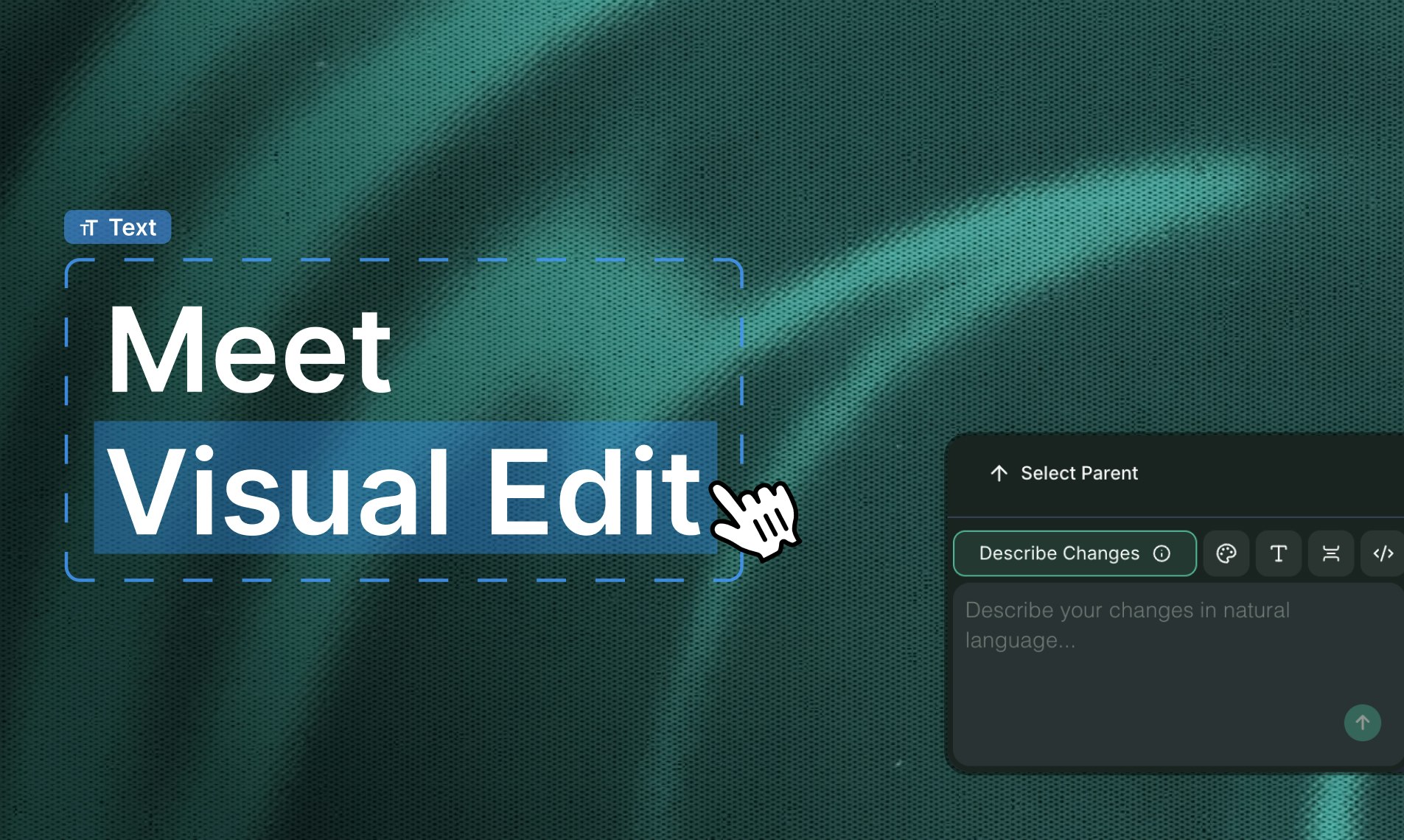
Shipper Visual Edit is a versatile development platform that empowers users to modify applications through their preferred modality. Whether you choose to click and edit elements directly, describe desired changes in natural language, or dive into the codebase for deep technical adjustments, the platform streamlines the entire process. It centers on an agentic AI system that reasons through requirements, writes self-fixing code, and manages deployments, functioning as a comprehensive “AI co-founder” for modern developers and founders alike.
Important Correction: The platform’s official domain is https://shipper.now/. While the previous description mentioned “shipper.dev,” all current documentation and services are hosted at the .now top-level domain.
Key Features
- Visual Edit Interface: Allows users to modify running applications by clicking on preview elements to make instant changes, avoiding the need for repeated manual prompts.
- Agentic AI Builder: Uses a reasoning-based architecture to build full-stack apps from a single prompt, capable of database design, autonomous coding, and error self-correction.
- The Advisor™: An integrated AI consultant that acts as a co-founder, providing strategic guidance on feature optimization, user engagement tactics, and project growth.
- Scoped Visual Edits: Focuses modifications on selected sections of the app to prevent unintended side effects or regressions in unrelated files and layouts.
- One-Click Deployment: Integrates hosting, databases, and billing into a unified flow, enabling users to generate and share live, revenue-ready products within minutes.
- Full Code Export: Provides an export option that allows developers to access the underlying codebase for manual customization or external hosting.
- GitHub Integration: Supports seamless synchronization with GitHub repositories from the start of the project, facilitating professional version control.
How It Works
Shipper follows a “Build-Edit-Share” workflow powered by a specialized agentic architecture. The process begins when a user describes an app idea in natural language; the AI then designs the database structure and generates the full-stack code. Once the initial version is live, users can use the Visual Edit tool to refine the UI through direct manipulation or text instructions. The system uses a credit-based resource model, consuming credits only upon successful task completion (such as a database setup) rather than billing for time spent. This dual-layer approach—where one AI builds while The Advisor™ audits the business logic—ensures that the final product is technically sound and market-ready.
Use Cases
- Non-Technical Founders: Ideal for makers who want to build and launch production-ready SaaS products without manually managing hosting or complex deployment pipelines.
- Indie Hackers and Solopreneurs: Facilitates rapid iteration on “revenue-ready” products, moving from concept to a live business link in a fraction of the time required by traditional methods.
- Agencies and Prototypers: Allows professional teams to scaffold complex frontends and backends quickly, providing a real codebase that can be exported for further development.
- SaaS Product Managers: Useful for testing new features or UI changes in a live environment without involving a full engineering team for early-stage prototypes.
Pros & Cons
Advantages
- Reduced Regressions: Scoped editing technology ensures that changes to one section of the app do not break unrelated components, leading to higher stability.
- Unified Ecosystem: Handles everything from domain configuration to database management and billing integration in one platform.
- Strategic Assistance: The Advisor™ feature differentiates the tool from pure coding assistants by offering business and UX optimization suggestions.
- Full Ownership: Unlike many “no-code” builders, Shipper provides a real codebase with a clean export path, preventing vendor lock-in.
Disadvantages
- Cost at Scale: While the entry price is competitive, the credit-based model can become expensive for large-scale projects requiring frequent, complex updates.
- Niche Learning Curve: Users familiar with standard IDEs may initially find the “Visual Edit” combined with “Advisor” workflow different from traditional git-based development flows.
- Dependency on AI Accuracy: Like all generative tools, complex custom logic may still require manual review through the code editor to ensure 100% precision.
How Does It Compare?
Bolt.new
- Best For: Developers who want an AI coding assistant but are comfortable cleaning up and debugging generated code manually.
- Pricing: Starts at $25/month for 10M tokens.
- Key Distinction: Bolt.new is often positioned as being $5/month cheaper than Shipper’s comparable premium plans, but it lacks the strategic “Advisor” guidance and built-in billing/database integration that Shipper provides.
Lovable
- Best For: Visual developers seeking high-end, collaborative AI design with a focus on UI/UX aesthetics.
- Pricing: Starts at $25/month for basic access.
- Key Distinction: Lovable focuses heavily on the design-to-app workflow, whereas Shipper emphasizes the end-to-end business readiness, including full-stack logic and business consulting features.
v0.dev (by Vercel)
- Best For: Engineers who need to scaffold React-based frontends quickly using a conversational interface.
- Pricing: Starts at $20/month for a Pro plan.
- Key Distinction: v0 is primarily a frontend-focused component generator. Shipper builds entire full-stack applications, including the database and backend infrastructure.
Replit Agent
- Best For: Beginners to intermediate developers who want to build and host entire applications directly in a cloud-based IDE.
- Pricing: Included in Replit’s subscription tiers, starting around $20/month.
- Key Distinction: Replit provides a full development environment, whereas Shipper provides a more streamlined, goal-oriented “app builder” experience with specialized business auditing.
Final Thoughts
Shipper Visual Edit is a significant evolution in the “AI as a Service” space, moving the focus from simple code generation to complete product management. By combining a powerful agentic builder with a WYSIWYG visual editor and a strategic business advisor, it bridges the gap between no-code simplicity and pro-code flexibility. For founders who prioritize speed to market and data ownership, Shipper offers a compelling path to launch fully-functional, revenue-ready applications with minimal technical friction. While it requires a paid commitment, the integrated hosting and deployment features make it a true all-in-one solution for the modern indie maker ecosystem.