
Table of Contents
Overview
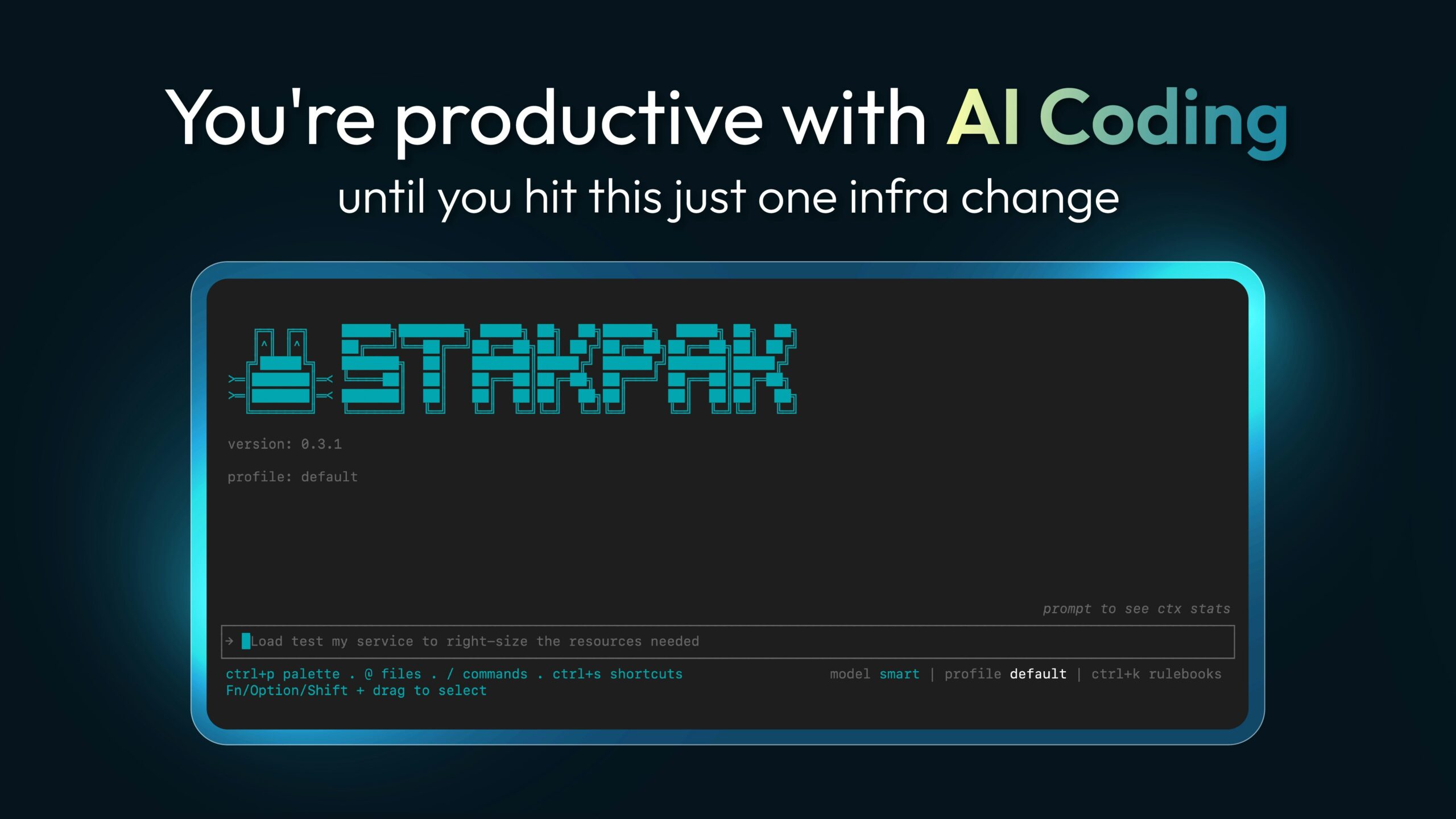
Stakpak is a fully open-source DevOps agent written in Rust that helps developers secure, deploy, and operate production infrastructure from the terminal or within GitHub Actions. The platform enables users to run AI-powered infrastructure operations locally, bring their own API keys, or use self-hosted models while maintaining enterprise-grade security built in from day one. Stakpak is specifically designed to work reliably with real production infrastructure, offering a secure alternative to traditional infrastructure management tools.
Key Features
- Rust-Based Architecture: Written in Rust for performance, memory safety, and reliability with 900x performance improvement over previous versions
- GitHub Actions Integration: Native integration with GitHub Actions workflows for automated CI/CD pipeline execution
- Real Production Infrastructure: Designed specifically for production environments with support for Terraform, OpenTofu, Kubernetes, Docker, and major cloud providers
- Security-First Design: Built-in safety features including mutual TLS (mTLS) encryption, dynamic secret redaction, and Warden guardrail system to prevent destructive operations
- Bring Your Own Keys: Supports personal API keys from providers like OpenAI, Anthropic, and self-hosted models
- Self-Hosting Option: Can be deployed on-premises for maximum control and privacy
- Rulebooks System: Customizable agent behavior with internal standard operating procedures, playbooks, and organizational policies
- Asynchronous Task Management: Run background commands like port forwarding and servers with proper tracking and cancellation
- Infrastructure Code Indexing: Automatic local indexing and semantic search for Terraform, Kubernetes, Dockerfile, and GitHub Actions
How It Works
Developers install Stakpak using the provided installation script: curl -sSL https://stakpak.dev/install.sh | sh. The agent runs in the terminal or integrates into GitHub Actions workflows. Users describe infrastructure tasks in natural language, and Stakpak generates, validates, and executes the necessary code. The system uses AI models to analyze existing infrastructure, learn from the environment, and adapt to internal practices. All operations are logged and reversible, with automatic backups of file modifications. The agent can detect and redact over 210 types of secrets while maintaining operational effectiveness.
Use Cases
- DevOps Automation: Automate infrastructure provisioning, configuration management, and deployment workflows
- Secure Deployment: Implement security-hardened deployments with built-in guardrails and secret management
- Incident Response: Quickly identify root causes from terminal and implement fixes to resolve production incidents faster
- Infrastructure as Code: Generate high-quality Terraform, Kubernetes manifests, and Docker configurations
- CI/CD Pipeline Integration: Embed AI-powered infrastructure operations into continuous integration and delivery pipelines
- Cost Optimization: Analyze cloud costs and optimize resource allocation
- IAM Security: Secure identity and access management configurations
Pros \& Cons
Advantages
- Open Source: Fully auditable codebase available on GitHub with Apache 2.0 license
- Secure by Design: Enterprise-grade security features including mTLS, secret redaction, and guardrail policies
- High Performance: Rust implementation provides 900x performance improvement and efficient resource usage
- Production-Ready: Specifically designed for real production infrastructure with reliability focus
- Flexible Deployment: Supports local execution, GitHub Actions, and self-hosted models
- Reversible Operations: All file modifications automatically backed up with recovery capabilities
Disadvantages
- Requires Technical DevOps Knowledge: Steep learning curve for users unfamiliar with infrastructure concepts and CLI tools
- Complex Setup: Initial configuration and rulebook customization require significant effort
- Model Dependency: Quality of generated infrastructure code depends on AI model capabilities
- Limited Documentation: As a newer tool, documentation and community resources are still maturing
- Enterprise Features Cost: Advanced capabilities require paid plans starting at \$10/month
How Does It Compare?
Terraform
- Key Features: Infrastructure as Code tool for provisioning and managing cloud resources, declarative configuration language, state management, provider ecosystem
- Strengths: Mature platform, extensive provider support, large community, proven in production, comprehensive documentation
- Limitations: Requires learning HCL, manual code writing, no AI assistance, steep learning curve for complex configurations
- Differentiation: Terraform is a configuration language and provisioning engine; Stakpak is an AI agent that generates and manages Terraform code automatically
Ansible
- Key Features: Configuration management and automation tool, agentless architecture, YAML-based playbooks, extensive module library
- Strengths: Simple YAML syntax, strong orchestration capabilities, large module collection (5000+), good for multi-vendor environments
- Limitations: Primarily focused on configuration management, not infrastructure provisioning, requires manual playbook creation, limited AI integration
- Differentiation: Ansible excels at configuration management and application deployment; Stakpak focuses on infrastructure generation and security with AI assistance
Pulumi
- Key Features: Infrastructure as Code using general-purpose programming languages (Python, TypeScript, Go), state management, provider ecosystem
- Strengths: Familiar programming languages, strong IDE support, good for developers, comprehensive cloud provider support
- Limitations: Requires programming knowledge, can be verbose, limited AI assistance, potential for complex codebases
- Differentiation: Pulumi uses general-purpose languages; Stakpak uses natural language with AI code generation and built-in security guardrails
Amazon Q Developer
- Key Features: AI-powered code generation for AWS infrastructure, IDE integration, AWS service optimization, chat interface
- Strengths: Deep AWS integration, strong for standard EKS deployments, good documentation, enterprise support
- Limitations: AWS-only focus, limited to AWS services, cannot generate Terraform code, vendor lock-in
- Differentiation: Amazon Q is AWS-specific; Stakpak is cloud-agnostic and supports multiple infrastructure tools
Overmind
- Key Features: AI-powered Terraform generation, existing AWS configuration transformation, impact analysis
- Strengths: Can transform existing AWS configurations into Terraform, good for migration scenarios
- Limitations: Limited to AWS, smaller feature set, less mature than Stakpak
- Differentiation: Overmind specializes in AWS-to-Terraform conversion; Stakpak provides comprehensive DevOps automation across multiple platforms
Final Thoughts
Stakpak 3.0 CLI represents a significant advancement in AI-powered DevOps tooling, addressing critical gaps in infrastructure automation and security. The platform’s Rust-based architecture delivers exceptional performance while maintaining memory safety, and its security-first design makes it suitable for production environments where trust and reliability are paramount.
The 95% one-shot validity for Terraform generation demonstrates the platform’s maturity and effectiveness in real-world scenarios. By combining AI assistance with hard guardrails and secret management, Stakpak enables teams to automate infrastructure tasks without sacrificing security or control.
For organizations struggling with DevOps complexity, talent shortages, or security concerns, Stakpak offers a compelling solution that democratizes infrastructure management while maintaining enterprise standards. The open-source nature and transparent codebase provide auditability essential for regulated industries.
While the technical learning curve and setup complexity require commitment, the potential ROI through reduced infrastructure management overhead and improved security posture justifies the investment. Teams should evaluate the platform through the free tier to assess fit with their specific infrastructure requirements and workflow patterns.