Table of Contents
Overview
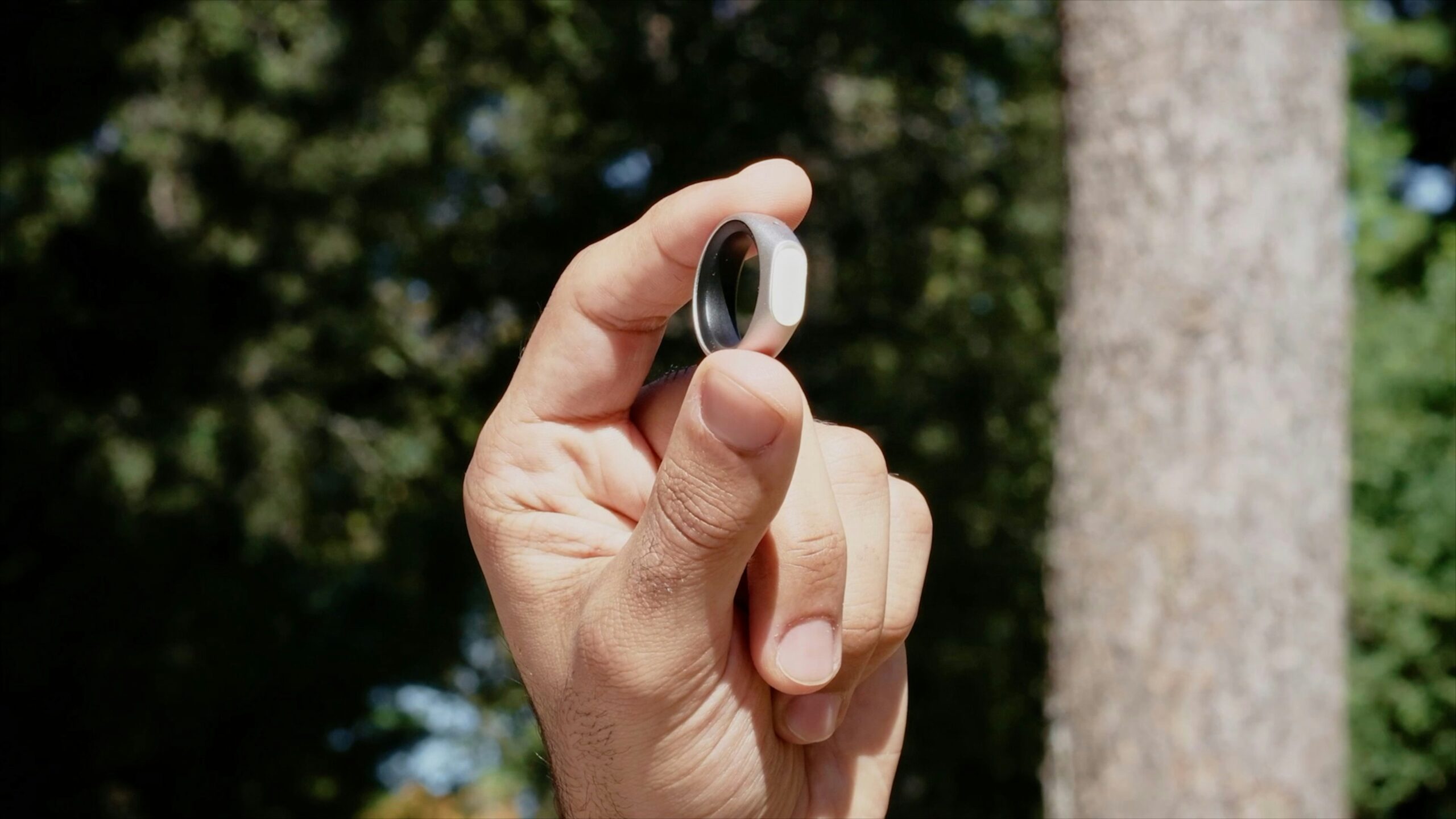
In an era where AI-powered wearables proliferate with increasingly ambitious feature sets, Stream Ring by Sandbar takes a deliberately focused approach to a specific problem: capturing your thoughts before they vanish. Created by Mina Fahmi and Kirak Hong—both former CTRL-Labs and Meta engineers—Stream represents a philosophical departure from devices attempting to replace smartphones or manage comprehensive AI tasks. Instead, Stream functions as what Sandbar describes as “a mouse for voice”—a minimal, touch-activated wearable designed for one core purpose: discreetly capturing fleeting ideas through whispered voice input. Launched in November 2025 with \$13 million in Series A funding, Stream Ring emphasizes privacy-first design, cognitive extension over automation, and seamless thought capture without the friction of reaching for your phone.
Key Features
Stream Ring delivers focused capabilities designed specifically for ambient thought capture and private voice interaction:
- Touch-activated voice input: Hold the capacitive sensor on the ring’s flat edge to activate the microphone, enabling discreet voice input without wake words or always-on listening.
- Whisper-optimized microphone: Intelligently captures clearly even softly-spoken words in noisy environments, allowing confidential interaction in crowded public spaces.
- Direct speech-to-text processing: Converts voice directly to text without storing audio files, converting your spoken thoughts into searchable, editable notes within seconds.
- Personalized Inner Voice: Custom AI voice generated during initial setup that mimics your own tone, cadence, and speaking style—designed to feel like talking to yourself rather than an external assistant.
- Conversational interface: Engage in back-and-forth conversations with the AI assistant for note refinement, elaboration, and exploration of captured ideas.
- Media control interface: Play, pause, skip, and adjust volume for music playback through simple ring gestures without phone interaction.
- Encrypted private interaction: All data encrypted at rest and in transit; users retain complete control with optional immediate data deletion.
- All-day battery life: Continuous operation throughout daily activities without requiring charging.
- Haptic feedback confirmation: Tactile confirmation when microphone is active, providing transparent feedback in social settings.
How It Works
Stream Ring’s operational design prioritizes subtlety and minimal friction. Users wear the ring on their dominant index finger. When an idea emerges, they simply raise their hand toward their mouth and hold the small touchpad. The ring vibrates, indicating the microphone has activated—transparent feedback that assures the wearer and signals transparency to nearby people. Speech input is processed in real-time using speech-to-text technology. Importantly, the device does not record audio files; instead, it directly converts your spoken words into text, which transmits via Bluetooth to the Stream app on your iPhone. The iOS app handles all processing, organization, and presentation of notes. From setup, you create a personalized “Inner Voice”—a custom AI voice trained on brief recordings of your own speech—that responds to your notes using your own tone and cadence. This design choice intentionally differs from assistant-like interactions; the experience emphasizes self-dialogue and cognitive processing rather than external assistance. All data remains encrypted, and users can delete notes immediately or establish custom retention policies. The entire interaction—from activation to text capture—completes in under two seconds for standard speech patterns.
Use Cases
While Stream Ring focuses on a narrower purpose than general-purpose AI wearables, it serves multiple practical scenarios where discretion and rapid capture prove valuable:
- Professional ideation in meetings: Capture emerging ideas during presentations, client calls, or collaborative sessions without the distraction of typing or the visibility of taking notes on a phone.
- Creative professionals in transit: Songwriters, authors, designers, and creators capture inspiration while commuting, walking, or in environments where opening a laptop would be impractical.
- Sensitive thought capture: Record personal reflections, therapy-adjacent processing, or private thoughts requiring discretion and security guarantees.
- Memory augmentation for cognitive processing: Externalize thinking patterns and internal dialogue for later reflection, elaboration, and organizational clarity.
- Ambient thought journaling: Build a searchable archive of ideas, perspectives, and observations throughout the day without formal journaling overhead.
- Cross-context idea synthesis: Capture related thoughts across different environments and activities, then review and connect them later for comprehensive problem-solving.
- Private communication in public: Receive discreet assistance with reminders, information, or task management without the visibility of phone-based interaction.
Pros \& Cons
Advantages
- Laser-focused design philosophy: Unlike competitors attempting broad functionality, Stream solves one problem exceptionally well—discreet, rapid thought capture.
- Privacy-first architecture: Converts speech directly to text without audio recording; all data encrypted with user-controlled deletion options.
- Touch-activated design: Eliminates always-on listening concerns and provides transparent haptic feedback, addressing common privacy anxieties with wearable devices.
- Discreet interaction model: Whisper-optimized microphone and minimalist form factor enable genuine privacy in public settings—a genuine innovation compared to larger wearables.
- Experienced founding team: Fahmi and Hong come from CTRL-Labs/Meta, bringing neural interface and AI expertise to device design.
- Personalization through Inner Voice: Custom voice training creates emotional connection and sense of self-dialogue rather than external assistance.
- Significant funding backing: \$13 million Series A demonstrates investor confidence and suggests resources for product refinement and market scaling.
Disadvantages
- iOS-only at launch: Android support represents a significant limitation for potential users; no timeline for Android compatibility announced.
- Music control limitations: Playback management limited to basic controls (play/pause/skip/volume); no playlist management, music discovery, or advanced audio features.
- Subscription requirement for full features: Free tier offers unlimited notes but limits AI interactions; meaningful use requires \$10/month Stream Pro subscription (\$120/year).
- Extended delivery timeline: Preorders won’t ship until summer 2026; customers wait 7-8 months from order to delivery.
- No health monitoring: Unlike competing smart rings (Oura, Samsung Galaxy Ring), Stream lacks health tracking, sleep monitoring, or fitness data—positioning it differently than health-focused wearables.
- Emerging platform maturity: As a new product from a newly founded company, long-term support, feature roadmap execution, and ecosystem integration remain unproven.
- Niche positioning: While focused design is an advantage, the narrow use case (thought capture) means it cannot serve users seeking comprehensive wearable functionality.
How Does It Compare?
The wearable AI device market encompasses multiple categories with distinct positioning and target audiences. Understanding these distinctions is crucial for evaluating Stream’s place:
The Humane AI Pin (Discontinued) represented the most ambitious wearable AI vision: a laser-projecting device (\$699 + \$24/month) intended as a smartphone replacement. The Pin featured gesture recognition, a built-in camera, and ChatGPT integration for comprehensive AI tasks. However, the device proved technically immature, prohibitively expensive, and lacked compelling advantages over smartphones. By mid-2024, Humane had moved only thousands of units with returns exceeding sales. Hewlett Packard acquired Humane’s remaining inventory and patents. The Pin serves as a cautionary example of over-ambitious wearable design disconnected from genuine user needs. Stream’s narrower focus directly addresses lessons from this failure.
The Rabbit R1 launched as an alternative to the AI Pin—a \$199 device with a 2.88-inch screen and “Large Action Model” designed to automate app interactions through voice commands. Initial preorders reached 100,000 units, suggesting market appetite. However, post-launch reality diverged sharply from promises: the device lacked meaningful intelligence, security vulnerabilities exposed user data and API keys, and execution lagged significantly behind marketing. Five months after launch, fewer than 5,000 of the 100,000 purchasers actively used their R1 devices. Founder Jesse Lyu later acknowledged the device shipped before ready to “beat competition to the punch.” Like the AI Pin, the R1 demonstrates the danger of feature breadth without execution depth. Stream, by contrast, promises narrow functionality executed excellently.
The Limitless Pendant (\$199 + \$19-29/month) represents perhaps the closest conceptual competitor to Stream. Limitless records everything heard throughout the day, automatically transcribing conversations and creating searchable archives with AI-driven summaries. It emphasizes memory augmentation and workplace productivity. Key differences from Stream: Limitless constantly records (with consent mode for unknown voices), costs substantially more monthly (\$288/year minimum vs. Stream’s optional \$120/year), and targets productivity professionals specifically. Limitless requires managing consent, raises privacy considerations with ongoing recording, and positions itself as “second brain” for knowledge workers. Stream positions differently: no passive recording, optional subscription, emphasis on personal ideation rather than meeting capture, and focus on discretion.
Friend Necklace (\$99, shipping Q1 2025) takes the opposite philosophical approach from Stream: rather than minimalism and extension, Friend emphasizes companionship and emotional support. The pendant continuously listens (with transparency indicators) and can proactively reach out to the wearer with encouragement, advice, and conversation. Friend positions as an emotional companion; Stream positions as cognitive tool. They serve fundamentally different human needs: emotional support versus thought capture.
Samsung Galaxy Ring, Oura Ring 4, Ultrahuman Ring Air represent the health-tracking smart ring category—distinctly different from Stream. These devices focus on sleep quality, recovery metrics, heart rate variability, and overall health insights rather than thought capture or voice interaction. They serve health-conscious users; Stream serves idea-capture-focused users. Some overlap exists in the wearable ring form factor, but positioning and functionality diverge significantly.
Apple Watch and Google Pixel Watch provide comprehensive smartwatch functionality including voice input, health monitoring, messaging, and app integration. They represent the opposite approach from Stream: maximum functionality, comprehensive device replacement ambitions, and always-on connectivity. For users wanting full smartwatch capabilities, these dominate. For users seeking minimalist, thought-capture-specific devices, they present feature overload and battery complexity.
Stream’s distinctive positioning centers on several differentiators: it’s the most specifically designed for ambient, discreet thought capture among current wearables; the speech-to-text-only architecture (no audio recording) represents a genuine privacy advantage; the touch-activated design prevents always-on listening concerns; and personalized Inner Voice creates emotional connection without abandoning the self-extension philosophy. Most importantly, Stream learns from the AI Pin and R1 failures by maintaining focused, achievable functionality rather than attempting comprehensive AI replacement. For professionals, creators, and thinkers prioritizing rapid idea capture with genuine privacy assurances, Stream offers specialized capabilities that existing wearables don’t address. However, users seeking comprehensive health monitoring, smartphone replacement, or emotional companionship should look elsewhere.
Final Thoughts
Stream Ring represents a thoughtful entry into the wearable AI ecosystem at a moment when the market has learned hard lessons about overambition. The spectacular failures of the Humane AI Pin and Rabbit R1—both attempting to be everything to everyone—have clarified market demand: users value specialization, genuine privacy, focused functionality, and transparent design over flashy feature lists. Stream positions squarely within these lessons: a minimal, privacy-first device designed for one clear purpose—capturing your thoughts before they disappear. The combination of whisper-optimized interaction, touch-activation, direct speech-to-text processing, and personalized Inner Voice creates a genuinely novel interaction model. For entrepreneurs, creatives, therapists, researchers, and thinkers who struggle with fleeting ideas, Stream offers genuine value. The \$249-299 pricing sits appropriately between impulse purchase and considered investment. The summer 2026 timeline allows Sandbar to refine design and incorporate user feedback before broad market introduction. While iOS-only launch, limited music features, and emerging platform maturity represent legitimate considerations, Stream’s core promise remains compelling: a trustworthy, discreet, always-available tool for capturing the ideas that matter most. In a market learning to reject overpromised AI devices, Stream’s disciplined focus and privacy-first design suggest genuine potential for establishing a category of specialized, human-centered wearables.