
Meta Description: Top AI news Jan 22, 2026: Gates-OpenAI $50M Africa health AI, South Korea AI Act takes effect, Davos reveals AGI 5-10 years, AI “too big to fail”, Goldman predicts mega-partnerships.
Table of Contents
- Top 5 Global AI News Stories for January 22, 2026: Gates-OpenAI Africa Partnership, Regulatory Frameworks, and “Too Big to Fail” Concerns Emerge
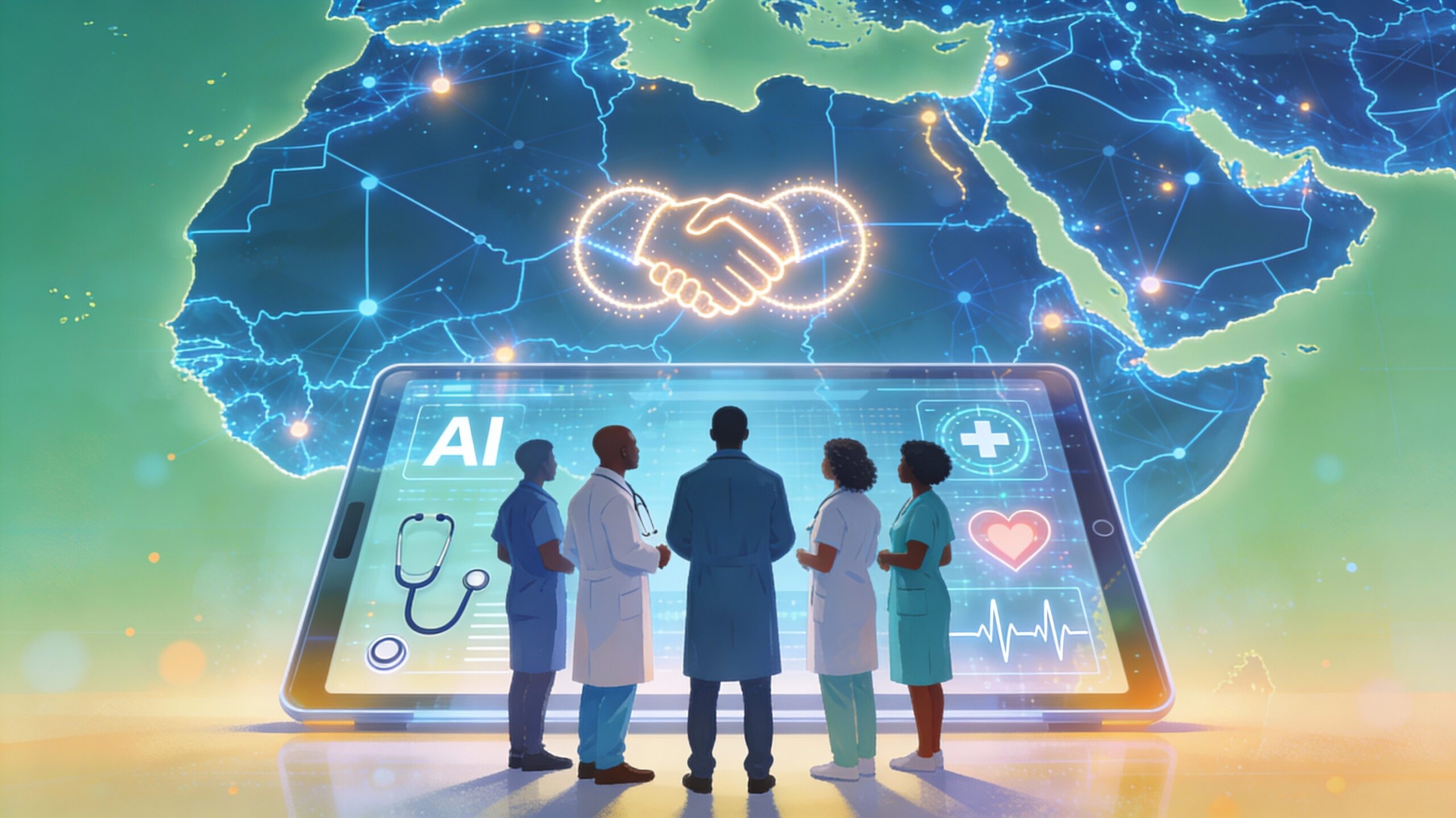
- 1. Gates Foundation and OpenAI Launch Million Partnership for African Health AI
- Headline: January 21 Announcement Targets Health System Modernization Through Clinical Decision Support, Medical Records, Disease Surveillance, and Healthcare Worker Training
- 2. South Korea’s AI Basic Act Takes Effect January 22 With Comprehensive Regulatory Framework
- Headline: Landmark Legislation Implements Mandatory Watermarking, Transparency Requirements, and Oversight Balancing Innovation Acceleration With Trust and Safety
- 3. Davos Consensus Places AGI 5-10 Years Away While Acknowledging “Missing Ingredients”
- Headline: Google DeepMind CEO Hassabis Extends Timeline Beyond Anthropic and OpenAI’s 2026-2027 Projections as Earlier Goals Slip With Isomorphic Targeting Late 2026 Clinical Trials
- 4. “Too Big to Fail” Concerns Emerge as AI Infrastructure Spending Reaches 0 Billion Annually
- Headline: Marketplace Analysis Warns Concentrated Tech Investment Creates Systemic Risk While Citrini Research CEO Predicts 2026 Job Losses Scarier Than Technology Failure
- 5. Goldman Sachs Predicts Mega-Partnerships and Personal Agents Will Define 2026 AI Evolution
- Headline: CIO Marco Argenti Forecasts Models Becoming Operating Systems, Context Replacing Scale, and Winner-Takes-Most Dynamics Creating Aerospace-Style Duopolies
- Conclusion: Humanitarian Deployment, Regulatory Maturation, AGI Timeline Recalibration, Systemic Risk Recognition, and Industry Consolidation Define AI’s 2026 Inflection
Top 5 Global AI News Stories for January 22, 2026: Gates-OpenAI Africa Partnership, Regulatory Frameworks, and “Too Big to Fail” Concerns Emerge
The artificial intelligence industry on January 22, 2026, reached a critical juncture characterized by major humanitarian AI deployment through Gates Foundation-OpenAI’s $50 million partnership bringing health systems modernization to African countries, South Korea’s landmark AI Basic Act implementation establishing comprehensive regulatory framework balancing innovation with trust requirements, Davos World Economic Forum consensus placing artificial general intelligence 5-10 years away while acknowledging missing ingredients, mounting concerns that $400 billion annual AI infrastructure spending creates “too big to fail” systemic risk comparable to 2008 financial crisis, and Goldman Sachs predictions that 2026 will witness mega-partnerships creating winner-takes-most dynamics as AI transitions from experimental chatbots toward agentic operating systems. The Gates Foundation and OpenAI established $50 million partnership announced January 21, 2026, to help African countries deploy artificial intelligence for health system improvements including clinical decision support, medical record management, disease surveillance, and healthcare worker training—representing major philanthropic commitment bringing advanced AI capabilities to resource-constrained environments through OpenAI’s models and Gates Foundation’s operational expertise in global health delivery across malaria, HIV, maternal mortality, and infectious disease control. South Korea’s amended Artificial Intelligence Basic Act took effect January 22, 2026, implementing comprehensive regulatory framework combining industrial promotion with mandatory watermarking, transparency requirements, accountability mechanisms, and oversight structures across public and private AI deployments—representing Asia-Pacific’s most systematic AI governance regime as nation positions to become “global AI leader” balancing innovation acceleration with trust and safety imperatives. Davos World Economic Forum revealed AI industry consensus that artificial general intelligence remains 5-10 years away according to Google DeepMind CEO Demis Hassabis, exceeding timelines suggested by Anthropic and OpenAI executives who previously indicated 2026-2027 arrival, while acknowledging “missing ingredients” and noting earlier ambitious timelines already slipping as Isomorphic drug discovery targets late 2026 clinical trials versus 2025 goals. Marketplace and financial analysts raised concerns that AI’s $400 billion annual infrastructure spending by big tech companies creates “too big to fail” systemic risk where technology sector becomes so economically significant that government intervention would be required if investments fail to deliver returns, with Citrini Research CEO James van Geelen warning “2026 is probably the year that we start seeing people losing their jobs and those jobs ceasing to exist”—framing employment displacement as greater societal threat than technology failure. Goldman Sachs CIO Marco Argenti predicted that 2026 will witness unprecedented AI evolution including models becoming new operating systems, context replacing scale as innovation frontier, personal agents arriving to automate multi-step tasks, and mega-partnerships creating winner-takes-most dynamics where only handful of major players can compete due to network effects and scale requirements comparable to aerospace industry duopolies. These developments collectively illustrate how global AI trends are transitioning from pure technology development toward humanitarian deployment in developing regions, systematic regulatory frameworks balancing innovation with governance, realistic AGI timeline recalibration acknowledging technical challenges, recognition of systemic economic risks from concentrated AI infrastructure investment, and industry consolidation around mega-partnerships creating structural barriers to new market entrants.reuters+4
1. Gates Foundation and OpenAI Launch Million Partnership for African Health AI
Headline: January 21 Announcement Targets Health System Modernization Through Clinical Decision Support, Medical Records, Disease Surveillance, and Healthcare Worker Training
The Gates Foundation and OpenAI established $50 million partnership announced January 21, 2026, to help African countries deploy artificial intelligence for health system improvements including clinical decision support algorithms, electronic medical record management, disease surveillance platforms, and healthcare worker training systems—representing major philanthropic commitment bringing advanced AI capabilities to resource-constrained environments through OpenAI’s large language models and Gates Foundation’s operational expertise in global health delivery across malaria, HIV/AIDS, maternal mortality, tuberculosis, and infectious disease control.[reuters]
Partnership Structure and Strategic Objectives:
Gates-OpenAI collaboration combines complementary organizational strengths:[reuters]
$50 Million Total Investment: Partnership funded jointly by Gates Foundation philanthropic capital and OpenAI technical resources over multi-year deployment timeline.[reuters]
African Country Focus: Initiative targets health systems across African continent where infrastructure gaps, healthcare worker shortages, and resource constraints create opportunities for AI-enabled leapfrogging.[reuters]
Health System Modernization: Comprehensive approach addressing clinical care, administrative efficiency, epidemiological surveillance, and workforce capacity building rather than isolated point solutions.[reuters]
Reuters Coverage: Major international news service reporting signals mainstream recognition of AI’s humanitarian deployment potential beyond commercial applications.[reuters]
Specific Application Domains:
Partnership targets concrete health system challenges:[reuters]
Clinical Decision Support: AI algorithms assisting healthcare workers with diagnosis, treatment selection, and patient management in settings lacking specialist physicians—particularly valuable for complex conditions requiring expertise unavailable in rural clinics.[reuters]
Medical Record Management: Electronic health record systems enabling patient information continuity, treatment coordination, and population health analysis where paper-based systems currently predominate.[reuters]
Disease Surveillance: AI-powered epidemiological monitoring identifying outbreak patterns, tracking disease spread, and enabling rapid public health responses—critical for malaria, tuberculosis, HIV, and emerging infectious threats.[reuters]
Healthcare Worker Training: AI-assisted education and clinical skill development for nurses, community health workers, and physicians addressing workforce capacity constraints through scalable training platforms.[reuters]
Gates Foundation Global Health Expertise:
Partnership leverages foundation’s decades of African health system experience:[reuters]
Malaria Programs: Foundation’s extensive work on malaria prevention, treatment, and eradication provides operational infrastructure and relationships enabling AI deployment.[reuters]
HIV/AIDS Initiatives: Decades of HIV prevention, treatment access, and care delivery create established healthcare networks where AI tools can integrate.[reuters]
Maternal and Child Health: Foundation’s maternal mortality reduction and child health programs offer deployment pathways for AI clinical decision support.[reuters]
Infrastructure Investments: Prior investments in health clinics, supply chains, and community health worker networks provide physical infrastructure where AI systems can operate.[reuters]
OpenAI Technology Contribution:
Company provides advanced AI capabilities and implementation support:[reuters]
Large Language Models: GPT-4 and future models enabling natural language interaction, medical knowledge synthesis, and clinical reasoning support.[reuters]
Model Adaptation: Customizing foundation models for African languages, local disease patterns, treatment protocols, and resource-constrained clinical environments.[reuters]
Technical Implementation: Engineering support deploying AI systems in low-connectivity, limited-infrastructure settings requiring offline capabilities and mobile optimization.[reuters]
Continuous Improvement: Iterative model refinement based on real-world deployment feedback, clinical validation, and healthcare worker input.[reuters]
Original Analysis: The Gates Foundation-OpenAI $50 million partnership represents significant validation that AI’s transformative potential extends beyond wealthy nations toward addressing global health inequities in resource-constrained African settings. The collaboration proves strategically logical: Gates Foundation brings decades of operational experience navigating African health systems, regulatory environments, cultural contexts, and on-the-ground implementation challenges, while OpenAI provides cutting-edge AI capabilities potentially enabling healthcare quality leaps impossible through traditional capacity building. Clinical decision support specifically addresses acute need: African countries face severe physician shortages with ratios of 1:10,000+ patients versus wealthy nations’ 1:300, creating situations where community health workers and nurses manage complex conditions beyond their training—AI algorithms providing expert guidance could dramatically improve outcomes. However, substantial implementation challenges remain: low internet connectivity requiring offline AI operation, electricity unreliability necessitating battery-powered or solar solutions, integration with existing paper-based or basic digital systems, and ensuring AI recommendations align with available treatments and local protocols rather than reflecting Western medical practices. The partnership’s success hinges on whether deployment achieves genuine healthcare improvements measurable through reduced mortality, increased diagnosis accuracy, or expanded access—requiring rigorous evaluation distinguishing AI’s contributions from concurrent health system investments and avoiding technological solutionism assuming AI fixes systemic resource constraints, governance challenges, or supply chain limitations.
2. South Korea’s AI Basic Act Takes Effect January 22 With Comprehensive Regulatory Framework
Headline: Landmark Legislation Implements Mandatory Watermarking, Transparency Requirements, and Oversight Balancing Innovation Acceleration With Trust and Safety
South Korea’s amended Artificial Intelligence Basic Act took effect January 22, 2026, implementing comprehensive regulatory framework combining industrial promotion policies with mandatory AI-generated content watermarking, algorithmic transparency requirements, accountability mechanisms, and multi-agency oversight structures across public and private sector deployments—representing Asia-Pacific region’s most systematic AI governance regime as nation positions to become “global AI leader” through approach balancing innovation acceleration with trust, safety, and ethical imperatives.[babl]
Legislative Framework and Implementation Timeline:
South Korea’s AI Act establishes comprehensive governance architecture:[babl]
January 22, 2026 Effective Date: Legislation entering force following amendment process and regulatory development enabling immediate implementation and enforcement.[babl]
“Artificial Intelligence Basic Act” Title: Foundational legislation establishing overarching AI governance principles, institutional structures, and regulatory requirements rather than sector-specific rules.[babl]
Revised and Amended Status: Current law represents modification of earlier AI framework reflecting lessons from initial implementation and evolving international AI governance approaches.[babl]
Public and Private Coverage: Requirements apply across government AI deployments and commercial applications ensuring consistent standards rather than bifurcated regulatory regimes.[babl]
Core Regulatory Requirements:
The Act implements specific mandatory obligations:[babl]
Watermarking Mandates: AI-generated content must include technical markers enabling identification of synthetic media, addressing deepfake concerns and misinformation risks.[babl]
Transparency Requirements: Organizations deploying AI must disclose system capabilities, limitations, training data characteristics, and decision-making processes enabling informed user decisions.[babl]
Accountability Mechanisms: Clear liability frameworks assigning responsibility for AI system failures, harms, or malfunctions across developers, deployers, and users.[babl]
Oversight Structures: Multi-agency governance involving science ministry, regulatory agencies, and sectoral authorities coordinating AI policy implementation and enforcement.[babl]
Trust and Safety Provisions: Requirements addressing algorithmic bias, fairness, privacy protection, and human rights ensuring AI deployments align with democratic values.[babl]
Industrial Policy Integration:
Legislation combines governance with innovation promotion:[babl]
“Global AI Leader” Positioning: South Korea explicitly targeting international leadership in AI development, deployment, and governance establishing model for responsible innovation.[babl]
Industrial Promotion Measures: Investment incentives, research funding, talent development programs, and infrastructure support accelerating domestic AI industry competitiveness.[babl]
Innovation-Safety Balance: Framework designed to enable AI experimentation and commercialization while implementing safeguards preventing harms—avoiding EU AI Act’s more restrictive approach.[babl]
Competitiveness Considerations: Recognition that overly burdensome regulation could disadvantage Korean companies versus less regulated jurisdictions like United States or China.[babl]
Regional and International Context:
South Korea’s approach occurs within broader Asia-Pacific AI governance landscape:[babl]
Japan Coordination: Alignment with Japanese AI strategies including January 16 Japan-ASEAN cooperation agreement on AI development indicating regional governance convergence.[babl]
China Comparison: South Korea’s transparency and accountability requirements contrast with China’s state-directed AI governance prioritizing social stability and party control.[babl]
EU AI Act Alternative: Korean framework offers middle path between European Union’s comprehensive risk-based regulation and United States’ sector-specific voluntary approach.[babl]
OECD AI Principles: Legislation incorporates OECD AI governance recommendations reflecting South Korea’s integration with Western democratic technology governance frameworks.[babl]
Original Analysis: South Korea’s AI Basic Act implementation on January 22, 2026, represents Asia-Pacific’s most comprehensive attempt to establish systematic AI governance balancing innovation acceleration with trust, safety, and accountability requirements. The mandatory watermarking provision specifically addresses acute concern about synthetic media’s potential to enable misinformation, deepfakes, and content authenticity crisis—though technical implementation challenges remain regarding tamper-resistant watermarks, retroactive application to existing content, and enforcement across international platforms. The legislation’s explicit “global AI leader” positioning reveals strategic intent: South Korea views AI governance not merely as risk management but as competitive advantage establishing international credibility, attracting responsible AI investment, and positioning Korean companies as trusted providers in markets increasingly demanding ethical AI. However, the framework faces inherent tension between innovation promotion and regulatory compliance: transparency requirements revealing training data and decision processes potentially expose proprietary methods, accountability mechanisms create liability concerns potentially chilling experimentation, and watermarking mandates impose technical costs disproportionately burdening startups versus established firms. The Act’s success depends on whether implementation achieves workable balance enabling Korean AI industry to compete globally while maintaining higher trust and safety standards than less regulated jurisdictions—or whether compliance burdens drive companies toward regulatory arbitrage deploying AI from permissive locations while serving Korean markets.
3. Davos Consensus Places AGI 5-10 Years Away While Acknowledging “Missing Ingredients”
Headline: Google DeepMind CEO Hassabis Extends Timeline Beyond Anthropic and OpenAI’s 2026-2027 Projections as Earlier Goals Slip With Isomorphic Targeting Late 2026 Clinical Trials
Davos World Economic Forum 2026 revealed AI industry consensus that artificial general intelligence remains 5-10 years away according to Google DeepMind CEO Demis Hassabis who stated the “path is becoming clearer” but still lacks “missing ingredients,” exceeding timelines suggested by Anthropic CEO Dario Amodei and OpenAI executives who previously indicated AGI could arrive as early as 2026-2027, while noting earlier ambitious timelines already slipping as Alphabet’s Isomorphic drug discovery startup now targets late 2026 clinical trials versus 2025 goals mentioned at last year’s Davos—suggesting industry recalibrating AGI expectations toward realistic multi-year development rather than imminent breakthroughs.[reuters]
AGI Timeline Projections and Industry Divergence:
Davos conversations revealed varied estimates for human-level AI arrival:[reuters]
Demis Hassabis (Google DeepMind): CEO projected AGI emergence in “five to ten years”—notably longer than competitors’ timelines suggesting Google’s more conservative or technically rigorous assessment.[reuters]
“Path Becoming Clearer” But “Missing Ingredients”: Hassabis characterized AGI development as increasingly well-understood technically but acknowledging specific unresolved challenges preventing near-term achievement.[reuters]
Anthropic and OpenAI Timelines: Executives from these companies previously suggested AGI could arrive “as early as 2026 or 2027″—significantly more aggressive projections than Google’s assessment.[reuters]
Timeline Divergence Significance: Variations reflect different AGI definitions, technical optimism levels, competitive positioning incentives, and genuine uncertainty about remaining research challenges.[reuters]
Reality Check: Slipping Milestones:
Concrete examples document timeline optimism recalibration:[reuters]
Isomorphic Labs Clinical Trials: Alphabet’s drug discovery spinoff now aims for “late 2026” first clinical trials—delayed from “2025 goal mentioned at last year’s conference”.[reuters]
One-Year Slip Documentation: Reuters explicitly noting twelve-month delay between consecutive Davos presentations provides concrete evidence of overly optimistic prior projections.[reuters]
Pattern Recognition: Isomorphic delay exemplifies broader phenomenon where AI capabilities advance but slower than enthusiastic forecasts suggested—requiring iterative timeline adjustments.[reuters]
Drug Discovery Complexity: Delays partly reflect genuine challenges translating AI predictions into validated therapeutic candidates passing safety and efficacy requirements rather than pure AI capability limitations.[reuters]
Davos Context and Industry Sentiment:
World Economic Forum provides bellwether for AI industry perspectives:[reuters]
“AI and Trump” Dominance: Reuters characterized this year’s Davos as having “two primary topics dominating discussions: AI and President Donald Trump”—reflecting technology’s centrality to global economic and political conversations.[reuters]
Anthropic’s Davos Office: Company establishing “first office on the main thoroughfare” despite being “relatively unknown just a few years back” signals rapid industry emergence and aggressive enterprise customer pursuit.[reuters]
Google Press Conference Scale: “Fourth consecutive year” hosting Davos press conference with “largest audience to date” indicates sustained and growing mainstream interest in AI developments.[reuters]
Optimism Persists Despite Reality Checks: While timelines adjust, fundamental conviction about AI’s transformative potential remains strong among business and political leaders.[reuters]
Technical and Commercial Challenges:
Hassabis and others acknowledged obstacles beyond pure capability development:[reuters]
Missing Ingredients Unspecified: DeepMind CEO didn’t elaborate on specific technical barriers—potentially involving reasoning capabilities, world modeling, generalization, or emergent properties.[reuters]
Meta’s Superintelligence Team: CTO hinted new model developed internally with “high expectations” following “costly talent acquisition battle” and “recent setbacks with Llama”—suggesting even well-resourced efforts face challenges.[reuters]
Job Losses Candidness: Anthropic CEO Dario Amodei “candid in warnings about potential job losses as AI capabilities advance”—acknowledging social disruption even as AGI timeline extends.[reuters]
Policy Concerns: Amodei criticized “U.S. policies that permit advanced American chips to be sent to China”—highlighting geopolitical dimensions complicating pure technical development.[reuters]
Original Analysis: Davos 2026’s AGI timeline consensus—5-10 years per Google DeepMind versus Anthropic/OpenAI’s earlier 2026-2027 projections—documents industry-wide recalibration away from imminent breakthroughs toward realistic multi-year development acknowledging unresolved technical challenges. Demis Hassabis’s “missing ingredients” characterization proves particularly notable: even as leading researchers gain clarity on AGI development pathways, specific technical obstacles remain preventing near-term achievement—potentially involving reasoning consistency, common sense understanding, transfer learning, or emergent general intelligence properties resisting incremental scaling. The Isomorphic clinical trial delay from 2025 to late 2026 provides concrete documentation that AI capabilities translate to real-world applications slower than enthusiastic projections suggest: drug discovery AI can predict promising molecules but validating candidates through preclinical studies, toxicology, and trial preparation involves irreducible biological and regulatory timelines independent of algorithmic improvements. For industry strategy, the timeline divergence creates interesting dynamics: companies projecting imminent AGI potentially attract investment and talent based on excitement but risk credibility damage if predictions fail, while conservative timelines may appear less ambitious but avoid overpromising and position companies as technically rigorous. The broader implication suggests that while AI continues rapid advancement, transformative capabilities like human-level general intelligence remain sufficiently distant that organizations should plan for incremental capability improvements rather than revolutionary discontinuities fundamentally restructuring society within 1-2 years.
4. “Too Big to Fail” Concerns Emerge as AI Infrastructure Spending Reaches 0 Billion Annually
Headline: Marketplace Analysis Warns Concentrated Tech Investment Creates Systemic Risk While Citrini Research CEO Predicts 2026 Job Losses Scarier Than Technology Failure
Marketplace and financial analysts raised concerns that artificial intelligence’s $400 billion annual infrastructure spending by big tech companies creates “too big to fail” systemic risk where technology sector becomes so economically significant that government intervention would be required if investments fail to deliver returns, with big tech data center expenditures outpacing consumer spending in first half of 2025 and expected to grow further in 2026, while Citrini Research founder and CEO James van Geelen warned that “2026 is probably the year that we start seeing people losing their jobs and those jobs ceasing to exist”—framing employment displacement as greater societal threat than technology failure risk.[marketplace]
Infrastructure Investment Scale and Economic Significance:
AI spending reached unprecedented levels creating systemic importance:[marketplace]
$400 Billion Annual Expenditure: Big tech companies collectively spent approximately $400 billion on data center buildout, AI chips, power infrastructure, and related capital investments in 2025.[marketplace]
Consumer Spending Comparison: AI infrastructure expenditures “outpacing consumer spending in the first half of 2025″—indicating technology investment rivaling entire consumer sector as economic driver.[marketplace]
2026 Growth Expectations: Analysts project further increases in AI capital spending during 2026 as companies race to expand compute capacity and establish competitive positions.[marketplace]
Nvidia Stock Performance: Chip manufacturer “up almost 40% last year” while “Alphabet was up around 65%”—demonstrating how AI investment drives market valuations and concentrates wealth.[marketplace]
“Too Big to Fail” Systemic Risk Characterization:
Financial analysts drawing parallels to 2008 financial crisis dynamics:[marketplace]
Systemic Importance Threshold: When sector becomes so economically significant that failure would trigger cascading economy-wide disruptions requiring government intervention to prevent collapse.[marketplace]
Search Results Proliferation: Term “too big to fail” searches “aren’t all just about the Great Recession” anymore but “popping up in relation to the artificial intelligence sector”.[marketplace]
Government Intervention Implications: If $400 billion+ investments fail to generate returns, political pressure for bailouts or intervention comparable to banking sector support during financial crisis.[marketplace]
Market Concentration: AI investment and capability concentrated among handful of tech giants (Microsoft, Google, Amazon, Meta, Apple) creating systemic vulnerability.[marketplace]
Employment Displacement Warnings:
Citrini Research CEO identified workforce impact as primary concern:[marketplace]
James van Geelen Quote: “2026 is probably the year that we start seeing people losing their jobs and those jobs ceasing to exist”—explicit prediction of permanent employment destruction.[marketplace]
“Scarier From Sociological Perspective”: Van Geelen emphasized employment displacement poses greater threat than technology failure: job losses create social disruption even if AI proves technically successful.[marketplace]
Technology Success Assumption: CEO “doesn’t believe the technology will fail” stating “even if the stock market were to go down, AI would still proceed as a technology”—suggesting employment impact inevitable regardless of investment returns.[marketplace]
Permanent Job Elimination: Distinction between temporary layoffs and jobs “ceasing to exist” implies structural labor market transformation rather than cyclical unemployment.[marketplace]
Investment-Return Tension:
Analysis highlights pressure for AI to deliver financial justification:[marketplace]
Return Requirements: $400 billion annual spending requires demonstrable productivity gains, revenue growth, and cost savings justifying capital deployment—creating pressure for rapid commercialization.[marketplace]
2026 as Inflection Year: Marketplace framing suggests 2026 may determine whether AI investments generate returns or prove speculative bubble requiring writedowns.[marketplace]
Deployment Urgency: Companies face imperative to move AI from experimental pilot projects toward production systems delivering measurable business value validating infrastructure spending.[marketplace]
Stock Market Dependence: While van Geelen claims AI would “proceed as technology” even if stocks decline, sustained investment requires capital market confidence preventing funding constraints.[marketplace]
Original Analysis: The “too big to fail” characterization of AI infrastructure investment—$400 billion annually outpacing consumer spending—captures profound concern that technology sector has achieved systemic economic importance where failure would necessitate government intervention comparable to 2008 banking crisis. The parallel proves apt: concentrated investment among handful of firms (Microsoft, Google, Amazon, Nvidia, Meta), assumption that continued investment essential for economic growth, and political impossibility of allowing major tech firms to collapse due to employment and market disruption they’d trigger. However, critical differences distinguish AI from pre-crisis banking: AI infrastructure builds real physical assets (data centers, chips, software) with residual value even if specific applications fail, versus mortgage securities whose value evaporated when housing bubble burst; AI capabilities demonstrably advance creating genuine if hard-to-monetize value, versus financial engineering creating illusory returns through leverage and risk obscurity. James van Geelen’s warning that 2026 employment displacement proves “scarier from sociological perspective than technology failure” captures crucial insight: even if AI succeeds technically and generates investment returns for shareholders, workforce disruption creates political instability, inequality, and social disruption potentially triggering backlash constraining further AI deployment regardless of economic efficiency. For policymakers, the “too big to fail” framing implies need for proactive frameworks addressing both financial systemic risk (if investments fail) and social systemic risk (if investments succeed but displace millions of workers)—requiring coordinated responses rather than allowing market dynamics alone to determine outcomes with potential for crisis-level disruption.
5. Goldman Sachs Predicts Mega-Partnerships and Personal Agents Will Define 2026 AI Evolution
Headline: CIO Marco Argenti Forecasts Models Becoming Operating Systems, Context Replacing Scale, and Winner-Takes-Most Dynamics Creating Aerospace-Style Duopolies
Goldman Sachs Chief Information Officer Marco Argenti predicted that 2026 will witness unprecedented AI evolution including models becoming new operating systems enabling autonomous task execution, context memory replacing model scale as innovation frontier, personal agents arriving to automate multi-step workflows like rebooking cancelled flights and rescheduling meetings, and mega-partnerships creating winner-takes-most dynamics where only handful of major players can compete due to network effects and scale requirements comparable to aerospace industry characterized by duopolies—asserting his 40 years in technology saw “biggest changes in 2025” but predicting “2026 will be an even bigger year for change”.[goldmansachs]
Seven AI Evolution Predictions:
Goldman Sachs CIO articulated comprehensive framework for 2026 developments:[goldmansachs]
1. AI Models as New Operating Systems: Rather than functioning as applications, AI models becoming platforms “independently accessing tools in order to perform tasks” comparable to how Windows or iOS enable app ecosystems.[goldmansachs]
2. Context as New Frontier: “AI engineers’ focus will shift from building ‘larger models’ to ‘better memory'”—prioritizing what models remember from previous discussions versus pure capability expansion.[goldmansachs]
3. Personal Agent Arrival: AI agents will “arrive” automating what “we do now with apps—manually, and in piecemeal fashion” including flight rebooking, meeting rescheduling, and restaurant ordering in coordinated workflows.[goldmansachs]
4. Outcome-Based Computing: Evolution “from static, hard-coded logic to outcome-based assistants that reprogram themselves” enabling more capable problem-solving.[goldmansachs]
5. Model Ownership as Strategic Control: “Those who own the models will own the new operating systems that power AI agents”—establishing winner-takes-most positioning.[goldmansachs]
6. Mega-Partnerships Creating Network Effects: “Headline partnerships and strategic alliances of unprecedented scale will reshape the AI landscape” through “self-reinforcing cycle where only a handful of major players are capable of competing”.[goldmansachs]
7. Aerospace-Style Industry Structure: AI “may come to resemble complex major industries like aerospace that are characterized by duopolies” due to scale requirements and capital intensity.[goldmansachs]
Personal Agent Capabilities and Impact:
Argenti provided concrete examples of agent functionality:[goldmansachs]
Multi-Step Workflow Automation: Single disruption (cancelled flight) triggering autonomous chain of actions: rebooking flight, rescheduling meetings, ordering food accounting for restaurant closures.[goldmansachs]
App Consolidation: Agents replacing “what we do now with apps—manually, and in piecemeal fashion” suggesting reduction in specialized applications as agents handle tasks across domains.[goldmansachs]
Agentic Capability Prerequisite: Functionality requires AI with “agentic capabilities”—autonomous action-taking, reasoning, and tool access rather than pure conversation.[goldmansachs]
2026 Arrival Timeline: Argenti explicitly predicting personal agents will “arrive” during 2026 indicating transition from experimental to mainstream availability.[goldmansachs]
Context and Memory as Competitive Moat:
Strategic emphasis shifting from model size to contextual understanding:[goldmansachs]
Training Data Saturation: Models “have been built from vast pools of data—they’ve scoured essentially the entire internet and then some in the form of synthetic data”.[goldmansachs]
Limited Context Problem: “The immediate context available to models—what they remember from previous discussions and tasks—is relatively tiny” compared to training corpus.[goldmansachs]
Memory as Differentiation: “Better memory” enabling “far more bespoke, customized responses” creates sustainable competitive advantage as model capabilities converge.[goldmansachs]
Personalization Opportunity: Models remembering user preferences, past interactions, and individual contexts providing customized experiences impossible with generic models.[goldmansachs]
Mega-Partnership Dynamics:
Industry consolidation creating structural barriers to competition:[goldmansachs]
“Game of Scale” Characterization: AI development and deployment requiring resources, partnerships, and infrastructure only achievable by largest organizations.[goldmansachs]
Network Effects: Strategic alliances creating “self-reinforcing cycle” where dominant platforms attract more users, developers, and partners amplifying advantages.[goldmansachs]
“Winner-Takes-Most” Structure: Unlike “winner-takes-all,” prediction allows for small number of survivors but expects dramatic concentration versus current fragmented landscape.[goldmansachs]
Aerospace Parallel: Comparison to industry “characterized by duopolies” (Boeing-Airbus commercial aviation) suggests 2-3 major AI platforms will dominate rather than diverse competitive ecosystem.[goldmansachs]
Career Context and Authority:
Argenti’s background establishing expertise for predictions:[goldmansachs]
40-Year Technology Career: Extensive experience providing historical perspective on technology evolution and change magnitude assessment.[goldmansachs]
Amazon Web Services VP Background: Prior role as “vice president of technology of Amazon Web Services” demonstrating cloud platform expertise directly relevant to AI infrastructure.[goldmansachs]
Goldman Sachs CIO Role: Current position managing AI deployment across major financial institution providing operational understanding of enterprise AI requirements.[goldmansachs]
Original Analysis: Goldman Sachs CIO Marco Argenti’s seven AI predictions for 2026—models as operating systems, context over scale, personal agents, mega-partnerships, and aerospace-style duopolies—represent authoritative articulation from enterprise AI deployment perspective of how technology transforms from experimental tools toward foundational infrastructure. The “models as operating systems” framing captures fundamental architectural shift: rather than applications performing specific tasks, AI models becoming platforms enabling diverse functionalities through tool access comparable to how iOS/Android enable app ecosystems—suggesting model ownership determines value capture similar to how Apple/Google control mobile economics through OS control. The context-over-scale prediction proves particularly insightful: as models approach training data saturation (having processed entire public internet plus synthetic data), differentiation shifts from pure capabilities toward personalized memory and contextual understanding creating user-specific value impossible to replicate through generic large models. Personal agent arrival in 2026 represents inflection from reactive chatbots toward proactive assistants autonomously handling multi-step workflows—though claim requires substantial progress in reliability, cost-effectiveness, and user trust beyond current capabilities. The mega-partnership and duopoly predictions reflect sober assessment that AI’s capital requirements, infrastructure needs, and network effects create structural barriers favoring 2-3 dominant players comparable to aerospace industry—suggesting current AI startup proliferation will consolidate dramatically through acquisitions, failures, and market dominance by vertically-integrated platforms controlling complete technology stacks from chips through user experiences.
Conclusion: Humanitarian Deployment, Regulatory Maturation, AGI Timeline Recalibration, Systemic Risk Recognition, and Industry Consolidation Define AI’s 2026 Inflection
January 22, 2026’s global AI news confirms fundamental industry transformation characterized by major humanitarian AI deployment extending benefits beyond wealthy nations, comprehensive regulatory frameworks implementing systematic governance, realistic AGI timeline recalibration acknowledging technical challenges, recognition of systemic economic risks from concentrated infrastructure investment, and authoritative predictions of industry consolidation creating winner-takes-most dynamics through mega-partnerships and scale requirements.reuters+4
Gates Foundation-OpenAI’s $50 million Africa partnership demonstrates AI’s humanitarian deployment potential bringing health system modernization to resource-constrained environments through clinical decision support, medical records, disease surveillance, and training—though success depends on navigating connectivity limitations, power constraints, and ensuring AI provides genuine health improvements versus technological solutionism. South Korea’s AI Basic Act implementation on January 22 establishes Asia-Pacific’s most comprehensive regulatory framework combining innovation promotion with mandatory watermarking, transparency requirements, and accountability mechanisms—representing middle path between EU’s restrictive approach and U.S. voluntary framework while creating template for responsible AI governance.reuters+1
Davos AGI timeline consensus placing human-level intelligence 5-10 years away per Google DeepMind CEO versus competitors’ earlier 2026-2027 projections documents industry recalibration toward realistic development acknowledging “missing ingredients,” with Isomorphic’s one-year clinical trial delay providing concrete evidence of overly optimistic prior forecasts. “Too big to fail” concerns emerging from $400 billion annual AI infrastructure spending highlight systemic economic risk requiring government intervention if investments fail, while employment displacement warnings frame workforce impact as scarier sociological threat than technology failure even if AI succeeds technically.marketplace+1
Goldman Sachs predictions of models becoming operating systems, context replacing scale, personal agents arriving, and mega-partnerships creating aerospace-style duopolies represent authoritative articulation of consolidation dynamics where only handful of vertically-integrated players controlling complete technology stacks can compete due to capital requirements and network effects. For stakeholders across the machine learning ecosystem and AI industry, January 22 confirms that sustainable positioning requires humanitarian deployment extending benefits equitably, proactive regulatory compliance implementing systematic governance, realistic capability assessment avoiding overpromising, recognition of systemic risks necessitating coordinated policy responses, and strategic partnerships or vertical integration achieving scale essential for long-term competitiveness in increasingly consolidated market structure.[goldmansachs]
Schema.org structured data recommendations: NewsArticle, Organization (for Gates Foundation, OpenAI, South Korea Ministry of Science and ICT, Google DeepMind, Goldman Sachs, Citrini Research, World Economic Forum), Person (for Demis Hassabis, Dario Amodei, Marco Argenti, James van Geelen), GovernmentOrganization (for South Korean government), Place (for African countries, South Korea, Davos Switzerland, global markets), Event (for World Economic Forum 2026), MedicalOrganization (for health systems)
All factual claims in this article are attributed to cited sources. Content compiled for informational purposes in compliance with fair use principles for news reporting.