
Table of Contents
- Antigravity IDE Extensions Investment Report
Antigravity IDE Extensions Investment Report
Category: Agentic software-development platform
Company Stage: Product line within Alphabet/Google
Founder or Founders: Developed by Google; no standalone founders
Headquarters: Mountain View, California, United States
Funding: Not separately funded; owned and financed by Alphabet
Business Model: Free individual tier plus Google AI subscriptions, Gemini Enterprise, Google Cloud usage, and enterprise contracts
Product Hunt Launch Date: 2026/08/21
Report Date: August 26, 2026
| Investment Metric | Assessment |
|---|---|
| Venture Potential | 88/100 |
| Unicorn Path | Already surpassed by parent |
| Valuation Attractiveness | Not Applicable to a standalone investment |
| Evidence Confidence | 96/100 |
| Final Decision | Hard Pass |
Executive Summary
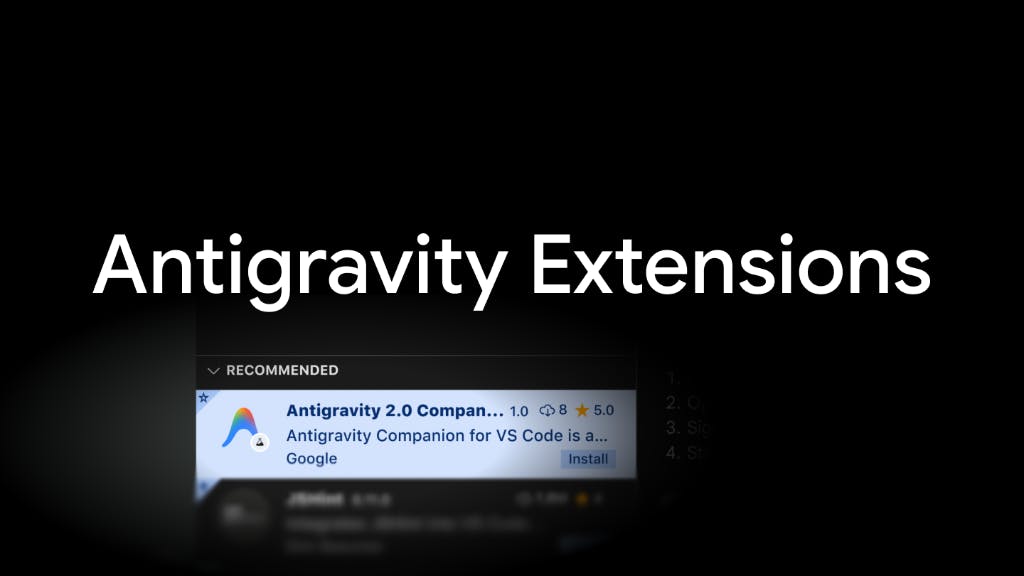
Antigravity IDE Extensions bring Google’s agentic coding platform into Visual Studio Code, Visual Studio, JetBrains IDEs, Zed, and Xcode. Developers can retain Antigravity conversations and shared context while reviewing inline diffs, inspecting agent plans, debugging code, and delegating multi-step engineering tasks without leaving their preferred editor.
The product addresses an important workflow gap. Google’s Antigravity 2.0 is optimized for autonomous multi-agent coordination, while traditional IDEs remain better for detailed code inspection and interactive debugging. Lightweight extensions connect the two surfaces instead of requiring every developer to abandon existing editor habits. Unified authentication spans desktop, CLI, and extensions; enterprise sessions can use Gemini Enterprise or Google Cloud credentials with IAM and VPC Service Controls.
The strategic opportunity is enormous. AI coding interfaces can increase Gemini consumption, Google Cloud workloads, developer loyalty, and enterprise data integration. Product Hunt shows four Antigravity launches, 2,300 followers, and a 4.6 rating across 19 reviews. The extensions ranked fifth on launch day. Google also inherits distribution across its AI, Cloud, Android, and developer ecosystems.
This is nevertheless not an early-stage investment opportunity. Antigravity is a Google product, not a separate company, and offers no standalone equity. Any financial exposure requires purchasing Alphabet shares and underwriting the entire public conglomerate, whose outcome will not be determined by this launch. A product-level venture report cannot responsibly infer Antigravity revenue, margins, or value from parent-company results.
Final decision: Hard Pass for this mandate. The decision reflects ownership and investability, not product weakness. Antigravity may become a major developer platform, but its upside accrues to Alphabet rather than an accessible early-stage entity.
Product Overview
The official announcement describes lightweight integrations for VS Code, Visual Studio, JetBrains, and Zed. Current documentation also lists Xcode. Users converse with agents in side panels, review granular diffs, inspect plans, and execute tasks while sharing context with Antigravity 2.0 and CLI.
The surrounding platform uses agents that read code, operate terminals and browsers, run tests, and produce reviewable artifacts. Developers can set terminal execution, review, and JavaScript policies. Antigravity plugins bundle skills, rules, MCP servers, and hooks. This makes the extension a distribution surface for a broader orchestration system rather than a standalone autocomplete feature.
Individual developers sign in with Google accounts under any Antigravity plan, including free. Enterprise users authenticate with Gemini Enterprise or Google Cloud project credentials. Google states that enterprise data is not used to train foundation models and that interactions respect organizational IAM and VPC Service Controls. JetBrains and Zed enterprise support remains in preview, as does Visual Studio.
The product’s strength is continuity: an agent can plan or run work in the dedicated manager, while the human examines implementation details in an established editor. The main product risk is fragmentation across extensions, desktop, CLI, accounts, quotas, and policy surfaces.
Founder and Team Assessment
There are no standalone founders. Google’s Antigravity team benefits from Alphabet’s model research, cloud infrastructure, security organization, distribution, procurement relationships, and ability to subsidize a free tier. That resource advantage is unmatched by most startups.
Public materials do not disclose the specific leadership, headcount, budget, internal adoption, or accountability for the extensions. Product consolidation has already occurred: Google unified earlier Gemini CLI and Code Assist efforts into Antigravity. Consolidation can improve focus, but user discussions show migration confusion and concerns about the future of the standalone IDE.
Founder Assessment: World-class parent resources; no separately investable team, capitalization, or governance.
Market Opportunity
Professional software development is a global, high-value market, and coding agents can expand spend from per-seat tools into model tokens, sandboxes, testing, data, and cloud deployment. Google can monetize Antigravity indirectly through Gemini plans, enterprise agreements, and Google Cloud consumption.
An illustrative scenario of 20 million professional developers spending $600 annually on AI coding would represent $12 billion in annual category revenue. Additional cloud workloads could be larger. This is a market scenario, not Google guidance.
The key strategic contest includes Microsoft/GitHub, OpenAI, Anthropic, Amazon, Cursor, JetBrains, and open-source agents. Google’s advantages are models, cloud, Android, enterprise distribution, and multiple IDE surfaces. The market is venture-scale, but it is being contested by the world’s largest technology companies.
Market Assessment: Extremely large and strategic.
Traction and Growth Signals
Product Hunt lists 2,300 followers and 19 reviews for the Antigravity family. The original November 2025 launch received 596 points and ranked second; Antigravity 2.0 received 295 points, CLI received 258, and the new extensions ranked fifth. Product Hunt activity is awareness, not PMF.
The extension announcement arrived across major editors immediately. Official documentation and Google Codelabs support onboarding, authentication, policy configuration, and Cloud data tools. This is stronger launch infrastructure than most startups can provide.
Independent community posts show both enthusiasm for official VS Code support and complaints about repeated backend downloads, MCP failures, missing history, and confusion after the 2.0 transition. These are anecdotal early reports, but they identify reliability and migration risks.
No standalone metrics were found for installs, active developers, task success, retained usage, paid conversion, token consumption, enterprise seats, or revenue.
Traction Assessment: Powerful launch distribution and product-family awareness; commercial and retention evidence is not isolated.
Competitive Position
Competitors include GitHub Copilot and coding agent, Claude Code, Codex, Cursor, Windsurf, JetBrains AI, Amazon Q, Gemini’s own predecessor tools, and open-source CLIs. Microsoft controls VS Code and GitHub; JetBrains controls important IDE distribution; Anthropic and OpenAI lead strong coding-agent brands.
Antigravity differentiates through multi-agent orchestration, shared cross-surface context, browser operation, artifacts, Google models, Google Cloud governance, and support across competing IDEs. Its parent can integrate deeply with Gemini Enterprise, IAM, VPC Service Controls, Android, and Cloud data services.
The moat is high at the platform level but not absolute. Model quality shifts quickly, editors can restrict integrations, and enterprises may choose model-neutral orchestration. Cross-platform extensions reduce dependence on a proprietary IDE while also making the user relationship partly controlled by Microsoft, JetBrains, Apple, or Zed.
Defensibility Assessment: High
Business Model and Economics
Free individual access seeds usage. Revenue can arise through Google AI Pro/Ultra, Gemini Enterprise, Cloud projects, model inference, and related developer infrastructure. Pricing and unit economics specific to Antigravity Extensions are not published.
Cost drivers include Gemini inference, context processing, tool execution, browser and terminal sandboxes, support, security, and continued maintenance across five IDE families. Enterprise margins depend on token efficiency, cache reuse, task success, and how much agent activity creates profitable Cloud consumption.
Because Alphabet does not separate Antigravity financials, product-level ARR, gross margin, CAC, retention, and payback cannot be assessed.
Unicorn Path
Alphabet already exceeds the unicorn threshold by orders of magnitude. Antigravity cannot be independently valued because Google owns the product and does not report separate economics.
A conventional startup path—winning developers, converting teams, and reaching $100 million ARR—may be strategically relevant, but it cannot create a standalone venture return. Its value is embedded in Gemini and Cloud adoption.
Unicorn Path: Already surpassed by parent; not applicable standalone.
Valuation Assessment
There is no Antigravity financing round, cap table, valuation, or purchasable private equity. Buying Alphabet stock would require a public-equity analysis of advertising, Cloud, Search, YouTube, capital expenditure, regulation, and consolidated cash flows, which is outside this product screen.
Valuation Attractiveness: Not Applicable to a standalone investment
Key Risks
- No standalone investable entity.
- Product economics are not separately disclosed.
- Microsoft, Anthropic, OpenAI, Amazon, and Cursor compete aggressively.
- Multi-agent execution can create unsafe code or uncontrolled spend.
- Broad file, terminal, browser, and cloud access increases security exposure.
- Editor-platform owners control important distribution.
- Product consolidation and migrations can disrupt users.
- Preview support may be unreliable across IDEs.
- Free access may subsidize heavy inference without conversion.
- Alphabet-scale considerations overwhelm product-specific upside.
Final Assessment
Venture Potential: 88/100
| Category | Score |
|---|---|
| Market Size and Expansion Potential | 20/20 |
| Traction and Growth Evidence | 16/20 |
| Founder and Team | 15/15 |
| Product Strength | 9/10 |
| Distribution Potential | 15/15 |
| Business Model and Economics | 7/10 |
| Defensibility | 6/10 |
| Total | 88/100 |
Evidence Confidence: 96/100
Ownership, product scope, supported IDEs, enterprise controls, launch history, and official positioning are primary-source supported. Product-specific financials and usage are unavailable.
Final Decision: Hard Pass
Antigravity IDE Extensions are strategically promising but wholly owned by Google. There is no early-stage standalone investment, so this mandate must pass regardless of product potential.
Upgrade Conditions
- A separately capitalized spinout with accessible equity.
- Audited standalone usage, retention, revenue, and margins.
- Investment terms offering venture-scale upside.
- Clear IP and commercial independence from Google.
Downgrade Conditions
- Google deprecates or repeatedly consolidates the product.
- Extension reliability or migrations damage developer trust.
- Enterprise adoption favors model-neutral competitors.
- Security incidents emerge from agent tool access.
Questions for Further Diligence
- What are extension installs and weekly active developers by IDE?
- What are task-success and 12-week retention rates?
- How much usage converts to paid Gemini or Cloud accounts?
- Which workloads run locally versus in Google infrastructure?
- How are permissions enforced across desktop, CLI, and editor sessions?
- What audit records exist for agent file, terminal, and browser actions?
- How are prompt injection and secret exposure mitigated?
- What is the roadmap for preview enterprise integrations?
- Why did Google consolidate earlier coding tools, and what migration churn resulted?
- What are inference cost and gross margin per active developer?
- Is any spinout or separate capitalization contemplated?
- How does Google measure Antigravity’s strategic return?