
Table of Contents
Grok Bot Investment Report
Category: Autonomous AI agents / knowledge-work automation
Company Stage: Beta product within public company SpaceX; not an independent startup
Founder or Founders: No standalone founders; developed by SpaceXAI and Cursor. SpaceX/xAI founder: Elon Musk
Headquarters: Starbase, Texas, United States (parent company)
Funding: No standalone funding; xAI raised a $6 billion Series C before being acquired by SpaceX
Business Model: Bundled consumer and team subscriptions plus usage-based overages; future enterprise plans
Product Hunt Launch Date: August 12, 2026
Report Date: August 15, 2026
| Investment Metric | Assessment |
|---|---|
| Venture Potential | 74/100 |
| Unicorn Path | Conditional |
| Valuation Attractiveness | Not Assessable |
| Evidence Confidence | 64/100 |
| Final Decision | Watch |
Executive Summary
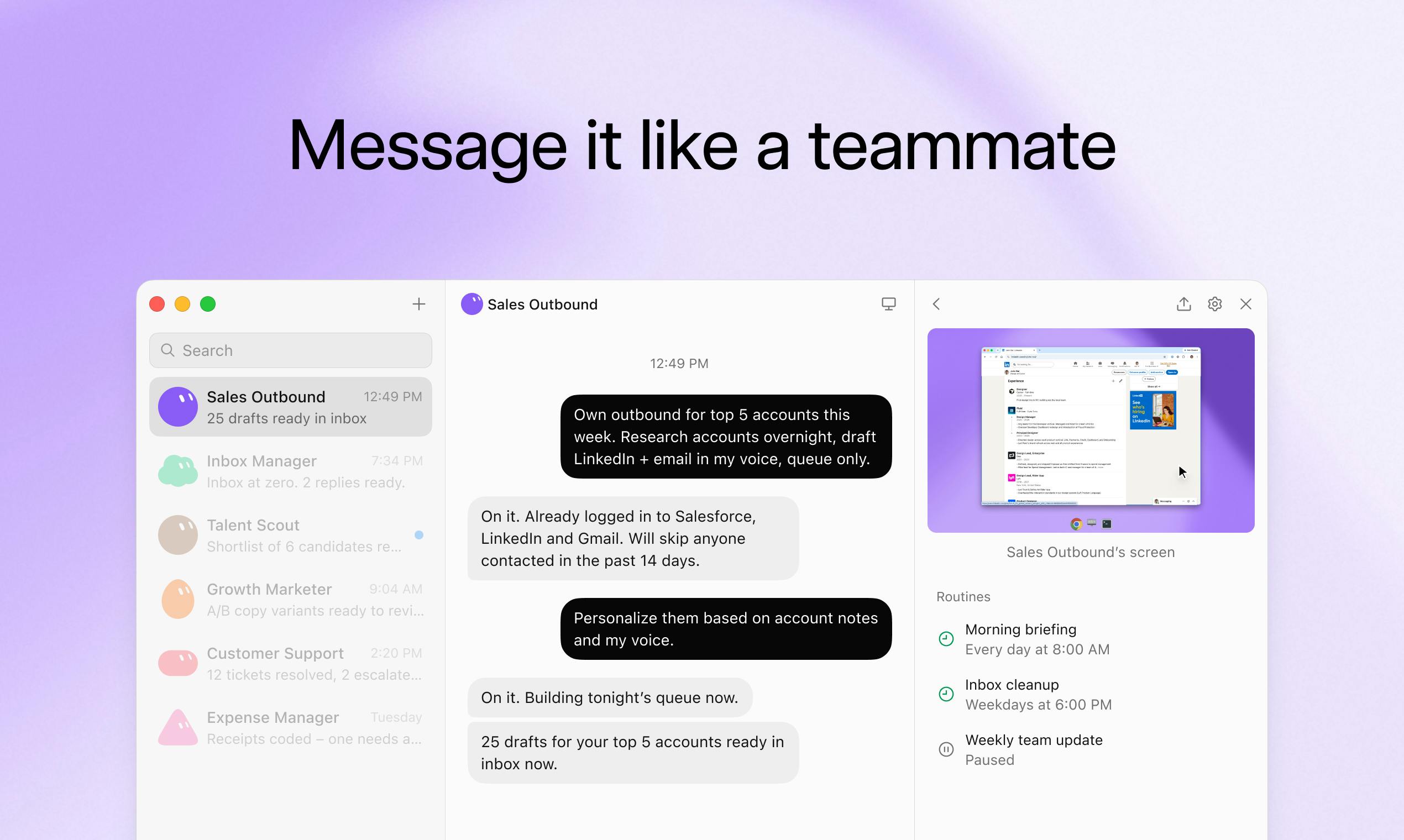
Grok Bot is a beta AI-agent product that gives users persistent cloud-based “coworkers.” Bots can operate browsers, command lines, connected services, and files; retain role-specific context; coordinate with other bots; and continue working after the user closes the application. It is intended to complete multi-step work rather than merely generate instructions or drafts (SpaceXAI announcement).
The initial audience is technically comfortable professionals and small teams willing to pay $120–$300 per month for autonomous sales, operations, research, recruiting, engineering, and administrative work. The product is bundled with Cursor Ultra, SuperGrok Heavy, and Cursor Premium Teams rather than sold as a clearly attributable standalone subscription (pricing).
Product quality appears promising. Persistent computers, cross-application browser use, multi-bot coordination, teach-by-demonstration, scheduled routines, and human approval gates form a more complete agent product than a conventional chatbot. Early App Store evidence is positive but limited: 4.1/5 from only 37 ratings, insufficient to establish satisfaction or retention (App Store).
The strongest investment signal is distribution and technical capacity. Grok Bot can be cross-sold through Grok and Cursor and financed by SpaceXAI’s model, compute, and engineering infrastructure. The parent is already far beyond venture scale. However, Grok Bot-specific users, revenue, retention, gross margin, and enterprise adoption have not been disclosed.
The principal concern is that this is neither an independently investable startup nor a validated business line. It competes against OpenAI, Anthropic, Microsoft, Google, and specialized agent platforms, while requiring unusually broad access to sensitive customer systems. Final Decision: Watch pending product-level commercial and retention evidence.
Product Overview
Grok Bot addresses the gap between AI-generated advice and completed work. A user creates role-specific bots, gives them access to a shared cloud computer, signs into relevant services, and delegates tasks through chat. Bots can use connectors or navigate actual interfaces when APIs are unavailable.
Core functionality includes persistent browser sessions, files and credentials shared across a user’s bots, parallel agents, inter-bot messaging, scheduled routines, reusable skills, and human takeover for passwords, two-factor authentication, CAPTCHAs, and payment confirmations (documentation). Supported clients include macOS, Windows, and iOS; Linux, Android, and iPad were unavailable at launch (FAQ).
Pricing is $200 monthly through Cursor Ultra, $300 through SuperGrok Heavy, or $120 per seat monthly through Cursor Premium Teams. Plans include weekly usage, with additional usage potentially billed based on model and token costs (official pricing). The iOS listing offers a $259.99 Ultra in-app purchase, likely reflecting different channel economics, but no product-level revenue allocation is disclosed.
The product replaces manual browser work, fragmented chat sessions, API-based automation setup, and portions of junior coordination or operations work. Its main benefit is task completion across existing tools without requiring users to design formal workflows first.
Founder and Team Assessment
Grok Bot has no identifiable standalone founding team. SpaceXAI states that the product began as an internal prototype used for outbound sales, marketing, office operations, and bug fixing, but these are company-reported use cases rather than independent customer validation (launch announcement).
SpaceX acquired xAI effective February 2, 2026, according to both the company and its SEC registration statement (official notice; SEC S-1). Cursor’s parent, Anysphere, subsequently announced that its acquisition by SpaceX had been completed (Cursor announcement). The App Store still identifies Anysphere as Grok Bot’s seller.
This organization provides exceptional model, compute, product, and distribution resources. Conversely, the specific Grok Bot team size, leadership, hiring plan, and commercial ownership are not publicly disclosed. Key-person risk is lower at the engineering level than for a typical startup, but strategic dependence on Elon Musk and a complex conglomerate remains meaningful.
Founder Assessment: Exceptional organizational resources and demonstrated technical execution, but the specific product team and commercial accountability are not publicly verifiable.
Market Opportunity
The narrow initial market is high-value knowledge workers and small teams already paying for premium AI—particularly sales operations, recruiting, research, software, and founder-led administration—where completed repetitive work can justify $1,440–$3,600 per seat annually.
An illustrative, analyst-assumption market comprises 1–5 million global power users with sufficient workflow complexity and willingness to pay. At $1,440–$3,600 annually, that implies a broad potential revenue pool of approximately $1.4–$18 billion. This is not a verified market-size figure; the range depends on autonomy reliability, security acceptance, and incremental value relative to cheaper AI subscriptions.
Adjacent opportunities include enterprise agent administration, vertical agent templates, API access, workflow marketplaces, transaction-based actions, and international deployment. Market timing is favorable because model capability increasingly supports computer use, but willingness to grant autonomous agents access to email, CRM, finance, and production systems remains uncertain.
The market can support venture-scale revenue, but Grok Bot must prove that autonomous execution creates sustained willingness to pay rather than short-lived experimentation.
Traction and Growth Signals
Grok Bot ranked second on Product Hunt’s August 12 daily leaderboard (Product Hunt leaderboard). This indicates launch interest, not product-market fit.
SpaceXAI reports internal adoption and a beta program involving hundreds of testers. These claims have not been accompanied by usage cohorts or external customer references. The iOS application’s 37 ratings and 4.1 score provide modest evidence of real usage but remain too small for robust conclusions (App Store).
Version 1.1 was released within days and addressed onboarding, chat, remote-computer control, reconnect failures, stale background chats, and other bugs. This demonstrates active iteration while also confirming early-product reliability issues.
No Grok Bot-specific revenue, downloads, active users, paid seats, task-completion rates, retention, or gross margin have been disclosed. The most important missing measures are weekly active paid users, successful autonomous task completion, 30/90-day retention, compute cost per completed task, and enterprise pilots.
Traction Assessment: Strong launch visibility and credible product activity, but commercially unverified.
Competitive Position
Direct competitors include OpenAI’s agentic workplace products, Anthropic Claude Cowork, Microsoft Copilot and Copilot Studio, Google’s enterprise agent platform, and Manus. Indirect alternatives include Zapier, Make, n8n, virtual assistants, internal automation scripts, and manual browser work.
Grok Bot differentiates through persistent cloud computers, conversational delegation, multiple coordinating bots, browser operation without an API, and distribution through both Grok and Cursor. Persistent user-specific context and learned routines could create workflow switching costs.
Defensibility is nevertheless incomplete. OpenAI, Anthropic, Microsoft, and Google can reproduce persistent computer-use agents and possess stronger enterprise channels or productivity-suite integration. Grok Bot’s advantages would need to come from superior completion reliability, lower inference cost, proprietary workflow data, and distribution through Cursor—not merely feature novelty.
If the largest platform launched the same feature within six months, customers would remain only if Grok Bot completed tasks more reliably, preserved valuable learned workflows, or was materially better integrated with Cursor and Grok. Public evidence does not yet prove those advantages.
Defensibility Assessment: Medium
Business Model and Economics
Revenue currently comes through bundled plans rather than a transparent standalone price. This supports cross-selling but obscures Grok Bot’s incremental revenue and makes product-level economics difficult to assess.
Potential variable costs include model inference, persistent cloud computers, storage, browser execution, connectors, support, and failed or repeated agent runs. Unattended routines may consume resources without producing customer value. iOS purchases also introduce App Store fees, although the higher listed in-app price may offset some channel cost.
Gross-margin potential could approach software levels only if task reliability improves faster than compute consumption and customers generate sufficient incremental subscription or usage revenue. No product-level gross margin, task cost, paid conversion, or customer-acquisition cost is available.
Enterprise revenue could be substantial, but adoption requires administrative controls, audit logs, data-retention policies, identity isolation, and contractual security assurances. Current documentation warns that bots share files, sessions, and credentials on one user-level computer and should not be treated as separate security boundaries (security documentation).
Unicorn Path
For a high-growth AI SaaS product with uncertain margins, an 8–10× ARR multiple is more responsible than applying frontier-model-company valuations. A $1 billion standalone valuation would therefore require approximately:
- $100–$125 million ARR
- 42,000–52,000 seats at an illustrative $2,400 annual revenue per seat
- More realistically, 50,000–70,000 seats after discounts and partial bundle attribution
- Alternatively, roughly 5,000–6,250 enterprise customers at $20,000 annual contract value
This is numerically achievable given SpaceXAI and Cursor distribution. However, it requires product-level monetization, dependable autonomous completion, enterprise-grade security, strong retention, and gross margins that remain attractive after inference and cloud-computer costs.
The strategic requirements are a standalone or attributable enterprise offering, repeatable non-launch distribution, administrative controls, measurable completion reliability, international expansion, and proprietary workflow or outcome data.
Unicorn Path: Conditional
Valuation Assessment
Grok Bot has no standalone financing, cap table, valuation, or independently disclosed revenue. SpaceX’s August 14 market capitalization was approximately $1.84 trillion, with Yahoo Finance reporting roughly 64× trailing sales, but that valuation includes launch, Starlink, X, AI infrastructure, Grok, and other businesses—not Grok Bot alone (market data).
The parent’s public valuation cannot responsibly be used as Grok Bot’s valuation. Nor can Product Hunt performance justify a product-level value.
Valuation Attractiveness: Not Assessable
Required information includes Grok Bot-attributable ARR, growth, paid seats, retention, gross margin, compute costs, enterprise pipeline, and any proposed standalone investment structure.
Key Risks
- No verified product-level revenue, retention, or active-user evidence.
- Rapid replication by larger AI and productivity platforms.
- Security risk from persistent access to email, credentials, files, and operational tools.
- High inference and cloud-computer costs from long-running or failed tasks.
- Reliability risk when websites, authentication systems, or interfaces change.
- Weak standalone monetization because Grok Bot is bundled with existing plans.
- Enterprise resistance to shared user-level computer and credential boundaries.
- Strategic deprioritization inside a large, diversified parent company.
Final Assessment
Venture Potential: 74/100
| Category | Score |
|---|---|
| Market Size and Expansion Potential | 18/20 |
| Traction and Growth Evidence | 7/20 |
| Founder and Team | 14/15 |
| Product Strength | 8/10 |
| Distribution Potential | 14/15 |
| Business Model and Economics | 6/10 |
| Defensibility | 7/10 |
| Total | 74/100 |
The strongest elements are market size, organizational resources, product breadth, and distribution. The weakest are product-specific traction, economic transparency, and defensibility against platform competitors.
Evidence Confidence: 64/100
Product capabilities, pricing, platform support, parent ownership, legal entity, and parent financial status are verified through official documentation, the App Store, and SEC filings. Internal adoption is company-reported. Market size and required customer counts are analyst estimates. Product revenue, users, retention, margins, team size, and enterprise pipeline remain unavailable.
Final Decision: Watch
Grok Bot merits monitoring because it has a credible venture-scale product concept and unusually strong distribution. Formal startup due diligence is not presently actionable because it is not an independent company, and commercial validation is insufficient. Parent-company stock would require a separate, diversified public-equity analysis.
Upgrade Conditions
- Disclosure of at least $10 million product-attributable ARR or equivalent incremental bundled revenue.
- More than 70% six-month paid-seat retention.
- Verified enterprise deployments with customer references.
- Demonstrated gross margin above 60% after inference and cloud-computer costs.
- Reliable task-completion metrics and declining human-intervention rates.
- Enterprise-grade isolation, audit, and administrative controls.
Downgrade Conditions
- Weak renewal or sustained-use data after launch.
- Material credential, privacy, or unauthorized-action incidents.
- Compute cost growing faster than revenue.
- Superior bundled agents from Microsoft, Google, OpenAI, or Anthropic.
- Grok Bot becoming merely an included feature without attributable monetization.
- Declining release activity or strategic deprioritization.
Questions for Further Diligence
- How many weekly active and paying Grok Bot users exist, excluding ordinary Grok and Cursor users?
- What incremental ARR is directly attributable to Grok Bot?
- What are 30-, 90-, and 180-day paid retention rates?
- What percentage of assigned workflows finish successfully without human correction?
- What is the average inference and cloud-computer cost per completed task?
- What gross margin does Grok Bot generate after failed runs and usage overages?
- How many enterprise pilots and production deployments are active?
- How are credentials, browser sessions, and files isolated within team accounts?
- Which acquisition channels produce retained users beyond Product Hunt and existing Cursor customers?
- Will Grok Bot receive standalone pricing, financial reporting, or an independently investable structure?
- Who owns product and commercial accountability, and how large is the dedicated team?
- What legal liability applies when a bot sends, purchases, deletes, or changes a production system incorrectly?