
Table of Contents
AlphaGenome Atlas Investment Report
Category: Computational genomics; AI-enabled variant interpretation; scientific data infrastructure
Company Stage: Not a standalone startup; product of Google DeepMind
Founder or Founders: Not applicable to the product. Google DeepMind is led by co-founder and CEO Demis Hassabis
Headquarters: Google DeepMind is headquartered in London; AlphaGenome Atlas team location not separately disclosed
Funding: No standalone funding. Developed and financed within Google/Alphabet
Business Model: Free non-commercial research access; commercial AlphaGenome deployment through Google Cloud with custom pricing and customer-funded compute
Product Hunt Launch Date: September 8, 2026
Report Date: September 12, 2026
| Investment Metric | Assessment |
|---|---|
| Venture Potential | 74/100 |
| Unicorn Path | Conditional |
| Valuation Attractiveness | Not Assessable |
| Evidence Confidence | 76/100 |
| Final Decision | Pass |
Executive Summary
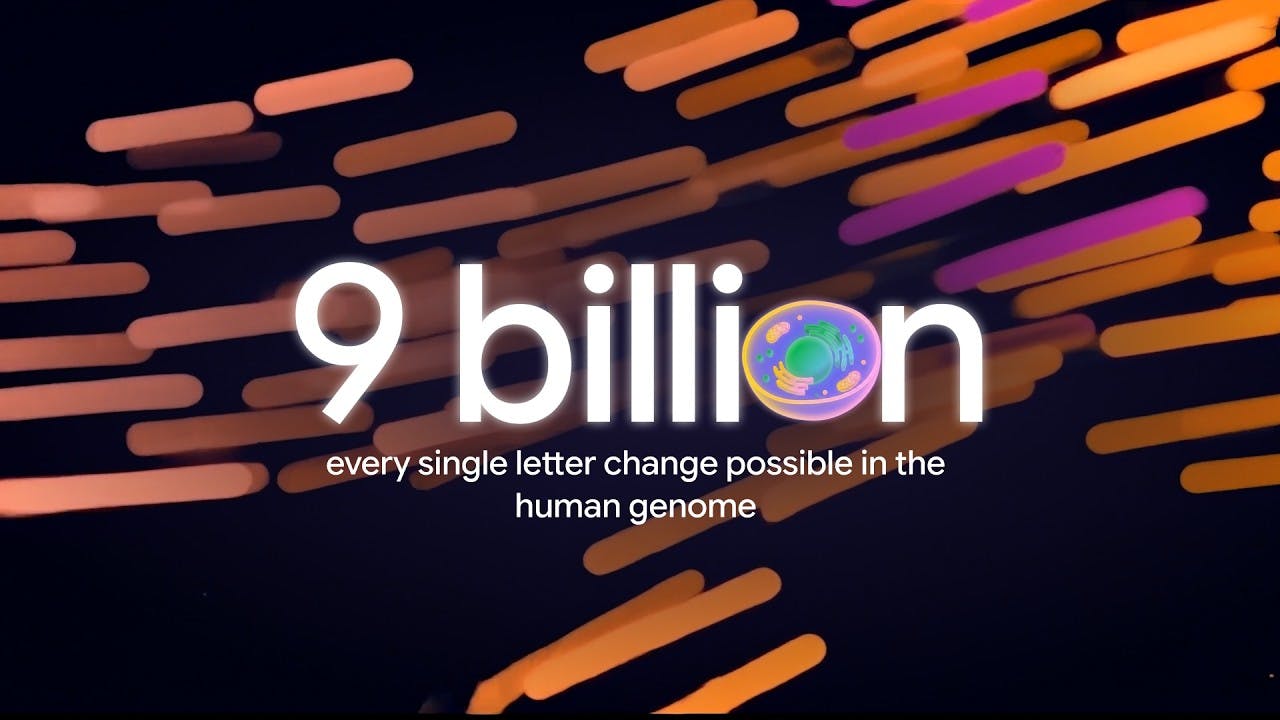
AlphaGenome Atlas is a Google DeepMind platform containing precomputed predictions for approximately nine billion possible single-nucleotide variants across the human genome. It combines the AlphaGenome sequence-to-function model with AlphaMissense-derived information to produce molecular-effect predictions, feature attributions and a unified AlphaGenome Variant Impact, or AVI, score. The approximately one-petabyte dataset is accessible through a browser, API and agent-enabled scientific workflows (Google DeepMind announcement).
The initial users are academic geneticists, rare-disease researchers, computational biologists and biopharmaceutical research teams that need to prioritize variants before expensive laboratory validation. The product is particularly relevant for non-coding variants, which are harder to interpret than protein-coding variants and represent most human genomic variation.
The strongest signal is scientific rather than commercial. The underlying AlphaGenome research was peer-reviewed in Nature and reported state-of-the-art performance on 22 of 24 genome-track tasks and 25 of 26 variant-effect tasks (Nature paper). Independent Nature reporting stated that approximately 9,000 researchers had accessed AlphaGenome predictions before the Atlas launch, although this does not establish Atlas-specific active usage or paid demand (Nature news).
Product quality and parent-company quality are high. The principal investment issue is structural: AlphaGenome Atlas is not an independent company or investable security. It is currently free for non-commercial use, is not approved for clinical decision-making and has no publicly disclosed revenue, commercial customer count or product-level economics.
Final decision: Pass. The product could support a venture-scale commercial genomics platform if separated or licensed into a dedicated business, but there is no standalone investment opportunity or valuation to assess. The conclusion reflects investability and business-model uncertainty, not scientific quality.
Product Overview
Genetic researchers regularly face thousands or millions of candidate variants, most of which have uncertain biological significance. Experimentally testing every variant is infeasible, particularly in non-coding regions that regulate gene expression, splicing and chromatin behavior.
AlphaGenome Atlas addresses that problem by precomputing AlphaGenome predictions for every possible single-letter change in the reference human genome. Its principal components are:
- Molecular-effect predictions across gene expression, splicing, chromatin accessibility, transcription-factor binding and other modalities.
- AVI scores for ranking potentially impactful variants.
- Feature attributions explaining which predicted biological mechanisms drive each score.
- More than 2,500 recurrent DNA-sequence motifs.
- Browser-based, zero-code exploration.
- Programmatic access through the AlphaGenome API.
- Integration with Google’s Antigravity scientific-agent environment.
The underlying AlphaGenome model processes up to one million DNA base pairs at single-base resolution for many outputs. The associated model predicts 5,930 human and 1,128 mouse genomic tracks across 11 output types (peer-reviewed paper).
The web Atlas and hosted API are free for non-commercial research. Outputs generally cannot be used commercially or to train other machine-learning models. AlphaGenome is separately available for commercial deployment through Google Cloud, where pricing requires contact with sales and customers pay for supporting A100 or H100 GPU infrastructure (GitHub documentation; Google Cloud deployment guide).
The product replaces fragmented variant-scoring tools, repeated model inference and manual aggregation of molecular predictions. It does not replace laboratory experiments, patient-specific analysis or clinical diagnosis.
Product quality: Scientifically strong and unusually comprehensive, with substantial usability advantages; however, it remains a research tool rather than a validated clinical product.
Founder and Team Assessment
AlphaGenome Atlas was built by the Google DeepMind AlphaGenome team rather than a startup founder. Google DeepMind identifies Demis Hassabis as its co-founder and CEO and describes the organization as the combination of DeepMind and Google Brain (Google DeepMind).
The Atlas announcement credits a large multidisciplinary team led by researchers including Jun Cheng and Žiga Avsec, with Pushmeet Kohli among the senior contributors. External collaborators came from the Broad Institute, Boston Children’s Hospital, University of Exeter, Stowers Institute, Harvard, Memorial Sloan Kettering and other research organizations.
The underlying AlphaGenome work has peer-reviewed publication evidence, and the Atlas paper reports collaborations involving experimental and population-genetics validation. This is considerably stronger technical evidence than is typical for an early-stage biotechnology software company.
Commercial capability specific to Atlas is not assessable. Google Cloud provides an established distribution and billing channel, but no dedicated sales organization, product P&L, team size or commercial roadmap has been disclosed. Key-person risk is lower than at a conventional startup because the project sits within Google DeepMind, although scientific leadership remains concentrated in specialized researchers.
Founder Assessment: Exceptional scientific and engineering capability, but standalone entrepreneurial ownership and commercial accountability do not exist.
Market Opportunity
The narrow initial market consists of academic genomics laboratories, rare-disease research programs, population-genetics groups and pharmaceutical discovery teams prioritizing coding and non-coding variants.
These customers have genuine willingness to pay when computational prioritization reduces laboratory experiments, shortens target-discovery cycles or improves diagnostic-research yield. However, current free academic access suppresses direct research revenue, while commercial pricing is undisclosed.
An illustrative bottom-up commercial scenario is:
- 2,000–5,000 globally relevant pharmaceutical, biotechnology, diagnostic and high-throughput genomics teams.
- $100,000–$500,000 annual software, model-access and cloud-compute expenditure per organization.
- Implied annual opportunity of approximately $200 million–$2.5 billion.
These customer counts and contract values are analyst assumptions, not verified company guidance. The upper range requires enterprise workflow software, regulatory-grade validation, support, data integration and substantial cloud usage—not merely access to a variant-score database.
Adjacent opportunities include drug-target discovery, clinical-trial stratification, rare-disease research, population genomics, functional-genomics experiment design and integration into clinical variant-interpretation platforms. International applicability is broad, but regulatory, ancestry-representation and patient-data requirements vary substantially.
The market can support a venture-scale company, but Atlas must become part of a validated commercial workflow rather than remain only a free research resource.
Traction and Growth Signals
The Product Hunt launch received 149 points, 13 comments, a #7 daily rank and a #30 weekly rank (Product Hunt launch). This is launch visibility, not evidence of commercial traction.
More important signals include:
- Approximately 9,000 researchers had accessed AlphaGenome predictions before the Atlas launch, according to Nature.
- The AlphaGenome GitHub repository had approximately 2,094 stars and 291 forks on September 12, 2026 (GitHub API).
- The underlying model was published in Nature.
- Google DeepMind reports experimental or applied collaborations in rare disease, population genetics and regulatory-motif research.
- In one company-reported example, researchers using Atlas-derived scores found 22% more non-coding associations in data from more than 54,000 UK Biobank participants.
- The product is already available through browser, API and Google Cloud deployment channels.
The approximately 9,000-researcher figure concerns the underlying AlphaGenome API, not necessarily Atlas. Product-specific active users, repeated usage, commercial contracts, revenue and retention are not disclosed.
Traction Assessment: Strong scientific adoption signals, but no verified commercial traction.
Competitive Position
Scientific model competitors and alternatives include Enformer, Borzoi, SpliceAI and Arc Institute’s Evo 2. Free alternatives include public variant databases, specialized open-source models and manual combination of annotation tools.
Commercial workflow competitors include Illumina Emedgene, Congenica and SOPHiA Genetics. These products provide clinical-research interpretation, reporting, laboratory integration and compliance capabilities that Atlas does not currently offer.
AlphaGenome’s differentiation is its combination of one-megabase context, high-resolution predictions, multiple molecular modalities, coding and non-coding coverage, precomputation at whole-genome scale and Google’s compute infrastructure. The AVI score simplifies a highly complex model output into a rankable measure.
Defensibility comes from the trained model, precomputed one-petabyte dataset, scientific talent, infrastructure and integration with Google Cloud. However, the client software is Apache-licensed, academic access is free and competitors can train alternative genomic models. Atlas does not currently have a proprietary network effect based on customer workflow or clinical outcomes.
If the largest platform launched the same feature within six months, why would customers continue using AlphaGenome Atlas? Customers would remain if its benchmark performance, interpretability, precomputed coverage and scientific validation materially exceed alternatives. That answer is credible for research, but less established for clinical or pharmaceutical production workflows.
Defensibility Assessment: High in model and infrastructure; medium in commercial workflow.
Business Model and Economics
The current model has two layers:
- Free website and API access for non-commercial research.
- Commercial AlphaGenome deployment through Google Cloud, with custom commercial terms and customer-funded GPU infrastructure.
No subscription price, API rate, annual contract value or Atlas-specific revenue is publicly disclosed. Google Cloud documentation states that commercial deployments require A100 or H100 GPUs with 80 GB memory. Customers bear endpoint and accelerator costs, potentially allowing Google to monetize both model access and cloud infrastructure.
Variable costs include storage and delivery of a one-petabyte dataset, API serving, model inference, support and GPU capacity. Precomputation reduces repeated inference for common single-nucleotide variants, but commercial custom predictions remain compute-intensive.
A high-margin model-license business is possible. A lower-margin outcome is also possible if commercial workloads require dedicated GPU capacity, extensive scientific support and custom data integration. Gross margin and contribution margin are not assessable.
Unicorn Path
Assume a 10× ARR multiple for a high-growth scientific-software and AI platform with strong intellectual property and recurring enterprise revenue.
Required ARR = $1 billion ÷ 10 = approximately $100 million.
At hypothetical enterprise ACVs:
- $100,000 annually: 1,000 customers.
- $250,000 annually: 400 customers.
- $500,000 annually: 200 customers.
These prices are analyst assumptions. A $100 million ARR business would likely require pharmaceutical licenses, cloud inference, proprietary datasets, workflow integration and regulated-market support. Pure academic subscriptions are unlikely to be sufficient.
Because Atlas is currently a free research product inside Google, reaching a standalone $1 billion valuation would require a spinout, dedicated commercial entity or materially expanded Google Cloud business model.
Unicorn Path: Conditional
Valuation Assessment
AlphaGenome Atlas has no separate financing history, investors, cap table or valuation. Google DeepMind is part of Google/Alphabet, and Alphabet’s public-market valuation cannot be allocated responsibly to this individual project.
Reported historical acquisition prices for DeepMind are not relevant to Atlas’s present investment value. Current fundraising status is not applicable.
Valuation Attractiveness: Not Assessable
A standalone assessment would require commercial revenue, growth, customer contracts, cloud gross margin, R&D allocation, data and model rights, transfer-pricing arrangements, ownership structure and proposed financing terms.
Key Risks
- No standalone investment security or corporate entity.
- No verified revenue or commercial customer base.
- Research-only status: The product is not validated or approved for clinical decision-making.
- Prediction risk: Computational scores cannot replace experimental validation or patient-specific evidence.
- Commercial competition: Established genomics platforms already own laboratory and reporting workflows.
- Compute intensity: Commercial deployment requires expensive high-memory accelerators.
- Data and ancestry bias: Performance may vary across populations, tissues and underrepresented biological contexts.
- Technical limitations: The model has a one-megabase context horizon and does not support customer fine-tuning.
- Regulatory and liability exposure: Clinical expansion would introduce medical-device, privacy and diagnostic obligations.
- Platform dependence: Commercial access and economics are controlled by Google Cloud.
Final Assessment
Venture Potential: 74/100
| Category | Score |
|---|---|
| Market Size and Expansion Potential | 18/20 |
| Traction and Growth Evidence | 10/20 |
| Founder and Team | 15/15 |
| Product Strength | 10/10 |
| Distribution Potential | 11/15 |
| Business Model and Economics | 2/10 |
| Defensibility | 8/10 |
| Total | 74/100 |
The strongest factors are scientific quality, team capability, dataset scale and technical defensibility. The weakest are the absence of a standalone company, commercial metrics and a defined product-level revenue model.
Evidence Confidence: 76/100
Product functionality, licensing, benchmark results, publication status, GitHub activity and research collaborations are well documented. Commercial pricing, customer count, revenue, retention, costs and product-level valuation are unavailable. Several impact claims come from Google DeepMind and collaborators rather than independent commercial deployments.
Final Decision: Pass
AlphaGenome Atlas is not currently an investable startup. It is an impressive research and Google Cloud asset, but no separate equity, valuation or financing terms exist. A venture investor should not confuse scientific importance with availability of a venture investment.
Upgrade Conditions
- Formation or spinout of a separately investable commercial entity.
- At least $5 million in recurring commercial revenue.
- Referenceable pharmaceutical and diagnostic customers.
- Demonstrated gross margin above 70%, including compute.
- Independent prospective validation across diverse populations.
- Clear commercial rights to models, data and derivative outputs.
- Regulatory strategy for any clinical-use expansion.
- Repeatable enterprise sales and deployment process.
Downgrade Conditions
- Independent studies identify material benchmark or population-performance weaknesses.
- Commercial customers reject Google Cloud deployment economics.
- Competing models match performance with lower cost or fewer usage restrictions.
- Material privacy, copyright or genomic-data governance issues.
- Google withdraws commercial support or keeps Atlas permanently research-only.
- Clinical users rely on predictions beyond validated use cases.
Questions for Further Diligence
- How many active Atlas users are distinct from prior AlphaGenome API users?
- How many commercial organizations are evaluating or paying for AlphaGenome?
- What are commercial annual contract values and model-access terms?
- What is the cost per variant query for precomputed and custom inference?
- What gross margin does Google Cloud expect after GPU and support costs?
- What are 30-, 90- and 180-day retention and query-volume trends?
- How does performance vary by ancestry, tissue and disease category?
- Which Atlas findings have received independent experimental replication?
- What contractual rights do commercial customers receive over outputs?
- Is regulatory clearance for clinical use on the roadmap?
- Can customers integrate private datasets without exposing genomic information to Google?
- Could Atlas, AlphaGenome or its commercial rights ever be separated into an investable entity?
Sources
- AlphaGenome Atlas on Product Hunt
- Google DeepMind Atlas announcement
- Official AlphaGenome Atlas portal
- AlphaGenome peer-reviewed Nature paper
- Independent Nature coverage
- AlphaGenome GitHub repository
- Google Cloud commercial deployment documentation
- Google DeepMind company history
- Arc Institute Evo 2
- Illumina Emedgene
- Congenica