
Table of Contents
Ghost Core — Investment Assessment
Category: Personal AI computing; on-device agents; consumer hardware
Company Stage: Seed-stage, emerged from stealth
Founder(s): Zain Javaid (CEO), Nicholas Chua, Yifei Chen, Gautam Sharda
Headquarters: San Francisco, California (reported build facility; legal headquarters not independently confirmed)
Funding: $11 million seed led by Andreessen Horowitz; Abstract, Audacious Ventures, SV Angel, and Nova participated
Business Model: Upfront device sale; Ghost currently advertises no subscription
Product Hunt Launch Date: 2026/10/11
Report Date: 2026/10/14
Executive Summary
Ghost’s Core is a screenless computer for local AI models and agents, designed to build context across a user’s digital life and perform ongoing tasks. It packages a dedicated GPU, preinstalled models, and proprietary software as an appliance. Ghost lists it at $3,499 with no subscription; its privacy claims have not been independently audited. Ghost
The investment thesis is that persistent personal agents could become a new computing layer, and that some users will pay for convenience and local control instead of relying only on cloud assistants or configuring a PC. If customers trust Core with sensitive information and use it daily, an integrated local system could be valuable. Yet a dedicated $3,499 device is a high-friction purchase for an unproven habit.
Ghost emerged from stealth with an $11 million seed round led by Andreessen Horowitz. Preorders opened at $3,499, with TechCrunch reporting shipment expected in the last week of October 2026. Product Hunt showed 181 points and a #4 day rank when reviewed; these indicate launch attention, not paid demand, retention, or sales scale. TechCrunch Product Hunt
Risks include adoption, hardware economics, supply, and security exposure from access to personal files, apps, and credentials. TechCrunch reported that a credential firewall was still being built at launch. Local inference does not alone prove that integrations, telemetry, backups, or network requests keep all data private. TechCrunch
Ghost merits monitoring because the vision is coherent and the seed round provides execution runway. Public evidence is not yet enough to establish adoption or venture-scale economics. The recommended decision is Watch, pending shipment, security, usage, and margin evidence.
Product Overview
Core runs local models and is intended to connect to apps, files, screen history, wearables, and smart-home devices. Users interact through a phone app. Ghost says Core builds context, acts proactively, and lets users set agent autonomy. TechCrunch reports that models can be updated over the air. Ghost TechCrunch
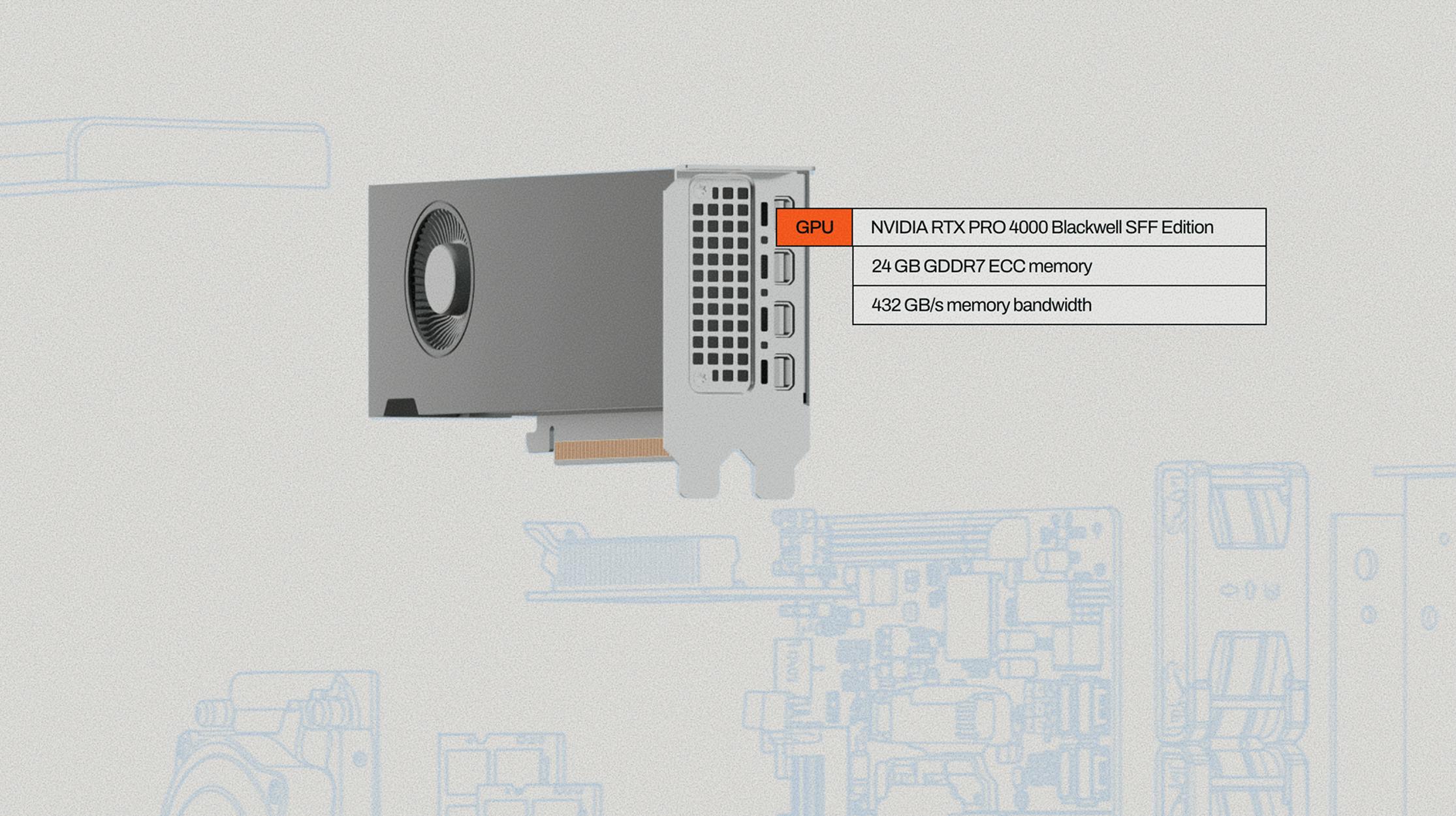
Ghost lists an NVIDIA RTX PRO 4000 Blackwell SFF GPU with 24 GB GDDR7 ECC memory, AMD Ryzen 5 7600, 64 GB DDR5, and 1 TB NVMe storage. Its current website lists Qwen 3.8-Next, Qwen 3.8-27B, Gemma 4-31B, and Muse-Glimmer-30B; TechCrunch’s launch coverage named three preinstalled models, suggesting the lineup may have changed. The current price is $3,499, and the product page advertises no subscription and 30-day returns. Ghost specifications
Founder and Team Assessment
CEO Zain Javaid was 19 at the October 2026 launch and previously worked as a quant, according to TechCrunch. Co-founders are Nicholas Chua, Yifei Chen, and Gautam Sharda. The team spent roughly a year building before emerging from stealth, and TechCrunch reports that it builds units at a San Francisco facility. The seed round signals investor access and confidence, but public information does not establish prior scaled-hardware, security, or consumer-support execution. TechCrunch
The team must execute across inference, integrations, security, procurement, fulfillment, and support; it has not shown it can do so at scale.
Founder Assessment: Strong early fundraising and a focused vision are positives; limited public evidence of scaled hardware and security execution keeps the assessment provisional.
Market Opportunity
Core targets AI enthusiasts, developers, privacy-sensitive professionals, and households willing to buy a premium device. It overlaps PCs, local workstations, home servers, and assistant software; no reliable product-specific market size is disclosed.
A bottom-up scenario is more useful: at $3,499, 10,000 annual device sales would yield $34.99 million in gross hardware revenue; 100,000 would yield $349.9 million before discounts, returns, taxes, and costs. These are sensitivities, not forecasts or TAM estimates. NVIDIA lists its DGX Spark at $4,699 with 128 GB unified memory, showing that specialized AI desktops can command premium prices, while general-purpose computers and cloud assistants remain alternatives. NVIDIA DGX Spark
Significant upside requires persistent agents to become a daily habit and users to trust one system with broad access. Willingness to pay remains unproven.
Traction and Growth Signals
Ghost announced an $11 million seed round, opened preorders, and priced Core at $3,499. TechCrunch reported shipment was expected in the last week of October 2026. Product Hunt displayed 181 points and a #4 daily rank when reviewed. These are early financing and launch signals; no public figures were found for order volume, shipments, conversion, revenue, customer acquisition cost, returns, or retention. TechCrunch Product Hunt
Key proof points are delivery, low returns, frequent use, and demand beyond launch enthusiasts.
Traction Assessment: Financing, preorders, and launch visibility justify continued diligence, but shipped-product retention and repeatable unit economics are not yet public.
Competitive Position
Core combines local models, dedicated GPU hardware, persistent context, and agent software. It may simplify setup versus a DIY computer. Durable differentiation must come from security, integrations, memory, and reliable actions—not just hardware.
Competition includes Apple and Microsoft operating systems, NVIDIA and workstation vendors, cloud AI providers, and open-source projects. Each can reproduce parts of Core’s value. Product Hunt lists adjacent private-agent, on-device assistant, and activity-capture products. Core’s commercial components may speed launch but expose it to supply volatility and imitation. Product Hunt
If the largest platform in this market launched the same feature within six months, why would customers continue using this product?
Ghost’s best answer would be independently trusted local processing, superior agent reliability, and seamless cross-vendor integrations. None is yet established at scale.
Defensibility Assessment: Low. This could improve with security proof, retention, and software differentiation that persists as hardware becomes commoditized.
Business Model and Economics
Ghost currently advertises a one-time $3,499 device price and no subscription. Device sales must cover hardware, assembly, logistics, warranty, returns, and support. No bill of materials, gross margin, discounting, or return data is public, so contribution margin cannot be assessed.
At full list price, 10,000 units equal $34.99 million in gross billings and 100,000 equal $349.9 million. These are not net revenue or profit. Without disclosed recurring revenue, the company depends on sustained unit volume and future hardware refreshes. TechRadar reported that Javaid said GPU prices had risen since Ghost secured supply and later batches may need higher prices, an immediate margin and demand risk. TechRadar
Unicorn Path
For an illustrative $1 billion valuation at 8x revenue, Ghost would need about $125 million in annual revenue. At $3,499 per device, that implies approximately 35,700 full-price sales each year if hardware were the only revenue source. This excludes discounts, returns, costs, and margin constraints; it is arithmetic, not a forecast. Hardware-heavy businesses may receive lower multiples, while recurring software revenue could improve revenue quality if proven.
The route requires reliable production, a much broader customer base, high retention, trusted security, and an agent experience that incumbents cannot easily match. Current evidence establishes neither scale nor recurring economics.
Unicorn Path: Conditional. A venture-scale outcome depends on persistent-agent adoption and software differentiation; a hardware-only route is demanding.
Valuation Assessment
Ghost disclosed an $11 million seed round, but valuation, dilution, preferences, and other terms are not public. The $3,499 product price and launch visibility do not establish equity value.
Valuation Attractiveness: Not Assessable.
Key Risks
- Product-market fit: Customers may not form a lasting habit around a separate AI computer.
- Price: $3,499 sharply narrows the initial customer pool.
- Margins and supply: GPU cost and availability may constrain margins or force price increases.
- Fulfillment: Early production may expose quality, repair, shipping, and support problems.
- Privacy and security: Persistent access to sensitive files and devices creates a high-impact breach surface; company claims need independent testing.
- Agent safety: Credentialed agents may take harmful actions; the credential firewall was still in development at launch.
- Platform dependence: Integrations can break or be restricted by app providers and operating systems.
- Obsolescence and competition: Models and hardware evolve quickly; incumbents can bundle comparable functions.
- Revenue concentration: One-time hardware sales depend on volume and replacement cycles.
Final Assessment
| Metric | Assessment |
|---|---|
| Venture Potential | 65/100 |
| Unicorn Path | Conditional |
| Valuation Attractiveness | Not Assessable |
| Evidence Confidence | 62/100 |
| Final Decision | Watch |
Evidence Confidence: 62/100. Announced funding, listed specifications, pricing, and founder statements are documented. Confidence is lower for demand, privacy implementation, gross margin, retention, and scalable fulfillment because those outcomes are not yet measurable publicly.
Final Decision: Watch. Reassess after initial shipment and meaningful customer use. Upgrade after on-time delivery, independent security review, low return rates, frequent use, and viable gross margins. Downgrade for material delays, security incidents, weak post-onboarding use, or supply-driven price increases that damage demand.
Due-Diligence Questions
- How many first-batch units were ordered, paid for, and refundable, and how many will ship?
- What are bill of materials, gross margin, warranty reserve, and return rate at $3,499?
- How much GPU supply is secured, and how will later batches be priced?
- What share of customers use Core daily after 30, 90, and 180 days?
- What data leaves the device during integrations, updates, support, and diagnostics?
- Has an independent firm tested encryption, credential isolation, network controls, updates, and resale resets?
- What is the firewall’s status and measured false-positive and false-negative rate?
- Which integrations work today, what permissions do they require, and how are they maintained?
- What are hiring and operating costs for manufacturing, repairs, and support?
- What were the seed-round valuation and terms, and what milestones does the capital fund?
Sources
- Ghost official product page — price, positioning, hardware, models, subscription, and returns claims.
- Product Hunt: Ghost Core — product description and launch signals.
- TechCrunch, October 5, 2026 — financing, founders, launch, specifications, and claims attributed to the CEO.
- NVIDIA DGX Spark — listed price and comparison specifications.
- TechRadar, October 6, 2026 — secondary report on GPU cost and future pricing.
Conclusion
Ghost has raised credible seed financing around a distinctive private-AI vision, but Core remains pre-shipment. Adoption, security, and margins remain unresolved. Maintain Watch and reassess after customer evidence.