
Table of Contents
AutoClaw Investment Report
Category: AI agents / desktop automation / enterprise productivity / foundation-model services
Company Stage: Public growth-stage company; AutoClaw is an early product within Z.AI
Founder or Founders: Tang Jie and Li Juanzi; Zhang Peng is CEO and a co-founding executive
Headquarters: Beijing, China
Funding: More than RMB8.36 billion raised before IPO; Z.AI listed in Hong Kong in January 2026 after an approximately US$558 million IPO
Business Model: Consumer subscriptions and usage credits for AutoClaw; broader Z.AI revenue from on-premise and cloud-based large-model services
Product Hunt Launch Date: August 22, 2026
Report Date: August 26, 2026
| Investment Metric | Assessment |
|---|---|
| Venture Potential | 77/100 |
| Unicorn Path | Clear |
| Valuation Attractiveness | Expensive |
| Evidence Confidence | 78/100 |
| Final Decision | Pass |
Executive Summary
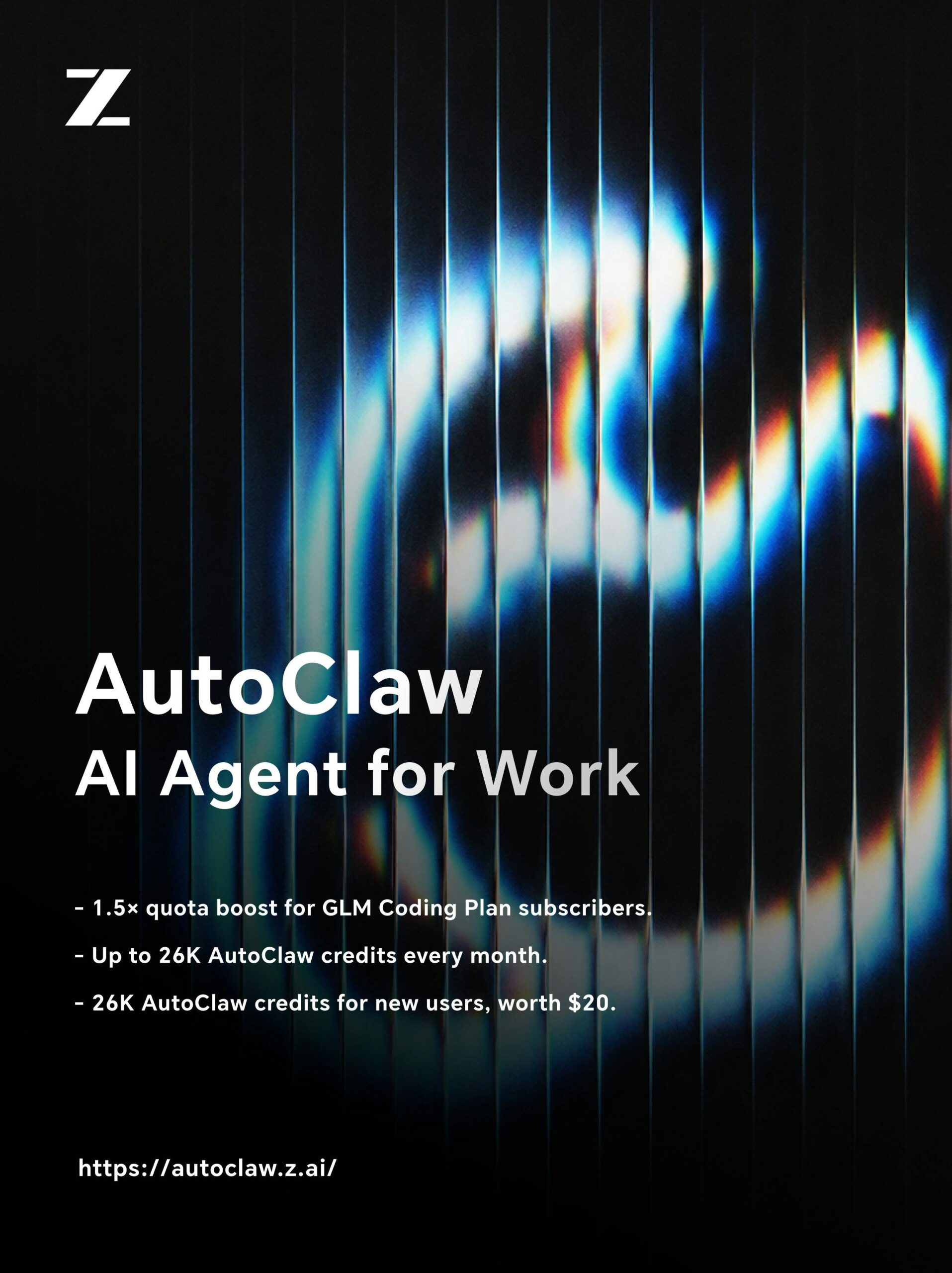
AutoClaw is Z.AI’s desktop and mobile AI agent for executing multi-step work across files, office documents, browsers, web applications, and messaging services. It combines local or cloud execution with more than 50 preconfigured skills and supports tasks such as document creation, data analysis, content operations, browser automation, and investment research (official product page; Apple App Store).
The product addresses a potentially large market: professionals and small teams that want AI to perform work rather than merely answer questions. AutoClaw’s principal advantage is packaging. It reduces the technical setup normally required to run an autonomous agent and integrates Z.AI’s GLM models, skills, desktop access, cloud execution, and messaging interfaces in one product.
The strongest investment signal is not Product Hunt attention but Z.AI’s established model, capital, and distribution infrastructure. Z.AI reported RMB724 million of 2025 revenue, up approximately 132%, and said that more than four million small businesses and developers had interacted with its products. These figures apply to Z.AI as a whole, not AutoClaw specifically (CNBC). Its IPO prospectus also reported more than 12,000 institutional customers during the first nine months of 2025 (HKEX prospectus).
The central concern is valuation and product-specific evidence. AutoClaw’s active users, subscription revenue, retention, task-success rate, and infrastructure economics are not publicly disclosed. The product has only three Apple ratings, while one community report alleged high credit consumption, task failures, incomplete uninstallation, and retained authentication data. Those allegations are not independently verified, but they warrant technical diligence because AutoClaw can access browsers, files, and communications (App Store; Reddit report).
Z.AI is already a public company with a market capitalization of approximately HK$249 billion as of August 26, 2026—well above unicorn status and more than 300 times its reported 2025 revenue after approximate currency conversion (HKEX quote). AutoClaw may become strategically important, but at the current public valuation the risk-reward profile is unattractive without evidence of much greater revenue scale and improved economics. The decision is Pass.
Product Overview
AutoClaw is intended to replace fragmented workflows involving chatbots, automation scripts, browser extensions, office software, and messaging bots. Users describe an objective in natural language; the agent breaks the request into steps, operates connected tools, and returns progress and results through the desktop interface or messaging applications.
The company lists office-document generation, spreadsheet analysis, browser automation, content production, investment research, web-product creation, and messaging integrations among its primary capabilities. Supported messaging channels reportedly include WhatsApp, Telegram, Discord, and Lark. Desktop support includes Windows 10 or later and macOS, while an iPhone application provides remote access to agents operating locally or in Z.AI’s cloud (official page; App Store listing).
The iPhone application launched on May 18, 2026 and had reached version 1.4.0 by August 2. It allows users to create specialized agents, send text, images, or voice instructions, search task history, and coordinate multiple agents. This indicates continued product development after initial release (Apple lookup data).
Consumer pricing is credit-based. App Store plans range from RMB29 per month for 5,000 credits to RMB999 per month for 240,000 credits. Intermediate plans are RMB109 and RMB499 per month, with additional credit packs available. Unused monthly credits expire. US App Store in-app purchases are approximately $3.99, $14.99, $69.99, and $149.99, depending on tier (App Store). The international landing page separately advertises free basic usage and paid plans but does not publish a complete price table.
The global website labels AutoClaw “coming soon,” while the iOS application is already available. This appears to reflect a phased international rollout, but the inconsistent product-status presentation should be clarified.
Product Quality Assessment: Broad and potentially valuable functionality with unusually easy deployment, but task reliability, credit efficiency, and security require independent validation.
Founder and Team Assessment
Z.AI originated from Tsinghua University research and was founded in 2019. Tang Jie and Li Juanzi are identified as founders, while Zhang Peng serves as CEO. The company has demonstrated deep model-development capability through the GLM model family and associated agent and multimodal systems (IPO prospectus; CNBC).
The team has stronger technical and capital resources than a conventional early-stage startup. The prospectus reported more than RMB8.36 billion of pre-IPO funding and significant continuing R&D investment. It recorded RMB2.20 billion of R&D expense in 2024 and RMB1.59 billion during the first half of 2025.
This capability comes at considerable cost. Z.AI’s 2025 adjusted loss was RMB3.18 billion, according to its first post-IPO results. AutoClaw’s dedicated team size, leadership, development budget, and contribution to consolidated revenue are not publicly disclosed.
Founder Assessment: Strong technical and fundraising capability, with demonstrated commercialization at the parent-company level; AutoClaw-specific operating ownership and economics remain unverified.
Market Opportunity
The initial addressable segment is professionals, creators, developers, analysts, and small operating teams willing to delegate repetitive digital work to autonomous agents. These users need browser and document automation but may lack the technical expertise to configure open-source alternatives.
A useful bottom-up scenario can be constructed from the RMB109-per-month plan:
- Annual subscription revenue per user: approximately RMB1,308
- 500,000 paying users: approximately RMB654 million annual gross subscription revenue
- One million paying users: approximately RMB1.31 billion annual gross subscription revenue
These are analyst scenarios, not forecasts. They exclude discounts, expired credits, credit-pack purchases, App Store commissions, refunds, taxes, and usage costs.
Z.AI has reported engagement with more than four million SMEs and developers across its broader product portfolio. Converting 5%–10% of that reported base to the RMB109 AutoClaw plan would imply roughly 200,000–400,000 subscribers and RMB262–523 million of annual gross subscription revenue. Neither conversion nor cross-selling has been demonstrated.
Adjacent markets include enterprise agent management, private deployment, compliance controls, workflow templates, agent APIs, and cloud-hosted persistent workers. International expansion is possible, but US export restrictions, enterprise trust, data residency, and competition from major Western and Chinese platforms may constrain it.
Traction and Growth Signals
AutoClaw ranked fifth on Product Hunt’s August 22, 2026 leaderboard with approximately 151 votes (Product Hunt leaderboard). This indicates launch interest only; it does not establish revenue, retention, or product-market fit.
The iPhone app had a 3.7/5 rating based on only three ratings. That sample is too small for meaningful conclusions. No verified download total, active-user count, paid-subscriber count, retention cohort, or AutoClaw revenue was found (App Store).
There is evidence of ongoing development: the mobile app advanced to version 1.4.0, introduced dedicated cloud agents, and disclosed subscription and credit purchases. Z.AI also maintains an Apache-2.0-licensed repository of GLM skills compatible with AutoClaw, OpenClaw, Claude Code, and other agent systems (GLM Skills).
Z.AI’s consolidated growth is more substantial. Revenue increased from RMB312 million in 2024 to RMB724 million in 2025, but its adjusted loss widened to RMB3.18 billion. These results support company-level demand but cannot be attributed to AutoClaw.
Traction Assessment: Strong parent-company momentum and visible product iteration, but AutoClaw’s commercial traction remains unverified.
Competitive Position
Direct competitors include OpenClaw, Manus, Genspark, AutoGLM, ChatGPT Agent, and other computer-use agents. Indirect competition includes Microsoft Copilot, Zapier, Make, UiPath, browser-automation tools, and manual virtual-assistant workflows.
AutoClaw’s principal differentiation is an integrated, lower-configuration experience built around Z.AI’s models and credits. Its local-plus-cloud architecture, mobile control, messaging integrations, and packaged skill library provide convenience compared with assembling an agent stack manually.
However, the underlying category is highly competitive. OpenClaw is free, open source, model-flexible, and runs on user-controlled devices (OpenClaw). Z.AI’s own skills are compatible with competing agent frameworks, reducing lock-in. Larger platforms can bundle computer use, document generation, and messaging integrations into existing subscriptions.
“If the largest platform in this market launched the same feature within six months, why would customers continue using this product?” The defensible answer would require materially lower inference cost, superior task completion, a large proprietary skill ecosystem, enterprise distribution, and accumulated user workflow data. Public evidence does not yet demonstrate those advantages.
Defensibility Assessment: Medium-Low
Business Model and Economics
AutoClaw uses a freemium, subscription, and credit-pack model. This creates recurring-revenue potential while limiting the company’s exposure to unlimited agent usage. The broader company monetizes on-premise model deployment and cloud-based model access.
Credit economics remain opaque. Z.AI publishes GLM API prices, including GLM-5.3 at $1.40 per million input tokens and $4.40 per million output tokens, but AutoClaw credits cannot be transparently mapped to token, browser, storage, or cloud-compute costs (Z.AI API pricing).
Apple may retain a share of in-app subscription revenue. Additional costs include inference, cloud agent instances, browser execution, storage, search, customer support, payment processing, and failed or repeated agent actions. Local execution reduces some cloud-compute expenses but does not eliminate model inference.
At the company level, 2025 first-half gross margin was approximately 50%, while the 2024 full-year figure was 56.3%. Cloud deployment’s gross margin was negative during the first half of 2025, illustrating the risk that rapidly growing inference usage may not produce attractive margins (IPO prospectus).
Unicorn Path
Z.AI has already exceeded a $1 billion valuation, so its company-level unicorn path is accomplished. To evaluate AutoClaw independently, a 10× ARR multiple is assumed for a high-growth subscription and usage-based AI product. This multiple would require strong retention and improving gross margins.
Required ARR for a $1 billion valuation:
\[
\$1\text{ billion} \div 10 = \$100\text{ million ARR}
\]
At current US App Store list prices, approximate subscriber requirements would be:
- $3.99/month tier: approximately 2.1 million subscribers
- $14.99/month tier: approximately 556,000 subscribers
- $69.99/month tier: approximately 119,000 subscribers
- $149.99/month tier: approximately 56,000 subscribers
These calculations use gross subscription revenue before App Store commissions, taxes, discounts, churn, inference, and infrastructure costs. A credible path would likely require a blended consumer base plus enterprise contracts, rather than relying on the highest consumer tier.
Unicorn Path: Clear for Z.AI; conditional for AutoClaw as a standalone product business.
Valuation Assessment
Z.AI raised more than RMB8.36 billion across eight pre-IPO rounds. Its January 2026 IPO valued the company at approximately HK$51.2 billion at the HK$116.20 offer price and generated approximately HK$4.17 billion of estimated net proceeds (prospectus).
On August 26, 2026, HKEX reported a share price of approximately HK$1,033 and market capitalization of HK$249 billion, or roughly US$32 billion using an approximate HK$7.8/US$ exchange rate. That represents an increase of almost nine times from the IPO price in less than eight months (HKEX).
Relative to RMB724 million of 2025 revenue, the market capitalization exceeds 300 times trailing revenue after approximate currency conversion. Even allowing for 132% historical growth and significant recent capital raising, this multiple embeds extremely optimistic expectations while the company remains deeply loss-making.
Valuation Attractiveness: Expensive
A more complete assessment would require 2026 revenue, current revenue growth, AutoClaw contribution, gross margin by product, net cash following the July placement, inference-cost trends, customer retention, and dilution-adjusted share count.
Key Risks
- Extreme valuation: The public valuation exceeds 300 times reported 2025 revenue.
- AutoClaw traction is undisclosed: No verified subscribers, revenue, usage, or retention.
- Heavy losses: Adjusted loss substantially exceeds annual revenue.
- Agent security exposure: AutoClaw can access files, browsers, credentials, and messaging channels.
- Unverified community allegations: A Reddit user reported retained tokens and browser hooks after uninstalling; these claims require independent reproduction.
- Poorly understood credit economics: Users may perceive pricing as unpredictable if failed tasks consume substantial credits.
- Competitive bundling: OpenAI, Microsoft, ByteDance, and other platforms can integrate similar capabilities.
- Open-source substitution: OpenClaw and other free frameworks lower switching costs.
- Export controls: Z.AI and several subsidiaries are on the US Commerce Department Entity List, potentially limiting technology access and international adoption.
- Cloud margin pressure: Increasing agent usage may raise compute costs faster than revenue.
Final Assessment
Venture Potential: 77/100
| Category | Score |
|---|---|
| Market Size and Expansion Potential | 19/20 |
| Traction and Growth Evidence | 13/20 |
| Founder and Team | 14/15 |
| Product Strength | 8/10 |
| Distribution Potential | 13/15 |
| Business Model and Economics | 4/10 |
| Defensibility | 6/10 |
| Total | 77/100 |
The strongest elements are the large potential market, capable model-development team, existing distribution, and rapid parent-company growth. The weakest are poor economics, insufficient AutoClaw-specific traction, uncertain security, and limited defensibility against bundled competitors.
Evidence Confidence: 78/100
Legal identity, public-company status, founders, headquarters, historical financing, consolidated revenue, losses, gross margin, share price, market capitalization, product pricing, and app activity are supported by primary or reputable sources.
AutoClaw revenue, users, retention, conversion, gross margin, task-success rate, dedicated team, and enterprise contracts remain unavailable. Security complaints are community reports rather than verified findings.
Final Decision: Pass
Z.AI is a credible, venture-scale AI company, and AutoClaw is a strategically relevant product. However, the current public valuation leaves little margin for execution risk. The combination of a greater-than-300× trailing-revenue valuation, large losses, uncertain AutoClaw economics, security exposure, and export-control risk makes the investment unattractive at the present price.
Upgrade Conditions
- AutoClaw reaches at least $25–50 million ARR with disclosed retention.
- Six-month paid retention exceeds 70%.
- AutoClaw demonstrates positive contribution margin after inference and cloud costs.
- Independent testing confirms reliable task completion and secure uninstallation.
- Consolidated revenue grows rapidly enough to reduce the valuation below approximately 30–40× forward revenue.
- Cloud gross margin becomes consistently positive.
- Enterprise contracts demonstrate willingness to pay for managed agent deployment.
Downgrade Conditions
- AutoClaw subscriber growth stalls after launch.
- Credit complaints produce high churn or reputational damage.
- A verified credential-storage or remote-execution vulnerability emerges.
- Larger platforms replicate the product and bundle it at lower cost.
- Revenue growth decelerates while losses remain elevated.
- Export restrictions materially constrain compute access or international sales.
Questions for Further Diligence
- What are AutoClaw’s current monthly active users, paid subscribers, and ARR?
- What are its 30-, 90-, and 180-day paid-retention rates?
- How many credits does a typical completed task consume, and what percentage of tasks fail?
- What is AutoClaw’s gross margin after inference, browser execution, storage, and App Store fees?
- What proportion of users choose local execution versus dedicated cloud agents?
- How much of Z.AI’s 2026 revenue is attributable to AutoClaw?
- Has the company independently audited credential storage, browser permissions, and uninstallation behavior?
- What is the enterprise pricing and current enterprise-customer count?
- How does AutoClaw’s task-success rate compare with OpenClaw, Manus, and ChatGPT Agent?
- What are customer acquisition cost and free-to-paid conversion by channel?
- How will the US Entity List affect international distribution and infrastructure procurement?
- What net cash and annualized burn remain after the IPO and July 2026 share placement?
Sources
- AutoClaw on Product Hunt
- Product Hunt daily leaderboard
- Official AutoClaw website
- AutoClaw on the Apple App Store
- Apple application metadata
- Z.AI IPO prospectus — HKEX
- Z.AI market quotation — HKEX
- Z.AI 2025 results coverage — CNBC
- Official Z.AI model pricing
- Official GLM Skills repository
- Z.AI privacy policy
- OpenClaw official website
- AutoClaw community complaint — Reddit, unverified