
Table of Contents
MiniMax Design Investment Report
Category: AI-native creative production platform
Company Stage: Public company product
Founder or Founders: Dr. Yan Junjie
Headquarters: Shanghai, China
Funding: HK$4.82 billion gross Hong Kong IPO in January 2026; July 2026 equity placing and HK$6.5 billion convertible bonds
Business Model: Consumer subscriptions and credits, enterprise production, and multimodal model/API revenue
Product Hunt Launch Date: 2026/08/20
Report Date: August 26, 2026
| Investment Metric | Assessment |
|---|---|
| Venture Potential | 80/100 |
| Unicorn Path | Clear |
| Valuation Attractiveness | Expensive |
| Evidence Confidence | 88/100 |
| Final Decision | Pass |
Executive Summary
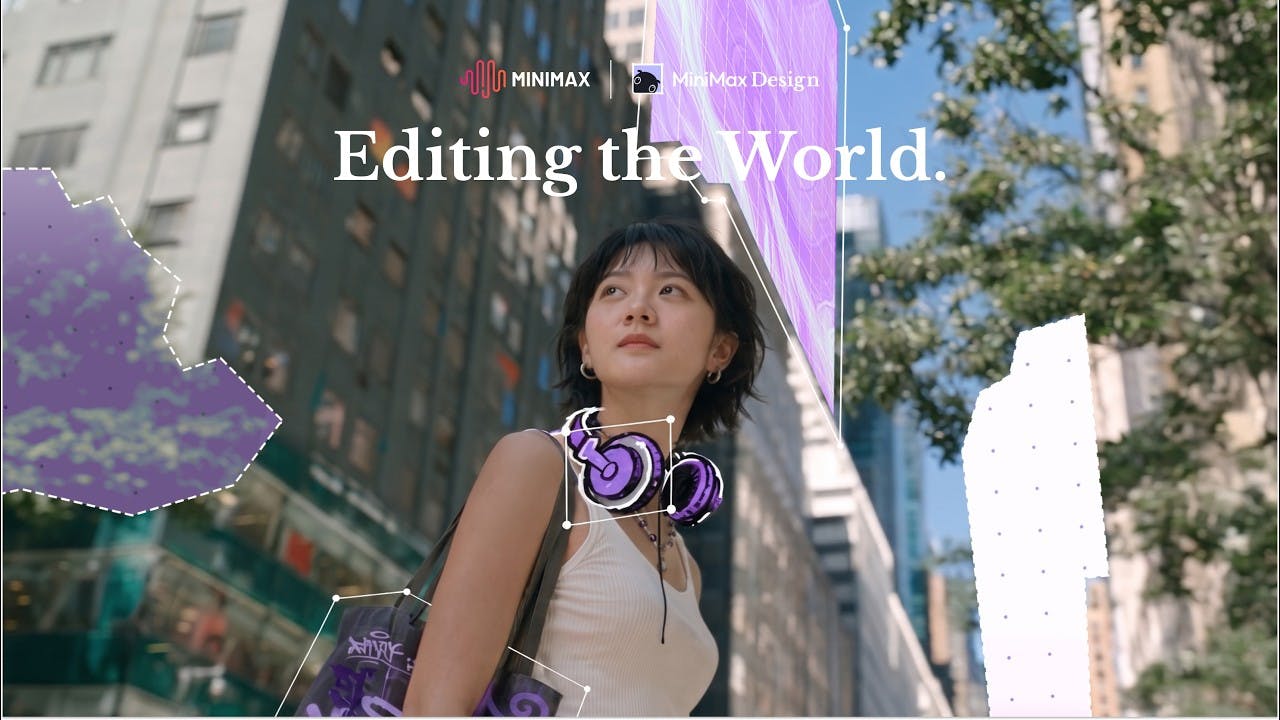
MiniMax Design is a desktop creative-production workspace from listed foundation-model company MiniMax Group. It turns a brief into scripts, images, video, music, voice, editing, and export through coordinated agents on one canvas. The primary users are professional creators, e-commerce teams, agencies, studios, and brands producing high volumes of multimodal content.
It combines proprietary media models with orchestration, reusable Skills, local assets, review checkpoints, and existing MiniMax distribution.
Audited company traction is strong: 2025 revenue was $79.0 million, up 158.9%, with over 70% international. Year-end reach exceeded 236 million cumulative users and 214,000 enterprises/developers, but these are company-wide, not Design cohorts.
The concern is economics and price: 25.4% gross margin, a $250.9 million adjusted loss, and a market capitalization above HK$100 billion—well over 150 times 2025 revenue.
The final decision is Pass: MiniMax is already public, far beyond the target stage, expensive, and missing Design-level adoption and margins.
Product Overview
MiniMax Design addresses fragmented creative production. A campaign normally moves among ideation tools, image generators, video models, audio services, editors, asset folders, and review systems. The official product gives users a desktop command center on macOS and Windows.
Agents decompose a brief across copy, image, video, and audio; a node canvas carries work through export. Reusable Skills, local files, and review checkpoints add control. Enterprise offers include custom Skills, on-premises deployment, and commissioned production.
The Product Hunt listing describes MiniMax H3 as the core video engine and shows 132 points, a number-nine daily rank, and free options. Launch attention does not demonstrate retention.
Design sells Media Plans and one-year credit packs, but public dollar prices require account state. The broader Token Plan is $20–$120 monthly on annual billing and includes multiple modalities. Verify an authenticated Design quote.
Founder and Team Assessment
Founder, chairman, CEO, and CTO Yan Junjie previously spent more than six years at SenseTime, including as vice president and vice-head of its research institute. MiniMax’s management profile states that he holds a doctorate in artificial intelligence, conducted postdoctoral research at Tsinghua, and has published about 200 papers with more than 30,000 citations.
The company had 428 employees at year-end 2025, specialized model and commercial executives, independent directors, and an audit committee.
Technical capability and international execution are strong. Risk is concentrated control: Yan combines chairman, CEO, and CTO under weighted voting rights.
Founder Assessment: Elite technical credentials and demonstrated scaling, offset by concentrated control and high key-person dependence.
Market Opportunity
The initial MiniMax Design segment is professional teams producing short-form advertising, e-commerce assets, creator media, and serialized video. Assume five million addressable creators and small teams worldwide at $1,200 annual software spend; that yields a $6 billion potential market before enterprise studios. The figures are estimates.
Customers may pay to replace tools and production hours; custom workflows, on-premises deployment, APIs, and services can raise ACV. Over 70% of 2025 revenue was international.
Timing is favorable, but falling generation prices, platform bundling, and uncertain copyright rules offset demand. The valuation already assumes major success.
Traction and Growth Signals
Audited 2025 revenue increased from $30.5 million to $79.0 million. AI-native products generated $53.1 million and enterprise/open-platform services $26.0 million. Cumulative users exceeded 236 million and enterprise customers/developers 214,000 by year-end, according to the annual results. These measures mix products and may include nonpaying users or developers.
MiniMax Design itself is newly launched. Product Hunt’s 132 points and daily rank show awareness only. The official site contains three testimonials claiming sixfold speed, threefold output efficiency, and 40 hours saved; identities and methodologies are insufficient for independent validation. Product-specific active users, paid teams, generation volume, retention, and revenue are not disclosed.
The IPO, later shares and convertibles show capital access; public GitHub repositories support technical credibility, not Design revenue.
Traction Assessment: Strong company-level growth and reach; MiniMax Design’s sustained commercial traction is unverified.
Competitive Position
Direct competitors include Adobe Firefly and Creative Cloud, Canva, Runway, OpenAI Sora, Google Flow/Veo, ByteDance CapCut, Kling, Pika, Luma, and integrated creator platforms. ComfyUI, open models, freelancers, agencies, and conventional production software are alternatives.
Proprietary models, agent workflows, Skills, enterprise deployment, and installed distribution differentiate MiniMax. Yet creators multi-home and larger platforms own deeper editing workflows.
If Adobe or Canva launched the same feature within six months, customers would stay for superior H3 output, lower cost, faster end-to-end production, unique Skills, or enterprise deployment. Public comparative evidence does not yet prove these advantages persist.
Defensibility Assessment: Medium
Business Model and Economics
MiniMax monetizes consumer applications through subscriptions and virtual credits, and enterprises through API and other AI services. Design adds Media Plans, credit packs, enterprise support, custom Skills, on-premises delivery, and commissioned production.
Direct costs include GPU inference, cloud delivery, model training, storage, media processing, payments, moderation, support, and possibly human services. 2025 cost of sales was $59.0 million against $79.0 million revenue, producing 25.4% gross margin—well below mature software. R&D expense exceeded three times revenue. Video generation is particularly compute intensive.
The thesis requires efficiency to improve faster than prices fall. Design may add workflow value, but third-party models and services add cost. Product-level margins and conversion are unknown.
Unicorn Path
Using a 10x ARR multiple for a fast-growing AI platform, $100 million ARR supports a $1 billion valuation. MiniMax crossed that valuation threshold before the launch and now trades far above it, despite 2025 revenue below $100 million.
For MiniMax Design alone, $100 million ARR could mean 83,333 professional accounts at $1,200 annually, 10,000 enterprise customers at $10,000, or a blended mix. Achieving that requires strong retention, team collaboration, enterprise security, reliable copyright controls, and improving video-generation margins.
The listed group must now justify its capitalization through profitable growth.
Unicorn Path: Clear
Valuation Assessment
The IPO sold shares at HK$165 and raised HK$4.82 billion gross; Reuters estimated an offer valuation near $6.5 billion. Secondary market data shows an August 25 close of HK$299.60. Using reported share counts, that implies market capitalization above HK$100 billion, approximately US$13 billion; exact fully diluted value should be confirmed after the July placing and convertibles.
The implied trailing multiple exceeds 150x. Even with 158.9% growth, low margin and a $250.9 million adjusted loss make this demanding.
Indicative framework: attractive below 25x forward revenue, fair at 25–50x, and expensive above 50x, contingent on continued triple-digit growth and margin expansion. On available figures, MiniMax is expensive.
Valuation Attractiveness: Expensive
Key Risks
- Extreme valuation: Current capitalization embeds years of exceptional growth.
- Weak gross margin: 25.4% in 2025 leaves little room for mature software economics.
- Capital intensity: R&D and inference spending materially exceed current gross profit.
- Product-level opacity: Design users, revenue, retention, and margins are undisclosed.
- Competitive convergence: Adobe, Canva, OpenAI, Google, ByteDance, and Chinese peers can bundle workflows.
- Copyright litigation: Media training and generated characters create active IP exposure.
- Geopolitics and export controls: GPU access and cross-border sales can be constrained.
- Content safety: Synthetic media may trigger abuse, regulation, or platform restrictions.
- Governance concentration: Weighted voting rights and combined founder roles reduce minority influence.
- Financing dilution: New shares and convertible bonds expand capital but may dilute holders.
Final Assessment
Venture Potential: 80/100
| Category | Score |
|---|---|
| Market Size and Expansion Potential | 19/20 |
| Traction and Growth Evidence | 17/20 |
| Founder and Team | 14/15 |
| Product Strength | 8/10 |
| Distribution Potential | 13/15 |
| Business Model and Economics | 4/10 |
| Defensibility | 5/10 |
| Total | 80/100 |
Growth and distribution are strong; economics, Design disclosure, and valuation are weak.
Evidence Confidence: 88/100
Audited revenue, gross profit, loss, R&D, headcount, IPO terms, leadership, and company reach are disclosed through HKEX and official sources. Design testimonials and current user totals are company-reported. Product-level traction and margins remain unavailable; current market-cap calculations use delayed secondary quotes.
Final Decision: Pass
MiniMax is public, not early stage. Its high valuation and thin Design-specific evidence do not fit this portfolio.
Upgrade Conditions
- Sustained triple-digit revenue growth with gross margin above 50%.
- Verified MiniMax Design retention, paid teams, and meaningful revenue.
- Material reduction in adjusted loss relative to revenue.
- Durable workflow advantages versus Adobe, Canva, and major model vendors.
- A public valuation below 50x forward revenue with improving economics.
Downgrade Conditions
- Revenue growth slows before margins expand.
- Copyright judgments, export controls, or safety incidents impair distribution.
- New equity or convertibles produce material dilution without commensurate growth.
- Design adoption remains promotional rather than recurring.
- Model prices fall faster than inference costs.
Questions for Further Diligence
- What are MiniMax Design’s active users, paid accounts, revenue, and three-month retention?
- What share of Design users already paid for another MiniMax product?
- What is gross margin per media type after inference and third-party model costs?
- How much human service is included in enterprise production?
- What is customer acquisition cost and payback by consumer and enterprise channel?
- Which Skills show repeated use, sharing, or marketplace revenue?
- What copyright licenses and indemnities cover training inputs and outputs?
- How will July equity and convertible financing affect fully diluted ownership?
- What are 2026 revenue guidance, cash burn, and compute commitments?
- How does H3’s task-level quality and cost compare with Veo, Sora, Kling, and Runway?
- What controls address political, export-control, and cross-border data risk?
- What governance protections exist for minority public shareholders?