
Table of Contents
Higgsfield Investment Report
Category: AI media generation — multi-model creation platform for creators/brands, plus a newly launched unified developer API across 50+ image and video models
Company Stage: Series B; valued at $5.4 billion (August 2026)
Founder or Founders: Alex Mashrabov, Co-Founder & CEO (former head of generative AI at Snap; previously co-founded AI Factory, acquired by Snap) prnewswire
Headquarters: San Francisco, CA prnewswire
Funding: ~$538M total: $8M seed (Menlo Ventures, 2024); $50M Series A (GFT Ventures, Sept 2025, ~$1B valuation); $80M Series A extension (Accel, Jan 2026, $1.3B); $400M Series B (DST Global, Aug 2026, $5.4B, with Goldman Sachs and Intel participation) prnewswire
Business Model: Creator subscriptions ($15–$129/month) with credit metering, plus pay-per-use API access to 50+ third-party and in-house models higgsfield
Product Hunt Launch Date: Higgsfield API launch, week of September 20, 2026; platform has 4.9/5 from 12 PH reviews and ~1.8K followers producthunt
Report Date: September 20, 2026
| Investment Metric | Assessment |
|---|---|
| Venture Potential | 69/100 |
| Unicorn Path | Clear (achieved — $5.4B) |
| Valuation Attractiveness | Expensive |
| Evidence Confidence | 65/100 |
| Final Decision | Pass |
Executive Summary
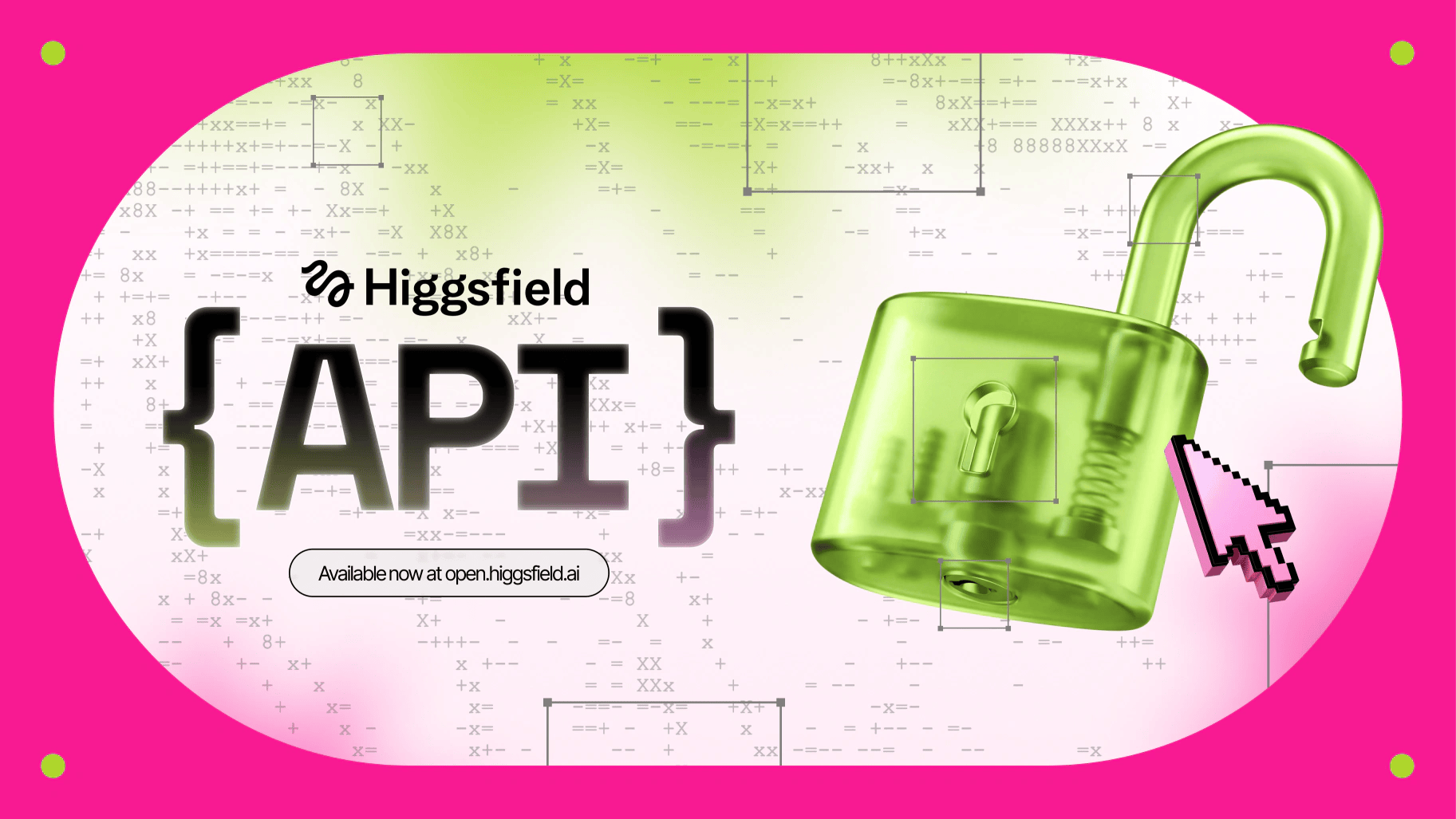
The product under review — the newly launched Higgsfield API — exposes 50+ frontier image and video generation models (Seedance, Kling, Soul, Grok Imagine, Wan, and others) behind a single authenticated, asynchronous interface with pay-per-use pricing, status polling or webhooks, and Python/TypeScript SDKs. It sits on top of Higgsfield’s broader consumer platform: an AI-native creative suite that bundles third-party models (Sora 2, Veo 3.1, Kling 3.0, Nano Banana Pro) with proprietary tools — the Soul 2.0 photo model, Soul ID character consistency, Speak lipsync, UGC Factory, and AI Influencer Studio. producthunt
The company serves professional social-media creators, marketing teams, agencies, and increasingly developers who would otherwise stitch together multiple model providers. The strongest positive signal is exceptional, well-documented commercial momentum: four financings in roughly two years, culminating in a $400M Series B led by DST Global at a $5.4B valuation, with company-reported annualized revenue reaching $700M. Founder-market fit is excellent — Mashrabov led Snap’s generative AI efforts and sold a prior company to Snap. prnewswire
The most important investment concern is the quality of that revenue and the durability of the business. Higgsfield is substantially an aggregation and reselling layer over third-party models it does not own (OpenAI, Google, Kuaishou, ByteDance), in a category where the model owners sell direct to the same customers, and where well-funded API rivals (Fal, Replicate) and creative suites (Runway, Krea, Freepik) compete on the same bundle. Company-reported revenue is unverified, gross margin structure is undisclosed, and “unlimited” promotional trials signal costly growth tactics. aiforesight360
Venture Potential is high (69/100), and the unicorn threshold is already cleared. But at $5.4B — a 4x step-up from a round closed seven months earlier — with unverified revenue quality, thin-moat aggregation economics, and intense competition, the entry price offers an unattractive risk-return. Final decision: Pass on valuation grounds, despite company strength.
Product Overview
The customer problem: brands, creators, and developers need high volumes of visual content across a fast-rotating set of best-in-class generation models, but each model lives behind a different subscription, API, and interface. Consumers face fragmented pricing and tool sprawl; developers face integration and maintenance burden across dozens of SDKs.
Higgsfield solves this two ways. For creators, a single subscription ($15 Starter / $49 Plus / $129 Ultra, with annual discounts) provides a unified workspace with credits and time-limited “unlimited” windows across more than 20 video models, plus proprietary features — Soul 2.0 for fashion/editorial photo aesthetics, Soul ID for persistent characters, lipsync and voice tools, and avatar/UGC workflows. For developers, the new API (open.higgsfield.ai) offers 50+ models behind one async lifecycle with per-model pay-per-use pricing and launch discounts up to 50%. higgsfield
The primary customer benefit is simplification and breadth: one bill, one interface, model choice without commitment. The replaced workflow is maintaining direct accounts with Sora, Veo, Kling, Seedance, and image providers separately, or paying agencies for content production. Current platforms: web app and developer API; in-house models complement third-party ones. producthunt
Founder and Team Assessment
Alex Mashrabov co-founded and leads Higgsfield. His background is directly relevant and largely verifiable through funding announcements: he previously co-founded AI Factory, which was acquired by Snap, where he subsequently led the generative AI team before founding Higgsfield in 2023. This is strong founder-market fit — deep technical and product experience in exactly the generative media category — plus a prior exit, which is uncommon among peers. prnewswire
The investor roster is high quality and cross-checked across sources: Menlo Ventures (seed), GFT Ventures (Series A), Accel (A extension), DST Global (Series B), with Goldman Sachs and Intel reported in the latest round. The company’s investor base participating at escalating valuations is third-party-verified evidence of institutional conviction, though not of unit economics. sacra
Team size, executive bench, and attrition are not publicly disclosed and were not verified. The company operates an aggressive content-marketing machine (contests, free unlimited trials, viral presets), suggesting a growth-heavy commercial team. higgsfield
Founder Assessment: Strong technical founder with a prior exit and category-specific expertise; team depth and commercial infrastructure beyond the founder remain to be verified.
Market Opportunity
The initial customer segment is professional visual-content producers: social-first creators, performance-marketing teams, e-commerce brands, and agencies producing high volumes of short-form video and imagery. Their problem is cost and speed of content production; willingness to pay is demonstrated by subscription conversion in a category where rivals (Krea, Freepik, Pollo, OpenArt) have validated the same buyer.
Bottom-up view (analyst assumption): if the global pool of serious AI-content professionals and marketing teams numbers in the low millions, and paying customers spend an average of $300–600/year on generation subscriptions (blending $15–$129/month tiers), the consumer/creator subscription opportunity alone is roughly $0.5–2B annually — before API volume. The developer API adds usage-based revenue against the budget that previously went to direct model-provider spend. Company-reported annualized revenue of $700M would imply meaningful penetration already, though its composition (gross vs. net, subscription vs. resold compute) is unknown. prnewswire
Expansion paths are credible: localization and multilingual avatars (Speak/Translate), enterprise brand-content workflows, and API/platform revenue. Geographic expansion is broad (global web product; VAT-based regional pricing). Timing risk cuts both ways: the category is exploding, but it is also one of the most competitively intense in software, with model owners themselves moving downstream (OpenAI’s Sora app; “viral presets now in ChatGPT” ). higgsfield
Traction and Growth Signals
- Funding velocity: ~$538M raised across four rounds from 2024 to August 2026, with valuation stepping from ~$1B (Sept 2025) to $1.3B (Jan 2026) to $5.4B (Aug 2026) — verified through investor announcements and financial press. prnewswire
- Revenue: company-reported annualized revenue “reaching $700 million” at the Series B announcement — unverified, no independent confirmation, no margin or composition disclosed. prnewswire
- Product Hunt: 4.9/5 from 12 reviews, ~1.8K followers; the API launch drew substantive developer engagement, including skeptical technical comments about API design and model-deprecation handling — a useful negative signal that integration reliability concerns exist. producthunt
- Community: active X presence with model launches (Soul 2.0 in February 2026), aggressive free-trial campaigns, and contests. higgsfield
- Product cadence: rapid — 50+ models integrated, audio tooling, influencer studio, and an API layered within 2026. producthunt
Missing metrics: gross margin, net revenue retention, cohort churn, paying-customer count, API revenue mix, and burn. The revenue figure, while impressive, is company-reported and unaudited.
Traction Assessment: Extraordinary reported growth, but revenue quality and retention are unverified.
Competitive Position
Direct competitors: Fal and Replicate (model aggregation APIs), Krea, Freepik, OpenArt, Pollo AI, and Leonardo (multi-model creative suites); Runway and Pika (native generation suites). Indirect: Canva and Adobe adding AI generation; agencies and UGC marketplaces (Billo, Twirl). Free alternatives: model owners’ own consumer tiers (Sora, Grok Imagine) and open-source models run locally.
Higgsfield’s differentiation today is breadth plus creator-specific tooling (Soul ID consistency, UGC workflows) and strong social distribution. Its pricing is competitive but not structurally cheaper than direct model access. Switching costs are low for developers (a unified API is replicable), moderate for creators (workflow and character assets). No proprietary data advantage beyond preference/usage data at scale. Network effects are weak.
The decisive question: if OpenAI, Google, or ByteDance launched direct consumer access with the same models and quality within six months — which they are already doing — why would customers keep paying Higgsfield? The honest answer is convenience of aggregation and creator-specific tools, which is a real but narrow and non-exclusive defense. Aggregation margins in comparable infrastructure businesses are typically compressed.
Defensibility Assessment: Low
Business Model and Economics
Revenue comes from creator subscriptions ($180–1,548/year) and pay-per-use API billing. The critical unknown is gross margin. For third-party models, Higgsfield resells inference at a markup; typical aggregator markups on frontier video generation yield gross margins plausibly in the 20–50% range (analyst assumption — not disclosed). Subscription “unlimited” windows and free one-day unlimited trials imply customer-acquisition spend in the form of subsidized compute, meaning usage growth may increase costs at least in step with revenue until conversion matures. No inference-cost, churn, or conversion data is public. higgsfield
Customer acquisition is organic-viral (X, contests, PH) plus paid promos. Enterprise potential exists via the API and brand workflows but is unproven. If the $700M annualized revenue is largely gross billings passed through to model providers, the economically relevant profit pool is materially smaller than the headline.
Unicorn Path
Already achieved: Higgsfield is valued at $5.4B, more than five times the unicorn threshold. For completeness, at a 10x multiple on the company-reported $700M annualized revenue, the current valuation is roughly consistent (7.7x); if that revenue is gross with 30–50% margins, the effective multiple on gross profit is roughly 15–25x, which is where valuation risk concentrates. Sustaining or growing into the valuation requires: durable retention of creator subscriptions, API revenue scaling against Fal/Replicate, margin expansion through in-house models (Soul line), and enterprise expansion. prnewswire
Unicorn Path: Clear
Valuation Assessment
Known terms: $400M Series B at $5.4B post-money, closed August 2026, led by DST Global with Goldman Sachs and Intel reported participating; prior rounds at $1.0B and $1.3B. Revenue is company-reported only; margin, retention, and burn are undisclosed. prnewswire
At $5.4B against unverified, possibly low-margin aggregation revenue in a category where model owners are verticalizing, the risk-return is unattractive. As an analytical estimate (not a verified value): attractive below roughly $2.5–3B only with verified net revenue retention above 110% and gross margin above 50%; the August 2026 price sits well above that. Valuation Attractiveness: Expensive. Verification of revenue composition, gross margin, and cohort retention could change this assessment materially.
Key Risks
- Platform dependency / verticalization — the core product resells models from OpenAI, Google, Kuaishou, and ByteDance, each of which sells direct to the same customers. aiforesight360
- Revenue quality uncertainty — the $700M annualized figure is company-reported, unaudited, and of unknown margin composition. prnewswire
- Low structural defensibility — aggregation convenience is replicable; API rivals and creative suites converge on the same bundle.
- Aggressive promotion economics — free unlimited trials and discount windows signal costly acquisition and potential churn-quality issues. producthunt
- Valuation compression risk — a 4x step-up in seven months requires flawless execution to justify.
- Model volatility — API customers face upstream deprecation/format changes; PH commenters already questioned versioning behavior. producthunt
- Churn in consumer creator subscriptions — a historically high-churn segment as novelty shifts across models.
- Capital intensity — subsidized usage and marketing in a burn-heavy category; runway depends on undisclosed burn rate.
Final Assessment
Venture Potential: 69/100
| Category | Score |
|---|---|
| Market Size and Expansion Potential | 16/20 |
| Traction and Growth Evidence | 14/20 |
| Founder and Team | 12/15 |
| Product Strength | 7/10 |
| Distribution Potential | 12/15 |
| Business Model and Economics | 5/10 |
| Defensibility | 3/10 |
| Total | 69/100 |
The strongest elements are market timing, founder-market fit with a prior exit, verified elite-investor conviction, and extraordinary reported revenue scale. The weakest are defensibility (a low-margin-feeling aggregation layer over other companies’ models) and unverified revenue economics.
Evidence Confidence: 65/100
Verified: funding history, investors, valuations, founder identity and background, product scope, pricing, and launch details. Company-reported: the $700M annualized revenue and platform-usage claims. Estimated: gross-margin ranges, ACV blends, and addressable-market sizing. Unknown: churn, retention, gross margin, burn, team size, and revenue composition. Secondary sources (Sacra, FT) corroborate round history but not revenue. prnewswire
Final Decision: Pass
Higgsfield is the strongest company evaluated on every quality dimension in this report series — real product, credible founder, verified capital, and reported revenue at a scale most AI startups never reach. It is nevertheless a Pass at the current valuation: $5.4B prices in flawless execution of a business with low defensibility, unverified revenue quality, and platform dependency on model owners who are actively competing with it downstream. Venture Potential (69) is high; Valuation Attractiveness is Expensive; the framework explicitly holds that a strong company can still be an unattractive investment. A secondary opportunity at a lower entry, or entry before the next hype cycle, would change the calculus.
Upgrade Conditions
- Independent verification (audited financials or investor disclosures) of revenue composition with gross margin above 50%.
- Net revenue retention above 110% with disclosed cohort data.
- Demonstrated API stickiness: significant developer revenue independent of creator subscriptions.
- In-house models (Soul line) becoming a majority of generation volume, reducing platform dependency.
- Entry price materially below the Series B valuation in a secondary or future round.
Downgrade Conditions
- Model owners (OpenAI, Google) offering direct consumer/developer pricing that undercuts aggregation.
- Evidence that the $700M figure is predominantly low-margin pass-through billings.
- High creator churn once promotional subsidies normalize.
- Margin contraction from inference cost inflation or price competition with Fal/Replicate.
- Senior departures or a down round at the next financing.
Questions for Further Diligence
- What is the composition of the $700M annualized revenue — subscription vs. API vs. resold compute?
- What is gross margin by revenue line, and how has it trended as volume scaled?
- What are 30/90/180-day and 12-month cohort retention for Starter, Plus, and Ultra subscribers?
- How much of reported revenue is promotional or trial-subsidized usage?
- What are the top-three model providers’ share of cost of goods, and what happens to margin if their prices rise?
- What share of generation volume now runs on in-house models (Soul 2.0) versus third-party?
- What is API revenue today, and what is net revenue retention among API customers?
- What are the terms of the DST round — liquidation preferences, ratchets, and board control?
- What is current burn, and what is the path to positive gross-margin-adjusted cash flow?
- How does Higgsfield respond if OpenAI or Google launches a direct competitor API at cost?
- What is team size and structure, and what are the key executive dependencies beyond the CEO?
Sources
- Product Hunt — Higgsfield (API launch) producthunt
- PRNewswire — Series B announcement ($400M at $5.4B, $700M annualized revenue) prnewswire
- Financial Times — Higgsfield valued at $5.4bn as Goldman and Intel back AI video startup ft
- Sacra — Higgsfield revenue, valuation & funding (secondary) sacra
- Official website higgsfield
- Pricing plans and plan details (company blog) higgsfield
- Soul 2.0 announcement higgsfield
- Third-party product review (secondary) aiforesight360
- Founder announcement — LinkedIn linkedin