
Table of Contents
Glasp for Firefox Investment Report
Category: Social knowledge management and AI-assisted reading
Company Stage: Seed / early revenue
Founder or Founders: Kazuki Nakayashiki and Kei Watanabe
Headquarters: San Francisco, California, United States
Funding: Approximately $400,000 reported across early rounds; investors include Goodwater Capital and Untapped Capital, but complete terms are not public
Business Model: Freemium consumer subscriptions with potential API and team revenue
Product Hunt Launch Date: 2026/08/20
Report Date: August 26, 2026
| Investment Metric | Assessment |
|---|---|
| Venture Potential | 76/100 |
| Unicorn Path | Conditional |
| Valuation Attractiveness | Not Assessable |
| Evidence Confidence | 75/100 |
| Final Decision | DD |
Executive Summary
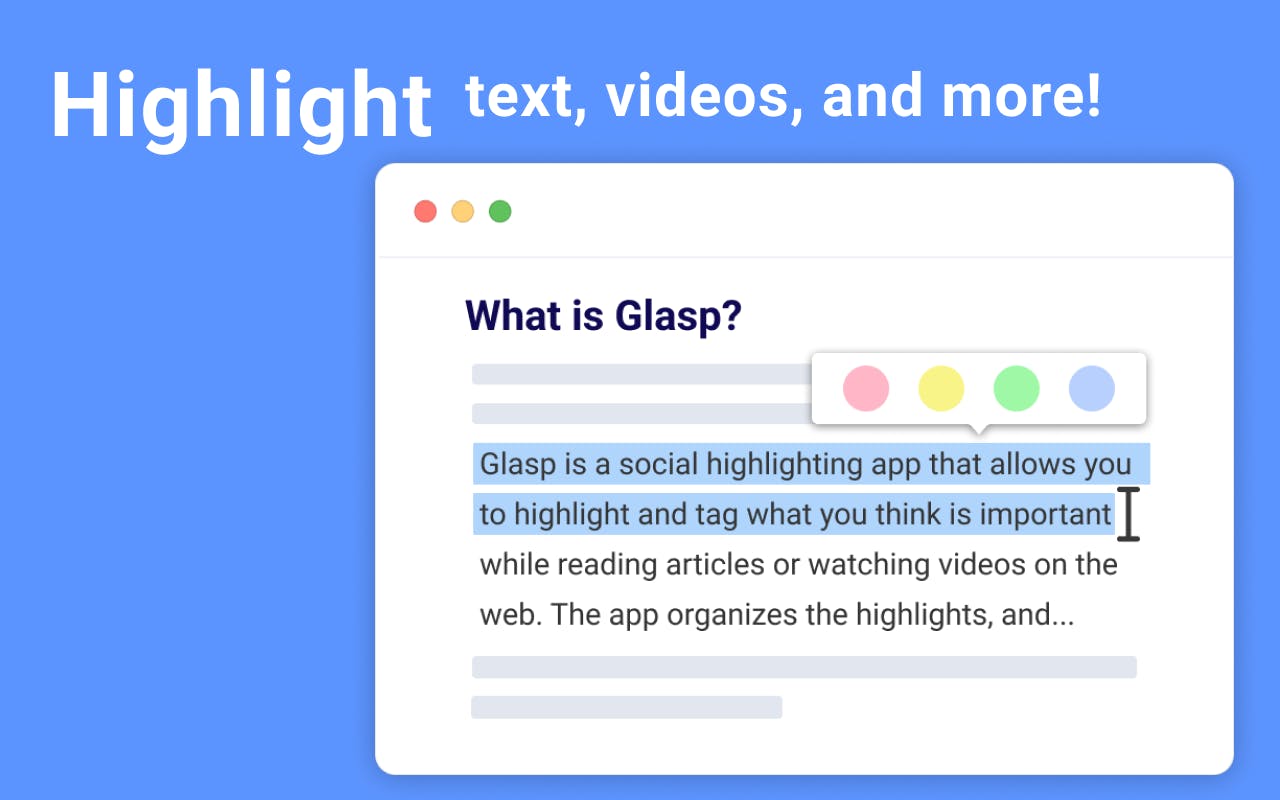
Glasp for Firefox extends Glasp’s social highlighting and AI-reading platform to Firefox. Users can highlight webpages, PDFs, images, and YouTube transcripts; add notes and tags; generate summaries; and sync a searchable library across browsers and mobile apps. Exports to common knowledge tools reduce lock-in.
The release is mainly a distribution and retention improvement for an existing network. Glasp reports three million users, a newsletter above 500,000, a two-person team, organic growth, and modest outside funding. Its pricing page separately says more than two million highlighters, so cohort definitions and active usage need verification.
The opportunity lies in capital-efficient scale, accumulated personal knowledge, public annotations, and strong organic discovery. The weakness is unproven monetization: paid users, ARR, conversion, retention, and AI gross margin are undisclosed. At $150 or $360 annually, Glasp needs substantial conversion or higher-value team/API products, while browsers and AI platforms can replicate basic features.
Final decision: DD. Reported scale and founder persistence merit formal diligence, conditional on verified active cohorts, subscription economics, privacy controls, and financing terms.
Product Overview
Glasp addresses fragmentation in online learning: readers otherwise copy passages into notes, lose source context, or keep separate stores for articles, PDFs, YouTube, Kindle, and audio. The Firefox extension adds another browser to the same account and library.
Features include four-color highlights, notes, tags, search, PDF/image capture, YouTube transcript highlighting, multi-model summaries, an AI Clone based on saved material, daily resurfacing, exports, and an MCP connector. The official highlighter page reports a 4.5 Chrome rating and more than two million highlighters.
The Firefox listing showed version 2.1.2, three five-star reviews, and broad access to website activity and content. This is too little evidence to assess Firefox retention. Pricing is transparent: Free includes unlimited public highlights and limited AI; Pro costs $15 monthly or $150 annually and adds private highlights, higher AI allowances, transcription, and Notion sync; Unlimited is $36 monthly or $360 annually. Students receive 40% off Pro.
Founder and Team Assessment
Kazuki Nakayashiki is co-founder and CEO; Kei Watanabe is co-founder and product lead. The company says both began as non-engineers and learned to build while iterating with users. Five years of operation demonstrate persistence, customer discovery, content marketing, and exceptional output from two people.
The founders report more than 750 one-on-one onboarding calls for the first thousand users and several audience pivots. Yet a two-person team creates key-person, security, support, and execution concentration. Prior exits, ownership, engineering depth, and hiring plans are not sufficiently disclosed. Untapped lists Glasp in its portfolio; private round documents were not found.
Founder Assessment: Persistent, capital-efficient builders with strong user empathy; organizational depth and enterprise capability remain unproven.
Market Opportunity
The initial segment is researchers, students, writers, analysts, and knowledge workers who save online material weekly. Assuming 50 million reachable power users and 2% paid penetration at $150 annually yields $150 million ARR; these are scenario inputs, not company forecasts.
Teams, classrooms, publisher tools, enterprise research, and APIs could expand the market. For example, 50,000 teams at $5,000 annually would add $250 million ARR, but enterprise use requires privacy, permissions, administration, and sales capabilities not yet demonstrated.
Information overload and AI assistants’ need for trusted personal context create favorable timing. Generic summarization is commoditizing, however. Venture scale requires recurring, high-margin value from accumulated knowledge and community distribution, not free SEO utilities alone.
Traction and Growth Signals
Glasp’s growth story reports growth from zero in 2020 to three million users, a newsletter above 500,000, a two-person team, and a 37-fold rise in ChatGPT referrals over four months. The pricing page states two million-plus highlighters. These company-reported figures use different definitions; MAU, retained highlighters, and overlap with viral summary tools are unknown.
A stale 2023 press kit reported 20,000 MAU, 25% six-month retention, 30%-plus monthly growth, 210,000 core-extension installs, and one million YouTube-summary installs. That history supports demand but not current engagement. The Firefox Product Hunt launch showed 115 points, number-eleven daily rank, 83 followers, and one review; Mozilla had three reviews. These are awareness signals, not PMF. A May 2026 price increase indicates active monetization, but ARR and subscriber response are undisclosed.
Traction Assessment: Exceptional top-of-funnel scale and organic distribution, with engagement and monetization unverified.
Competitive Position
Direct competitors include Readwise Reader, Matter, Glasp-like Liner, Hypothesis, Diigo, Weava, Raindrop.io, Instapaper, Pocket successors, and annotation features in Notion or Obsidian. Free alternatives include browser bookmarks, local notes, Kindle highlights, and general AI summarizers. Google, Microsoft, Apple, OpenAI, Anthropic, and browser vendors can bundle capture and summarization.
Glasp differentiates through public social highlighting, accumulated content, cross-platform sync, open exports, search distribution, its newsletter, AI Clone, and MCP access. Personal history creates switching cost; public contributions may improve discovery. Openness also raises privacy and consent risk, while portability limits lock-in.
Users might stay after a platform copy because Glasp preserves history, community, neutrality, and discovery. Retention and network-usage data must validate that thesis.
Defensibility Assessment: Medium
Business Model and Economics
Revenue comes from Pro and Unlimited subscriptions; free public highlights seed content and distribution. APIs, teams, education, and enterprise tools are plausible future lines, not disclosed current revenue.
Variable costs include model inference, transcription, storage, indexing, moderation, support, payments, and browser maintenance. Generous AI allowances could compress margin. Organic search, newsletter, community, referrals, Product Hunt, and answer-engine discovery may keep CAC low, but dependence on search and AI rankings is fragile. Diligence needs conversion, retention, contribution margin by plan, free-user AI cost, and CAC payback.
Unicorn Path
Assume an 8x ARR multiple for a high-growth consumer/prosumer knowledge platform. A $1 billion valuation requires about $125 million ARR.
At $150 annual Pro revenue, that requires roughly 833,000 subscribers; at $360 Unlimited revenue, about 347,000. Against three million reported users, the all-Pro scenario implies 27.8% conversion—far above typical freemium consumer software. A blended team model is more plausible: 300,000 Pro users at $150 plus 16,000 teams at $5,000 equals $125 million ARR.
Glasp must convert active cohorts, build team administration, preserve a trusted content graph, maintain strong organic distribution, and keep AI gross margins high. It also needs a larger team without losing capital efficiency.
Unicorn Path: Conditional
Valuation Assessment
Secondary funding data reports approximately $400,000 raised across early rounds and investors including Goodwater, Untapped, CyberAgent Capital, and angels. Untapped’s portfolio confirms the company relationship, but exact round amounts, SAFE caps, ownership, current raise, and investor rights are not public.
No ARR, growth, margin, or retention data supports a responsible price range. User count alone cannot establish valuation.
Valuation Attractiveness: Not Assessable
Required inputs are ARR and growth, paid cohorts, gross margin, burn, runway, cap table, SAFE obligations, round size, valuation cap, option pool, liquidation preferences, and pro-rata rights.
Key Risks
- Monetization gap: Free scale may not convert at venture-relevant rates.
- Activity ambiguity: Cumulative users may overstate retained core usage.
- Commoditization: Browsers and AI platforms can bundle summaries and chat.
- Privacy: Public defaults and broad extension permissions can damage trust.
- Team concentration: Two founders cover security, support, browsers, AI, and growth.
- Dependencies: App stores, models, integrations, and referral engines control access.
- Margins: Heavy AI and transcription usage may be structurally expensive.
- Weak lock-in: Portability builds trust but lowers switching friction.
- Content risk: Public annotations may expose copyrighted or sensitive material.
- Financing opacity: Price, ownership, and dilution are unknown.
Final Assessment
Venture Potential: 76/100
| Category | Score |
|---|---|
| Market Size and Expansion Potential | 17/20 |
| Traction and Growth Evidence | 17/20 |
| Founder and Team | 12/15 |
| Product Strength | 8/10 |
| Distribution Potential | 13/15 |
| Business Model and Economics | 4/10 |
| Defensibility | 5/10 |
| Total | 76/100 |
User scale, organic distribution, and founder efficiency are strongest. Monetization evidence, team depth, and platform defensibility are weakest.
Evidence Confidence: 75/100
Products, pricing, founders, platform coverage, Firefox reviews, and investor relationships are publicly supported. Growth figures are company-reported and use differing definitions. Funding totals are secondary. Revenue, paid conversion, current retention, margin, and cap table are unavailable.
Final Decision: DD
Reported scale and capital efficiency justify diligence. The decision depends on whether three million users represent retained knowledge behavior and whether paid cohorts finance AI usage at attractive margins.
Upgrade Conditions
- Verified ARR above $2 million with strong growth.
- Paid conversion and 12-month subscriber retention supporting efficient expansion.
- Gross margin above 75% after AI and transcription costs.
- Evidence that public/social discovery improves retention or acquisition.
- Successful team product with growing ACV.
- Financing terms aligned with verified revenue quality.
Downgrade Conditions
- Most reported users belong only to viral free tools.
- Weak paid retention after the 2026 price increase.
- Model costs make high-usage plans structurally unprofitable.
- Material privacy, extension-permission, or content-consent controversy.
- Search or AI referral changes sharply reduce acquisition.
Questions for Further Diligence
- How are “three million users,” “two million highlighters,” installs, and MAU defined?
- What are current ARR, MRR growth, paying users, and plan mix?
- What are free-to-paid conversion and 3-, 6-, and 12-month retention?
- What percentage of users create highlights weekly versus use only summaries?
- What is gross margin by plan after model, transcription, and storage costs?
- Which channels drive retained users, and what is CAC and payback?
- How much discovery or retention comes from public social highlights?
- What privacy controls govern public-by-default annotations and extension access?
- What is the roadmap for teams, classrooms, APIs, and enterprise administration?
- What are team structure, founder roles, hiring plans, burn, and runway?
- What are the cap table, SAFE obligations, current raise, and proposed valuation?
- Why will users stay if browsers or AI assistants bundle equivalent features?