
Table of Contents
Oqoqo Investment Report
Category: AI-agent evaluation and developer infrastructure
Company Stage: Pre-seed; newly launched
Founder or Founders: Haritha Nair and Renzo Viale
Headquarters: San Francisco Bay Area; legal headquarters not publicly verified
Funding: $1.5 million reported funding to date; round terms and valuation not disclosed
Business Model: Usage-based SaaS with subscriptions and prepaid evaluation runs
Product Hunt Launch Date: August 10, 2026
Report Date: August 13, 2026
| Investment Metric | Assessment |
|---|---|
| Venture Potential | 60/100 |
| Unicorn Path | Conditional |
| Valuation Attractiveness | Not Assessable |
| Evidence Confidence | 52/100 |
| Final Decision | Watch |
Executive Summary
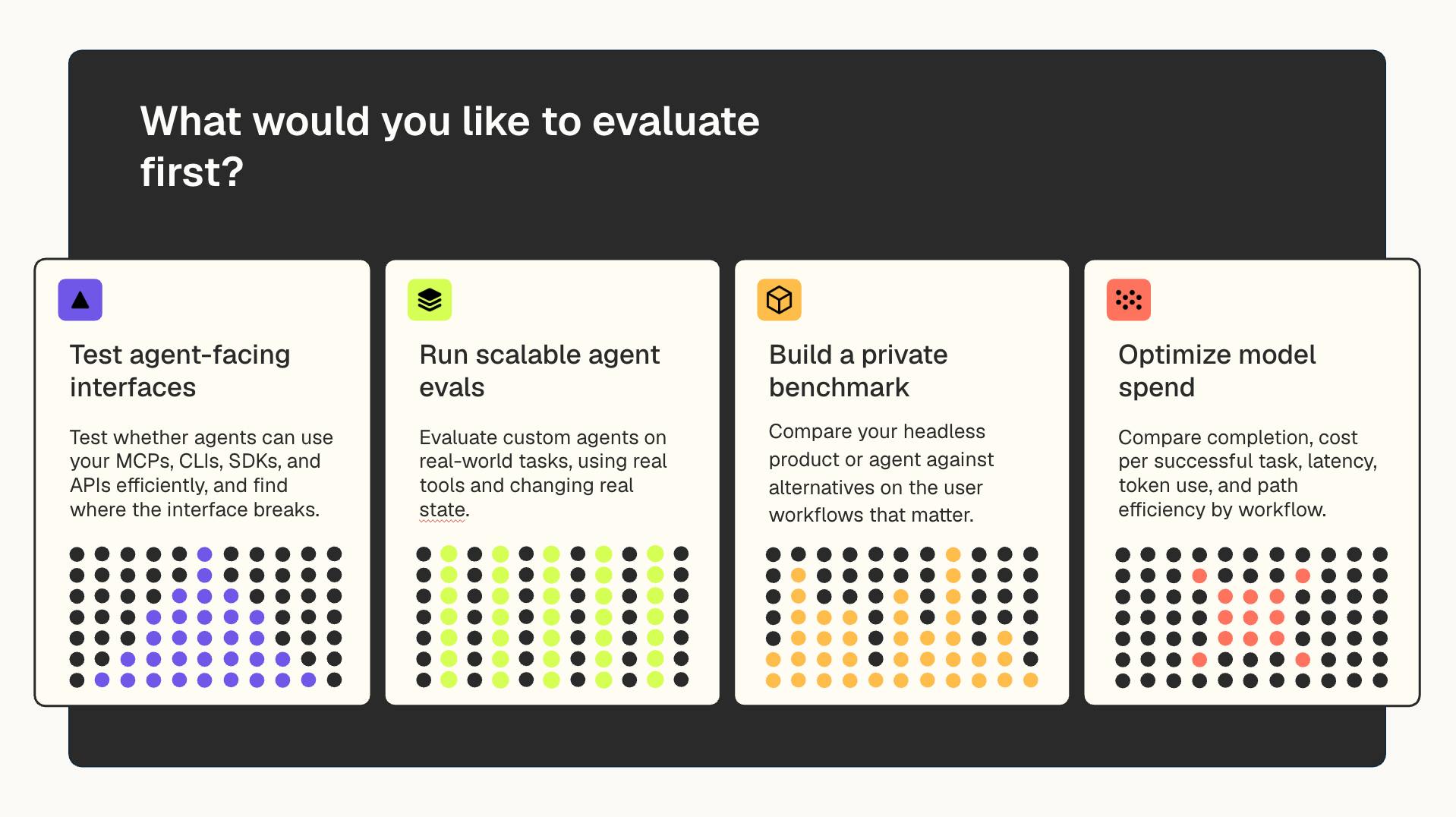
Oqoqo provides managed infrastructure for evaluating how coding agents and AI models perform on realistic, company-specific tasks. Teams define tasks, environments, interfaces and success rubrics; Oqoqo runs agents in isolated cloud sandboxes and reports pass rates, trajectories, token usage, cost and interface friction (official website; documentation).
The product addresses an emerging problem: public model benchmarks do not tell a developer-tools company whether agents can reliably discover and use its SDK, CLI, MCP server or API. Oqoqo’s emphasis on reproducible real-world tasks and agent-facing product interfaces is more specific than generic LLM observability.
The strongest investment signals are the founding team and evidence of substantive product execution. Haritha Nair has software engineering, ML and AI-product experience at Microsoft, AWS and Windsurf, while Renzo Viale combines enterprise AI-product work with early-stage investing (Nair profile; Viale profile). The company has also secured $1.5 million in pre-seed funding, according to investor Bee Partners (Bee Partners).
The central concern is commercial validation. No reliable public information was found on revenue, paying customers, active teams, retention, production usage or gross margin. Oqoqo’s Product Hunt launch ranked first for the day and generated launch attention, but occurred only three days before this report and cannot establish product-market fit (Product Hunt awards).
Decision: Watch. The product appears credible and the company quality is promising, but the venture case requires evidence that agent-interface evaluation is a recurring, budgeted workflow rather than an occasional test.
Product Overview
Oqoqo replaces manually running coding agents against ad hoc examples and comparing screenshots or anecdotal outputs. Users define tasks, attach files, machines, tools and success rubrics, then compare agents, models and “treatments”—such as a raw agent versus one given an SDK, skill or MCP interface (core documentation).
Core capabilities include isolated cloud execution, custom benchmarks, trajectory capture, pass/fail evaluation, regression testing, model comparisons and analysis of token cost and product-interface friction. Supported agents include Claude Code, Codex, Cursor, GitHub Copilot, OpenCode, OpenClaw, Pi and Hermes (use cases).
Pricing is accessible but currently low-ACV: Free includes 100 monthly runs; Pro costs $20 per month for 300 runs; Ultra costs $60 for 1,000. Top-ups cost approximately $0.10–$0.20 per run, while model inference is paid separately through customers’ own providers (pricing).
Product quality: Strong for a newly launched product. The working application, detailed documentation, multiple interfaces—dashboard, CLI and MCP—and clear evaluation model suggest more than a superficial launch. Independent reliability testing and customer references remain unavailable.
Founder and Team Assessment
Haritha Nair is the technically strongest verified founder. Her public history includes software engineering and product roles at Microsoft, an AWS technical-product internship, a product-strategy role at Windsurf, ML research publications, and open-source work including participation in Google Summer of Code (LinkedIn; GitHub).
Renzo Viale’s background includes enterprise ML-product adoption, wealth management, an MBA from Berkeley Haas and venture roles associated with NFX and NuMundo Ventures. His profile indicates relevant commercial, financing and product exposure, although less demonstrated infrastructure-engineering depth than Nair (LinkedIn).
Both founders publicly list full-time Oqoqo roles. LinkedIn exposes the two founders but no clearly verified broader employee base; therefore team size beyond two is not verified (company profile). No previous founder exit was found.
Founder Assessment: Strong technical and product-market fit, with credible commercial exposure, but startup scaling and repeatable enterprise sales remain unproven.
Market Opportunity
The initial customer is narrower than “all AI developers”: developer-platform and AI-application teams that need to test whether coding agents can reliably use their APIs, SDKs, CLIs, MCP servers and documentation.
There is plausible willingness to pay when failed agent interactions affect adoption, support costs or enterprise reliability. However, Oqoqo must demonstrate that this pain creates a recurring evaluation budget distinct from existing QA, observability and model-evaluation spending.
A reasonable bottom-up scenario—not a verified market figure—is:
- 20,000–100,000 globally relevant agent-building or developer-platform teams;
- $5,000–$25,000 potential annual spend after enterprise features and substantial usage;
- Implied serviceable revenue opportunity of approximately $100 million–$2.5 billion.
The lower end is insufficient for a durable unicorn; the upper end requires Oqoqo to become a standard continuous-testing layer rather than a standalone benchmarking utility. Adjacent opportunities include general agent regression testing, production observability, benchmark marketplaces, compliance reporting and evaluation APIs.
Traction and Growth Signals
Oqoqo was Product Hunt’s #1 product of the day on August 10, 2026 (awards page). A third-party tracker reported approximately 237 launch-day upvotes, while Product Hunt search results showed roughly 767 followers shortly after launch. These are awareness signals only.
More meaningful product-activity evidence includes a developed documentation site and a series of technical articles published from April through August 2026 covering agent trajectories, harnesses, interface affordances and benchmark experiments (Oqoqo blog). This supports founder engagement and domain expertise, but not commercial adoption.
Revenue, active users, paying customers, retention, run volume, customer references, web traffic and conversion are not publicly disclosed. No independent customer reviews or public case studies were found.
Traction Assessment: Active product development and positive launch attention, but commercially unverified.
Competitive Position
Direct competitors include Braintrust, LangSmith, Langfuse and Arize Phoenix. These products already combine various forms of tracing, datasets, experiments and evaluation. Braintrust charges $249 per month for its Pro platform, LangSmith starts team pricing at $39 per seat, and Langfuse offers paid plans from $29 per month through enterprise tiers (Braintrust; LangSmith; Langfuse).
Free and indirect alternatives include Arize Phoenix’s open-source platform, internal Python test harnesses, CI pipelines, spreadsheet-based comparisons and repeatedly running agents manually (Phoenix).
Oqoqo’s current differentiation is its focus on whether external agents can use a product’s interfaces—not merely whether an application’s model output is good—and managed realistic sandboxes with trajectory-level analysis. Its low self-serve pricing may encourage adoption.
If a large evaluation platform launched the same capability within six months, customers would remain only if Oqoqo had accumulated hard-to-recreate task suites, historical regression data, superior multi-agent integrations and deeply embedded CI workflows. None of these advantages is yet proven at scale. Switching costs and network effects appear low today.
Defensibility Assessment: Low to Medium
Business Model and Economics
Revenue comes from monthly run allowances and prepaid usage. The maximum published subscription is only $720 annually, excluding top-ups, so a venture outcome requires much larger usage accounts or enterprise contracts.
Oqoqo charges for orchestration and cloud infrastructure while customers supply model API keys or subscriptions. This reduces direct inference exposure, but sandbox compute, storage, orchestration and support remain variable costs (pricing). Gross margin is not disclosed and could be pressured if long-running agent tasks consume substantially more infrastructure than the per-run price anticipates.
Enterprise adoption will likely require SSO, access controls, audit logs, data-retention policies, private deployment options and contractual security commitments. Materially, the public privacy and terms pages are still placeholders (privacy; terms). That is a significant procurement weakness for a product that may receive source code, files and credentials.
Unicorn Path
Assume a 10× forward-ARR multiple, appropriate only for a high-growth software infrastructure company with strong retention and gross margins above roughly 70%. This implies:
Required ARR = $1 billion ÷ 10 = approximately $100 million.
At the current $720 annual Ultra subscription, Oqoqo would need approximately 139,000 paying organizations, which is not credible for the narrow initial segment. At a hypothetical $10,000 enterprise ACV, it would need 10,000 customers; at $25,000 ACV, 4,000 customers.
A unicorn path therefore requires moving beyond low-priced self-service runs into continuous enterprise evaluation, CI integration, governance, production monitoring and potentially proprietary benchmark data. If growth or margins are weaker and the applicable multiple is 5–8× ARR, required revenue rises to approximately $125–$200 million.
Unicorn Path: Conditional
Valuation Assessment
Bee Partners reports $1.5 million in funding to date and identifies the last stage as pre-seed (Bee Partners). NuMundo Ventures also lists Oqoqo in its portfolio, and Sterling Road publicly lists the company among its investments (NuMundo; Sterling Road).
Round date, security type, SAFE cap, ownership, post-money valuation and current fundraising terms are not publicly disclosed. Revenue is also unknown.
Valuation Attractiveness: Not Assessable
Assessment requires current ARR, growth, gross margin, retention, burn, runway, cap table, SAFE terms, round size, post-money valuation and liquidation preferences.
Key Risks
- No verified revenue, customer or retention evidence.
- The evaluation workflow may be episodic rather than recurring.
- Established observability platforms can bundle similar functionality.
- Current self-serve ACV is too low for venture-scale revenue.
- Unverified sandbox compute economics and gross margin.
- Missing public privacy policy and terms create security and procurement risk.
- Low switching costs before benchmark history and CI integrations accumulate.
- Heavy founder dependency in a two-person verified team.
- Agent vendors may provide first-party evaluation tools.
- Rapid model and agent changes create ongoing integration burden.
Final Assessment
Venture Potential: 60/100
| Category | Score |
|---|---|
| Market Size and Expansion Potential | 15/20 |
| Traction and Growth Evidence | 5/20 |
| Founder and Team | 13/15 |
| Product Strength | 8/10 |
| Distribution Potential | 8/15 |
| Business Model and Economics | 6/10 |
| Defensibility | 5/10 |
| Total | 60/100 |
The strongest elements are founder quality, product execution and favorable agent adoption timing. The weakest are commercial validation, defensibility and the gap between current pricing and venture-scale revenue.
Evidence Confidence: 52/100
Verified information includes product functionality, pricing, documentation, founders’ public work histories, launch date and investor-reported funding. Product claims are primarily company-reported. Market sizing and future ACVs are analyst assumptions. Revenue, customers, retention, gross margin, burn, runway, valuation and financing terms remain unavailable.
Final Decision: Watch
Oqoqo is sufficiently interesting to monitor but not yet supported by the commercial evidence required for formal diligence. Product quality and company quality are promising; venture-scale potential remains conditional on recurring enterprise demand and stronger defensibility.
Upgrade Conditions
- At least $1 million ARR or equivalent credible contracted revenue.
- Multiple named customer references using Oqoqo in recurring CI workflows.
- More than 70% six-month logo retention.
- Gross margin above 70% after sandbox costs.
- Demonstrated enterprise ACV above $10,000.
- Published privacy, security and data-processing terms.
- Evidence that organic and partner channels outperform launch-driven acquisition.
Downgrade Conditions
- Weak paid conversion or predominantly one-off benchmark usage.
- Gross margins materially below software norms.
- Direct replication by LangSmith, Braintrust or agent vendors.
- Product activity or integration coverage declining after launch.
- Material credential, source-code or sandbox security incident.
- Founder disengagement or misleading traction claims.
Questions for Further Diligence
- What are current MRR, paying organizations and monthly run volume?
- What percentage of teams rerun experiments within 30, 90 and 180 days?
- How many customers use Oqoqo in CI versus one-time benchmarking?
- What are free-to-paid conversion and logo churn?
- What is gross margin per run after sandbox compute, storage and orchestration?
- Which acquisition channels have generated retained paying customers?
- What enterprise security, isolation and credential controls are implemented?
- What are burn rate, runway and current team structure?
- What are the founders’ ownership, vesting and full-time commitments?
- What were the $1.5 million round’s SAFE cap, discounts and investor rights?
- What prevents Braintrust or LangSmith from reproducing the core workflow?
- What current valuation and financing terms are being offered?