
Table of Contents
Kira Community Investment Report
Category: Consumer AI image/video creation app expanding into an AI-creation social community (hashtag-curated feeds)
Company Stage: Bootstrapped/pre-seed stage; operating since 2025 (Singapore-registered Kira Art Pte. Ltd.); third Product Hunt launch, first community-layer release
Founder or Founders: Owen Longbo (龙博), founder; team members identified include Leila Lei (Tokyo) and Cici Li producthunt
Headquarters: Kira Art Pte. Ltd., Singapore; distributed team help.kira
Funding: No reliable public information was found; the product is listed in a bootstrapped/pre-seed/angel-only launch directory superpublic
Business Model: Freemium credit-based subscription (Basic, Pro, Max tiers; image generation/edits cost 5 credits, video 60 credits; credits reset monthly) help.kira
Product Hunt Launch Date: August 27, 2026 (Kira Community; the product’s third launch overall) launly
Report Date: August 30, 2026
| Investment Metric | Assessment |
|---|---|
| Venture Potential | 49/100 |
| Unicorn Path | Improbable |
| Valuation Attractiveness | Not Assessable |
| Evidence Confidence | 40/100 |
| Final Decision | Pass |
A disambiguation note: several funded companies named “Kira” exist — a Miami fintech ($6.7M seed), Kira Learning (AI Fund/NEA-backed), and Kira Systems. None is affiliated with kira.art; conflating their funding records with this company would be a material error. webull
Executive Summary
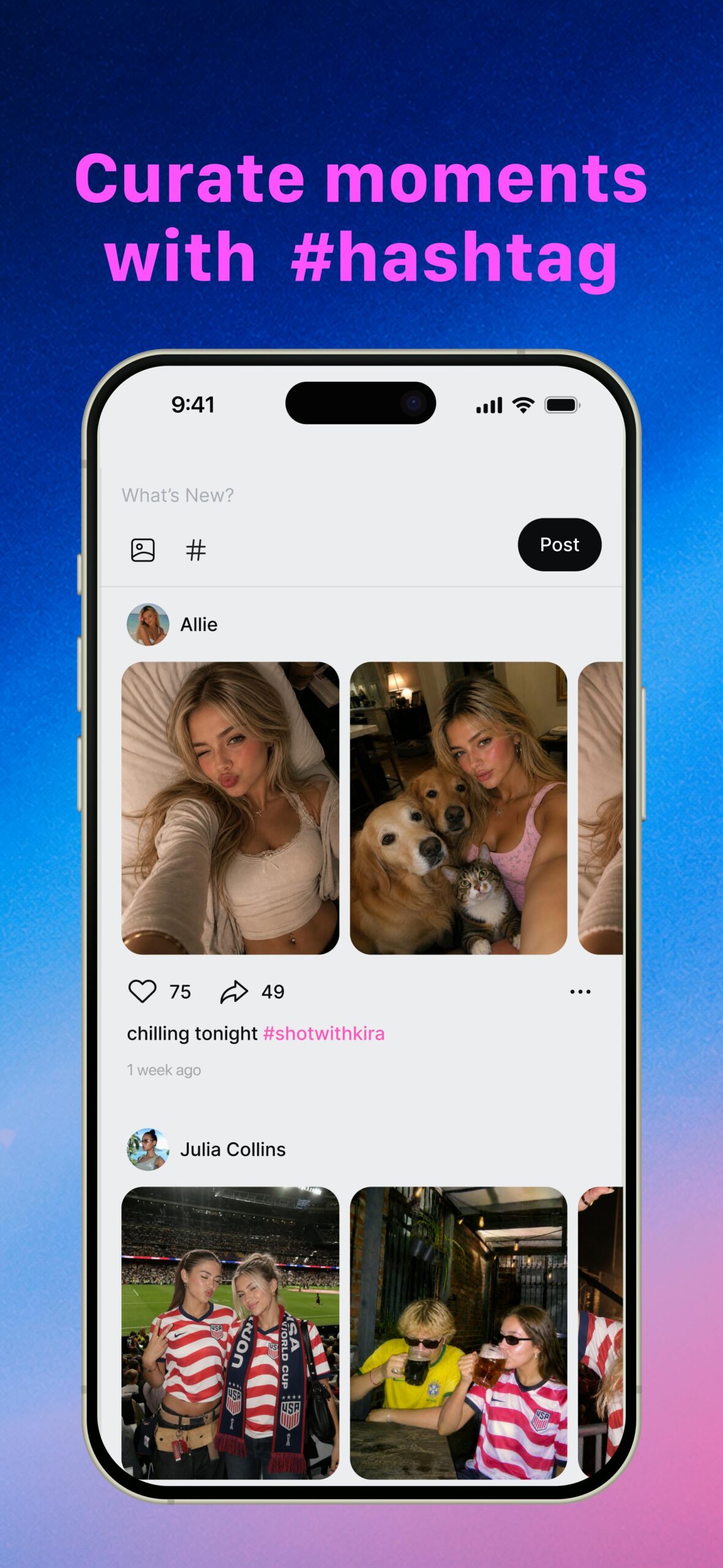
Kira is a conversational AI creation tool: users describe an idea or upload a photo, receive portraits, cinematic shots, or videos, and refine results by talking rather than using prompts or layers. The featured gallery reveals the real use case — vanity and lifestyle imagery (“You as Spiderman,” “U in Private Jet,” “Muscle Maxing,” “Y2K Beach Pic”) optimized for social sharing. Kira Community, launched August 27, 2026, adds a social layer: creations become curatable “moments” tagged with hashtags, aggregated into theme-based feeds and profiles — the company’s stated pivot “from a tool to a place”. producthunt
The product is real, iterating steadily (video and music generation added in version 4.0), and has a coherent retention thesis: creation tools have low engagement ceilings, while communities compound. The strongest positive signal is a year of consistent shipping — three Product Hunt launches, 1.6K followers, and a #10 Product of the Day result — plus well-designed growth mechanics where sharing and posting earn credits. producthunt
The most important concern is structural: the core capability is orchestrated from third-party models — the founder confirms Kira “orchestrates existing models” with its own pipeline — while Google, OpenAI, and Meta now give away conversational image editing for free at unmatched scale. No user, revenue, retention, or funding data is publicly disclosed, regional blocks exclude multiple markets, and the community layer competes directly with Instagram’s native distribution. producthunt
The decision is Pass: the venture case fails on defensibility and scale economics, not on execution. This profile — a small, shipping, monetized consumer app with no disclosed outside capital — reads as a bootstrapped business, which is a viable path for this team but not a venture-scale one.
Product Overview
Problem: Casual users want polished, social-ready images of themselves and their ideas without learning prompts, layers, or editing software — and once created, they want an audience for them. producthunt
How it works: Users describe an idea or upload a photo; Kira generates portraits, cinematic shots, or videos, and edits follow conversationally. Generation modes span Lite, Nova, and Ultra tiers; a Kira Nova model powers top picks. With Kira Community, every creation becomes a curatable moment — captionable, hashtag-tagable (#portrait, #goldenhour, #pet), hosted on a profile, and surfaced in hashtag-based feeds. producthunt
Core features: Conversational generation and editing; photo-to-portrait and cinematic transformations; video generation; a credit-based referral system (50 credits per referred user, no limit; posting with #pet earns credits); hashtag community feeds and profiles. help.kira
Target users: Casual consumers producing social-media imagery, initially in accessible regions; the team notes Kira is not yet available in every region, with users in Vietnam and the Philippines reporting access blocks. producthunt
Pricing: Free tier with daily credits; paid Basic, Pro, and Max subscriptions billed monthly or annually, varying by credit amount and model access; images cost 5 credits, videos 60; credits reset monthly without rollover; add-ons available. Exact plan prices were not verifiable in this research. help.kira
Primary benefit: Studio-grade social imagery from conversation. Replaces: photo editors, prompt-based AI tools, and posting outputs to Instagram as a separate step.
Founder and Team Assessment
The founder is Owen Longbo (龙博), named on the Product Hunt launch and an external team-mapping page; he writes founder content for the Chinese startup ecosystem and was featured in a “14 unreported startups” piece by the outlet 暗涌 Waves. Team members identified publicly include Leila Lei (Tokyo) and Cici Li, suggesting a small, distributed team around a Singapore holding entity. The LinkedIn page describes the origin story — “a fun AI image editor, people used it to mess with friends’ photos” — and steady expansion into video and music. producthunt
No information is verifiable about the founder’s prior companies, exits, or funding history in English-language sources. Technical capability is evident in shipped product; commercial capability is suggested by disciplined monetization mechanics but unproven at scale. Team size, full-time commitment, and key-person depth are all unassessed.
Founder Assessment: A shipping-oriented founder with a coherent consumer thesis, but background, commercial track record, and team depth are unverified.
Market Opportunity
The initial segment is casual consumers in accessible regions who want AI-enhanced personal imagery for social sharing, willing to pay small subscriptions. The category is genuinely large and monetizable — consumer AI photo apps like Remini generate nine-figure revenues, and Google’s conversational image editing reached hundreds of millions of users after its 2025 release. Willingness to pay is proven; the problem is that the price anchor is zero, set by the largest platforms. media
Bottom-up (analyst assumptions): at an effective $6–15/month, a business of 50,000–150,000 paying subscribers yields $4–20M ARR — a healthy bootstrapped or small-VC outcome, but two orders of magnitude below unicorn scale. The community layer could expand the ceiling if AI-created personal content becomes a dominant social format, but that market is contested by Instagram itself, which natively hosts sharing. Adjacent expansions (music, video, commerce integrations) raise costs faster than ARPU in most consumer precedents. The addressable market supports a real business; under current competitive conditions it does not credibly support venture-scale revenue for an orchestrator.
Traction and Growth Signals
Available evidence: three Product Hunt launches across the product’s life, with the Community launch achieving roughly 110 votes, 11 comments, and a #10 daily ranking; 1.6K followers and a 5.0 rating (from a single review) on the product page. The live gallery shows active creation across dozens of templates; the referral and credit mechanics are operational; LinkedIn shows version 4.0 adding video and music generation. An active help center with billing, terms, and FAQ articles indicates a maintained commercial product. producthunt
Missing metrics: everything commercial. No user counts, downloads, paying subscribers, revenue, retention, or conversion data is public. The X account is essentially inactive, and the company’s presence in bootstrapped/pre-seed launch directories suggests no institutional funding. Regional access blocks further constrain measurable growth. producthunt
Traction Assessment: Consistent shipping and modest launch traction, but commercially unverified.
Competitive Position
| Competitor | Position | Notes |
|---|---|---|
| Google Gemini image editing | Free conversational editing | Massive distribution; the exact “edit by talking” experience media |
| ChatGPT / OpenAI | Conversational image generation and editing | Free-to-cheap, universal reach |
| Meta AI / Instagram | In-app editing plus native social layer | Owns the sharing destination |
| Midjourney | Community-first AI creation | Proven tool-plus-gallery model at scale |
| Civitai, SeaArt, Tensor.Art, PixAI | AI art communities with credit economies | Established community gravity |
| Remini, PhotoAI, Fotor, Media.io | Consumer photo enhancement subscriptions | Direct pricing and feature competitors media |
Kira’s differentiation is packaging: conversation-only UX, lifestyle-focused templates, an integrated hashtag community, and share-to-earn incentives. Pricing appears competitive within the paid-app set. But there is no proprietary model — the founder acknowledges orchestrating existing models — and no data or network moat yet. producthunt
The platform question is fatal as posed: if Google, OpenAI, or Meta shipped the identical experience tomorrow — functionally, they already have the editing core — Kira’s remaining answer is its community. A nascent community is not a credible answer against Instagram.
Defensibility Assessment: Low
Business Model and Economics
Revenue is a freemium credit subscription: three tiers, monthly or annual, with 5 credits per image and 60 per video, monthly resets, no rollover, and non-refundable terms. The structure is sensibly engineered: monthly resets eliminate credit liability, add-ons capture heavy users, and referral credits (50 per user) make word-of-mouth economically rewarding. help.kira
The economics concern is video: 60 credits per generation means video-heavy usage carries real inference cost against consumer price points, and usage growth raises costs directly — whether revenue outruns inference depends on tier pricing and mix, none of which is disclosed. Consumer risks compound: novelty-driven churn, App Store fees where applicable, payment processing via Stripe, and a support burden across regions. Community hosting adds infrastructure and moderation costs without a defined monetization layer. Free-to-paid conversion, renewal rates, and CAC are all unknown.
Unicorn Path
Assume a 5–8x revenue multiple, appropriate for consumer subscription apps (lower than B2B SaaS due to churn and platform dependency). A $1 billion valuation requires roughly $125–200M revenue, implying on the order of 1–2 million paying subscribers at effective consumer price points. That is Remini-tier scale, achieved by a handful of apps globally — and those that did it owned proprietary models or unique distribution. Kira’s core capability is free from three of the largest companies in technology, its community layer must out-network Instagram, and its regional availability is restricted. Reaching that scale would require a major strategic transformation — winning AI-native social networking — against the incumbent that owns the destination. No credible sequence of steps under the current model reaches it.
Unicorn Path: Improbable
Valuation Assessment
Valuation Attractiveness: Not Assessable. No funding round, valuation, or revenue figure for Kira Art Pte. Ltd. exists in any reliable public source. The name collision with funded “Kira” companies (a $6.7M-seed fintech; AI-Fund-backed Kira Learning) makes casual database lookups actively misleading and raises the bar for verification. Assessment would require: paying-subscriber count, ARR and growth, retention cohorts, cost per video generation, funding history, and any round terms. webull
Key Risks
- Free commoditization — Google, OpenAI, and Meta provide the core conversational editing capability free with unmatched distribution media
- No model moat — the product orchestrates third-party models, with pricing and access controlled upstream producthunt
- Regional access restrictions — multiple markets blocked, shrinking TAM and signaling licensing constraints producthunt
- Zero commercial transparency — no users, revenue, retention, or funding disclosed; profile consistent with bootstrapped scale
- Community cold-start — hashtag feeds require density to be valuable; network effects unproven against Instagram’s gravity
- Video inference economics — 60 credits per video against consumer price points pressures margins as usage grows help.kira
- Small distributed team — roughly three people identified; concentrated key-person risk f6s
- Brand collision — multiple funded “Kira” companies create confusion in search, app stores, and diligence webull
- Novelty churn — vanity-image apps historically see sharp engagement decay once the fun cycle completes
Final Assessment
Venture Potential: 49/100
| Category | Score |
|---|---|
| Market Size and Expansion Potential | 13/20 |
| Traction and Growth Evidence | 8/20 |
| Founder and Team | 7/15 |
| Product Strength | 6/10 |
| Distribution Potential | 8/15 |
| Business Model and Economics | 5/10 |
| Defensibility | 2/10 |
| Total | 49/100 |
Strongest: disciplined shipping cadence, coherent tool-to-community strategy, and well-constructed monetization mechanics. Weakest: near-zero defensibility on an orchestrated stack, a free price anchor set by giants, and no commercial evidence of scale.
Evidence Confidence: 40/100
Verified: product, entity (Kira Art Pte. Ltd., Singapore), founder identity, team members, pricing structure, credit economics, launch history and results, regional restrictions. Company-reported: all product claims and the community thesis. Unavailable: revenue, users, retention, conversion, funding, team size, and valuation. The “Kira” name collision materially complicates verification.
Final Decision: Pass
Kira is a competently executed consumer product with a rational strategic pivot — but it is not a venture-scale investment candidate. The core capability is commoditized and free from better-distributed platforms, defensibility is essentially nil, no commercial data supports a growth case, and every verifiable signal (bootstrapped directories, small distributed team, restricted regions) points to a lifestyle-scale business. Pass reflects fit for venture strategy, not product quality; the company could sustain a profitable niche indefinitely.
Upgrade Conditions
- Disclosed revenue showing consumer subscription traction ($1M+ ARR with growth)
- Community retention data demonstrating network effects: returning posters, feed engagement, and user-to-user discovery independent of the creation tool
- A proprietary model or data advantage reducing dependency on orchestrated third parties
- Institutional funding with a differentiated technical thesis
- Evidence of organic viral distribution beyond credit incentives
Downgrade Conditions
- Google or OpenAI extending free conversational editing into community feeds
- Continued or expanded regional blocks indicating licensing fragility
- Community features shipping without measurable engagement
- Founder deprioritizing the product
- Any evidence that credit economics mask negative unit economics on video generation
Questions for Further Diligence
- What are current paying-subscriber counts and ARR by tier?
- What are MAU, DAU, and 30/90-day retention for the creation tool and the community separately?
- What share of generations is video, and what is the fully loaded cost per video?
- Which upstream models do you orchestrate, and under what commercial terms?
- Why are specific regions blocked, and what would open them?
- What is free-to-paid conversion, and how do referral credits affect CAC and LTV?
- What are community engagement metrics — posts per active user, hashtag feed sessions, share-out rates?
- What is the exact team size, locations, and equity structure?
- Is any fundraising underway, and at what terms?
- How do you compete against free conversational editing from Google and OpenAI?
- What is the monetization plan for the community layer itself?
- What did the earlier two Product Hunt launches teach you about retention that shaped this pivot?
Sources
- Product Hunt — Kira.art / Kira Community producthunt
- Kira — official website kira
- Kira Help Center — Billing FAQ help.kira
- Kira Help Center — Terms of Use help.kira
- Launly — launch metrics launly
- F6S — Kira Art team f6s
- Bonjour.bio — Kira.art team page (secondary) bonjour
- Kira Art — LinkedIn company page linkedin
- Superpublic — Kira listing (bootstrapped/pre-seed directory) superpublic
- NODUS — August 27, 2026 launch rankings nodus-ai
- Media.io — Kira Art alternatives overview (secondary) media
- Kira fintech funding — for disambiguation only webull