
Table of Contents
Muse Gadgets — Venture Investment Report
Prepared: 8 October 2026 | Product owner: Meta Platforms, Inc. | Decision: Pass
Snapshot
| Metric | Assessment |
|---|---|
| Product | Open-source SDKs and firmware connecting ESP32 and Linux/Raspberry Pi hardware to Meta’s Muse agent |
| User | Makers and developers building personal AI gadgets |
| Product Hunt | #4 daily rank, 185 points; launch-week snapshot |
| GitHub | Apache-2.0 SDK; about 1.7k stars and 342 forks at research time |
| Monetization | No standalone price or revenue; Home Link offered free to eligible Muse subscribers in the US |
| Commercial access | Token terms limit use to personal, non-commercial projects absent Meta’s prior written permission |
| Operating status | Meta labels the SDK unsupported; it can change or be withdrawn without notice |
| Investable company | None identified; this is a Meta product and open-source project |
| Final Decision | Pass |
Executive view
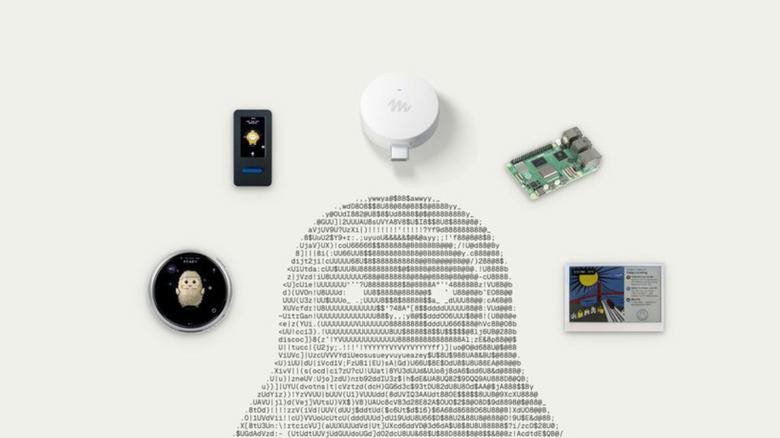
Muse Gadgets is Meta’s open-source hardware toolkit for connecting its Muse AI agent to devices people build. The public SDK supports ESP32 boards and Linux devices such as Raspberry Pi. Developers can add displays, microphones, speakers, buttons, sensors and actuators; examples include a pocket companion, e-ink briefing display and Home Assistant controller. The code and firmware use Apache 2.0, which supports experimentation and community contributions.
The project could help Meta make Muse a more persistent and embodied assistant. By enabling small devices to call into Muse, Meta can encourage more engagement with its agent, app and subscription while learning which hardware experiences people want. The Home Link offer, free with an active Muse subscription for eligible US subscribers, reinforces the strategic funnel. Community interest is visible in GitHub stars and Product Hunt votes, but these measure developer attention, not commercial demand or customer retention.
The repo and product site identify Meta Platforms, Inc. as publisher, and no independent startup, cap table, revenue stream or security available for venture investment was found. More importantly, Meta’s SDK token terms restrict use to personal, non-commercial projects. Tokens cannot be embedded in devices sold or publicly listed without Meta’s prior written permission; access is not a supported developer platform and may be suspended or withdrawn. The Apache license covers source code, not access tokens or the Muse service.
Recommendation: Pass on Muse Gadgets as a venture investment target. This is an internal strategic product of a large public company, not an independent financing opportunity. A separate startup building hardware around it would need written commercial authorization and reliable service access before its business could be underwritten. Watch the ecosystem for independent products that own their own software and can operate under durable commercial terms.
Product and strategic value
The official project describes two device paths: an ESP32 SDK for microcontroller boards and a Linux SDK for Raspberry Pi or other Linux computers. A gadget pairs with the Muse app on iOS or Android after the user enables Developer mode; each device needs an SDK token. This lets developers test physical interfaces for voice, screens, sensors, buttons and local commands rather than relying only on a phone or browser.
That is a useful developer affordance. The SDK reduces the work of connecting hardware to the Muse agent and provides examples that can help a hobbyist get to a demo faster. Home Assistant, briefing displays and voice interfaces are credible experiments because users can see an agent’s output or trigger actions in the physical environment. Open-source firmware also lets the community inspect and modify implementation details.
For Meta, the value is strategic rather than direct SDK revenue: more time in Muse, more reasons to subscribe, richer device usage and a developer community that may contribute ideas. The Home Link adds a Meta-made bridge to compatible home devices, while the open SDK broadens hardware experimentation. These benefits may support Meta’s consumer AI business, but public materials do not attribute subscription lift, retention, device sales or cost savings to Muse Gadgets.
Adoption and business model
At research time the GitHub repository showed about 1.7k stars, 342 forks and 75 commits, while Product Hunt listed the launch at #4 for the day with 185 points. The official site showed an active Discord with 205 members online. Together these indicate a maker audience is trying the project, but they do not establish sustained builds, production devices, active users or independent ecosystem revenue.
The core firmware and SDK are free and Apache-licensed. The token-gated Muse service is the dependency that matters commercially. The current Gadget SDK token terms say tokens are for personal, non-commercial use; they limit tokens to 50 devices and prohibit embedding a token in a device sold for payment or otherwise commercially distributed without Meta’s prior written permission. The terms also state that the SDK and tokens are not a supported product or developer platform and may change or stop working without notice. This sharply limits the present opportunity for third-party device makers.
Meta’s own Home Link is described as free with an active Muse subscription, US-only, one per subscriber, with claims holding a place rather than constituting an order. The likely strategic logic is subscription engagement, not hardware margin. No standalone SDK price, token revenue, hardware gross margin or partner economics are disclosed. For a third-party investor, there is no clear route to participate in this value unless Meta creates a commercial program, licenses the service, or an independent company builds a compatible alternative without dependence on restricted tokens.
Market, competition and defensibility
Personal AI hardware is an appealing but uncertain category. Voice assistants, smart speakers, wearable devices and home automation already occupy adjacent use cases. Meta has distribution, consumer products and AI capabilities that a startup cannot easily match. Open firmware also lowers barriers for hobbyists but can make the code itself difficult to monetize.
Potential defensibility would need to come from a trusted device brand, a valuable distribution channel, unique on-device capabilities, reliable integrations or a proprietary assistant relationship. Muse Gadgets does not own these as an investable standalone product: Meta owns the Muse agent, token service and Home Link. Independent hardware projects can differentiate their enclosure, sensors and workflows, but their core assistant dependency remains subject to Meta’s permission and service continuity.
The open-source project could still create strategic value for Meta by seeding experiments and keeping Muse top of mind. That is a reasonable corporate product strategy even if the project is not a standalone venture case. For a VC, evaluate independent hardware and agent startups separately, with particular attention to whether their service access, data rights and distribution survive a platform change.
Team, governance and risk
No separate founding team or company is presented. The publisher and site footer identify Meta Platforms, Inc.; company-level resources and balance sheet are not attributable to this small project. Consequently, venture diligence should not assign a startup valuation or infer a financing opportunity from repository engagement.
The main risks are structural:
- Not independently investable: No separate legal issuer, equity, cap table or reported product revenue is identified.
- Commercial-use restriction: SDK tokens are personal and non-commercial by default; selling devices that use them requires prior written Meta permission.
- Platform withdrawal: Meta can change, suspend or withdraw tokens; the service is explicitly unsupported and may stop without warning.
- Source/service distinction: Apache 2.0 grants rights to the code, not the right to use Muse or obtain tokens.
- Adoption uncertainty: Stars and votes are shallow proxies; no recurring usage, device shipments or retention is public.
- Hardware support burden: Third-party boards, microphones, network conditions and firmware updates create fragmented reliability and safety issues.
- Platform concentration: Meta controls the agent, app, token issuance and related consumer subscription.
- Strategic priority risk: Meta could redirect or discontinue the experiment as its AI priorities evolve.
Investment scorecard
| Dimension | Score | Rationale |
|---|---|---|
| User problem and appeal | 3/5 | Physical interfaces for personal agents are compelling but still exploratory |
| Product execution | 3/5 | Working open SDKs and examples enable experimentation |
| Community signal | 3/5 | GitHub stars, forks and launch votes show interest, not commercial adoption |
| Market potential | 3/5 | Large adjacent consumer hardware market, with uncertain category behavior |
| Monetization | 1/5 | No standalone revenue model; commercial token use is restricted |
| Defensibility | 2/5 | Meta platform access helps Meta but is not owned by a startup |
| Investibility | 0/5 | Meta project with no separate equity or financing vehicle identified |
| Overall | 2.1/5 | Pass; strategically relevant Meta initiative, not a standalone VC target |
Diligence questions for any adjacent investment
- Does Meta offer written commercial SDK token access, and what are its fees, service levels and revocation rights?
- Can a device maker sell a product that pairs with Muse, and what approval, branding and distribution rules apply?
- Which components can run without Muse tokens, and can a company substitute another model or assistant?
- What are active devices, weekly users, returning builders and completed projects beyond GitHub stars?
- Has Meta measured whether gadget use improves Muse subscription conversion, retention or engagement?
- What is the roadmap and support commitment for ESP32, Linux SDKs, pairing and token issuance?
- How are device users’ prompts, audio, sensor readings and credentials transmitted, retained and deleted?
- What safety controls prevent a gadget from misusing sensors or triggering unsafe home actions?
- Which hardware vendors sell compatible components, and can they support returns, firmware updates and warranties?
- If an independent startup is evaluated, what proprietary assets and customer relationship does it own beyond this Meta integration?
Sources
- Official Muse Gadgets site, ownership, token gating and Home Link offer: https://gadgets.muse.ai/
- Meta’s muse-gadget-sdk repository, SDK details, Apache-2.0 license and metrics: https://github.com/facebookincubator/muse-gadget-sdk
- Gadget SDK token terms, including non-commercial restrictions and withdrawal rights: https://gadgets.muse.ai/sdk-terms
- SDK token page and unsupported-platform notice: https://gadgets.muse.ai/settings/sdk-tokens
- Product Hunt launch page and community signal: https://www.producthunt.com/products/muse-22
Conclusion: Muse Gadgets is a useful open-source extension of Meta’s consumer AI strategy, and the code has attracted maker interest. Its current terms make the service unsuitable as the foundation of a third-party commercial device business without Meta’s written permission, and there is no separate company to invest in. Pass on the product as a direct VC target; revisit only if Meta establishes a durable commercial developer program or an independent business owns a compliant, replaceable technology stack.