
devpit — VENTURE INVESTMENT REPORT
Research date: 2026-10-08 | Product Hunt launch: 2026-10-05
SNAPSHOT
Product: devpit
Category: AI coding-agent control room / native developer tooling
Product Hunt signal: #8 daily rank and 116 points in the current page capture, with 107 followers. The launch is tagged open source and free.
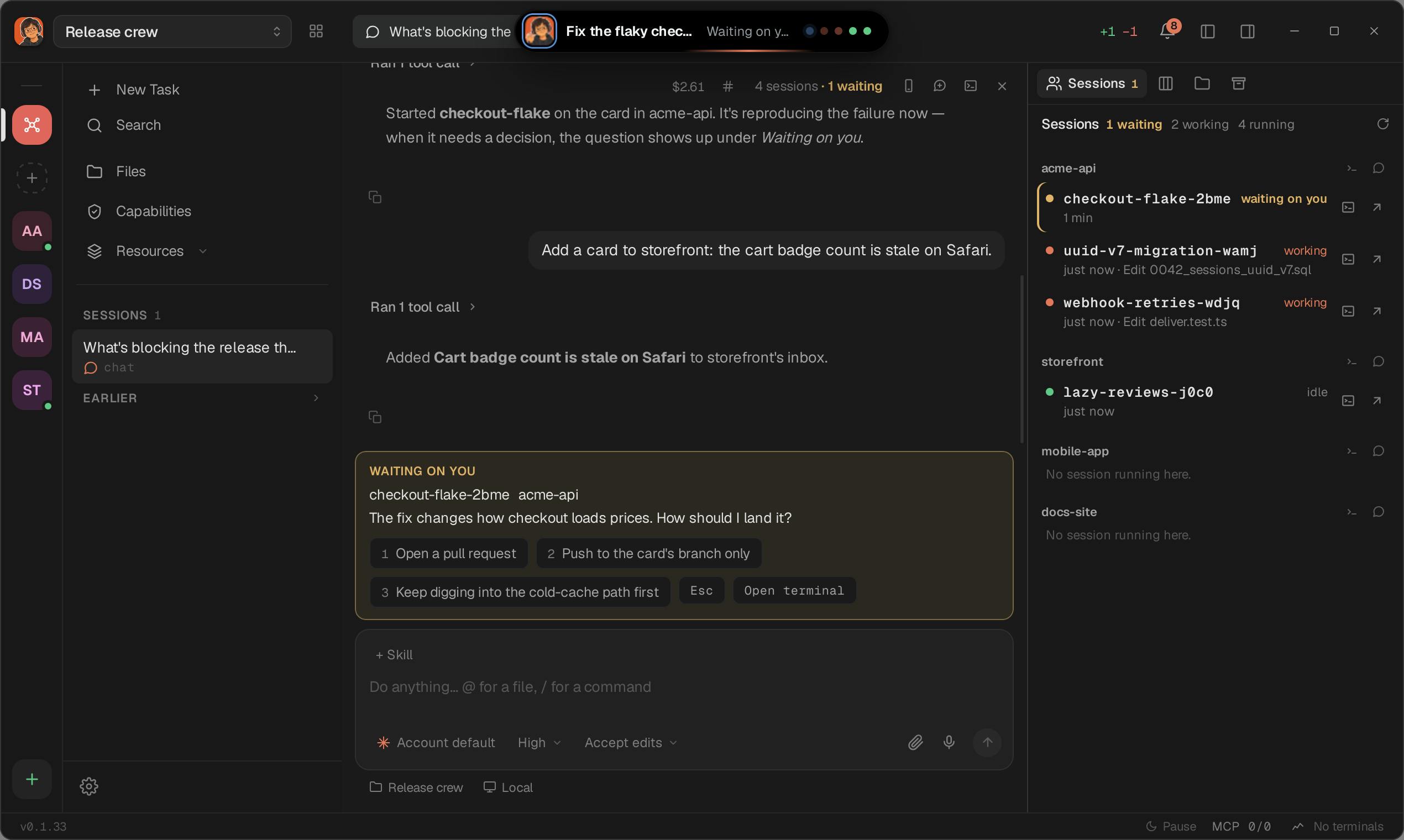
Product: Local-first desktop app that brings coding-agent terminals, a per-project board, task execution, per-call spending caps and costs, git worktrees, diffs, a browser pane, and cross-project orchestration into one interface.
Availability: Open-source Apache-2.0; repository documentation lists Linux and macOS, with Windows install documentation. Requires tmux and Claude Code for the documented setup.
Early adoption signal: The linked GitHub repository showed 11 stars and 3 forks at research time.
Preliminary decision: PASS.
EXECUTIVE SUMMARY
devpit is a native app for developers running multiple coding agents. It combines a terminal view, a project board where workflow steps launch work, cost visibility for each agent call, and an orchestrator that can see projects and delegate work. It also uses a git worktree per board card when needed, keeps sessions running in tmux after the app window closes, and stores its data locally. The product responds to a growing workflow problem: as developers use more coding agents, sessions become fragmented across terminals and it becomes difficult to know which agent is running, what it is doing, and how much it has spent.
The product is coherent and potentially useful to a technical audience. Its local-first architecture avoids requiring a cloud account or uploading source code to a new service. The linked repository is Apache-2.0, and the Product Hunt page lists devpit as free. A founder’s forum post says the idea came from losing track of several agent terminals. A discussion also exposed a current limitation: cost visibility is per call, rather than live during an active generation, which reduces its value for stopping an unexpectedly expensive call in progress.
The investment case is currently weak. The available product is a free open-source desktop application, and no paid tier, business entity, enterprise plan, or monetization route has been demonstrated. The repository had 11 stars and 3 forks, and there is no evidence of recurring use or paid demand. The competitive field is moving quickly, with terminals, IDEs, and agent platforms adding session management and orchestration. Recommendation: PASS as an early-stage venture investment today. Reconsider if the developer tool establishes a substantial active user base and a credible enterprise or paid distribution model.
PRODUCT AND CUSTOMER
The official repository describes devpit as a native application for controlling coding agents. A developer can watch one project terminal while other sessions continue in the background; track work on a board whose columns execute an agent, a session, or a custom command; create a git worktree for a card; inspect a file tree and diffs; view a browser pane; and use an orchestrator chat across projects. Each agent call can have a spending cap, with the actual cost attached to the work card. Data resides locally in ~/.devpit and an account is optional.
The immediate customer is an individual developer or small engineering team that works with multiple coding-agent sessions and wants a common control surface. The strongest use case is not necessarily building software faster by itself, but reducing context switching and improving oversight. Teams that already run multiple concurrent Claude Code sessions, use tmux and git worktrees, and care about token spend are likely to see the most value. The repository’s documented setup requires Claude Code and tmux; broader agent support and a simpler setup could expand the addressable audience.
MARKET AND TIMING
Agentic coding workflows are rapidly becoming more parallel. Developers increasingly delegate tasks to coding agents, spin up worktrees, and review several sessions at once. Traditional terminals and IDEs were designed around a person editing one project at a time; an orchestration layer could make agents more manageable and expose workload costs. This category is timely as code agents become part of daily development.
The category is also crowded and evolving quickly. Product Hunt itself lists alternatives such as Warp, opencode, Google Antigravity, Conductor, and Superset, spanning terminals, IDEs, agent dashboards, and parallel execution. Claude Code itself and other coding environments can add native session views. The differentiation challenge is to become the control plane developers actually keep open, across agent providers and projects, rather than another thin interface over existing command-line tools.
PRODUCT HUNT AND TRACTION
The Product Hunt page showed a #8 daily rank and 116 points, with 107 followers. The maker’s launch post describes a recognizable personal pain point and clarifies that the orchestrator can show active sessions and per-session token usage. A community discussion asked whether spending data updates live; the maker’s answer indicates the dashboard shows session cost and token usage, while the commenter interpreted cost as becoming available after a call finishes. This is a tangible product limitation that should be tested directly.
The linked GitHub repository showed 11 stars and 3 forks at the research time, while documenting 763 commits. The commit count suggests active development, but the repository is still early by public adoption measures. Product Hunt interest and repository activity are not substitutes for weekly active users, retention, installation completion, or team adoption. No independent user count, paid conversion, or customer reference was found.
BUSINESS MODEL
Product Hunt lists devpit as free. The repository is Apache-2.0, which lowers adoption barriers but also allows users and competitors to self-host, fork, or adapt the product. No paid features, subscription, enterprise deployment price, sponsorship, or commercial services were found in the reviewed material.
Possible future business models include a paid team edition with shared project visibility and policies, enterprise controls and support, hosted orchestration, agent-spend limits and reporting, or commercial integrations. These options introduce trade-offs: a hosted service could conflict with local-first privacy; a team plan would need solve a real collaboration problem rather than add artificial gating; an enterprise product would need strong security, update, and compliance guarantees. The company should first demonstrate that users rely on devpit and identify which workflow or administrative feature they will pay for. It should not be valued as a venture-scale business based solely on a free tool with a plausible feature roadmap.
COMPETITIVE POSITION AND DEFENSIBILITY
Devpit’s promising product choices are its direct integration with local developer workflows, visible terminal output, board-triggered execution, worktree isolation, spending caps, and multi-project overview. The cost attached to each task card offers a useful accountability unit. Local data storage and an optional account are attractive to developers concerned about uploading source code.
The product has little defensibility today. Interfaces for agent sessions and task boards are copyable, and the underlying agent execution, tmux, and git-worktree components are available to competitors. A durable advantage could come from becoming provider-agnostic, managing multiple coding agents reliably, offering team-wide policy and budget controls, and accumulating a strong integration ecosystem. That advantage requires adoption and execution. The Apache license helps community growth but provides no exclusive barrier.
RISKS
- Monetization gap: The product is free and open source, with no verified paid plan or company-level commercial strategy.
- Early traction: Public launch and repository signals are small, with no evidence of retained active users.
- Platform dependence: The documented workflow depends on Claude Code and tmux; provider-specific changes may break functionality.
- Cost visibility: Per-call cost reporting appears after a call, which may not prevent runaway spend during a call.
- Competitive bundling: Terminals and IDEs can add agent dashboards and orchestration natively.
- Setup burden: Users need to configure a local toolchain; any friction limits adoption beyond advanced developers.
- Local operating risk: Running many agent sessions and worktrees can consume substantial memory, processes, and storage.
- Team adoption: A single-user local app may lack the collaboration, permissions, and audit controls required for organizational purchasing.
SCORECARD (1 = weak, 5 = strong)
Problem relevance: 4/5
Product clarity: 4/5
Developer experience potential: 3/5
Market timing: 4/5
Verified adoption: 1/5
Monetization: 1/5
Differentiation: 2/5
Defensibility: 2/5
Venture readiness: 1/5
Overall: 2.4/5 — useful early product, but no validated venture model.
FINAL DECISION: PASS
devpit solves a real workflow pain and has a sensible local-first implementation. The present evidence supports an open-source developer tool, not a venture investment case: there is no shown revenue model, low public adoption, and substantial competition from platforms that already control the coding-agent experience. Reopen diligence if the team can show sustained active usage, multi-provider support, team-level willingness to pay, and a product path that preserves local trust while building recurring revenue.
DILIGENCE QUESTIONS
- Who owns the product and what is the company’s legal and financing status?
- What are weekly and monthly active users, retention by install cohort, and completed sessions per user?
- What paid feature have users requested repeatedly, and has anyone committed to pay?
- Is Claude Code the only fully supported agent, and what is the roadmap for Codex, Gemini, and other runtimes?
- Does cost visibility update during a live call or only after usage settles?
- How does devpit calculate costs across subscription plans, cached tokens, and model changes?
- What privacy or telemetry data leaves the machine when users opt into an account or analytics?
- How are agent commands, worktree changes, and potentially destructive actions gated?
- Which competing product is most often evaluated, and why do developers choose devpit?
- Can team members share projects without moving source code to a hosted service?
- What is the installation completion rate and support burden across macOS, Linux, and Windows?
- Which enterprise control would most likely support the first recurring revenue?
SOURCES
Product Hunt page and launch discussion: https://www.producthunt.com/products/devpit
Official GitHub repository: https://github.com/jholhewres/devpit
Official product site: https://devpit.app/