
Table of Contents
Rool Investment Report
Category: Privacy-first AI workspace and cloud virtual machines
Company Stage: Early-stage startup; launched in 2026
Founder or Founders: Casper Wilstrup, Jaan Kasak, Brian Meidell
Headquarters: Dublin, Ireland
Funding: Not publicly disclosed. Crunchbase lists an obscured pre-seed/PSV Tech entry, unconfirmed by primary sources.
Business Model: Freemium subscriptions, usage-credit purchases, planned team plans
Product Hunt Launch Date: 2026/10/07
Report Date: 2026/10/10
| Investment Metric | Assessment |
|---|---|
| Venture Potential | 65/100 |
| Unicorn Path | Conditional |
| Valuation Attractiveness | Not Assessable |
| Evidence Confidence | 64/100 |
| Final Decision | DD |
Executive Summary
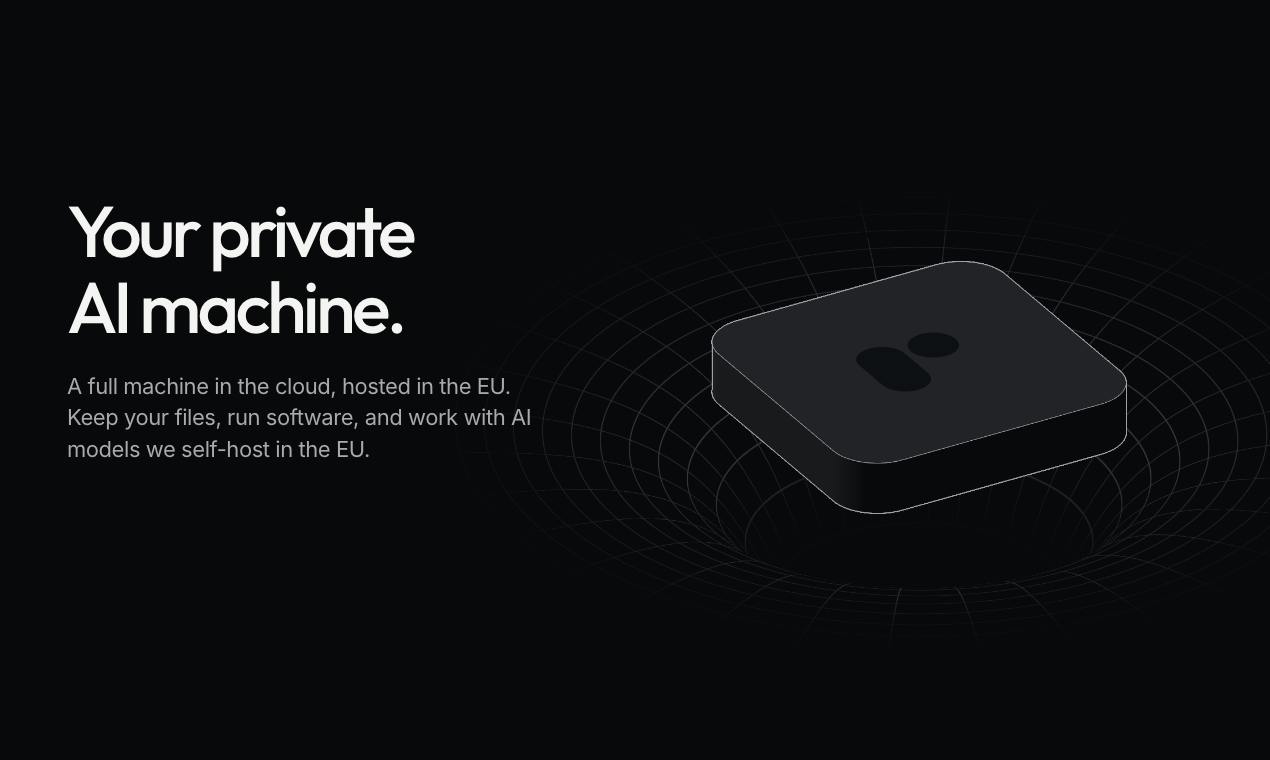
Rool is a persistent AI workspace built around a private Linux virtual machine in the cloud. Files, chats, structured Objects, memory, software, and the AI agent live inside a user’s Machine, allowing work to continue across sessions. Rool says it self-hosts most models in the EU and supports tools, MCP servers, and shared Machines. Product site Features
The core proposition is control and continuity with less setup than local self-hosting. Pricing is free, €9/month for Plus, and €25/month for Pro; paid plans add credits, storage, Machines, connectors, or priority support. A creator referral program pays 35% of a customer’s first six paid months. Pricing Creator program
Early discovery is visible but commercial traction is unclear. Product Hunt showed 158 points, #9 daily rank, 473 followers, and one review; Google Play showed 1K+ downloads. Product Hunt commenters give positive, self-selected usage anecdotes. None of these establish paid conversion, retention, or satisfaction at scale. Product Hunt Google Play
The product and team merit diligence, but low subscription prices must fund persistent VMs, storage, and AI inference. Rool has not disclosed revenue, paid cohorts, margins, funding terms, or valuation. DD is appropriate to verify usage and economics before any investment decision.
Product Overview
Each Rool Machine is a Linux VM with private files, chats, memory, and an AI agent. Users can edit files, run software, create persistent Objects, invite collaborators, use mobile apps, export data, and connect services through MCP. The company routes tasks among models; its own models run in Finland, with optional third-party services for some features. FAQ Privacy policy
Standard is free with two 1 GB Machines and 240 daily credits. Plus costs €9/month for two 2 GB Machines and 1,200 credits/day; Pro costs €25/month for five 10 GB Machines and 4,800 credits/day. A 3,000-credit voucher costs €5. The FAQ says credit use tracks compute, but unit costs are not published. Pricing FAQ
Founder and Team Assessment
The official team page lists Wilstrup as founder, Jaan Kasak and Brian Meidell as co-founders, and Lucas Jones as Head of Product Engineering. Company biographies describe Wilstrup as an AI entrepreneur and Abzu/Unispeed founder; Kasak as a physicist and former Abzu AI-research executive; Meidell as a co-founder of FRVR; and Jones as a full-stack developer with 15+ years’ experience. These are company-published claims; full-time status and total headcount are not disclosed. Team
Abzu materials independently support Wilstrup’s prior CEO role. No verified exit or Rool financial results were found. Abzu interview
Founder Assessment: Strong technical and startup experience; current commercial execution and commitment require verification.
Market Opportunity
The initial customer is a privacy-conscious European freelancer, consultant, creator, or small team handling sensitive files and seeking persistent AI without operating its own models. The alternative is a convenient hosted chatbot with less infrastructure control or a self-hosted stack requiring setup.
No reliable public count of this specific buyer segment was found. Analyst scenario, not a market fact: 100,000–500,000 paid users at €9–€25/month imply €10.8M–€150M ARR (users × price × 12). Team administration, shared billing, and developer tools could raise contract values, but the team plan is still in development and demand is unverified.
Traction and Growth Signals
Product Hunt recorded 158 points, #9 daily rank, 473 followers, and one review. Google Play displayed 1K+ downloads and an app update dated September 2026. These indicate launch reach and availability, not revenue or retention. A few Product Hunt users describe recurring use and praise the privacy and memory, but the comments are self-selected and unverified. Product Hunt Google Play
No reliable MRR, ARR, paid-user count, conversion, churn, cohort retention, customer-acquisition cost, or usage frequency was found.
Traction Assessment: Live product with early discovery; commercial traction remains unverified.
Competitive Position
Alternatives include ChatGPT, Claude, and Gemini for file-based assistance; and open-source tools such as Open WebUI and AnythingLLM for local or self-hosted workspaces. The latter give users model choice and control, often with more setup or administration. Open WebUI alternatives AnythingLLM
Rool’s differentiation is a managed private VM combining storage, persistent memory, software execution, and AI, with EU hosting and export. That can appeal to users who value control but do not want to run infrastructure. However, workspace features are replicable and big platforms can improve memory and isolation. Rool’s best defense is operational trust and an exportable workspace; customer loyalty and switching costs are not yet proven.
Defensibility Assessment: Medium. Machine-level isolation and structured memory are distinctive design choices; proprietary data, network effects, and high switching costs are unproven.
Business Model and Economics
The model is freemium subscriptions (€9 and €25 monthly) plus €5 credit vouchers. Low entry pricing supports adoption but makes per-account VM, storage, and GPU inference costs critical. Rool says credits track compute use, but it publishes no cost, gross margin, or plan-level usage data. Pricing FAQ
The referral program pays 35% of a customer’s first six paid months, excluding VAT, and grants 3,000 bonus credits. For a customer staying all year, the commission alone equals 17.5% of first-year subscription billings, before bonus credits and infrastructure costs. Referral conversion and payback are unknown. Creator program
A shared-billing team plan is not yet launched, so individual subscriptions currently anchor the public offer.
Unicorn Path
At an illustrative 10× ARR multiple, a $1 billion valuation requires $100 million ARR. Using an assumed €1=$1.10 solely for scale, that equals about €91 million: roughly 842,000 subscribers at €9/month or 303,000 at €25/month. This is scenario math, not a forecast, and excludes VAT, app/payment fees, churn, referral commissions, infrastructure costs, and margin.
A unicorn outcome is conditional on retaining a large paid base or moving successfully to higher-value team and enterprise contracts while maintaining strong margins. The team plan and commercial evidence are not yet there.
Unicorn Path: Conditional
Valuation Assessment
Valuation Attractiveness: Not Assessable. No verified financing round, amount, cap table, revenue, or valuation was found. Crunchbase lists an obscured pre-seed/PSV Tech entry, but no primary company or investor source confirms it; the entry is not treated as verified funding. Crunchbase profile
A responsible assessment needs current terms, ARR and growth, gross margin, retention, burn, runway, and financing history.
Key Risks
- Serving costs: Persistent VMs and self-hosted GPU inference may burden free and €9 plans.
- Unverified demand: Downloads and Product Hunt activity do not prove paid retention.
- Low ARPU: Individual plans may not cover support, storage, and heavy usage.
- Competition: Open-source and mainstream assistants can copy workspace features.
- Team monetization: Shared billing and admin controls remain in development.
- Data flows: Core machines are in Finland, but optional providers can receive data; Rool cautions that data does not always stay in the EU. Privacy Creator guidance
- Enterprise readiness: No public independent security certification or uptime commitment was found; Terms disclaim guaranteed availability and cap free-service liability at €100. Terms
- Funding uncertainty: Secondary pre-seed information is unconfirmed and lacks usable terms.
- Model dependency: Model availability and costs may shift as routing changes.
- Small-team risk: Headcount, founder commitment, and support capacity are undisclosed.
Final Assessment
Venture Potential: 65/100
| Category | Score |
|---|---|
| Market Size and Expansion Potential | 15/20 |
| Traction and Growth Evidence | 6/20 |
| Founder and Team | 13/15 |
| Product Strength | 9/10 |
| Distribution Potential | 9/15 |
| Business Model and Economics | 6/10 |
| Defensibility | 7/10 |
| Total | 65/100 |
The strongest points are the private-machine experience, relevant founders, and clear subscription offer. The weakest are missing paid-cohort evidence, uncertain serving costs, and low initial contract value.
Evidence Confidence: 64/100
Official product, pricing, team, legal, privacy, and app listings verify the offer and operator. Product Hunt and Google Play provide limited launch signals. Founder biographies and user comments are company-published or self-selected. Revenue, retention, margins, funding, and valuation remain unknown; the secondary funding entry is unverified.
Final Decision: DD
Proceed to focused founder and product diligence, not an investment commitment. Verify paid usage, retention, and cost to serve. Product Hunt attention is not product-market fit, and valuation cannot be judged without terms and financials.
Upgrade Conditions: Verify six-month paid retention; show sustainable gross margins after VM, GPU, storage, credits, and referrals; prove repeatable acquisition beyond launch; and launch a team plan with paying customers and admin/security readiness.
Downgrade Conditions: Weak paid conversion or retention, negative contribution margins, inaccurate privacy claims, a material security incident, or unclear ownership, funding, or founder commitment.
Questions for Further Diligence
- How many monthly active users, paid users, and paid teams do you have by cohort?
- What are free-to-paid conversion, 30/90/180-day retention, churn, and NRR?
- What are GPU, storage, and model costs per user on each plan?
- What share of requests uses self-hosted models versus third parties?
- What are gross and contribution margins by plan and usage cohort?
- What are CAC and payback after referral commissions and bonus credits?
- When will team billing/admin launch, and how many buyers have requested it?
- Can you provide independent security reviews, uptime history, and a certification roadmap?
- Which requests can reach optional providers outside the EU, and what controls exist?
- Is the PSV Tech pre-seed listing accurate? If so, what are the date, amount, instrument, cap, and ownership?
Sources
- Product Hunt
- Rool product, features, pricing, and FAQ
- Team, privacy, terms, and creator program
- Google Play and iOS App Store
- Abzu founder interview
- Open WebUI alternatives and AnythingLLM
- Crunchbase (secondary, funding details unverified)