
Table of Contents
- Playground by Google Labs — Venture Investment Report
Playground by Google Labs — Venture Investment Report
Category: Consumer AI game creation / generative gaming
Company Stage: Experimental product within Google Labs
Founder or Founders: No standalone founder or company disclosed; launch post authored by Google software engineer Maryam Karimzadehgan
Headquarters: Google LLC / Alphabet Inc., Mountain View, California
Funding: No product-level financing disclosed; Alphabet Inc. is publicly listed
Business Model: Free browsing and gameplay; limited weekly creation tokens, with higher limits and earlier access linked to Google One AI plans
Product Hunt Launch Date: 2026/10/09
Report Date: 2026-10-12
| Investment Metric | Assessment |
|---|---|
| Venture Potential | 55/100 |
| Unicorn Path | Not applicable as a standalone startup; strategic value to Google One is unmeasured |
| Valuation Attractiveness | Not Assessable at product level |
| Evidence Confidence | 58/100 |
| Final Decision | Pass |
Executive Summary
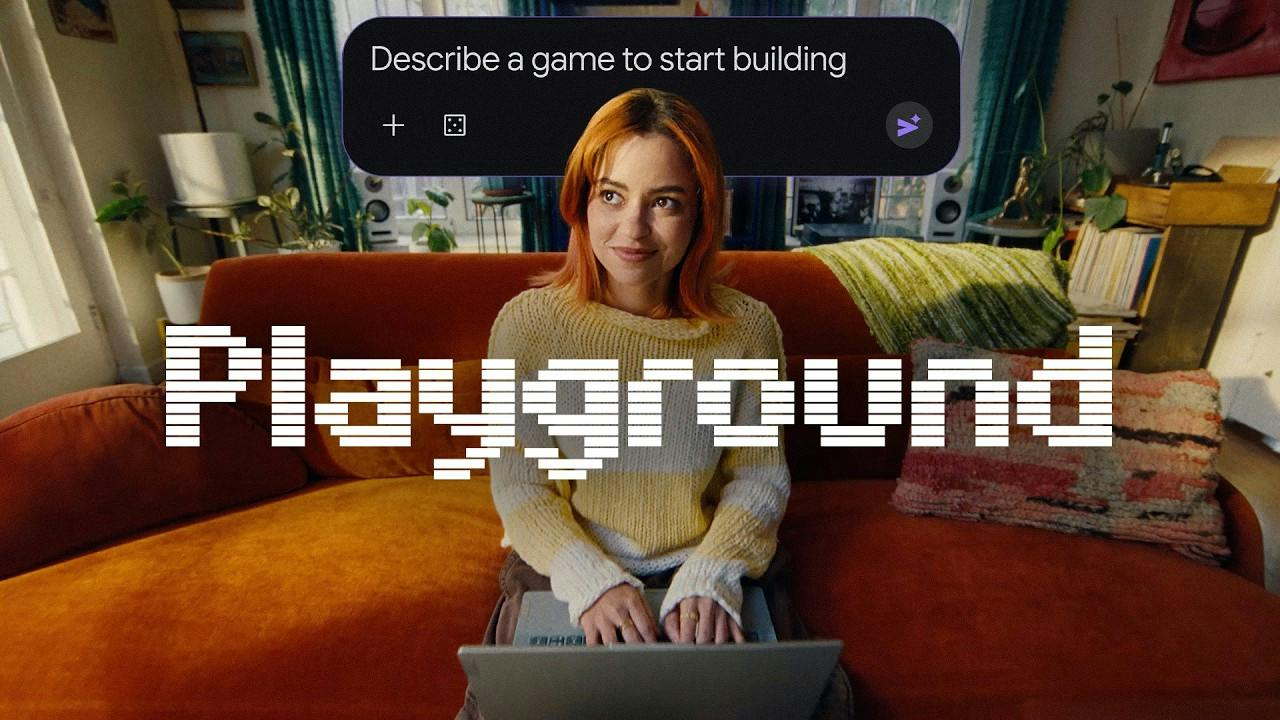
Playground is a Google Labs experiment for creating browser games through natural-language prompts. Users can describe rules and visuals, play the result, and request edits in chat. They can keep games private, share an unlisted link, or publish to a public gallery. Google documents image uploads, export, leaderboards, and multiplayer in early preview. The product lowers the effort to make a simple prototype, but has not established a lasting creator business.
Google announced Playground on October 7, 2026; the spreadsheet’s Product Hunt launch date is October 9. Product Hunt showed a #3 daily rank and 203 points at research time. This is launch attention, not evidence of repeat creation, player retention, paid conversion, or creator earnings. Google has not published product-specific users, games generated, revenue, retention, or unit costs.
Browsing and playing are free. Creation has limited weekly free tokens; Google One AI subscribers can receive higher limits and earlier access. This could support the subscription bundle, but its incremental impact is unknown. Initial access is limited to U.S. users aged 18 and older, and creation is rolling out in phases.
Playground belongs to Google Labs. No separate company, equity, financing, or product-level financial statements are identified. Final Decision: Pass as a direct venture investment target. There is no standalone security to underwrite. See the official product page and Help Center.
Product Overview
Playground turns a text description into a playable game and supports conversational revisions. Users can start from a blank canvas or guided prompts, pick a genre, and upload reference images that AI transforms into stylized assets. Games can remain private, be shared by link, or be publicly listed after safety screening. Google says creators can export a ZIP containing HTML, JavaScript, CSS, and generated assets.
This offers a low-friction starting point for hobbyists, but repeated use will depend on more than generation. Debugging, collaboration, version control, analytics, reliable publishing, and monetization affect whether creators return. Google has not established the depth of these workflows or whether generated games retain players. Multiplayer is in early preview, and game creation is rolling out in phases.
Founder and Team Assessment
Playground is not presented as a startup. Google’s launch post names software engineer Maryam Karimzadehgan, but discloses no separate founding team, product-level P&L, or staffing commitment. Google supplies significant technical and distribution resources, while internal priority remains unknown.
There is no independent management team, equity ownership, or financing vehicle to assess. Alphabet shares are publicly investable, but that is a different thesis from venture investment in Playground.
Founder Assessment: Execution is backed by Google; standalone team depth and accountability are not disclosed.
Market Opportunity
The product targets people who want to make small games but lack programming or design experience. Potential uses include personal play, classrooms, prototypes, and social experiments. A large pool of people with game ideas does not prove that they will return, publish, or pay.
The opportunity depends on repeat creation and player engagement. Playground has sharing, a gallery, profiles, and leaderboards, but Google has not disclosed creator retention, player-to-creator conversion, catalog activity, or marketplace economics. Available evidence does not support a standalone TAM or revenue forecast.
Traction and Growth Signals
Product Hunt showed a #3 rank and 203 points for the October 9 launch at research time. The 2.7K followers shown on the Google Labs profile represent the publisher, not Playground users. Google’s pages confirm that the product and public catalog exist.
No public figures were found for active creators, games generated, successful-generation rate, published-game plays, repeat usage, retention, subscription conversion, or revenue. The launch was only days before this report, so cohort data may not yet exist; it remains the main diligence gap.
Traction Assessment: Launch activity and product availability are verified; sustained adoption and commercial traction are unverified.
Competitive Position
Roblox Build is the closest strategic alternative: it generates playable Roblox games from prompts and connects creation to Roblox’s engine, audience, discovery, safety systems, and creator tools. Playground offers a standalone browser experiment backed by Google AI, but has not shown an equivalent ecosystem. Other alternatives include Unity, Godot, visual creation tools, and AI coding products, which can require more skill but offer greater control or a production path.
Google has discussed a future Unity Spark integration, not a current capability. Playground’s potential differentiation is low-friction prompt-and-play and possible Google subscription integration. Neither is yet a moat: large platforms can add similar flows, and established ecosystems have creators and distribution.
Defensibility Assessment: Low to moderate. Google has meaningful resources, but no exclusive network or independent switching cost is established.
Business Model and Economics
Browsing and playing are free. Creation has limited free weekly tokens; higher limits and earlier access are linked to Google One AI plans. This could increase bundle value, but no standalone price, conversion, retention lift, or revenue attribution is disclosed.
Costs include model calls, compilation, hosting, moderation, and support. Google says credits are refunded after failed generation, but does not publish cost per successful game or gross margin. The value to Google may come through subscription acquisition or engagement; both are unmeasured.
Unicorn Path
There is no standalone company, revenue, or equity on which to build a unicorn case. For Google, the test is whether Playground increases subscription conversion or retention while keeping generation and safety costs viable. Public data do not answer this.
Valuation Assessment
No product-level funding, valuation, revenue, or financing terms were disclosed. Alphabet’s public valuation cannot isolate Playground’s contribution.
Valuation Attractiveness: Not Assessable. A separate case would require attributable revenue, usage cohorts, subscription impact, generation cost, and rights to models and distribution.
Key Risks
- No venture security: No separate company, equity, or financing opportunity is identified.
- Experimental status: Google may change or discontinue the product.
- Retention and quality: Novelty may not lead to games that players revisit.
- Distribution gap: Roblox and established engines have deeper creator ecosystems.
- Unknown economics: Model, hosting, moderation costs, and subscription lift are undisclosed.
- Limited access: U.S.-only, 18+ initial availability and phased creation constrain reach.
- Safety and IP: User-generated games and uploaded images require review and rights management.
- Platform dependence: Creators rely on Google’s models, token limits, accounts, and hosting.
Final Assessment
Venture Potential: 55/100
| Category | Score |
|---|---|
| Market Size and Expansion Potential | 16/20 |
| Traction and Growth Evidence | 5/20 |
| Founder and Team | 4/15 |
| Product Strength | 8/10 |
| Distribution Potential | 12/15 |
| Business Model and Economics | 6/10 |
| Defensibility | 4/10 |
| Total | 55/100 |
Google has the resources to test a promising creation interface. Product-level engagement, economics, and standalone investability are not demonstrated.
Evidence Confidence: 58/100
Primary sources document product features, access rules, launch details, and the subscription mechanism. Usage, retention, economics, internal priority, and revenue contribution remain unknown.
Final Decision: Pass
Pass on Playground as a direct venture target because no separate company or investable security is identified. Monitor it as a Google experiment and a signal for AI game-creation demand.
Upgrade Conditions
- Google reports creator retention, published-game plays, and repeat-generation cohorts.
- Generated games show repeat player engagement.
- Playground’s subscription impact is measured.
- Generation and moderation costs support viable margins.
- A separate investment opportunity or commercial participation right emerges.
Downgrade Conditions
- Access remains narrow or the experiment is withdrawn.
- Creators and players do not return after initial trials.
- Safety or copyright failures constrain sharing.
- Model costs make repeated creation uneconomic.
- Competitors bundle comparable creation with stronger distribution.
Questions for Further Diligence
- How many weekly active creators and players use Playground, and what are 30-, 90-, and 180-day retention rates?
- What share of generated games compile, get published, and receive repeat plays?
- How many free users join the creation waitlist, and how many upgrade to Google One AI?
- What subscription conversion or retention is attributable to Playground?
- What are model, hosting, and moderation costs per successful game?
- How are weekly tokens allocated across initial generation and revisions?
- What is the roadmap for collaboration, analytics, publishing, and monetization?
- How are copyrighted characters, uploaded images, harmful content, and multiplayer interactions reviewed?
- What rights do creators retain over generated code, assets, and listed games?
- What evidence would lead Google to graduate or discontinue the experiment?
Sources
- Google: Introducing Playground: Create and play custom games
- Official Playground product page
- Playground Help Center
- Playground Community Guidelines
- Product Hunt launch page
- TechCrunch coverage
- Roblox: Build, mobile-first AI creation
- Alphabet 2025 Annual Report filed with the SEC
Conclusion: Playground is a Google Labs experiment that makes simple game creation easier and may support Google One AI. Launch interest is verified; repeat use, subscription impact, and unit economics are unknown. Pass as a direct venture target because there is no separate equity to invest in.