
Table of Contents
- Hyrax AI — Venture Capital Investment Report
- Investment Metrics
- Executive Summary
- 1. Product Overview
- 2. Founder & Team Assessment
- 3. Market Opportunity
- 4. Traction & Growth Signals
- 5. Competitive Position
- 6. Business Model & Economics
- 7. Unicorn Path
- 8. Valuation Assessment
- 9. Key Risks
- 10. Final Assessment
- 11. Diligence Questions
- Sources
Hyrax AI — Venture Capital Investment Report
Category: AI developer tools; autonomous code review, codebase auditing, and remediation
Company stage: Early commercial product / corporate venture within an established private company
Founder: Tyler Yates is publicly identified as Hyrax’s founder and Chief Architect; other launch contributors should not be assumed to be co-founders (LinkedIn)
Headquarters: Miami, Florida; legal entity address in Coral Gables, Florida (LinkedIn, Terms)
Ownership: Hyrax AI, LLC, a subsidiary of Iru, Inc. (Terms)
Funding: Hyrax-specific funding not publicly disclosed. Parent Iru—formerly Kandji—announced a $100 million financing at an $850 million valuation in 2024 (Iru); the amount allocated to Hyrax is unknown.
Business model: Self-service SaaS priced per developer, with usage credits and optional overages (Pricing)
Product Hunt launch date: September 21, 2026 (Product Hunt leaderboard)
Report date: September 25, 2026
Investment Metrics
| Metric | Assessment |
|---|---|
| Venture Potential | 66/100 |
| Unicorn Path | Conditional |
| Valuation Attractiveness | Not Assessable |
| Evidence Confidence | 57/100 |
| Final Decision | DD — Proceed to diligence, not investment approval |
Executive Summary
Hyrax is an AI-assisted software-quality platform that maps an entire repository, evaluates it across security, correctness, maintainability, performance, architecture, and operations, and converts selected findings into tested GitHub pull requests. Unlike a conventional pull-request reviewer, it is positioned to discover problems before a new pull request exists and to perform remediation rather than merely produce comments (Hyrax, FAQ).
The product concept addresses a credible and expanding workflow problem. GitHub reported more than 180 million developers, 43.2 million pull requests merged per month during 2025, and 518.7 million merged pull requests for the year. GitHub also characterized AI agents as entering mainstream development workflows (GitHub Octoverse). Greater code output can increase demand for automated review, testing, security analysis, and remediation.
Hyrax’s strongest current signal is product completeness for a new offering: GitHub-native installation, repository discovery, six specialized review domains, Linear integration, automatic fix generation, and a stated 13-stage verification process. The low-friction free plan and $30-per-seat paid tier are competitively positioned (Pricing). Parent-company backing may also provide security expertise, capital, enterprise relationships, and operational infrastructure unavailable to a typical seed-stage startup.
The central concern is lack of independently verifiable commercial traction. Revenue, active installations, paid teams, repository volume, renewal rates, fix acceptance rates, and customer concentration are not publicly disclosed. One named customer quotation appears on Hyrax’s pricing page, but this company-provided testimonial is insufficient evidence of repeatable product-market fit. The Product Hunt #5 daily ranking establishes launch attention only, not retention or purchasing behavior (Product Hunt).
The recommendation is DD. The product deserves further investigation, but investment quality cannot be established without cohort data, product accuracy measurements, unit economics, and clarification of whether outside investors can invest in Hyrax separately from Iru.
1. Product Overview
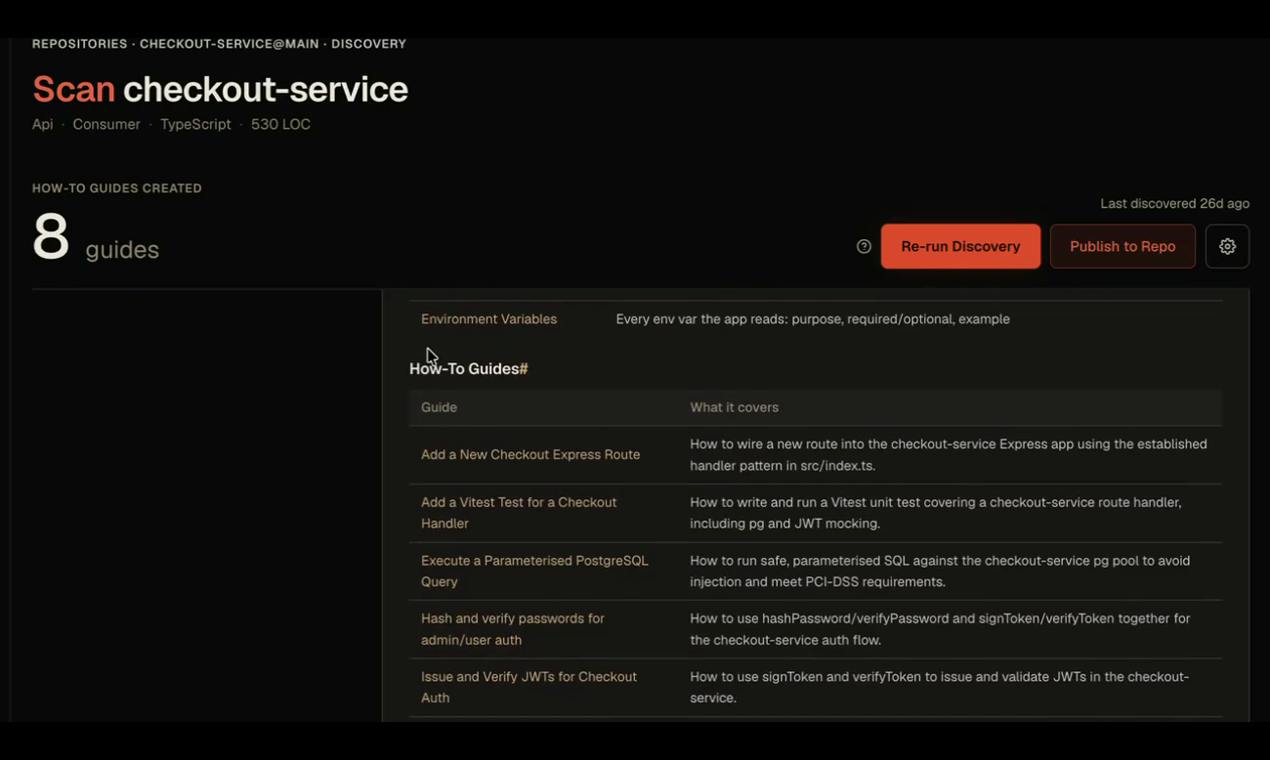
Hyrax operates as a GitHub App. Its initial “Discovery” process reads a repository and produces HYRAX.md and a .hyrax/ directory containing shared codebase context. Six agents then assess the repository across security, correctness, maintainability, performance, architecture, and operations. Approved findings can be converted into pull requests, while humans retain approval and merge authority (Hyrax).
The company describes a 13-stage verification pipeline involving an isolated worktree, baseline and post-change tests, a diff-size guard, build and lint checks, cross-project testing, an independent-agent review, and confirmation that the original finding has been resolved. A pull request is not opened if a required stage fails (FAQ). This is a thoughtful workflow design, but no independent evaluation currently establishes the system’s false-positive rate, defect-detection recall, fix correctness, or performance against competing products.
At launch, Hyrax supports GitHub and integrates with Linear. It claims audit coverage for more than 18 programming languages, although autonomous fixing is limited to languages for which the company considers execution reliable (FAQ). GitLab, Bitbucket, Jira, self-hosting, and broader enterprise controls were not evidenced as generally available.
Security positioning is mixed. Hyrax says inference runs through Anthropic models on AWS Bedrock, customer code is not used for model training, and code is ordinarily processed in memory. Its terms nevertheless permit storage where needed for transient caching, jobs, output, logs, debugging, security, billing, or legal purposes (Terms). Enterprise buyers will need more detailed retention, tenancy, subprocessor, and access-control documentation.
2. Founder & Team Assessment
Tyler Yates publicly describes himself as Hyrax’s founder and Chief Architect (LinkedIn). Public profiles also identify Aaron Morin as Head of Product and Tristan Benozer as working on go-to-market activities; Product Hunt lists several launch contributors, but launch-team membership should not be interpreted as legal founder status (Product Hunt).
Hyrax’s LinkedIn page lists six associated employees and a broader 11–50 size band, but LinkedIn counts are self-reported and may include shared parent-company personnel (LinkedIn). Exact dedicated headcount, technical ownership, prior startup outcomes, and employee allocation are not publicly disclosed.
The strongest company-quality factor is parentage. Hyrax’s legal terms identify it as an Iru subsidiary, and its careers page describes an established, well-funded company supporting the venture (Terms, Careers). This may reduce financing and operational risk. Conversely, it creates strategic-governance risk: Hyrax may be a product line rather than an independently financeable company, and Iru may reallocate capital or integrate the product into its broader security platform.
3. Market Opportunity
The narrow initial market is GitHub-based software teams purchasing automated code review, code-quality analysis, and AI remediation. GitHub’s 180-million-plus registered developer population is an upper boundary, not a realistic serviceable market; individual, inactive, open-source, and non-paying accounts must be excluded (GitHub Octoverse).
A bottom-up scenario is more useful. At Hyrax’s current $30 monthly paid-seat price:
- 100,000 paid seats would produce approximately $36 million annualized subscription revenue.
- 250,000 paid seats would produce approximately $90 million.
- 300,000 paid seats would produce approximately $108 million.
These are scenario calculations, not forecasts. They exclude free users, discounts, churn, overage revenue, taxes, and any future enterprise contracts. Reaching 100,000 paid seats would require penetration equal to only about 0.06% of GitHub’s reported developer accounts, but the relevant denominator is substantially smaller and competition is intense.
4. Traction & Growth Signals
Sustained metrics: Not publicly disclosed. There is no verified ARR, growth rate, number of paid seats, active repositories, weekly active teams, net retention, customer count, or expansion data.
Hyrax publishes a testimonial from Synter’s CEO stating that the product identified missed issues and now reviews the company’s repositories. Because the quotation is hosted by Hyrax and is not accompanied by deployment or outcome data, it should be treated as company-provided customer evidence rather than independent validation (Pricing).
Launch attention: Hyrax ranked fifth on Product Hunt’s September 21, 2026 daily leaderboard (Product Hunt). This demonstrates initial visibility among technology adopters but says nothing about activation, production deployment, conversion, or retention. No venture score is awarded for votes or ranking alone.
5. Competitive Position
Direct competitors include AI code-review platforms such as CodeRabbit, Greptile, and Qodo, while indirect alternatives include GitHub Copilot review, SonarQube, Snyk, conventional static-analysis tools, and manual review.
Hyrax’s differentiation is codebase-wide, continuous remediation: it maps existing architecture, finds issues outside incoming diffs, and generates verified fixes. CodeRabbit, however, already offers multi-repository analysis, architectural-impact analysis, continuous security monitoring, and agentic review, with published annual pricing from $24 to $72 per developer per month (CodeRabbit pricing). Greptile’s published Pro plan is also $30 per seat per month (Greptile pricing). Hyrax therefore competes in a crowded price and feature band.
Potential defensibility lies in accumulated repository context, accepted-versus-rejected fix data, workflow embedding, and proprietary evaluation systems. None is yet proven as a durable moat. Model suppliers, GitHub, and larger code-quality vendors could reproduce significant portions of the workflow.
6. Business Model & Economics
The free plan includes the full product, $30 in starter credit, $10 in recurring monthly credit, and up to 100 free pull-request reviews. The paid tier costs $30 per user per month and includes $30 of monthly usage credits; additional usage is opt-in and capped by customer-selected budgets (Pricing).
Hyrax states that one dollar of credit corresponds to one dollar of service compute. Its FAQ estimates approximately $5–$10 for repository discovery, $1–$35 for an audit, and $1–$10 for a fix, with token costs passed through at cost (FAQ, Terms). If all $30 of a paid seat’s included credits represent pass-through compute, the subscription’s direct gross profit could be limited at full utilization. Actual utilization, cloud discounts, support costs, and overage margin are undisclosed, so gross margin cannot be calculated.
The terms state that the offering is exclusively self-service and does not use negotiated agreements, custom order forms, or statements of work (Terms). That simplifies sales but could obstruct security procurement and high-ACV enterprise adoption.
7. Unicorn Path
Using an assumed 10× ARR valuation multiple for a fast-growing, strategically valuable developer-tools SaaS company, a standalone $1 billion valuation would require approximately $100 million ARR. At $360 per paid seat annually, Hyrax would need roughly 278,000 paid seats, before accounting for churn or discounts.
An enterprise path could require, illustratively, 2,000 customers at $50,000 annual contract value. However, $50,000 is an explicit scenario assumption—not a disclosed Hyrax price—and the current self-service-only contracting model does not support this motion.
The path is therefore Conditional: the addressable workflow is large enough, and parent-company distribution could help, but the required scale is far beyond disclosed traction. Because Hyrax is an Iru subsidiary, it may contribute to Iru crossing $1 billion rather than independently becoming a unicorn.
8. Valuation Assessment
Not Assessable. No Hyrax financing round, standalone capitalization, revenue multiple, or offered investment terms are public. Iru’s previously announced $850 million valuation is historical parent-company information and cannot be treated as Hyrax’s valuation (Iru).
Assessment requires the proposed security, pre-money valuation, fully diluted capitalization, Hyrax’s ownership of intellectual property, intercompany agreements, allocated revenue and expenses, and minority-investor rights.
9. Key Risks
- No disclosed recurring-revenue or retention evidence.
- False positives or unsafe fixes could erode developer trust.
- Dependence on Anthropic models and AWS Bedrock creates supplier and margin risk.
- Current pricing may leave limited gross profit under heavy usage.
- Strong competition from specialized startups and integrated platforms.
- GitHub-only availability narrows the reachable market.
- Source-code access creates substantial security and procurement friction.
- Self-service-only terms may block larger enterprises.
- Parent-company control may constrain product independence or investor rights.
- Repository context and remediation workflows may be replicable.
10. Final Assessment
| Category | Score | Maximum |
|---|---|---|
| Market Size | 15 | 20 |
| Traction | 5 | 20 |
| Founder/Team | 11 | 15 |
| Product Strength | 8 | 10 |
| Distribution | 10 | 15 |
| Business Model | 8 | 10 |
| Defensibility | 9 | 10 |
| Total Venture Potential | 66 | 100 |
Product quality appears promising, but company and investment quality remain unproven. Evidence Confidence is 57/100 because product behavior, pricing, legal structure, and market activity are documented, while revenue, cohorts, accuracy, margins, customer concentration, and investment terms are unavailable.
Final Decision: DD. Advance only to structured diligence.
Upgrade conditions: verified paid-customer cohorts; strong six- and twelve-month retention; high fix acceptance; independently measured precision and recall; attractive gross margin after inference; enterprise-ready contracts and controls; and clear investability.
Downgrade conditions: low repeat usage, high false-positive rates, frequent rejected fixes, negative compute margins, inability to pass enterprise security reviews, rapid competitor parity, or no protected economic interest for investors.
11. Diligence Questions
- How many active, paid, and retained teams use Hyrax?
- What are conversion and retention by signup cohort?
- What percentage of findings are accepted, dismissed, or disputed?
- What percentage of generated fixes pass all verification stages?
- What are gross margins by audit, review, and fix workflow?
- How much included credit does the median paid seat consume?
- What independent benchmarks compare Hyrax with CodeRabbit, Greptile, and static analysis?
- What data is retained, for how long, and which personnel can access it?
- When will SOC 2, SSO, RBAC, audit logs, GitLab, and self-hosting be available?
- Does Hyrax own its intellectual property, or is it licensed from Iru?
- Can investors obtain direct Hyrax equity, and what rights would minority holders receive?
- What milestones determine whether Iru continues, integrates, or divests the product?