
Table of Contents
tiun. Investment Report
Category: Developer infrastructure; authentication, billing, Merchant of Record, and analytics
Company Stage: Pre-seed; recently repositioned product
Founder or Founders: Sandro Zweig, Christian Heiduschke, Nikolaos Christoforakos
Headquarters: Zurich, Switzerland
Funding: Approximately $2.5 million/€2.5 million pre-seed; reporting conflicts on currency
Business Model: Transaction fees, payout fees, analytics add-on, and custom enterprise pricing
Product Hunt Launch Date: September 16, 2026
Report Date: September 18, 2026
| Investment Metric | Assessment |
|---|---|
| Venture Potential | 62/100 |
| Unicorn Path | Conditional |
| Valuation Attractiveness | Not Assessable |
| Evidence Confidence | 52/100 |
| Final Decision | Watch |
Executive Summary
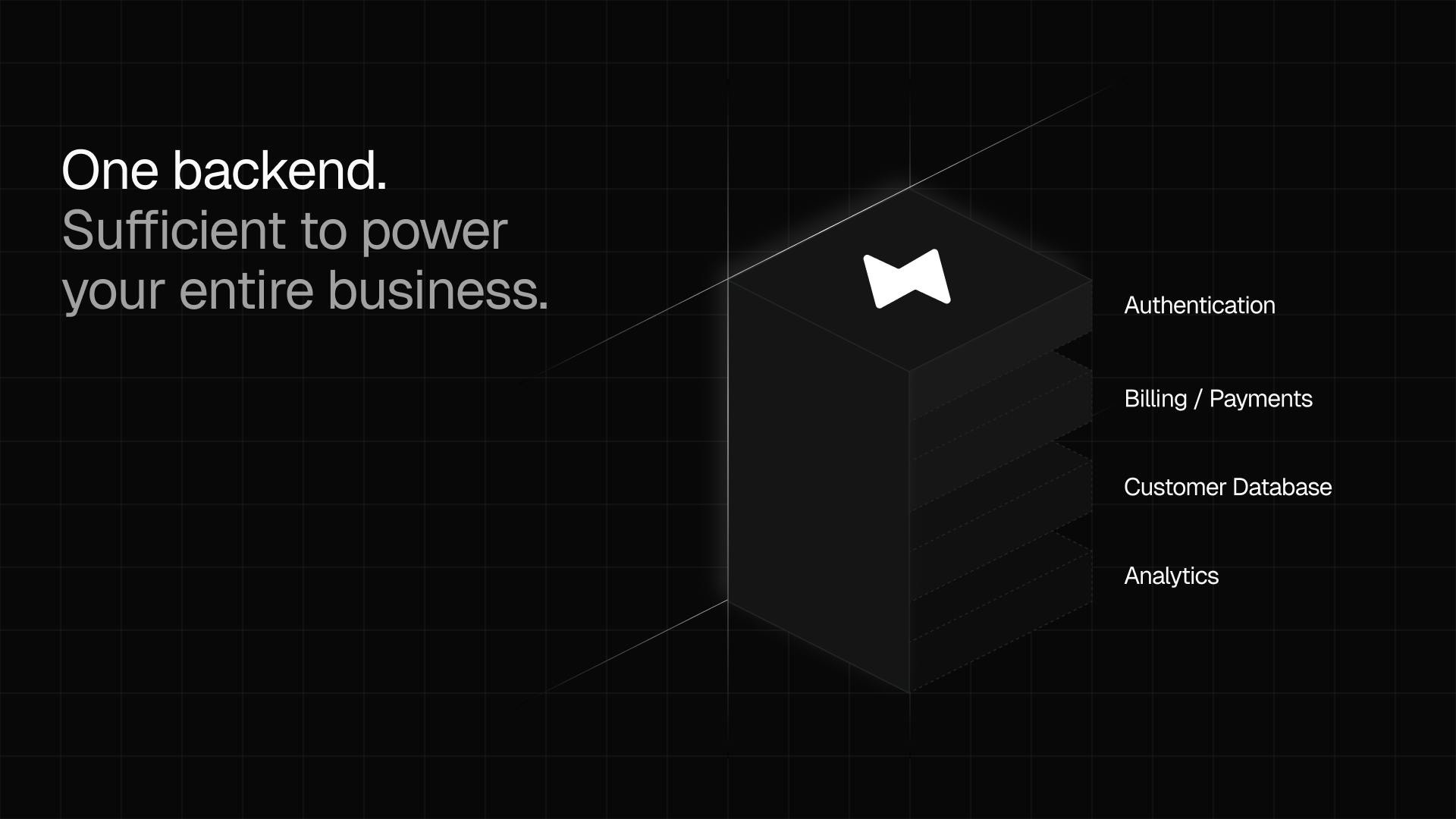
tiun. provides a unified commercial backend for AI and SaaS companies. It combines authentication, checkout, subscription and usage billing, customer records, product analytics, and Merchant-of-Record services through one SDK and an optional Model Context Protocol integration. The proposition is to replace several independently synchronized services and their associated webhook logic (official website; documentation).
The initial target appears to be small AI and SaaS teams that want to monetize quickly without separately integrating authentication, payments, tax compliance, entitlements, and analytics. Product documentation is live, recently updated, and covers both web and React Native implementations. This supports the view that tiun. is a functional product rather than only a landing-page concept (SDK documentation; quickstart).
The strongest investment signal is the combination of a credible technical product, three identifiable founders, prior institutional funding, and experience running payment pilots. Before its current positioning, tiun. focused on flexible payments for digital media. A founder interview later claimed exposure to 10 million monthly website visitors and 15–20% monthly transaction growth, although these figures are company-reported, unaudited, and relate primarily to the earlier media-oriented model (Apple Podcasts episode).
The central concern is that the current product is effectively a strategic repositioning into a crowded infrastructure market. The public evidence does not establish current revenue, retained customers, processed payment volume, conversion, gross margin, or migration from the earlier media product. Product Hunt attention—527 votes, 106 comments, and a reported #1 Product of the Day finish—is useful evidence of developer interest, but not product-market fit (Product Hunt).
The decision is Watch. tiun. could justify formal diligence after demonstrating that Product Hunt interest converts into durable payment volume and retained merchants under the new positioning.
Product Overview
tiun. addresses the integration burden created when a software company uses separate providers for authentication, payments, tax compliance, customer data, and analytics. Its value proposition is one data model and SDK rather than maintaining synchronization across multiple tools.
Core functions include:
- Passwordless authentication and account management
- One-time, subscription, usage-based, and time-based billing
- Embedded checkout and self-service customer portals
- Merchant-of-Record tax and chargeback handling
- Customer-level events, sessions, payment history, and entitlements
- AI-assisted analytics
- Web and React Native SDKs
- MCP-based installation through supported coding agents
The web SDK is publicly distributed through npm, while the documentation provides checkout, authentication, session, access-control, and event APIs. Native Swift, Kotlin, and Flutter SDKs remain on the roadmap rather than being currently supported (SDK overview).
The platform has no fixed charge for core functionality. Published pricing includes 2.9% plus $0.30 per transaction, an additional 0.5% for subscriptions, 1.5% for payouts, $15 per dispute, and a $17 monthly AI-analytics add-on. Enterprise terms are custom (pricing). The presentation of these fees requires clarification: a company blog describes the all-in fee as approximately 3.4% plus $0.30, while the pricing page separately lists a 1.5% payout charge (company comparison).
Product Quality: Promising and technically coherent, with unusually broad integration for an early product. Reliability, payment authorization rates, security controls, and production-scale performance are not publicly verified.
Founder and Team Assessment
The official company page identifies Sandro Zweig as CEO, Christian Heiduschke as CTO, and Nikolaos Christoforakos as CRO (company page). Zweig’s public profile references ETH Zurich, Christoforakos’s references ESCP, and Heiduschke is publicly associated with ETH Zurich. No prior founder exits were verified.
The founders have at least three years of operating history together or within tiun. An earlier interview said the company was founded by Zweig and Heiduschke in January 2023; later funding coverage identifies Christoforakos as a co-founder as well (Swiss Startup Association; Business Insider). This may reflect a later addition or differences in public attribution.
The official careers page lists openings for two full-stack engineers and one marketing engineer, indicating active hiring, but the current employee count is not reliably disclosed. The three-founder structure offers technical, executive, and revenue ownership, although operating depth below the founders is unknown.
Founder Assessment: Relevant payment-product experience and clear functional coverage, but prior outcomes, present team depth, and execution after the repositioning remain insufficiently verified.
Market Opportunity
The narrow initial market is globally selling, early-stage AI and SaaS businesses that need authentication and monetization but lack dedicated payments and backend teams. Customer willingness to pay is indirect: tiun. charges transaction fees rather than requiring a large fixed software contract.
A reasonable bottom-up scenario—not a verified market estimate—is:
- 50,000–200,000 potentially addressable software merchants
- $100,000–$500,000 annual processed volume per merchant
- Approximately 3.5%–5.5% gross fees, depending on subscription and payout treatment
This produces a broad gross-fee opportunity of roughly $175 million to more than $5 billion. The range is deliberately wide because neither the number of suitable merchants nor tiun.’s retained net take rate is publicly established.
Adjacent opportunities include larger SaaS companies, mobile-app monetization, creator software, digital media, enterprise billing, and API-based payment infrastructure. Geographic expansion is structurally possible because Merchant-of-Record compliance solves an international problem, but each additional jurisdiction increases tax, fraud, payment-method, and support complexity.
The market can support a venture-scale outcome. However, it is already served by focused payment platforms, authentication vendors, databases, and bundled backends. Market size therefore does not establish tiun.’s ability to capture meaningful share.
Traction and Growth Signals
The September 2026 Product Hunt launch reportedly received 527 votes and 106 comments and ranked #1 Product of the Day. Product Hunt also showed approximately 1,200 followers shortly after launch (Product Hunt). These are launch-attention metrics only.
Earlier traction relates to tiun.’s previous media-payments model. In 2024, the company reported onboarding more than 50 Central European media titles (Venturelab). A later founder interview claimed:
- Reach of 10 million monthly users through customer websites
- 15–20% month-over-month transaction growth
- A 20% increase in paying users in pilot cases
- Less than 1% subscription cannibalization
These are founder-reported figures and are not supported by public financial statements, merchant dashboards, or named current case studies. They may not transfer to the newly launched AI/SaaS backend.
Positive operating signals include recent documentation updates, an npm package, a public GitHub presence, mobile support, and three advertised roles (GitHub; company page). Missing metrics include current ARR, payment volume, merchants, paying customers, retention, chargeback rate, authorization rate, and post-launch activation.
Traction Assessment: Meaningful historical pilot claims and strong launch attention, but current commercial traction is unverified.
Competitive Position
Direct competitors include Merchant-of-Record and developer-billing products such as Polar, Paddle, Lemon Squeezy, and Stripe Managed Payments. Indirect competitors include assembling Stripe with Clerk or Supabase, a product-analytics service, and internal webhook infrastructure.
Polar’s published plans range from 5% plus $0.50 on its free plan to 3.4% plus $0.30 with a $400 monthly subscription, before certain international-card charges (Polar pricing). Paddle publishes an all-inclusive 5% plus $0.50 rate (Paddle pricing). Stripe Managed Payments adds 3.5% to standard processing fees (Stripe). Clerk and Supabase provide substantial free authentication allowances, making a modular stack inexpensive for low-volume startups (Clerk; Supabase).
tiun.’s differentiation is integration breadth: authentication, billing, entitlements, customer records, and analytics share one system. Its MCP integration may reduce setup time for AI-assisted developers.
The disadvantages are low apparent switching costs, dependence on underlying payment infrastructure, and limited evidence of proprietary technology. Consolidation can also increase vendor risk: a merchant entrusts tiun. with identity, payments, and customer data simultaneously.
If the largest platform launched the same feature within six months, why would customers remain? The credible answer would need to be materially better economics, faster implementation, superior unified data, or accumulated merchant-specific workflow. None is yet proven at scale.
Defensibility Assessment: Low to Medium
Business Model and Economics
Revenue appears primarily transaction-based, supplemented by payout fees, a $17 monthly analytics add-on, and enterprise contracts. Revenue should scale with merchant payment volume, creating potential expansion without conventional seat-based upselling.
Gross-margin potential is unknown. Material variable costs likely include payment processing, fraud, chargebacks, foreign exchange, tax administration, identity services, messaging, support, and cloud infrastructure. The 1.5% payout charge may improve economics but could weaken the headline pricing advantage.
AI analytics is unlikely to be the principal cost driver at present; payments, compliance, and support are more consequential. The company must show that its retained net take rate remains attractive after payment-provider expenses and losses.
Unicorn Path
An 8× net-revenue multiple is assumed for a growing software-enabled payments platform. This is an analyst assumption, not a current market valuation.
Required net annual revenue:
$1 billion ÷ 8 = $125 million
At a 4% gross fee rate, $125 million of gross fee revenue would require approximately $3.1 billion in annual payment volume. If tiun. retains only 1% of volume after payment and compliance costs, it would require approximately $12.5 billion in annual volume.
At $250,000 of annual volume per merchant, that implies roughly 50,000 active merchants under the 1% net-take scenario. At $1 million per merchant, it implies 12,500 merchants. Both are far beyond presently disclosed adoption.
A credible path therefore requires repeatable developer distribution, strong merchant retention, migration into larger accounts, higher-value enterprise services, reliable global payment operations, and a defensible data or workflow advantage.
Unicorn Path: Conditional
Valuation Assessment
Business Insider reported a $2.5 million pre-seed round led by Founderful, with Blue Wire Capital, an a16z scout, and angels participating. Venturelab reported the amount as €2.5 million, creating a currency discrepancy (Business Insider; Venturelab).
No reliable post-money valuation, SAFE cap, current financing terms, or current fundraising status was found.
Valuation Attractiveness: Not Assessable
Assessment would require current ARR, net revenue, payment volume, growth, gross margin, burn, runway, round size, valuation, preferences, and cap-table ownership.
Key Risks
- Current revenue and merchant retention are undisclosed.
- Historical traction may not transfer from media payments to AI/SaaS infrastructure.
- Strong competition from established Merchant-of-Record and backend platforms.
- Low switching costs before tiun. becomes deeply embedded.
- Ambiguous effective pricing and retained net take rate.
- Concentrated operational risk from combining identity, payments, and data.
- Tax, fraud, chargeback, and cross-border compliance exposure.
- Limited public evidence of enterprise security certifications or SLAs.
- Founder and key-person dependency within an apparently small team.
- Product Hunt-led acquisition may not become repeatable merchant distribution.
Final Assessment
Venture Potential: 62/100
| Category | Score |
|---|---|
| Market Size and Expansion Potential | 16/20 |
| Traction and Growth Evidence | 8/20 |
| Founder and Team | 10/15 |
| Product Strength | 8/10 |
| Distribution Potential | 9/15 |
| Business Model and Economics | 6/10 |
| Defensibility | 5/10 |
| Total | 62/100 |
The strongest elements are product breadth, market scope, founder continuity, and transaction-based expansion. The weakest are current traction verification, economics, and defensibility.
Evidence Confidence: 52/100
Verified information includes the legal entity, founders, headquarters, product documentation, public pricing, SDK, job openings, and pre-seed financing announcement. Historical usage and growth figures are company-reported. Market sizing and unicorn calculations are analyst scenarios. Current revenue, merchants, retention, margins, payment volume, burn, runway, and valuation remain unavailable.
Final Decision: Watch
The product merits monitoring, but the current AI/SaaS positioning is too recent and commercially unverified for formal diligence. The venture path is possible, yet conditional on converting launch attention and previous payment experience into retained software merchants.
Upgrade Conditions
- At least $1 million in annualized net revenue or comparably strong verified payment volume
- Material merchant growth outside Product Hunt
- Six- and twelve-month merchant retention data
- More than 70% gross margin on net revenue
- Transparent payment authorization, fraud, and chargeback metrics
- Five referenceable AI/SaaS customers processing meaningful volume
- Evidence of repeatable, efficient acquisition
- Clear security certifications and enterprise controls
Downgrade Conditions
- Declining documentation or release activity
- Weak activation after the launch
- High merchant churn or failed migrations
- Pricing that proves uncompetitive after all fees
- Major incumbent replication without an effective response
- Material fraud, security, privacy, or compliance incidents
- Inability to convert historical media customers to the new platform
- Founder departures or cessation of full-time commitment
Questions for Further Diligence
- What are current ARR, net revenue, gross payment volume, and monthly growth?
- How many merchants are live, processing payments, and paying for add-ons?
- How many historical media customers remain active after the repositioning?
- What are merchant retention at 30, 90, 180, and 365 days?
- What is the effective gross fee and retained net take rate after all processor costs?
- What are gross margin, chargeback losses, authorization rates, and fraud costs?
- Which acquisition channels generated merchants beyond Product Hunt?
- What proportion of integrations reach production, and how long does activation take?
- Which payment processors, tax vendors, and infrastructure providers underlie the service?
- What security certifications, penetration tests, SLAs, and disaster-recovery controls exist?
- What are monthly burn, runway, team composition, and founder commitment?
- What are the cap table, current financing valuation, round terms, and liquidation preferences?