
Table of Contents
Superflow AI Investment Report
Category: AI QA agents / website feedback & review SaaS (agency tooling)
Company Stage: Seed (product of Velt, YC W22)
Founder or Founders: Rakesh Goyal (Founder & CEO)
Headquarters: San Francisco, California
Funding: $2.77M seed at the Velt parent level (closed March 2022; Y Combinator, Spider Capital, Amino Capital, First Row Partners, angels); no Superflow-specific round disclosed
Business Model: Per-seat SaaS plus usage-based AI credits
Product Hunt Launch Date: August 18, 2026 (7th launch; first launch October 18, 2022)
Report Date: August 21, 2026
| Investment Metric | Assessment |
|---|---|
| Venture Potential | 52/100 |
| Unicorn Path | Conditional |
| Valuation Attractiveness | Not Assessable |
| Evidence Confidence | 45/100 |
| Final Decision | Watch |
Executive Summary
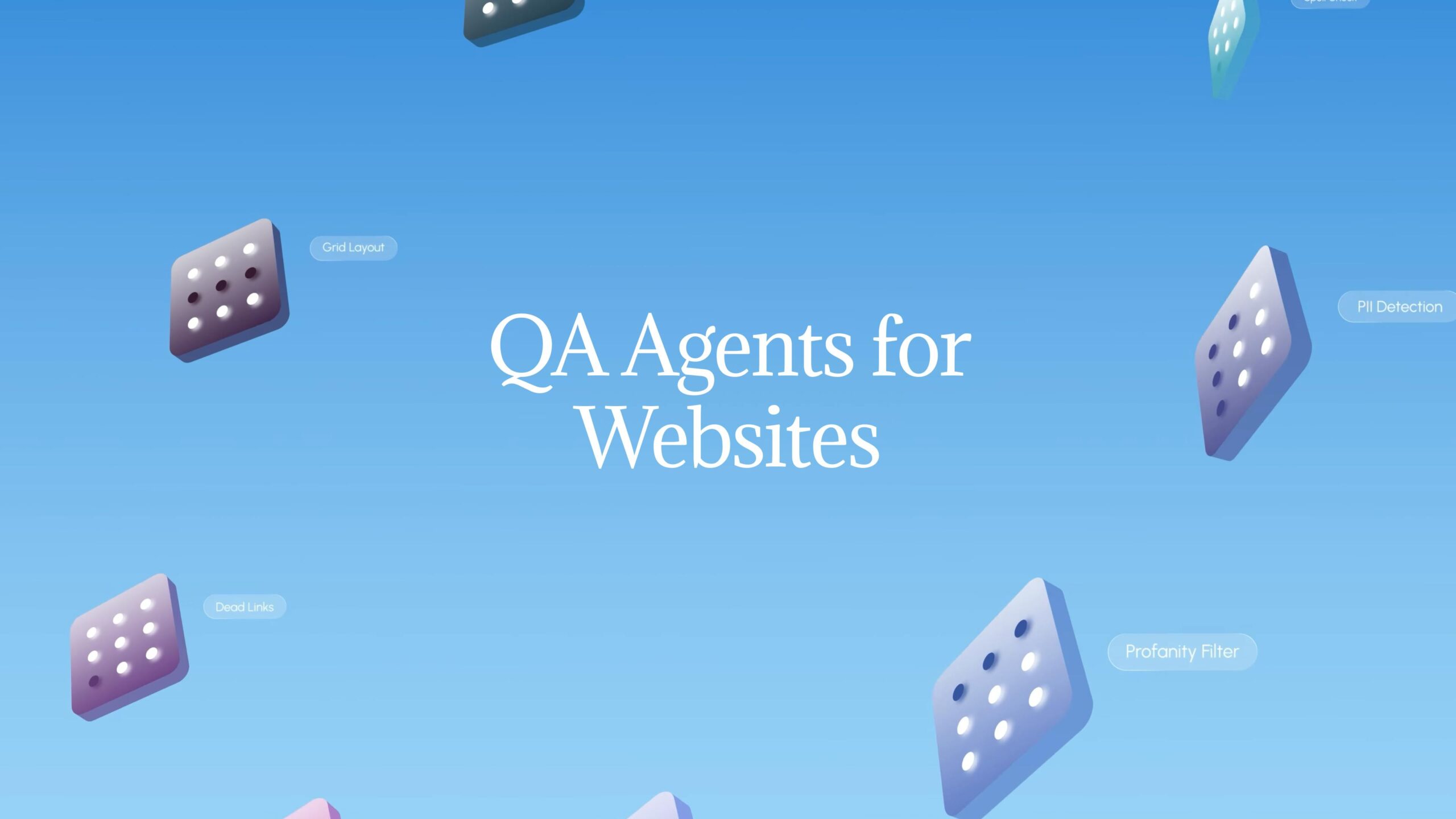
Superflow began in October 2022 as a Webflow plugin for Figma-style commenting on live websites and has since expanded into a multi-asset review platform (websites, PDFs, video, images, Lottie). Its August 18, 2026 Product Hunt launch repositioned the product as “Superflow AI”: AI agents generated from an agency’s existing QA checklist that sweep every page of a site (desktop and mobile), pin findings to elements, and route them to human approvers, with a “Memory” layer that learns from rejected findings (Product Hunt, usesuperflow.ai).
The product serves web and marketing agencies, freelancers, and in-house content teams — a real, painful workflow (client review cycles, pre-launch QA) that is currently handled with screenshots, email threads, and manual checklists. The AI-agent angle is a genuinely timely differentiator in a category (website annotation) that has been feature-frozen for years.
The strongest positive signal is the team: Superflow is built by Velt (YC W22), founded by ex-Google PM Rakesh Goyal, backed by a $2.77M seed from Y Combinator, Spider Capital and others, with a working sibling product (Velt SDK) that reports usage from customers such as Pendo and Leadpages (Spider Capital announcement, Velt 2024 highlights).
The most important concern is the complete absence of commercial evidence for Superflow itself: no disclosed revenue, paying-customer count, retention, or growth metrics, in a crowded, low-ACV category where competitors cluster at $16–$79/month. The decision is Watch: credible team and interesting pivot, but the venture case is commercially unverified.
Product Overview
The customer problem: agencies ship client websites through manual QA checklists and chaotic feedback loops across email, Slack, and screenshots. Superflow’s original product let reviewers comment directly on live sites without a browser extension; the 2026 version turns a checklist (spreadsheet, CSV, PDF) into a team of AI agents that check every page for broken links, spelling, accessibility, SEO basics, and brand rules, then pin findings as comments with screenshots. Humans — first the team, then the client via a no-login link — approve every finding before sign-off (Product Hunt, usesuperflow.ai).
Core features: AI review agents, Memory, pinned comments with auto-screenshots, guest/client approval links, Kanban task workflows, white-labeling, and integrations with Slack, Asana, Monday, ClickUp, Jira, Webflow, Framer, WordPress, and Shopify. Pricing is per-seat: Starter free (1 seat, 60 AI credits/mo), Growth $24/seat/mo billed annually, Scale $28/seat/mo, Enterprise custom; AI agent reviews cost 10 credits each, with top-up packs from $20 per 500 credits (pricing page). It replaces manual QA passes plus tools like MarkUp.io, Pastel, or BugHerd. The product is live and verifiable; the company claims “Loved by 100+ Agencies” (company-reported, unverified).
Founder and Team Assessment
Founder Rakesh Goyal is independently verifiable: roughly nine years as a Product Manager at Google (launched AR features in Google Maps and Search), now Founder & CEO of Velt (YC W22), which operates both the Velt collaboration SDK and Superflow (LinkedIn, BEAMSTART profile). Velt’s LinkedIn page lists 11–50 employees, describes a “team of ex-Googlers,” and shows San Francisco headquarters (LinkedIn). Team members publicly credit roughly six months (February–August 2026) building the agent framework behind Superflow AI (LinkedIn).
Concerns: the CEO’s attention is split between two products (Velt SDK and Superflow), team size dedicated to Superflow is not disclosed, and commercial (sales-led) capability is unproven publicly. Key-person risk is moderate.
Founder Assessment: Strong technical and product pedigree with real YC backing, but split focus and unproven go-to-market execution.
Market Opportunity
The initial segment is narrow: web design/development agencies and freelance studios that run pre-launch QA and client approvals. A bottom-up sketch: at current pricing, a typical agency workspace of ~8 seats on Growth yields roughly $2,300/year. Even 100,000 addressable agencies globally implies a ~$230M serviceable market at current ACV — enough for a solid SaaS business, not obviously for venture scale. Willingness to pay is proven in principle by incumbents (MarkUp.io at $79/mo, BugHerd at ~$42/mo, Pastel, Ruttl, Marker.io — competitor pricing roundups, DesignRush), but these tools’ modest pricing signals a value ceiling in this segment.
Expansion potential is the more interesting story: AI-assisted QA/governance for websites and web apps edges toward the software-testing market, where QA Wolf has raised ~$57M including a $36M Series B led by Scale Venture Partners with 130+ customers (TechCrunch). The founder’s public reframing (“Agentic Governance Platform”) suggests ambition beyond agency feedback. Realistic venture-scale revenue requires moving upmarket into higher-ACV QA/compliance workflows, not just more agency seats.
Traction and Growth Signals
Verified signals: seven Product Hunt launches since October 2022, with the AI launch on August 18, 2026; a 4.7 rating across 7 reviews and roughly 800–1,100 followers on the product page; a small number of positive G2 reviews (one noting it is “very expensive… though worth the cost”) (Product Hunt launches, G2). A team post claims the launch reached “Top 3 for the day” (company-reported). The founder claimed 18 agencies using the product at the 2022 launch; the site now claims “100+ Agencies” — both unverified. Four years of continuous shipping (Webflow plugin → multiplayer → GPT-4 copilot → Lottie → AI agents) demonstrates persistence and update frequency.
Missing and decisive: revenue, MRR/ARR, paying customers, retention, conversion, and any post-launch usage data for the AI product (three days old at report date). Product Hunt attention is launch noise, not PMF.
Traction Assessment: Promising product velocity and launch attention, but commercially unverified.
Competitive Position
Direct competitors (manual annotation/feedback): MarkUp.io, Pastel, BugHerd, Ruttl, Marker.io, Feedbucket, Userback, Filestage — mostly $16–$199/mo with low switching costs. Indirect: Figma comments, Webflow’s native (free) commenting, Loom, and manual spreadsheets. AI-QA adjacent: QA Wolf, Meticulous, Octomind, Momentic, Reflect — better-funded and aimed at engineering QA budgets.
Superflow’s differentiation today is the checklist-to-agents workflow plus client-approval gating and Memory; its distribution advantages include the Webflow marketplace listing and integrations. However, annotation is commoditized, and the AI-agent layer is replicable: MarkUp.io, Ruttl, or BugHerd could ship LLM-based checks within months, and Webflow or AI site builders could bundle basic QA natively. If the largest platform launched the same feature in six months, Superflow’s residual moat would be its cross-platform Memory and approval workflow — plausible but unproven.
Defensibility Assessment: Low-to-medium.
Business Model and Economics
Per-seat SaaS ($24–$28/seat/mo annual) plus usage-based AI credits (10 credits per agent review; packs from $20/500 credits). Implied ACV is low (~$1,000–$4,000 for small agencies), which caps LTV and makes paid acquisition difficult; the model depends on organic/Product Hunt/marketplace acquisition and seat expansion. Gross margin should be software-typical on seats, but agent reviews carry real inference costs; at $20 per 50 reviews, heavy usage is priced cheaply, so margin quality under scale is unknown. Enterprise tier (SSO, SCIM, self-hosting, custom credits) is the only path to meaningful ACV expansion. Free guest seats are a smart viral loop into clients. Unverifiable without cohort data: conversion, churn (agency churn is structurally high), and net revenue retention.
Unicorn Path
Assume a 8x ARR multiple (reasonable for SMB SaaS with AI usage revenue; generous given low ACV). Required ARR ≈ $125M. At ~$2,300 ARPA (8-seat agency), that implies ~54,000 paying agency customers — versus a claimed base of “100+” today. That is not credible under the current model. A unicorn outcome requires: (1) moving from agency feedback into engineering/enterprise QA-governance budgets (the QA Wolf-adjacent market), raising ACV 10–50x; (2) usage-based agent revenue becoming a primary driver; (3) international and platform expansion beyond agencies. Each is possible; none is evidenced.
Unicorn Path: Conditional
Valuation Assessment
Known funding: $2.77M seed at Velt (closed March 2022; Y Combinator, Spider Capital, Amino Capital, First Row Partners, angels from Google/Stripe/SAP) (Velt blog, BounceWatch). No valuation, no subsequent round, and no Superflow-specific financing is disclosed.
Valuation Attractiveness: Not Assessable. Responsible assessment requires current ARR, growth, retention, burn/runway (a 2022 seed implies capital may be thin in 2026), round size, and post-money or SAFE cap.
Key Risks
- No verified commercial traction for Superflow (revenue, customers, retention all undisclosed).
- Crowded, low-ACV category with structurally high SMB/agency churn.
- Feature commoditization: incumbents or Webflow/AI site builders can replicate AI QA checks.
- Low switching costs and weak data moat (Memory is nascent).
- Founder split between Velt SDK and Superflow; key-person dependency.
- Capital efficiency/runway unknown; last disclosed round is from 2022.
- Compliance-claim inconsistency: the homepage markets “SOC 2 Type II, HIPAA with BAA” while the pricing FAQ states SOC 2 certification is still in progress — a credibility flag requiring verification.
- AI inference costs could compress margins if usage-based revenue underprices heavy runs.
- Platform dependency on website-builder ecosystems for distribution.
Final Assessment
Venture Potential: 52/100
| Category | Score |
|---|---|
| Market Size and Expansion Potential | 12/20 |
| Traction and Growth Evidence | 7/20 |
| Founder and Team | 10/15 |
| Product Strength | 7/10 |
| Distribution Potential | 8/15 |
| Business Model and Economics | 5/10 |
| Defensibility | 3/10 |
| Total | 52/100 |
Strongest: founder pedigree and product velocity. Weakest: defensibility and the absence of any commercial evidence.
Evidence Confidence: 45/100
Verified: founder identity/background, YC W22 + $2.77M seed (parent level), launch history, current pricing, competitive pricing. Company-reported: “100+ agencies,” “~90% catch rate,” Top-3 launch finish, compliance claims. Unavailable: all revenue, customer, retention, margin, burn, and valuation data; the SOC 2 conflict further reduces confidence.
Final Decision: Watch
A capable, YC-backed team executing a timely AI pivot in a real workflow — but three days post-launch with zero verifiable commercial data, low-ACV economics, and weak moats. Too early for formal DD; not a Pass because the team and the governance-market expansion thesis are credible.
Upgrade Conditions
- $500K+ ARR with verifiable paying-customer count (e.g., 300+ paying workspaces)
- >70% six-month logo retention and evidence of seat/credit expansion
- Enterprise contracts at $10K+ ACV validating the QA-governance move
- Clarified SOC 2 status; new financing with disclosed terms
Downgrade Conditions
- Flat usage after launch spike; weak free-to-paid conversion
- MarkUp.io/BugHerd/Webflow shipping equivalent AI QA
- Founder deprioritizing Superflow for Velt; unresolved compliance-claim discrepancies
Questions for Further Diligence
- What are Superflow’s current MRR, paying workspace count, and month-over-month growth, separate from Velt SDK?
- What are free-to-paid conversion and 90/180-day retention for agency workspaces?
- How many weekly agent reviews run, and what is the inference cost per review versus credit revenue?
- What is the blended gross margin at current usage levels?
- Which channel drives paying customers today beyond Product Hunt and the Webflow marketplace?
- What is the company’s cash position, burn, and runway given the 2022 seed?
- Is a new round being raised, at what terms, and is Superflow the primary use of proceeds?
- How is engineering/CEO time allocated between Velt and Superflow?
- What is the actual SOC 2 / HIPAA certification status, and why do site pages conflict?
- What retention does Memory create — do switching costs measurably increase with usage?
- What ACV and pipeline exist for the Enterprise tier?
- Why did pricing move from $249–$449/mo tiers to $24–$28/seat, and what did that change do to revenue?
Sources
- Product Hunt — Superflow AI product page and launch history
- Superflow official site and pricing page
- Rakesh Goyal — LinkedIn and Velt — LinkedIn
- Velt $2.77M seed announcement and Spider Capital announcement
- Velt 2024 highlights (founder post)
- Superflow agent-framework engineering post
- G2 — Superflow reviews
- TechCrunch — QA Wolf $36M Series B
- Competitor pricing: ReviseFlow roundup, DesignRush, SnapFeed alternatives (secondary sources)