
Table of Contents
Causal (causal.so) Investment Report
Category: AI-powered spatial canvas / digital whiteboard for planning visual creative projects
Company Stage: Pre-seed / just-launched solo-built product
Founder or Founders: Rameen Sharif (solo maker; identity sourced from Product Hunt maker profile and a third-party directory — background not independently verified) producthunt
Headquarters: Not publicly disclosed (founder appears UK-based per LinkedIn directory listings, unverified) linkedin
Funding: Not publicly disclosed; no evidence of external funding found
Business Model: Freemium prosumer subscription (Free £0; Pro £8/month) causal
Product Hunt Launch Date: September 2026 (launch week of the report date) producthunt
Report Date: September 6, 2026
> Important disambiguation: This report covers Causal (causal.so), an AI canvas for planning visual projects, launched on Product Hunt in September 2026. It is not Causal (causal.app), the London-based financial modeling startup co-founded by Taimur Abdaal, which raised ~$24M from Accel and Coatue and was acquired by LucaNet in 2024. The shared name creates SEO, trademark, and brand-confusion issues addressed below. startupintros
| Investment Metric | Assessment |
|---|---|
| Venture Potential | 39/100 |
| Unicorn Path | Improbable |
| Valuation Attractiveness | Not Assessable |
| Evidence Confidence | 30/100 |
| Final Decision | Pass |
Executive Summary
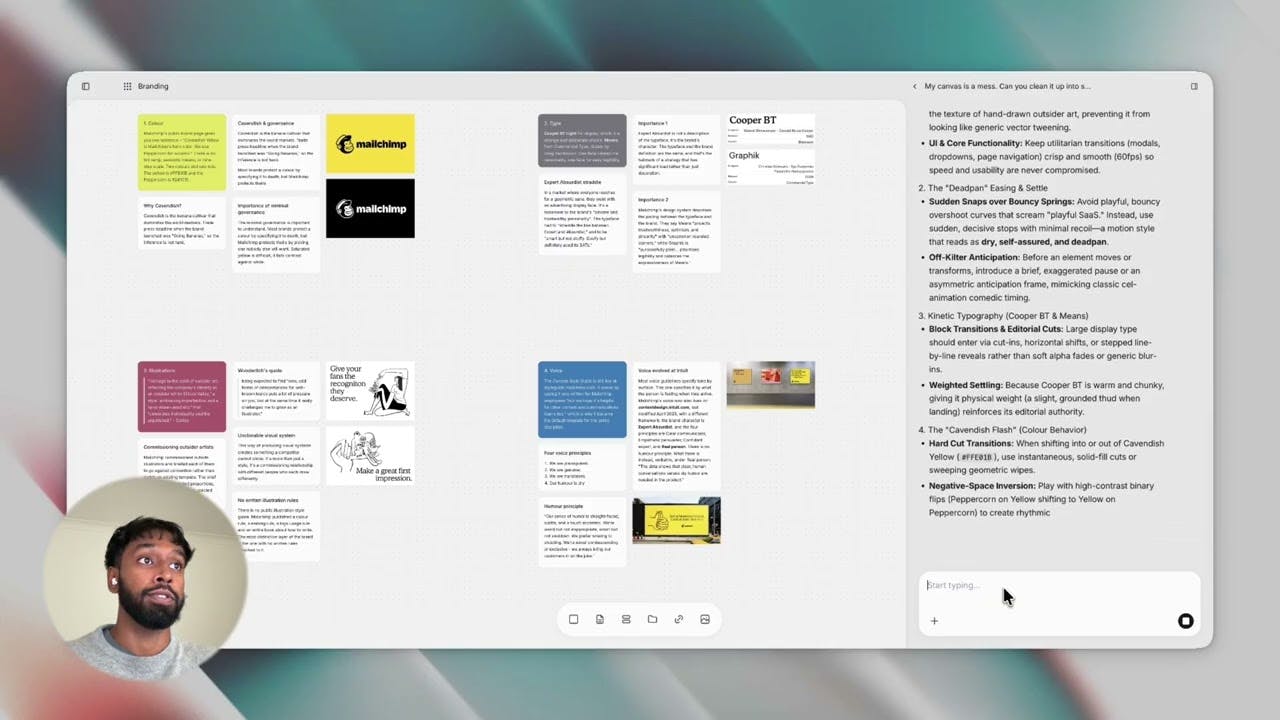
Causal is an infinite AI canvas where designers, creators, and founders collect inspiration, notes, files, and links, then use a native AI agent to organize, brainstorm, and generate structured project plans such as roadmaps, moodboards, and storyboards. Its differentiation relative to Miro, Notion, and Obsidian is positioning — it targets solo creatives and small teams planning before execution, rather than enterprise collaboration — plus MCP-based agent handoff that lets external AI tools like Claude read and act on the canvas. causal
The product itself appears real, thoughtfully scoped, and competitively priced: a permanent free plan and a £8/month Pro tier, with a Mac desktop app and web app. The launch garnered modest Product Hunt attention (95 followers, a handful of genuinely engaged comments) roughly a week before this report. causal
The strongest positive signal is execution speed and product coherence: a single founder appears to have designed in Figma, built with Claude Code and Supabase, and shipped a functional desktop-plus-web product with MCP integration. This demonstrates strong technical and AI-native execution capability. producthunt
The most important investment concern is structural: this is an extraordinarily crowded category (Miro, FigJam, Canva Whiteboards, Notion, Milanote, Obsidian Canvas, plus AI-native entrants), the product has no verified revenue, users, or retention, defensibility is low, and a solo £8/month consumer subscription has a very narrow path to venture-scale revenue. producthunt
There is no evidence of external funding, team, or incorporation details. As a venture investment, this is currently a Pass: the company fits a bootstrapped/indie profile better than a venture-scale one. It could be reconsidered if the founder demonstrates sustained paying-user growth, retention, and a repeatable acquisition channel beyond Product Hunt.
Product Overview
Causal addresses the scattered pre-production workflow of visual creatives: references in one tool, notes in another, plans in a third. The product places notes, images, videos, links, and files (up to 20MB each, with in-place editing of markdown and CSV) on a freeform infinite canvas, where spatial arrangement itself is the organization. causal
Core features include: a context-aware AI agent that reads the entire canvas and can create, organize, and place ideas; native output generation (prompts become canvas content); custom widgets the agent can build (e.g., a habit tracker); MCP connections enabling handoff to external agents; collections and nested canvases for structure; an unsorted tray for unplaced items; templates for app plans, brand boards, storyboards, and website plans; one-click read-only share links requiring no account; and a free self-updating macOS desktop app. MCP setup connects Claude (and other MCP clients) to any board in the account via a custom connector. causal
Target users are individual designers, creators, and small founding teams — explicitly not the enterprise audience the founder associates with Miro. Pricing is Free (100 notes/images/links, 10 files, 5 widgets, “generous” AI requests) and Pro at £8/month (unlimited items, 10x AI requests). Note a minor internal inconsistency: the FAQ states the free plan includes 200 nodes and 50 AI requests/month, while the pricing table lists lower limits; this is a low-materiality conflict, and the FAQ’s more generous figures are used here. causal
The replaced workflow is moodboard/planning fragments across Notion, Google Docs, Apple Notes, Pinterest boards, and Figma files. No App Store or Google Play listing was found; distribution is via the website and direct Mac download. causal
Founder and Team Assessment
The Product Hunt maker profile and a third-party design directory identify Rameen Sharif as the maker of Causal. His Product Hunt account was created August 28, 2026 — days before launch — and this is his first product launch. LinkedIn directory listings show a Rameen Sharif in the UK with a BSc in Economics from the University of Warwick and prior experience including a company called “South Stays”; this is plausibly but not confirmed to be the same person. The “Built With” page describes implementing Figma designs solo and lists Claude Code, Supabase, and Figma as the stack, consistent with a single-person build. producthunt
No co-founders, employees, incorporation, or legal entity information was found. Team size, full-time commitment, and funding status are all not publicly disclosed. Key-person risk is total: the product depends entirely on one individual whose commercial track record is unverified.
Founder Assessment: Plausible AI-native technical execution as a solo builder, but commercial capability, commitment, and background remain unverified — insufficient evidence for a team-based investment case.
Market Opportunity
The narrow initial segment is individual designers, content creators, and solo/small founding teams who plan visual projects (brand identity, videos, websites, apps) and currently stitch together moodboards and plans across multiple tools. Willingness to pay in this segment is real but modest — comparable tools like Milanote monetize at roughly $10–15/month per user, and Causal’s £8/month Pro price is consistent with that band. causal
A rough bottom-up estimate: assume 1–2 million globally addressable English-speaking professional and semi-pro creatives who would pay for a planning canvas, at ~£96 (~$125) per year. Full penetration of 2% would yield roughly 20,000–40,000 paying users, or roughly $2.5–5M ARR. Even optimistic 5–10% penetration of the most motivated subset stays in the $10–25M ARR range. Adjacent expansion (teams, education, agencies, Windows/mobile apps, agent-API access) could raise this, but each expansion moves Causal into direct competition with entrenched platforms (Miro, FigJam, Canva). producthunt
The realistic addressable market likely supports a healthy indie or small SaaS business, but not venture-scale revenue without a fundamental expansion into team/enterprise collaboration — a market where incumbents are strongest.
Traction and Growth Signals
Available evidence: a Product Hunt launch in early September 2026 with 95 followers and a small number of substantive, positive comments; founder engagement in comment threads. Inclusion in the Design Minis directory. A functional website with detailed FAQ, templates, and MCP documentation, indicating an actively maintained product. designminis
Not available: paying customers, revenue, registered users, active users, retention, app store ratings, downloads, website traffic data, press coverage, community discussion beyond Product Hunt, or any post-launch momentum data (the launch occurred roughly one week before this report).
The most important missing metrics are paying-customer count, 30/90-day retention, and free-to-paid conversion — none of which can exist meaningfully yet given the launch timing. Product Hunt attention here is launch-week attention, not sustained traction, and should be given minimal weight.
Traction Assessment: Launch attention only; commercially unverified and far too early to assess.
Competitive Position
- Direct competitors: Milanote (moodboard-focused), Whimsical, Miro, FigJam producthunt
- Large platforms that could replicate: Canva Whiteboards (AI whiteboards launched 2022, deep distribution), Notion canvas, Obsidian Canvas, Google/AI-native canvas products canva
- Free alternatives: Notion free tier, Apple Notes, Google Jamboard-successors, Obsidian, Pinterest boards
- Manual alternative: scattered documents and folders, which is free
Current differentiation is real but thin: the founder argues Miro is enterprise-oriented and not built for designers or small teams, and Causal’s positioning as “the step before opening any creative tool” is a coherent wedge. The MCP agent handoff is genuinely current-generation thinking. However, none of this is proprietary: the AI capabilities are built on third-party models (built with Claude Code; MCP connects to Claude), the canvas itself is a commodity pattern, and Canva, Miro, or Figma could ship an equivalent agent feature within one product cycle. causal
The six-month replication test: if Canva or Figma shipped an AI agent that organizes an infinite canvas (Canva already markets AI whiteboards), Causal’s remaining advantages would be price (£8/month), a lighter-weight solo-creator focus, and MCP openness. That is a feature-level, not moat-level, answer. Switching costs are low — canvas data can be rebuilt elsewhere in an afternoon. canva
Defensibility Assessment: Low.
Business Model and Economics
Revenue model is a freemium prosumer subscription: free forever, Pro at £8/month (~£96/~$125 annually). There is no annual plan, team plan, or enterprise tier publicly listed. causal
Estimated annual contract value is ~$125 per paying user. Gross-margin potential for a pure software subscription is nominally high, but two variable costs compress it: AI inference (the free plan includes 50 AI requests/month and Pro multiplies this 10x, so heavy users directly consume inference budget), and file storage for a product whose core job is holding images, screenshots, and videos up to 20MB each — a media-heavy cost profile unusual for a low-priced note tool. Payment-processing fees (~3%) are immaterial at this price point; there is no app store dependency since the Mac app is distributed directly. causal
The key economic question — whether usage growth increases revenue faster than inference and storage costs — cannot be answered without cost data, and the flat £8/month price with a 10x AI allowance creates explicit risk that the heaviest (most valuable) users are the least profitable. Free-to-paid conversion, churn, and seasonality are unknown. There is no evidence of expansion revenue, API revenue, or transaction revenue.
Unicorn Path
Assume a high-quality consumer/prosumer SaaS multiple of ~10x ARR (justified by the multiple band for high-growth consumer subscription software; conservative relative to 2021-era peaks). Required revenue: $1B ÷ 10 = ~$100M ARR.
At ~$125 annual revenue per Pro subscriber, reaching $100M ARR requires roughly 800,000 paying subscribers. For context, that is a top-tier consumer productivity outcome in a category where the dedicated moodboard leader (Milanote) has operated for a decade without publicly approaching that scale, and where free alternatives from Canva, Notion, and Google cap willingness to pay. The realistic addressable population estimated above (1–2M motivated creatives) would need 40–80% paid penetration — implausible. canva
Strategic changes required: a shift from solo consumers to teams/agencies (higher ACV, but head-on with Miro/Canva), enterprise contracts, an agent/API revenue layer, Windows and mobile expansion, and a funded team. That is a business-model transformation, not an extension.
Unicorn Path: Improbable. A valuable niche business is achievable; a $1B outcome would require a near-total strategic rebuild in the face of entrenched incumbents.
Valuation Assessment
No funding rounds, investors, valuations, or SAFEs are publicly disclosed. No Crunchbase-style records, press announcements, or investor portfolio mentions of this specific product were found (searches surface only the unrelated causal.app company). Current fundraising status is unknown. startupintros
Valuation Attractiveness: Not Assessable. Assessing it responsibly would require: current ARR/MRR and growth, paying-customer count and retention, gross margin after AI inference and storage costs, burn rate and runway, round size or SAFE cap, post-money valuation, and investor ownership. Nothing beyond pricing is publicly verifiable.
Key Risks
- Category saturation: Miro, FigJam, Canva, Notion, Milanote, and Obsidian all occupy adjacent space, with Canva shipping AI whiteboards since 2022. canva
- Platform replication: No proprietary technology; the AI layer is third-party models, replicable by incumbents within months.
- No commercial validation: Zero public evidence of paying customers, revenue, or retention; launch is one week old. producthunt
- Solo-founder key-person risk: One unverified individual; no team, no disclosed entity. producthunt
- Unit economics compression: Flat £8/month pricing with 10x AI requests on Pro and 20MB media storage risks negative-margin heavy users. causal
- Name collision: “Causal” is strongly associated with the LucaNet-acquired finance company and its founders’ public profiles, creating SEO and brand confusion, plus potential trademark exposure. startupintros
- Distribution weakness: No visible acquisition channel beyond Product Hunt and directories; SEO for “Causal” is dominated by the finance product and causal-AI research.
- Low switching costs: Canvas content is easy to abandon; retention risk is high in free-tier creative tools.
Final Assessment
Venture Potential: 39/100
| Category | Score |
|---|---|
| Market Size and Expansion Potential | 11/20 |
| Traction and Growth Evidence | 4/20 |
| Founder and Team | 6/15 |
| Product Strength | 6/10 |
| Distribution Potential | 5/15 |
| Business Model and Economics | 5/10 |
| Defensibility | 2/10 |
| Total | 39/100 |
The strongest element is coherent, current AI-native product execution — MCP integration and an agent that operates on the whole canvas are the right 2026 patterns. The weakest elements are defensibility (2/10), traction (4/20, launch-week only), and a solo unverified team. This score places Causal in the “more likely a niche, lifestyle, or bootstrapped business” band.
Evidence Confidence: 30/100
Verified: the product exists, is functional, with published pricing, features, and MCP documentation. Weakly verified: founder identity via Product Hunt and a third-party directory. Unknown: legal entity, headquarters, team, funding, revenue, users, retention, costs, and fundraising status. The founder’s professional background is unverified and rests on plausibly-matched LinkedIn directory entries. No secondary press coverage exists to corroborate anything. producthunt
Final Decision: Pass
Causal is a competently built, well-priced product in a saturated category with no commercial validation, a solo unverified founder, no disclosed funding, low defensibility, and an improbable venture-scale path under the current consumer-subscription model. Pass does not mean the product is bad — it appears genuinely useful and well-scoped — but it does not currently fit a venture capital strategy. A healthy bootstrapped business is the more plausible outcome.
Upgrade Conditions
- Reaching roughly $500K–$1M ARR with sustained month-over-month growth
- Demonstrating >50% 90-day retention on the free tier and a credible free-to-paid conversion rate
- A repeatable acquisition channel beyond Product Hunt (SEO, creator partnerships, or agent-ecosystem distribution)
- Shipping a team/agency tier with materially higher ACV
- Verifiable founder background and team expansion
Downgrade Conditions
- Product abandonment or declining update cadence
- Evidence of near-zero free-to-paid conversion or high Pro churn
- Canva, Figma, or Miro shipping an equivalent organizing agent
- Confirmed trademark conflict with the established Causal (causal.app/LucaNet) brand startupintros
- Founder discontinuing work on the product
Questions for Further Diligence
- How many paying Pro subscribers and registered users do you have, and what is free-to-paid conversion?
- What are 30-, 90-, and 180-day retention curves for free and Pro users?
- What is monthly revenue growth since launch, and what share of traffic comes from channels other than Product Hunt?
- What are your monthly AI inference and file-storage costs as a percentage of revenue, and how do they scale with Pro usage?
- Is Causal your full-time commitment, and what is your professional background?
- Is there a registered legal entity, and where is it incorporated?
- Have you raised any capital, or are you bootstrapped? What is your burn and runway?
- Have you encountered any trademark friction over the “Causal” name given the established causal.app company ? startupintros
- What is the roadmap for Windows, mobile, and team/workspace features?
- How do you plan to compete if Canva or Figma ships an equivalent agent-enabled canvas ? canva
- What is the MCP/agent strategy — do you expect distribution from the Claude/agent ecosystem, and can you measure it?
- What would the team/agency tier look like, and at what price point?
Sources
- Product Hunt — Causal: AI Powered Canvas for planning visual projects
- Causal official website (pricing, FAQ, features)
- Causal MCP setup documentation
- Product Hunt — Causal “Built With” tech stack page
- Product Hunt — Rameen Sharif maker profile
- Design Minis — Causal directory listing (maker attribution)
- LinkedIn directory — Rameen Sharif profile listing (unverified identity match)
- Startup Intros — Causal (causal.app) funding and LucaNet acquisition, for disambiguation
- Taimur Abdaal personal site (causal.app founder, for disambiguation)
- Canva Newsroom — AI Whiteboards (competitive context)