
Table of Contents
Doneit 3.2 Investment Report
Category: Personal productivity / task and project management
Company Stage: Small, revenue-generating software business; venture stage not established
Founder or Founders: Daniils Miņonoks
Headquarters: Riga, Latvia
Funding: No reliable public funding information found
Business Model: Freemium consumer subscription and lifetime in-app purchase
Product Hunt Launch Date: September 19, 2026
Report Date: September 22, 2026
| Investment Metric | Assessment |
|---|---|
| Venture Potential | 46/100 |
| Unicorn Path | Improbable |
| Valuation Attractiveness | Not Assessable |
| Evidence Confidence | 72/100 |
| Final Decision | Pass |
Executive Summary
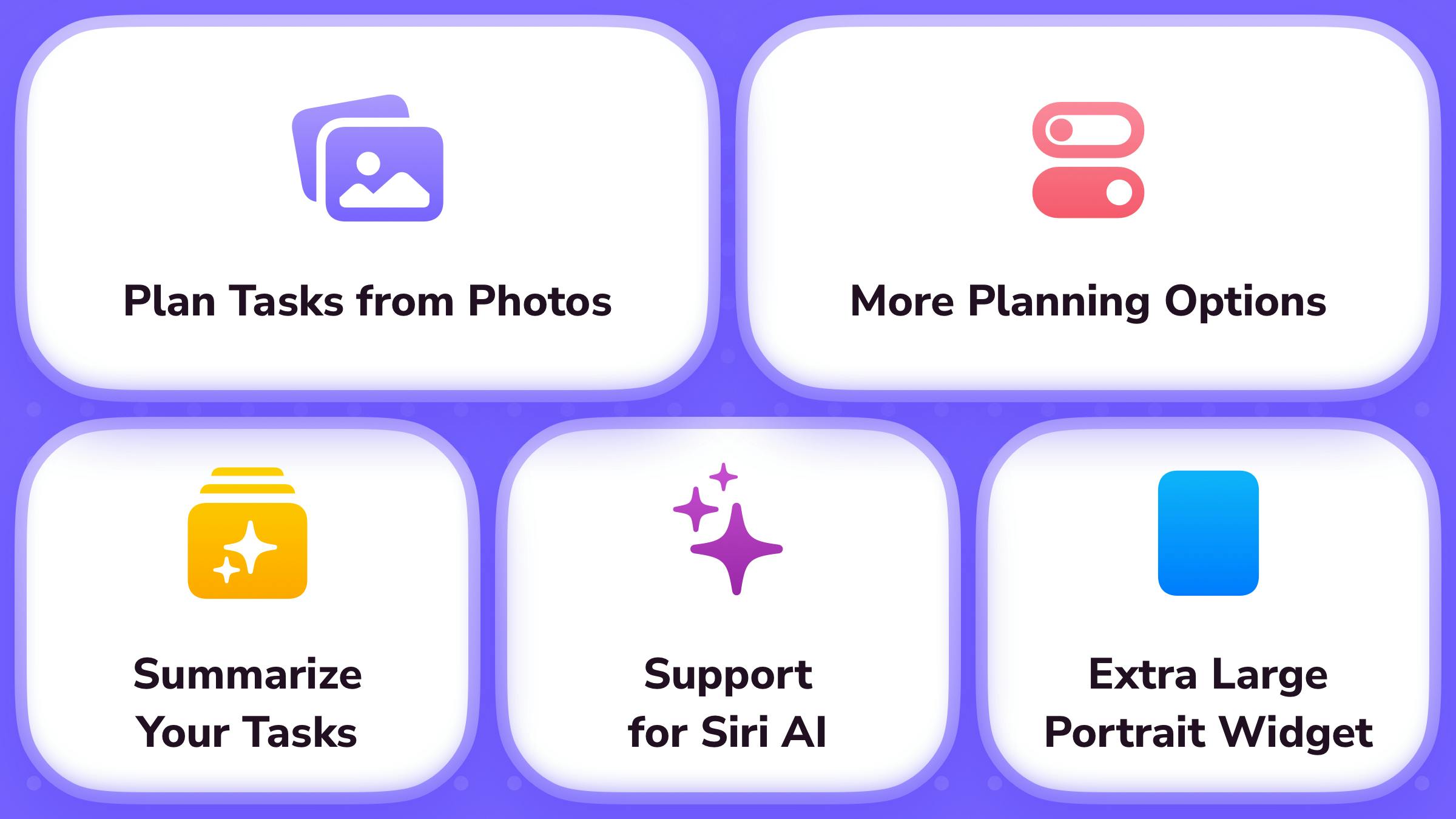
Doneit is a native task and lightweight project-management application for Apple devices. It offers list, grid, Kanban and timeline views, along with recurring tasks, reminders, attachments, custom attributes, widgets and iCloud-based synchronization. Version 3.2 adds an expanded AI assistant that can convert photographs of handwritten lists, documents or whiteboards into structured tasks, summarize task lists and interact with Apple’s newer Siri capabilities (App Store).
The product is well developed for an independent consumer application. It supports iPhone, iPad, Mac, Apple Watch and Apple Vision, has a 4.5/5 rating from 280 US App Store ratings, and has been maintained since its first release in January 2021 (App Store, founder interview). Local storage, iCloud synchronization and relatively limited collection of non-identifiable analytics data provide a reasonable privacy position for personal task management (privacy policy).
The strongest company-quality signal is sustained product execution by founder Daniils Miņonoks, who reports beginning Doneit in 2019, learning Swift while building it and maintaining it through multiple major releases. The registered operator, DesignTech SIA, is active in Latvia and had three reported employees in 2025 (founder interview, company record).
The core investment concern is scale. DesignTech’s 2025 statutory results show €28,919 of net turnover, down from €32,614 in 2024, and a €7,364 net loss. These figures cover the entire DesignTech portfolio—not just Doneit—but they establish that the company remains very small after several years of operation. Doneit also competes in a mature market against free platform software and established cross-platform products.
Doneit can plausibly remain a useful, sustainable independent application, but the available evidence does not support a venture-scale outcome under its current Apple-only, low-price consumer model. The appropriate decision is Pass, subject to reconsideration if the company develops meaningful subscription growth, cross-platform distribution or a higher-value team product.
Product Overview
Doneit addresses the recurring problem of organizing personal tasks and relatively lightweight projects without adopting a complex enterprise project-management system. Users can maintain tasks and subtasks, organize them through categories, folders, tags and custom attributes, and display them as lists, grids, Kanban boards or timelines (official product page).
Version 3.2 expands Doneit Assist with multimodal task creation. A user can attach a photograph of a handwritten list, whiteboard or document and ask the application to structure the content into tasks. The assistant can suggest reminders and attributes, break work into subtasks, summarize a task list and identify upcoming or important items. The release also exposes task information to Apple’s Siri for onscreen awareness and task creation (App Store version history).
The free edition includes unlimited tasks and subtasks but limits users to two categories and three primary views. Premium unlocks unlimited categories, advanced boards, timeline view, list actions, collaboration through iCloud, attachments, recurring reminders, bulk editing and additional organizational features.
The US App Store lists:
- Monthly: $3.99
- Annual: $14.99
- Lifetime: $29.99
The official website has displayed a $14.99 premium offer, which may reflect a temporary promotion or older price. Because the App Store is the transaction platform, its current listing is used as the authoritative source (App Store, official site).
The application requires current Apple operating systems and is unavailable on Android, Windows or the web. That produces a coherent native experience but sharply limits addressable distribution. It replaces combinations of Apple Reminders, Calendar, spreadsheets and simpler task applications.
Product Quality Assessment: A polished, mature native application with useful AI-assisted capture, but the functionality is incremental in a crowded category rather than category-defining.
Founder and Team Assessment
Daniils Miņonoks is the founder of DesignTech and the publicly registered owner and board member of DesignTech SIA. Latvian registry-derived records list him as the company’s sole shareholder and beneficial owner, with 100% ownership, and identify the company’s primary activity as computer programming (company record).
In a first-person Setapp interview, Miņonoks describes himself as a Latvian developer and designer who began learning Swift more than seven years ago. He started building Doneit in 2019 and released its first version in January 2021. He has subsequently built several other Apple applications, including Accountit, Creativit, ShowcasePro and ScreenPlace (Setapp interview, DesignTech portfolio).
This history demonstrates product-design ability, native Apple development expertise and persistence. The founder also discusses experimenting with directories, sponsorships, content and paid advertising for ScreenPlace, indicating awareness that distribution—not development—is the remaining constraint. However, he explicitly states that he has not yet established a fixed marketing strategy for that product.
Public records report three employees in both 2024 and 2025. No current hiring program, institutional board, senior commercial executive or prior venture-scale exit was found. Operating five applications with a three-person team creates execution and focus risk.
Founder Assessment: Strong independent product-development capability, but venture-scale distribution and commercial execution remain unproven.
Market Opportunity
Doneit’s initial market is Apple-device users who want more structure than Apple Reminders provides but do not need a full business project-management platform. This includes individual professionals, students, freelancers and highly organized consumers.
The broader productivity market is large, but the relevant paying segment is constrained by three factors: the product is Apple-only, task management is heavily commoditized, and free alternatives are adequate for many users. Established competitors also offer substantial functionality. TickTick charges $49.99 annually for a cross-platform premium product with calendars, Kanban boards, natural-language processing and AI features (TickTick pricing). Todoist offers a free plan, team workspaces, integrations and AI-assisted task management (Todoist pricing). Things provides a mature native Apple experience and has won multiple Apple Design Awards (Things).
A bottom-up scenario using Doneit’s $14.99 annual price illustrates the limited economics:
- 100,000 annual subscribers: approximately $1.5 million gross annual billings.
- 1 million annual subscribers: approximately $15 million gross annual billings.
- 5 million annual subscribers: approximately $75 million gross annual billings.
These figures exclude App Store commissions, refunds, regional pricing and churn. The lifetime option further reduces recurring revenue if customers choose a one-time purchase instead of renewing.
Venture-scale expansion would require Windows, Android and web products, or a team-oriented offering with centralized administration and higher annual contract values. DesignTech has not publicly announced such a strategy.
Traction and Growth Signals
Doneit’s most credible traction evidence is its longevity and App Store record. The product has been available since January 2021 and currently has a 4.5/5 rating from 280 ratings in the US store. Ratings differ by geography—for example, 4.0 from 28 ratings in the UK and 4.7 from three ratings in Latvia—so ratings should not be aggregated without Apple’s underlying country-level data (US App Store, UK App Store, Latvia App Store).
Doneit 3.2 received 100 Product Hunt points and was the product’s eighth launch on the platform. Launch tracking placed it approximately seventh on September 19, 2026 (Product Hunt, daily leaderboard). This reflects repeat launch activity and some community interest, not product-market fit.
The most important evidence is financial. Registry-derived statements report company-wide net turnover of:
- 2023: €22,916
- 2024: €32,614
- 2025: €28,919
The company recorded a €7,364 net loss in 2025 and employed three people. Because DesignTech operates several applications, these results cannot be attributed solely to Doneit. Nevertheless, they establish that the overall business has not yet reached venture-scale revenue and that turnover declined approximately 11% in the latest reported year (company financial record).
Downloads, active users, Doneit-specific revenue, subscription growth, paid conversion and retention are not publicly disclosed.
Traction Assessment: A maintained product with positive ratings, but commercial scale is small and latest company-wide turnover declined.
Competitive Position
Doneit competes directly with Things, Todoist, TickTick, OmniFocus and numerous smaller task managers. Apple Reminders and Calendar are important free alternatives, particularly because they are preinstalled and deeply integrated into the same operating systems that Doneit targets.
Doneit’s strengths are its native interface, multiple task views, broad Apple-device coverage, customizable task metadata and low annual price. Its local storage and iCloud model may appeal to privacy-conscious users and reduces the need to operate a proprietary synchronization backend (privacy policy).
However, switching costs are low. Most value resides in ordinary task data rather than a proprietary workflow, network or dataset. iCloud collaboration supports sharing but is not equivalent to a team-management platform with administrative controls, reporting, guest roles and enterprise integrations.
If Apple or a leading task platform launched equivalent image-to-task conversion within six months, customers might remain for Doneit’s interface and organizational flexibility, but there is no strong technical or distribution barrier preventing substitution. Siri integration increases usefulness while simultaneously increasing dependence on Apple’s roadmap.
Defensibility Assessment: Low
Business Model and Economics
Doneit earns revenue through monthly and annual subscriptions and a lifetime purchase. The annual plan provides potentially recurring revenue, while lifetime pricing generates immediate cash but caps long-term revenue per customer.
At $14.99 annually, the average customer value is low. Apple’s commission, applicable taxes and RevenueCat purchase-management costs reduce net receipts. App Store acquisition is also difficult because competitors have larger brands and review bases.
Doneit’s local and iCloud-based architecture should limit proprietary cloud-storage costs. The privacy policy identifies iCloud for synchronization, RevenueCat for purchases, TelemetryDeck for analytics and Apple for crash diagnostics (privacy policy). The cost basis for Doneit Assist is not disclosed. If AI functionality uses Apple’s on-device or platform-provided intelligence, marginal inference costs may be limited; this is not verified.
Enterprise revenue is currently unlikely because the product lacks publicly documented centralized billing, user provisioning, audit logs and administrative security controls.
Unicorn Path
A mature, low-priced consumer productivity application would more reasonably be valued at approximately 5× revenue than at a premium enterprise SaaS multiple.
Required annual revenue = $1 billion ÷ 5 = approximately $200 million.
At current gross prices:
- At $14.99 annually: approximately 13.3 million annual subscribers.
- At $3.99 monthly, or $47.88 annually: approximately 4.2 million continuously paying monthly subscribers.
- A mixed annual/lifetime customer base would likely require several million active purchasers and a much larger free-user funnel.
These calculations exclude App Store fees, discounts and churn. They are particularly demanding relative to DesignTech’s €28,919 of total 2025 turnover across its entire application portfolio.
A credible route would require a strategic transformation: cross-platform expansion, a web service, team collaboration, substantially higher ACV, enterprise administration and repeatable global distribution. That path is theoretically possible but not supported by current scale or announced strategy.
Unicorn Path: Improbable
Valuation Assessment
No external funding round, investor, SAFE cap, current fundraising process or private-market transaction was found. Registry records show Miņonoks as the sole shareholder, while the latest financial statements show modest turnover and negative net income (company record).
Valuation Attractiveness: Not Assessable
A responsible assessment would require Doneit-specific ARR, subscription growth, renewal cohorts, App Store proceeds, gross margin, cash balance, founder compensation, debt, burn, fundraising terms and proposed investor rights.
Key Risks
- Insufficient scale: Company-wide annual turnover remains below €30,000.
- Recent contraction: Reported 2025 turnover declined from 2024.
- Apple dependence: Distribution, payments, devices and Siri functionality depend on one platform.
- Crowded category: Large incumbents and free bundled tools address the same problem.
- Low ARPU: Current pricing requires millions of subscribers for venture-scale revenue.
- Weak defensibility: Task data, AI capture and interface features are readily replicable.
- Portfolio dilution: A three-person company operates at least five applications.
- Lifetime pricing: One-time purchases can weaken recurring revenue and expansion economics.
- Limited team product: iCloud sharing does not provide enterprise-grade administration.
- Founder concentration: Product, design, engineering and distribution appear highly dependent on one founder.
Final Assessment
Venture Potential: 46/100
| Category | Score |
|---|---|
| Market Size and Expansion Potential | 10/20 |
| Traction and Growth Evidence | 7/20 |
| Founder and Team | 10/15 |
| Product Strength | 8/10 |
| Distribution Potential | 5/15 |
| Business Model and Economics | 4/10 |
| Defensibility | 2/10 |
| Total | 46/100 |
Product quality and founder execution are credible. The weakest factors are revenue scale, distribution, low pricing, platform concentration and lack of defensibility.
Evidence Confidence: 72/100
The legal entity, ownership, employee count, company-wide financials, founder identity, product history, pricing and App Store ratings are reasonably well evidenced. Doneit-specific revenue, active users, retention, conversion, margins and acquisition costs remain unavailable.
Final Decision: Pass
Doneit appears better suited to an independent or bootstrapped software portfolio than an institutional venture investment. The product may be commercially worthwhile, but current revenue and distribution do not support a credible venture-return profile.
Upgrade Conditions
- Doneit-specific ARR exceeds $1 million with strong year-over-year growth.
- Six-month subscriber retention exceeds 70%.
- Annual subscribers materially outnumber lifetime purchases.
- Cross-platform or web distribution demonstrates incremental demand.
- A team plan produces higher ACV and recurring expansion revenue.
- Customer acquisition becomes repeatable outside Product Hunt and Apple featuring.
- Company-wide gross margin and operating profitability are demonstrated.
Downgrade Conditions
- Continued decline in company turnover.
- Reduced update frequency or founder attention.
- Weak renewal after initial AI-feature adoption.
- Apple bundles equivalent functionality into Reminders.
- App Store discoverability or ratings deteriorate.
- AI functionality creates material privacy or variable-cost problems.
Questions for Further Diligence
- What portion of DesignTech’s revenue comes specifically from Doneit?
- What are current Doneit MRR, ARR and monthly subscription growth?
- How many active, paying and lifetime-license users does Doneit have?
- What are 30-, 90- and 180-day retention rates?
- What is annual subscription renewal, and how does it compare with monthly churn?
- What percentage of premium purchases are lifetime rather than recurring?
- What are net proceeds after Apple commissions, taxes and refunds?
- Does Doneit Assist create any per-request inference cost?
- Which acquisition channels generate paying users, and at what CAC?
- How are the three employees allocated across Doneit and the other applications?
- Is Android, Windows, web or business-team expansion planned?
- Is the company raising capital, and if so, at what valuation and terms?
Sources
- Doneit on Product Hunt
- Doneit official website
- Doneit US App Store listing
- DesignTech product portfolio
- DesignTech privacy policy
- DesignTech terms of service
- DesignTech SIA company and financial record — secondary interface to Latvian registry and tax datasets
- Founder interview with Setapp
- Todoist pricing and features
- TickTick pricing
- Things product page