
Table of Contents
Eclatira Investment Report
Category: Developer infrastructure for real-time multimodal AI agents (voice, vision, and tool execution)
Company Stage: Pre-seed / newly launched (analyst inference; stage is not publicly disclosed)
Founder or Founders: Moad Rahali Semlali, CEO and Co-Founder (Product Hunt, X). The other co-founder has not been identified.
Headquarters: Not publicly disclosed. The company’s LinkedIn page sits on the Canadian subdomain and uses the name “Éclatira Inc.” (LinkedIn). Customer data is hosted in the U.S. (Pricing).
Funding: Not publicly disclosed
Business Model: Usage-based SaaS with credit-metered subscription tiers and Enterprise contracts
Product Hunt Launch Date: About late September 2026. This is inferred from the dates of the launch announcement posts and is not independently confirmed.
Report Date: September 29, 2026
| Investment Metric | Assessment |
|---|---|
| Venture Potential | 38/100 |
| Unicorn Path | Improbable |
| Valuation Attractiveness | Not Assessable |
| Evidence Confidence | 22/100 |
| Final Decision | Watch |
Executive Summary
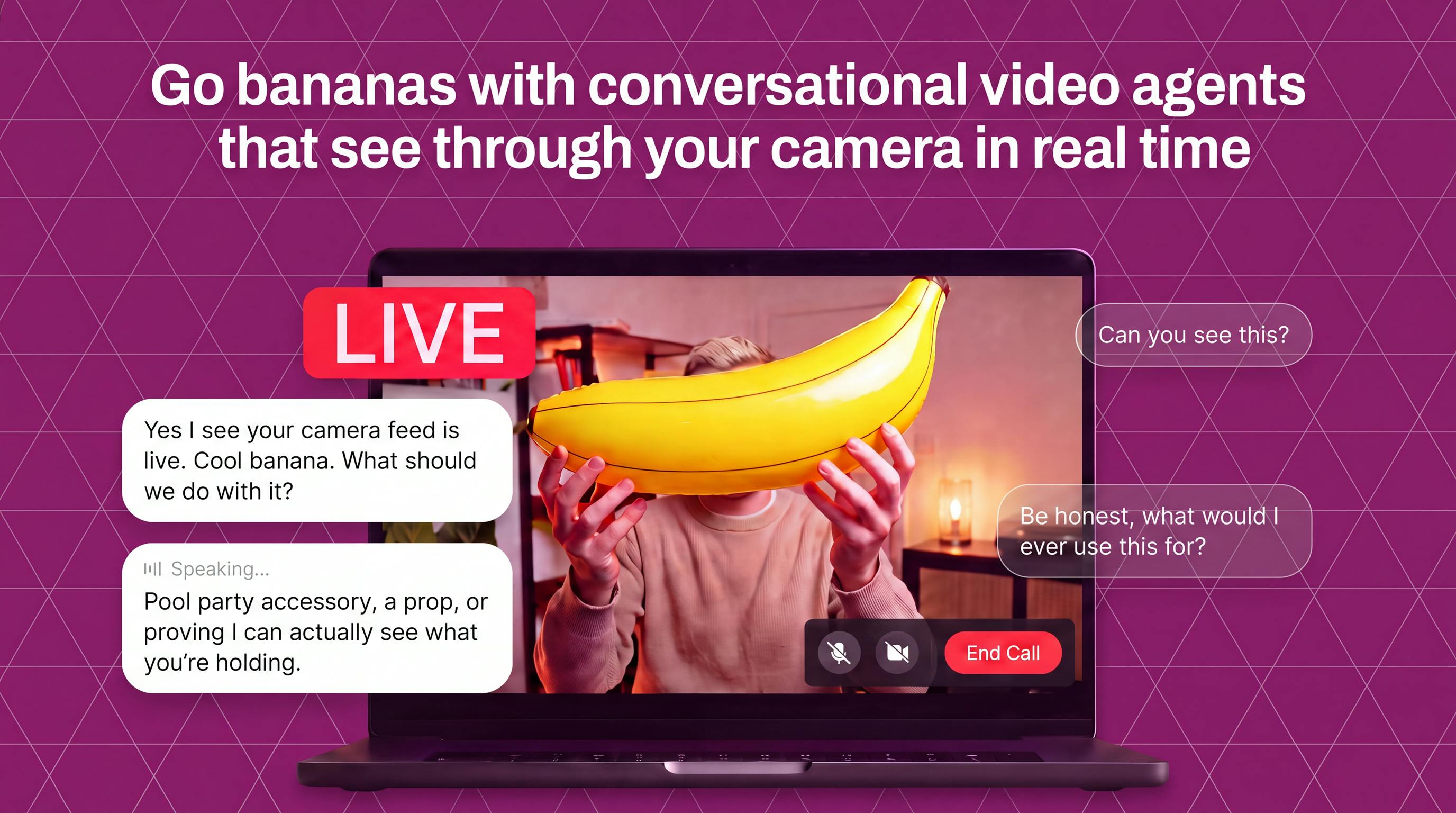
Eclatira is a platform for building AI agents that talk with users by voice, see their camera or screen, and take actions through APIs, MCP servers, and a claimed “3,000+” integrations (Product Hunt). The website says video is processed at up to 30 frames per second within a latency budget under 800ms, and that agents can be built either in a no-code builder or through a REST API (website).
It is aimed at developers and product teams building assistants, support agents, and copilots. The pricing page, however, pitches the product to small businesses and regulated sectors such as healthcare, legal, and the public sector (Pricing).
The most interesting part is the combination of live vision, voice, and tool execution in one session, which fits use cases like guided troubleshooting and screen-share support. The strongest positive signal is that the product appears to be live, with published self-serve pricing from $0 to $1,850 per month.
The biggest concern is competition. This category is crowded and well funded. LiveKit raised at a $1B valuation, Vapi at about $500M, and Tavus has raised about $64M in total. Model providers such as OpenAI already offer realtime models that accept audio and image input (OpenAI). No revenue, customer, funding, or usage data is public.
Decision: Watch. The company launched only days ago, so there is too little evidence for due diligence. But there is also no evidence of misconduct, and a launch this recent doesn’t justify a Pass on missing information alone.
Product Overview
Problem. Building live conversational video means stitching together speech, vision, a language model, telephony, and tool-calling. The founder calls this “a plumbing nightmare” (Product Hunt).
How it works. Audio and video run through a single two-way session. The agent can read text on camera (OCR), recognize objects, follow a screen share, and call external tools. Agents are set up with plain-language prompts, voice selection, tool definitions, and uploaded documents (website).
Platforms. Web builder, REST API, an embeddable widget, and telephony. Every plan, including the free one, gets voice, vision, screen share, text chat, and support for 100+ languages (Pricing).
Pricing. All plans run on credits. Voice uses about 45 credits per minute and text about 25 credits per message.
| Plan | Price/month | Approx. voice minutes | Implied $/min |
|---|---|---|---|
| Free | $0 | ~30 | — |
| Solo | $35 | ~155 | ~$0.23 |
| Starter | $270 | ~1,555 | ~$0.17 |
| Growth | $925 | ~6,775 | ~$0.14 |
| Scale | $1,850 | ~16,440 | ~$0.11 |
Extra credits cost 333 per dollar, which works out to roughly $0.135 per minute. Enterprise pricing is custom. The Product Hunt launch included a 50% discount for three months.
What it replaces. Teams would otherwise assemble their own stack from components like LiveKit and a realtime model, use voice-agent platforms such as Vapi or Retell, or rely on human agents doing screen-share support.
Positioning. The messaging is inconsistent. Product Hunt calls Eclatira a “conversational video engine for developers.” The pricing page focuses on voice and chat agents with telephony. LinkedIn describes “a 24/7 digital workforce.” This suggests the ideal customer is still being worked out.
Founder and Team Assessment
Moad Rahali Semlali is the verified maker on Product Hunt and describes himself as a co-founder. His LinkedIn headline reads “CEO & Co-Founder at Éclatira | Multimodal AI” (LinkedIn post).
LinkedIn search snippets show several people listing Eclatira as their employer: a GTM engineer and at least two software engineers (LinkedIn). The company exhibited at the ALL IN 2025 event, which puts its existence back to at least 2025.
The following could not be verified: the second co-founder, prior employers, technical credentials, previous companies or exits, full-time commitment, and total team size.
Founder Assessment: The team has shipped a functioning product with a small staff, but the founders’ backgrounds and their fit with this market cannot be verified.
Market Opportunity
Initial segment. SaaS companies and service businesses that need visual guided support, such as troubleshooting from a camera feed or walking a user through a screen share, plus developers building multimodal copilots.
Bottom-up estimate (analyst assumption). Suppose 50,000–150,000 companies worldwide adopt real-time voice or vision agents at an average of $3,000–$15,000 per year. That gives a serviceable market of about $150M to $2.25B a year. Enterprise contact-center deployments could push this higher. Retell, for example, reports automating contact-center tasks in what it calls a $350B market (this figure is company-reported).
Timing. The timing is favorable. Investors are clearly funding real-time voice infrastructure, and Vapi says its enterprise revenue grew 10x in a year (Vapi, company-reported). The market can support venture-scale companies. The open question is whether Eclatira can win a meaningful share of it.
Traction and Growth Signals
Launch attention. There was a Product Hunt launch, a founder LinkedIn post, and requests for upvotes in r/GrowthHacking. Vote counts, ranking, and comment numbers could not be retrieved. The Product Hunt awards page does not show any Eclatira-specific award (awards).
Sustained traction. None is verifiable. No figures are public for revenue, paying customers, users, retention, customer case studies, GitHub activity, funding, or partnerships. There are no independent customer reviews, and directory listings such as AI Tools Recap only repeat the company’s own marketing text.
Most important missing metrics: paying customers, MRR, voice minutes per month, conversion from free to paid, and retention.
Traction Assessment: The product is live but has no commercial validation yet.
Competitive Position
Direct competitors:
- Tavus: conversational video interface with a $40M Series B from CRV (Tavus)
- Vapi: voice agent platform, about $72M raised (Vapi)
- Retell AI: voice agent platform
Infrastructure and platform risk. LiveKit provides real-time infrastructure and has raised more than $220M (Forge). OpenAI’s gpt-realtime already accepts text, audio, and image input (OpenAI). Contact-center suites and CRM platforms could add the same capability to products they already sell.
Differentiation. Eclatira’s claimed edges are vision built into every tier, bundled telephony, and a large integration catalog. None of these is proprietary. Any of them could come from Eclatira’s own upstream model providers.
Six-month test. If OpenAI or LiveKit shipped a turnkey “voice + vision + tools” agent product, what reason would customers have to stay with Eclatira? Nothing in the public materials answers this. Possible answers would be switching costs from workflow configuration, vertical compliance packaging, or proprietary data, but none of these is evidenced.
Defensibility Assessment: Low
Business Model and Economics
Revenue. Revenue comes from credit-based subscriptions, top-ups, and Enterprise contracts, so income rises with usage.
Gross margin. The implied price is $0.11–$0.23 per voice minute. Eclatira’s underlying costs are not disclosed: which model it uses, telephony, video-frame processing, and orchestration. For reference, OpenAI lists gpt-realtime at $32 per 1M audio input tokens. Continuous 30fps vision adds image-token costs on top of audio.
The main economic risk is that vision-heavy sessions are the product’s selling point but could have much thinner margins than voice-only calls. Gross margin can’t be assessed without per-minute cost data.
Other factors:
- A free tier with telephony included creates exposure to abuse and support costs.
- Distribution currently depends on launches and self-serve sign-ups.
- The Enterprise tier promises isolated infrastructure and written SLAs (Pricing). These commitments are costly for a small team to deliver.
Unicorn Path
Assumed multiple. 8–12x ARR. Usage-based AI infrastructure with uncertain gross margins deserves less than top-tier SaaS. Recent private rounds in this category have priced well above that range (LiveKit at $1B and Vapi at about $500M). Those rounds show investor demand for the sector, not a multiple a newly launched startup should expect.
Required ARR. $1B ÷ 8–12x ≈ $85M–$125M.
What that implies:
- At about $0.13 per minute, Eclatira would need roughly 650M–960M billable minutes a year.
- At an $11,100 annual contract value (the Growth plan), it would need about 7,500–11,000 paying customers.
- At a blended $3,000 per year, it would need roughly 28,000–42,000 customers.
- Gross margin would need to be sustained above 60%.
Changes required. Eclatira would need to move from self-serve SMB sales to enterprise contact-center deals, build a vertical focus (for example, visual field support or compliance-heavy healthcare), develop proprietary evaluation or workflow data, raise substantial outside capital, and grow the team considerably. Well-funded incumbents are already pursuing the same customers.
Unicorn Path: Improbable
Valuation Assessment
No public information exists on funding history, investors, round terms, valuation, or current fundraising.
Comparable financings in the category:
| Company | Round | Valuation |
|---|---|---|
| LiveKit | Series B, April 2025 | $345M |
| LiveKit | Series C, 2026 | $1B |
| Vapi | $50M Series B, 2026 | ~$500M |
| Tavus | $40M Series B, 2025 | Not stated |
Retell AI’s revenue figures conflict across sources: $7.2M in 2025 from a third-party estimate versus $50M ARR reported by the company. That makes it an unreliable benchmark.
Valuation Attractiveness: Not Assessable
A valuation would require current ARR, its growth, gross margin, retention, burn and runway, round size, the SAFE cap or post-money valuation, and the preference terms.
Key Risks
- Platform replication: model providers and LiveKit-style infrastructure could make the orchestration layer a commodity.
- Well-funded competitors: Vapi, Retell, and Tavus compete with far more capital and existing enterprise references.
- Vision inference costs: continuous video may erode margins at the published per-minute prices.
- Unclear customer focus: the messaging shifts between developers, SMBs, and regulated enterprises.
- No verified traction: there is no public evidence of paying customers or usage.
- Dependency on upstream models: Eclatira depends on third-party model pricing, policies, and latency.
- Compliance claims: marketing to healthcare, legal, and the public sector brings privacy and regulatory exposure. No certifications are shown.
- Enterprise delivery: a small team faces operational strain from SLA and isolated-infrastructure commitments.
- Key-person risk: the public founder identity is thin, and only one co-founder is visible.
Final Assessment
Venture Potential: 38/100
| Category | Score |
|---|---|
| Market Size and Expansion Potential | 13/20 |
| Traction and Growth Evidence | 2/20 |
| Founder and Team | 5/15 |
| Product Strength | 6/10 |
| Distribution Potential | 5/15 |
| Business Model and Economics | 5/10 |
| Defensibility | 2/10 |
| Total | 38/100 |
The strongest parts of the case are the market’s momentum and a coherent multimodal product with transparent pricing. The weakest are defensibility and traction. As things stand, the evidence points toward a niche business, not a clear venture outcome.
Evidence Confidence: 22/100
Verified: the product exists, the founder’s name, the pricing, the feature claims (as the company describes them), and the team members listed on LinkedIn.
Company-reported: latency, the “3,000+ integrations” figure, and object-recognition accuracy.
Estimated: the market sizing and the unicorn math in this report.
Unavailable: revenue, customers, funding, legal domicile, founder backgrounds, margins, and burn.
Final Decision: Watch
A Pass would be justified if the evidence stays unchanged. However, the company launched within the last week and there are no integrity concerns, so it is worth monitoring for a quarter to see whether a clear customer niche and commercial signals emerge.
Upgrade Conditions
These would move the decision to DD:
- At least $30K MRR from 50 or more paying customers, with more than 70% of customers still paying after six months
- Named customer references in a single focused vertical
- Gross margin above 60% on sessions that use vision
- Evidence of a repeatable acquisition channel beyond launch spikes
- A disclosed seed round with credible institutional investors
Downgrade Conditions
These would move the decision to Pass or lower:
- Product updates stall
- OpenAI or LiveKit ships an equivalent turnkey agent product
- Pricing is cut below cost
- Compliance claims turn out to be unsupported (which would mean Hard Pass)
- The founder departs
Questions for Further Diligence
- What are current MRR, the number of paying customers, and the mix of customers across plans?
- How many billable voice and video minutes are processed each month, and how fast is that growing?
- What is the fully loaded cost per minute for voice-only sessions versus 30fps vision sessions?
- Which foundation models and telephony providers do you depend on, and how could you switch?
- What share of sessions actually use vision, and which use cases drive the most retention?
- What is the conversion rate from free to paid, and what is 30-, 90-, and 180-day retention?
- What are the “3,000+ integrations” in practice: native connectors, or a third-party aggregator?
- Which compliance certifications (SOC 2, HIPAA BAA) are held or in progress to support the healthcare and public-sector pitch?
- Who is the second co-founder, what are both founders’ backgrounds, and is everyone full-time?
- Where is the company legally domiciled, what is the cap table, and how much has been raised to date?
- What are the terms of the current round (size, cap, and instrument)?
- Why would a customer choose Eclatira over building their own stack with LiveKit and gpt-realtime, or over buying Tavus or Vapi?
Sources
- Eclatira on Product Hunt
- Eclatira official website
- Eclatira pricing page
- Eclatira LinkedIn company page (search snippet only)
- Founder launch post on LinkedIn and founder X profile
- ALL IN 2025 exhibitor listing
- LiveKit Series C announcement and Series B coverage
- TechCrunch on Vapi’s valuation and Vapi Series B announcement
- Tavus company information
- OpenAI gpt-realtime announcement and model page
- Retell AI revenue: Latka (secondary estimate) and Yahoo Finance (company-reported); these conflict